When to Use a Crewneck Hi Vis Sweatshirt Instead of a Hoodie?
Choosing high-visibility workwear involves more than just picking a color. The debate between a crewneck sweatshirt and a hoodie is a critical decision that directly impacts worker safety, comfort, and compliance. This guide will help you make the right call.
The Quick Answer
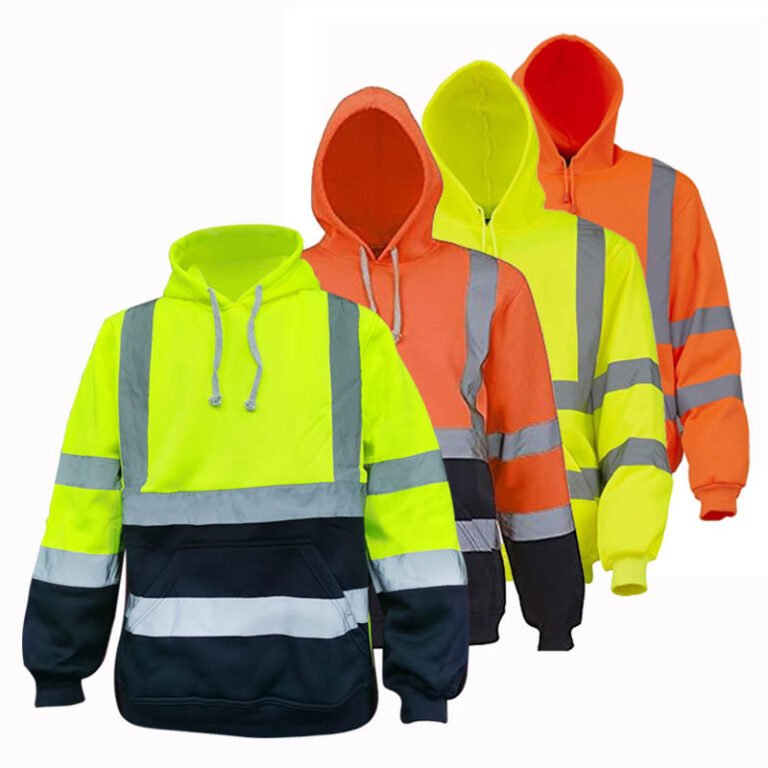
You should use a hi-vis crewneck sweatshirt instead of a hoodie primarily when workers are near rotating machinery, conveyors, or any equipment that poses a snag risk. Crewnecks are also the superior choice for tasks requiring unobstructed peripheral vision and for layering comfortably under other Personal Protective Equipment (PPE) like harnesses or jackets. A hi-vis hoodie is better suited for outdoor jobs where protection from wind, rain, or cold is the priority and snagging is not a primary concern.
“As someone who talks to procurement managers and safety officers every day, this question isn’t about fashion; it’s about function and risk assessment. The conversation almost always shifts from ‘what do my guys want to wear?’ to ‘what does the job site demand for compliance and safety?'”
“My insight is this: the choice to use a hi-vis crewneck sweatshirt is a deliberate decision driven by hazard mitigation.”
“So, while hoodies are great for weather protection in open environments like road work or surveying, my guidance is clear: when your team is working with machinery, in tight quarters, or needs to layer their PPE effectively, the crewneck isn’t just an alternative—it’s the professional and safer choice.”
— A VizGlo Safety Workwear Specialist
The Deciding Factor: Hazard Mitigation and Job Function
While both a hi-vis crewneck and hoodie can keep your team warm and visible, the subtle design difference—the hood—is a massive factor in a risk assessment. Let’s break down the three key scenarios where a crewneck is the undisputed winner.
1. Snag Hazard Elimination: The Non-Negotiable Rule
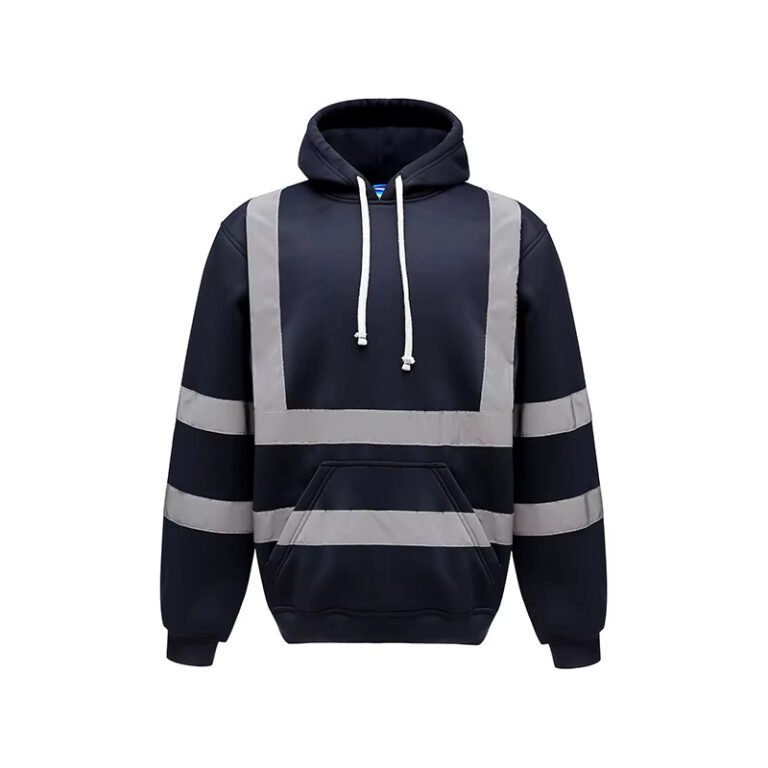
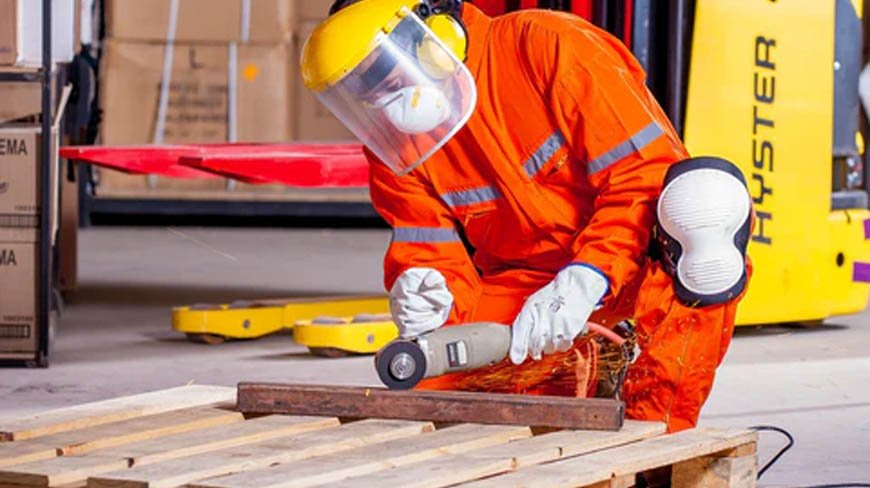
This is the most critical reason to choose a crewneck. On any job site with moving parts, a hood is a significant liability. The drawstrings or the hood itself can easily get caught in rotating machinery, assembly lines, conveyor belts, or even dense scaffolding and protruding rebar. The result can be catastrophic, pulling a worker into equipment and causing severe injury or worse.
- Industries at Risk: Manufacturing, warehousing, logistics, factory assembly, and any environment with heavy machinery.
- The Crewneck Solution: A hi-vis crewneck offers a clean, streamlined profile with nothing to catch or dangle. It eliminates the snag hazard entirely, making it the only responsible choice for these environments. When sourcing workwear for warehouse and logistics teams, this should be a top consideration.
2. Unobstructed Peripheral Vision
Safety is intrinsically linked to awareness. A worker’s ability to see their surroundings, especially their peripheral vision, is crucial for avoiding collisions with vehicles, equipment, or other personnel. A hood, even when not worn up, can create blind spots. When worn up to protect against weather, it severely limits a worker’s field of view.
A crewneck sweatshirt ensures a full, 360-degree field of vision is maintained at all times. This is vital for equipment operators, forklift drivers, roadway flaggers, and anyone working in a dynamic environment where hazards can approach from any direction. It’s a simple change that dramatically improves the core function of hi-vis clothing: being seen and seeing others.
3. Superior Layering and PPE Compatibility
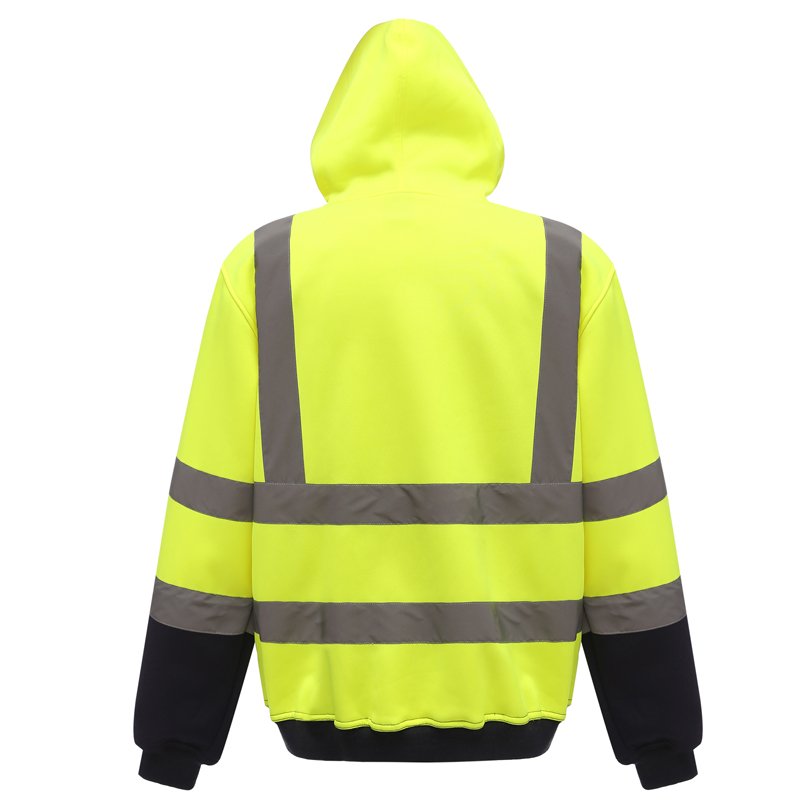
Work doesn’t stop when the temperature drops. Effective layering is key to staying warm and safe. This is another area where the crewneck excels. Trying to wear a hi-vis hoodie under a winter jacket or a fall protection harness is often uncomfortable and can even be unsafe. The hood bunches up at the back of the neck, creating pressure points, restricting head movement, and potentially interfering with the proper fit of a harness’s D-ring.
A crewneck provides a smooth, bulk-free foundation for layering. It fits seamlessly under vests, jackets, and harnesses, ensuring both comfort and the correct function of all safety equipment. When considering fabric, a higher GSM (Grams per Square Meter) will provide more warmth, whether you choose a crewneck or a hoodie.
When is a Hi-Vis Hoodie the Right Choice?
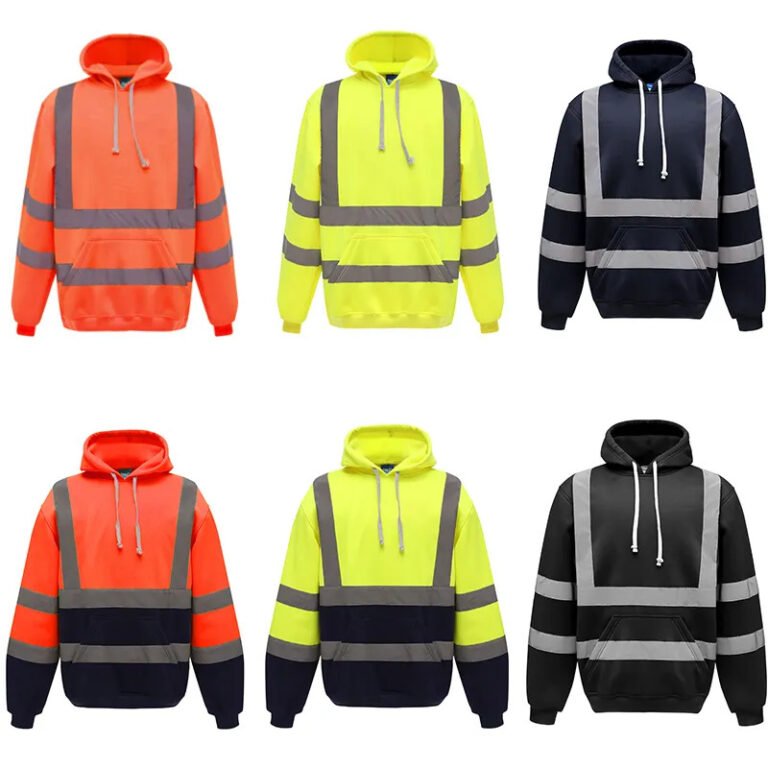
This isn’t to say hi-vis hoodies don’t have their place. They are an excellent and popular choice when the risk profile of the job site changes. A hi-vis hoodie is often preferred in:
- Open Outdoor Environments: For road work, surveying, or general construction where snagging is not a primary risk, a hoodie provides valuable protection from wind, light rain, and cold.
- Standalone Outerwear: When it’s chilly but not cold enough for a heavy jacket, a heavy-duty winter work hoodie can be the perfect all-in-one solution for warmth and ANSI compliance.
- Worker Preference (in Safe Contexts): In low-risk areas, allowing workers to wear hoodies can improve morale and comfort, which positively impacts overall job satisfaction.
Ultimately, the choice between different styles of hi-vis sweatshirts and hoodies comes down to a thorough assessment of the work environment.
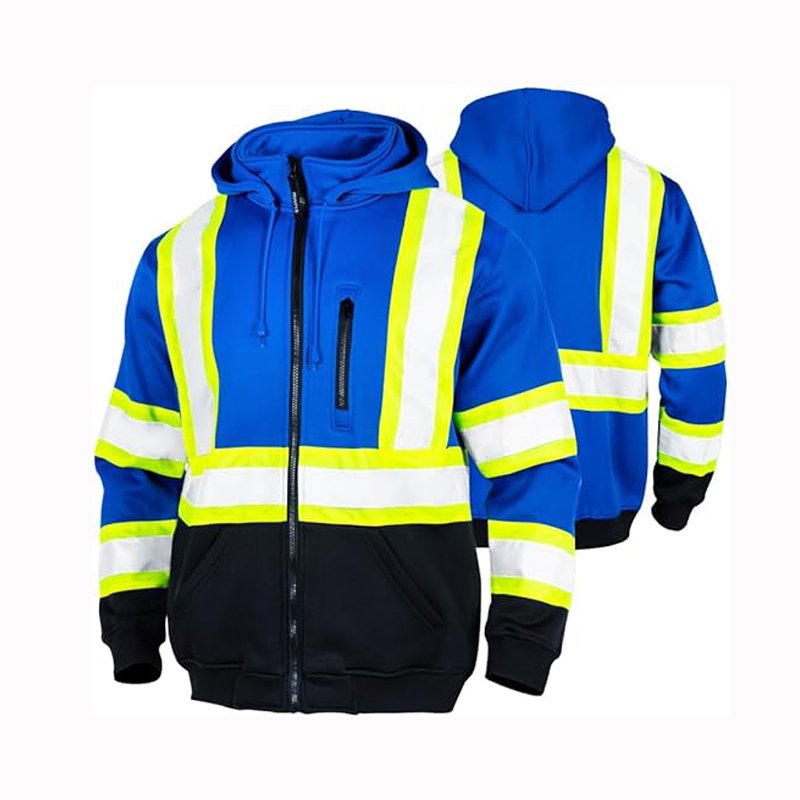
Crewneck vs. Hoodie: Head-to-Head Comparison
| Feature | Hi-Vis Crewneck Sweatshirt | Hi-Vis Hoodie |
|---|---|---|
| Snag Safety | Excellent (No hood or drawstrings) | Poor (High risk of snagging) |
| Peripheral Vision | Excellent (Unobstructed view) | Fair to Poor (Can be restrictive) |
| PPE Layering | Excellent (Smooth fit, no bunching) | Poor (Bulky, can interfere with fit) |
| Weather Protection | Fair (Provides core warmth) | Excellent (Protects head/neck from elements) |
Equip Your Team with the Right Safety Gear
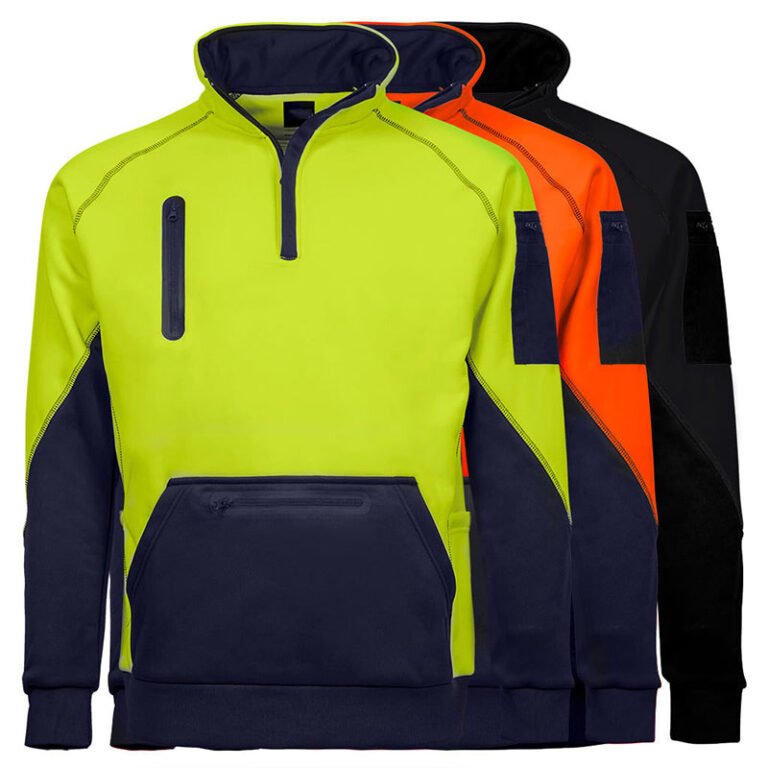
The choice is clear. For environments with machinery, the crewneck is essential. For outdoor work, a hoodie offers comfort and protection. At VizGlo Safety, we manufacture a full range of both ANSI-compliant hi-vis crewnecks and hoodies. We can provide custom hi-vis hoodies with your company logo or crewnecks to meet your exact safety specifications.
Get a Quote for Your TeamFrequently Asked Questions
Is a hi-vis crewneck sweatshirt still ANSI compliant without a hood?
Absolutely. ANSI/ISEA 107 compliance is determined by the total square inches of fluorescent background material and retroreflective tape, as well as 360-degree visibility. The presence or absence of a hood does not affect its compliance class, as long as the garment meets the specific requirements of our guide to Class 1, 2, and 3.
Is a hoodie or a crewneck warmer for winter work?
The warmth of the garment depends more on its material and GSM (grams per square meter) than its style. However, a crewneck is often better for layering. You can wear a heavy-duty crewneck under a winter work jacket for maximum warmth without the bulk of a hood. A heavy-duty hi-vis hoodie is an excellent choice as a standalone outer layer in cold but dry conditions.
Can a hood get in the way of other PPE like hard hats?
Yes, it can. A hood can interfere with the fit and function of a hard hat, especially if the hard hat has a rear suspension adjustment knob. It can also create uncomfortable bunching around the neck and shoulders. A crewneck provides a seamless fit with hard hats, safety harnesses, and fall protection equipment, making it a better choice for integrated team workwear systems.