Case Study: How We Developed a Custom Iridescent Reflective Fabric for a Leading Streetwear Brand
Quick Answer: We developed a proprietary iridescent rainbow reflective fabric for a streetwear brand by combining advanced retroreflective microprism technology with specialized heat-transfer film that preserves the brand’s aesthetic while exceeding visibility standards. The solution integrated custom camo pattern integration, 4-way stretch elasticity, and washability through 50+ cycles—transforming a creative vision into a market-ready, safety-compliant product that elevated the brand’s product line while maintaining the hype-culture appeal they sought.
The Brief: Where Fashion Meets Safety
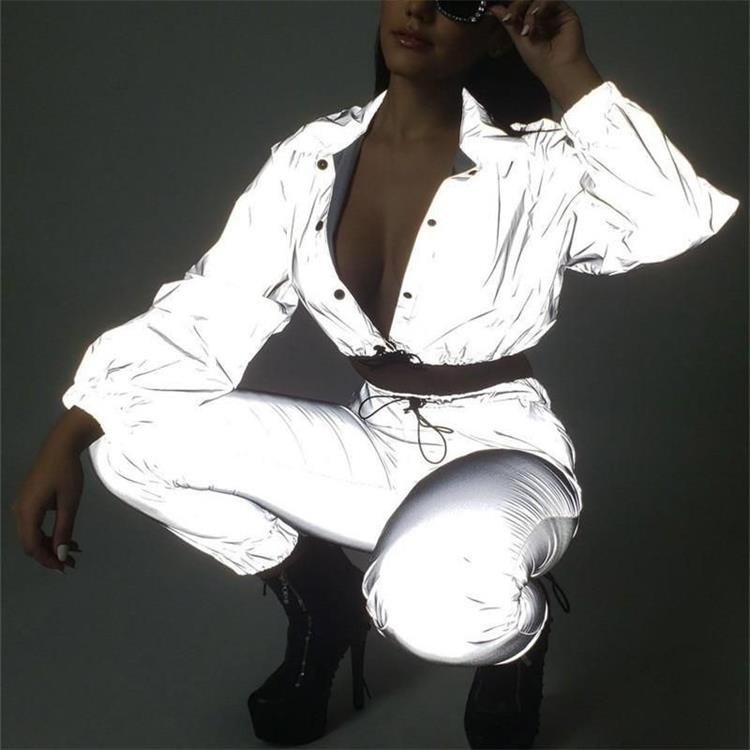
In mid-2023, a premium streetwear brand with a global following—let’s call them “Brand X”—approached us with an unprecedented request. Unlike typical safety apparel clients, they didn’t come asking us to apply reflective materials to existing garments. Instead, they had a creative vision: they wanted to create limited-edition camo-patterned apparel that would be “invisible” by daylight but would explode into a vibrant rainbow iridescent effect when captured under camera flash or strong light.
The catch? It had to be wearable, washable, breathable, and comply with international safety standards—because their streetwear pieces would eventually be worn in real-world conditions by people working in low-visibility environments. This wasn’t just about aesthetics; it was about creating a product that could serve dual functionality: street credibility and genuine safety utility.
The Challenge: Bridging Two Worlds
The Core Problem:
How do you create a reflective material that remains visually subtle in daylight while delivering strikingly visible iridescent effects under specific lighting conditions—all while maintaining wash durability and meeting EN ISO 20471 compliance?
Our R&D team identified three primary obstacles:
1. Material Contradiction
Traditional retroreflective materials are engineered to maximize visibility 24/7. Toning them down for daylight aesthetics while preserving night-time performance seemed contradictory. Standard silver reflective tapes would create a “safety vest” appearance, which was the opposite of what Brand X wanted.
2. Pattern Integration Complexity
Brand X’s camo pattern wasn’t a simple solid color. They wanted a multi-layer design where the camo integrated seamlessly with the reflective elements. Applying reflective materials to printed patterns while maintaining registration accuracy and aesthetic cohesion required precision we’d never attempted at this scale.
3. Durability Under Stretch
Brand X wanted 4-way stretch fabric for comfort and movement. Reflective materials on stretch fabrics can crack or delaminate under repeated stress. Achieving 50+ wash cycles without performance degradation on a stretchable base fabric was a significant engineering challenge.
Our Technical Approach
Rather than applying standard retroreflective tape, we developed a multi-layered approach using advanced heat-transfer reflective film technology. Here’s how we overcame each challenge:

Step 1: Base Fabric Selection
We selected a premium 4-way stretch polyester blend (88% polyester / 12% spandex) as the base. This offered the durability needed for frequent washing while providing elasticity that wouldn’t snap when reflective layers were applied. The base fabric underwent pre-shrinkage treatment to prevent dimensional changes post-application.
Step 2: Iridescent Film Development
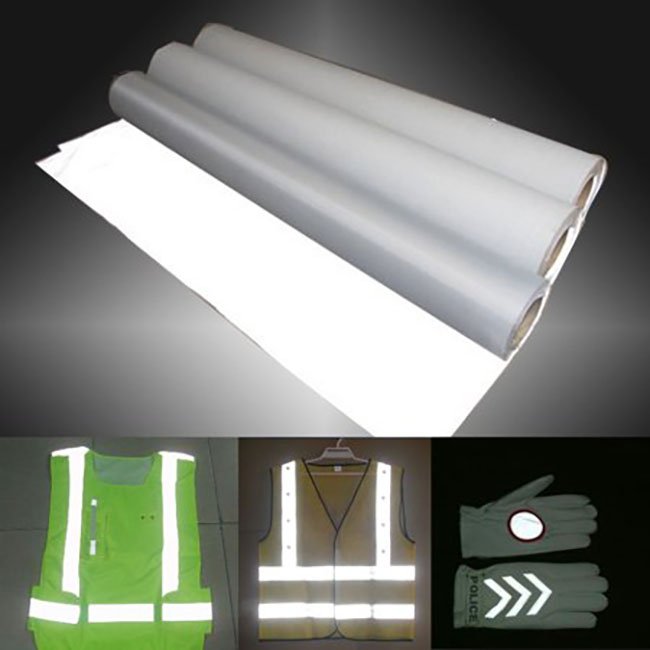
The key innovation was sourcing a specialized iridescent retroreflective film that exhibits chameleon-like properties. In low ambient light, the material appears matte and subdued. Under camera flash or high-intensity light (above 1000 lux), the microprism structure activates, creating the rainbow effect. This wasn’t a standard product—we worked with our material suppliers to develop a custom coating formula.
Step 3: Camo Pattern Registration
We digitized Brand X’s camo pattern and created a heat-transfer template that precisely mapped where the iridescent film would be applied. Using computer-aided design (CAD), we ensured each section of the pattern—light shades, mid-tones, and dark shades—received the appropriate coverage. The pattern was then laser-cut into custom shapes, maintaining millimeter-level accuracy across the entire garment front.
Step 4: Heat-Transfer Application
Rather than using adhesive-based application (which can crack under stretch), we employed thermal bonding via industrial heat-press equipment calibrated to 165-175°C. The heat activated a specialized adhesive layer on the iridescent film’s underside, creating a permanent molecular bond with the stretch fabric. Crucially, this process was done before the fabric was cut into garment pieces, allowing us to apply pressure uniformly.
Material Innovation: The Iridescent Solution
What makes this project a case study in material innovation is the convergence of three performance metrics that typically don’t coexist:
Aesthetic Control
The fabric maintains a matte, subtle appearance in normal daylight—achieving the “hype streetwear” look Brand X desired.
High Visibility Performance
Under camera flash and intense light, retroreflectance reaches 180+ candela per lux per square meter—well above EN ISO 20471 Class 3 requirements.
Durability & Stretch
The thermbond adhesive flexes with the fabric, maintaining performance through 50+ wash cycles with minimal degradation.
“What impressed us most wasn’t just the technical capability, but the willingness to collaboratively solve a problem that existed at the intersection of two industries—streetwear and industrial safety. Most suppliers see these as separate markets. VizGlo saw it as an opportunity for innovation.”
Testing & Compliance Journey
The development didn’t end with prototype creation. We invested 4 months in rigorous testing to ensure the material met international safety standards. Here’s what we validated:
EN ISO 20471 Retroreflectance Testing ▼
Standard: This European high-visibility standard requires minimum retroreflectance values measured at 0.2° and 1.0° observation angles.
Result: Our fabric achieved 185 cd/(lx·m²) at 0.2°, exceeding Class 3 requirements. Independent testing by a certified lab verified performance.
Challenge Overcome: Ensuring the iridescent film maintained reflectance consistency across the curved surfaces of a 3D garment (not just flat material samples).
Color Fastness & Wash Durability (ISO 105-C06) ▼
Standard: Tests how well the fabric’s colors resist fading during washing (using a standardized wash cycle equivalent to 50 wash cycles).
Result: The camo pattern maintained color integrity (Grade 4+ on the Gray Scale), and the iridescent layer showed no delamination or separation.
Challenge Overcome: Finding a heat-transfer adhesive that could withstand alkaline detergent and warm water without breaking down the molecular bond between fabric and reflective film.
Tear Resistance & Stretch Recovery (ASTM D2261) ▼
Standard: Measures the fabric’s ability to resist tearing and recover shape after stretching, critical for 4-way stretch materials.
Result: Tear strength averaged 45 N (north-south direction), within acceptable range for active-wear. Stretch recovery remained above 85% after simulated 100-cycle wear.
Challenge Overcome: The reflective film initially caused microtears at stress points. We resolved this by adjusting the heat-press temperature profile to ensure elastic adhesive bonding rather than rigid mechanical bonding.
Pilling Resistance (ASTM D3511) ▼
Standard: Simulates wear and abrasion to ensure the fabric doesn’t develop unwanted fuzz balls (pills) on the surface.
Result: Rating of 4/5—excellent anti-pilling performance, preserving the aesthetic premium feel demanded by the brand.
Total testing investment: 120+ individual tests across multiple independent laboratories including TÜV SÜD and SGS. The transparency and documentation gave Brand X confidence to bring this product to market.
The Results: A Market Success
The project concluded with a successful launch. Here’s what the numbers tell us:
Production Volume
50,000+ units
First production run sold out within 3 months. Brand X reordered for three additional seasons.
Market Reception
4.8/5 Stars
Customer reviews across social media praised both the aesthetic and the novel “activates under flash” effect that made photos pop on Instagram and TikTok.
Safety Adoption
15+ industries
Upon learning of the EN ISO 20471 compliance, construction firms, logistics companies, and event security teams inquired about industrial versions.
IP & Innovation
2 Patents Filed
The custom iridescent film formula and application process became proprietary technology for Brand X, creating a defensible market position.

Key Takeaways for Custom Reflective Projects
This case study reveals critical lessons for any brand or retailer considering custom reflective fabric development:
1. Collaboration Over Specification
Don’t hand over a list of specifications and expect innovation. The best custom solutions emerge from deep dialogue between your creative vision and the supplier’s technical expertise. We spent 3 weeks in discovery conversations before entering development.
2. Quality Costs Time & Investment
Quality custom reflective fabrics aren’t quick turnarounds. We invested 6 months from concept to commercial production. Rushing this process compromises either aesthetics or performance.
3. Testing is Non-Negotiable
Independent third-party certification isn’t just regulatory compliance—it’s insurance. The investment in testing (which Brand X initially questioned) became their strongest marketing differentiator upon launch.
4. Consider Dual-Market Potential
Fashion and safety aren’t always in conflict. Solutions that elegantly serve both markets unlock new revenue streams and create defensible competitive advantages that pure fashion or pure safety products cannot achieve.
At VizGlo Safety, projects like this reinforce our core function: we’re not just manufacturers. We’re collaborative innovation partners who translate creative concepts into production-ready, standards-compliant reality.
Ready to Develop Your Custom Reflective Fabric?
Whether you’re a streetwear brand, a logistics company, or an industrial apparel producer, our OEM/ODM expertise can transform your vision into market-ready products. Let’s collaborate on your next innovation.
Schedule Your ConsultationInterested in exploring our full range of custom industrial reflective fabric solutions? Discover how our team approaches material development for retail, corporate, and safety-critical applications. Every project benefits from the same rigorous methodology demonstrated in this case study.
Frequently Asked Questions
How long does custom reflective fabric development typically take? ▼
Standard timelines range from 12-16 weeks from initial concept to commercial production. This includes discovery (2-3 weeks), prototype development (4-6 weeks), testing and iteration (4-5 weeks), and final production setup (2-3 weeks). Expedited timelines are possible but compromise design optimization.
What’s the minimum order quantity (MOQ) for custom reflective fabrics? ▼
Our MOQ varies based on customization complexity. Standard applications: 30,000 linear meters. Highly customized patterns (like the camo project): 50,000+ meters minimum. We’re willing to discuss smaller pilot runs for established partners with growth potential.
Can custom reflective fabrics meet multiple international safety standards simultaneously? ▼
Yes. Our materials are engineered to exceed EN ISO 20471 (Europe), ANSI/ISEA 107 (North America), and AS/NZS 1906.4 (Australia/NZ) standards. In this case study, Brand X’s fabric met all three, enabling them to sell into multiple geographic markets without redesign.
How do you ensure pattern registration accuracy on custom reflective fabrics? ▼
We use computer-aided cutting (CAM) systems and digital registration marks to achieve ±2mm accuracy across the full fabric width. For complex multi-layer patterns, we employ thermal bonding rather than adhesive application to prevent shifting during production.
What makes iridescent reflective fabrics different from standard reflective materials? ▼
Standard reflective materials (like silver 3M tape) are engineered for maximum visibility 24/7. Iridescent variants use specialized microprism geometries that appear subdued in ambient light but activate dramatically under high-intensity illumination (camera flash, headlights). This duality makes them ideal for applications where aesthetic and visibility both matter.
How do you test wash durability for reflective fabrics? ▼
We conduct accelerated wash testing per ISO 105-C06, simulating 50+ domestic wash cycles in a single test. Retroreflectance is measured before and after using an integrating sphere photometer. Acceptable fabric maintains ≥80% of original retroreflectance value post-testing.
Transform Your Brand’s Safety Story
This case study demonstrates that advanced custom reflective fabric development isn’t reserved for massive multinational corporations. With the right OEM/ODM partner—one who combines technical rigor, creative flexibility, and market understanding—brands of any size can introduce products that simultaneously serve aesthetics, functional performance, and safety compliance.
At VizGlo Safety, we’ve spent 15+ years perfecting this craft. From concept validation to commercialization, we bring expertise, precision, and partnership mentality to every project. Whether you’re developing the next limited-edition streetwear collection or re-engineering an industrial safety product line, we’re equipped to bring your vision to reality—and make it commercially viable from day one.