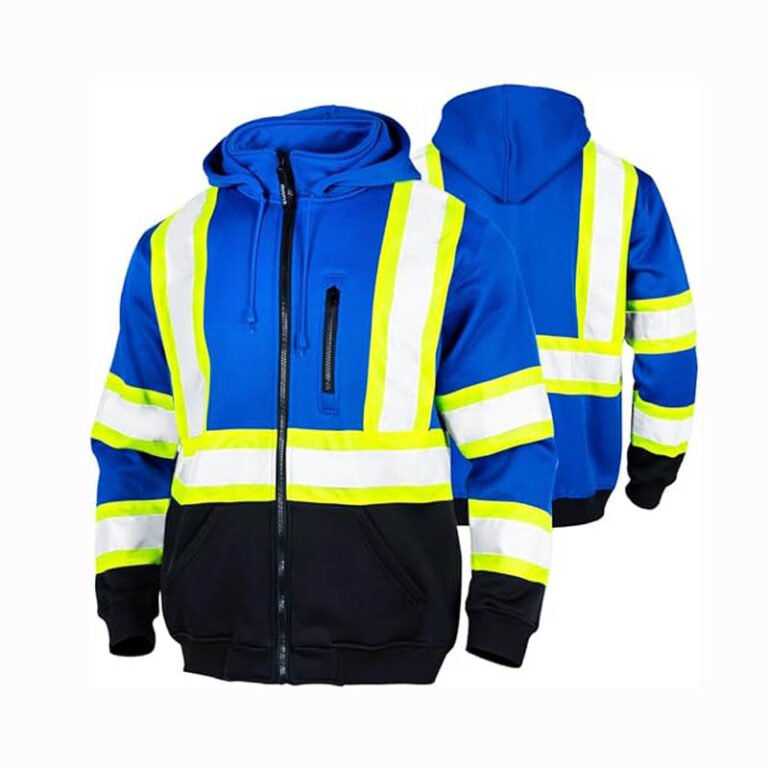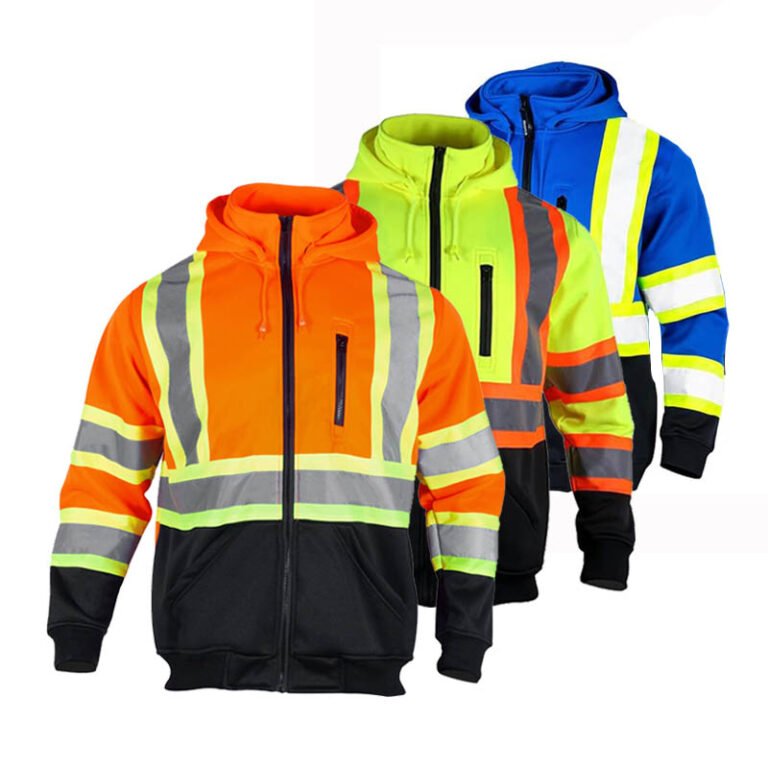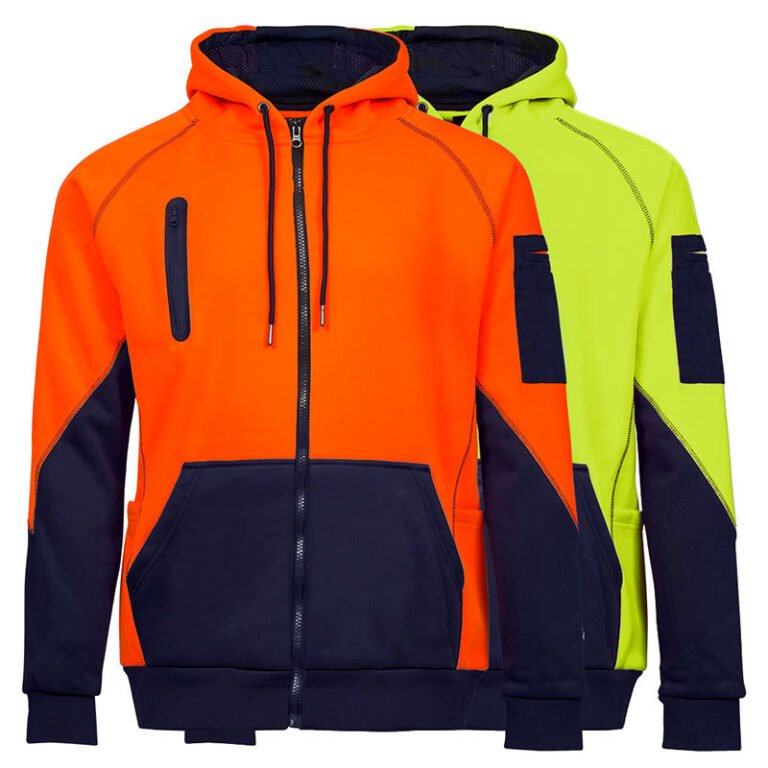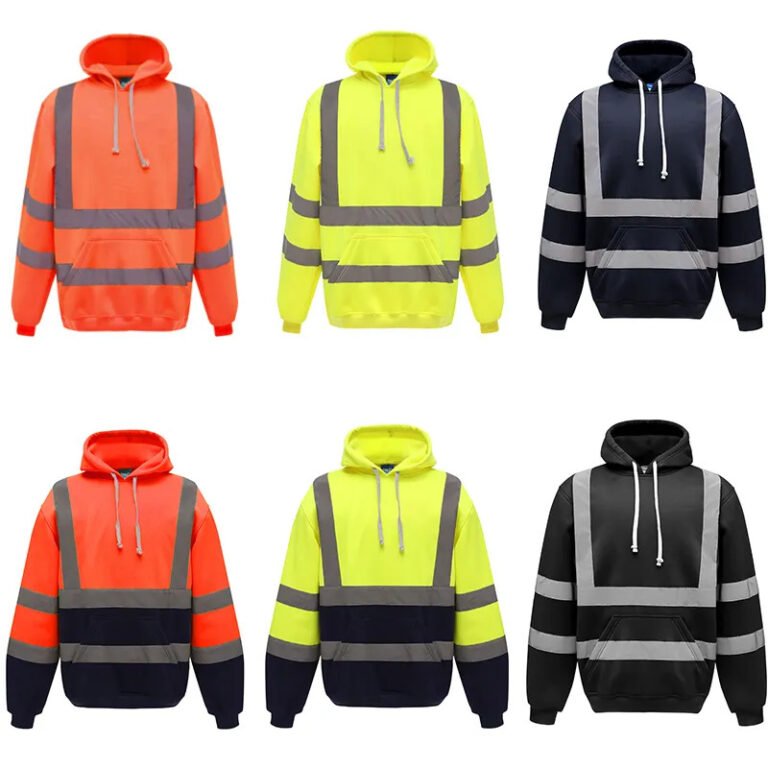
What is GSM in Workwear and Why Does It Matter for Hoodies?
Published on | By VizGlo Safety
GSM (grams per square meter) is a measurement that indicates the weight and density of fabric used in workwear hoodies. It directly affects the garment’s warmth, durability, breathability, and overall comfort. In practical terms, a hoodie with 280-320 GSM offers lightweight versatility ideal for layering in mild climates, while 350+ GSM provides heavy-duty insulation necessary for harsh winter conditions. Understanding GSM helps safety managers, procurement teams, and workers select the right hoodie that balances protection, comfort, and cost-effectiveness for their specific work environment—whether construction sites in Texas or oil fields in Alberta. Choosing the wrong GSM means workers will either be uncomfortably hot or dangerously cold, directly impacting productivity and safety compliance.
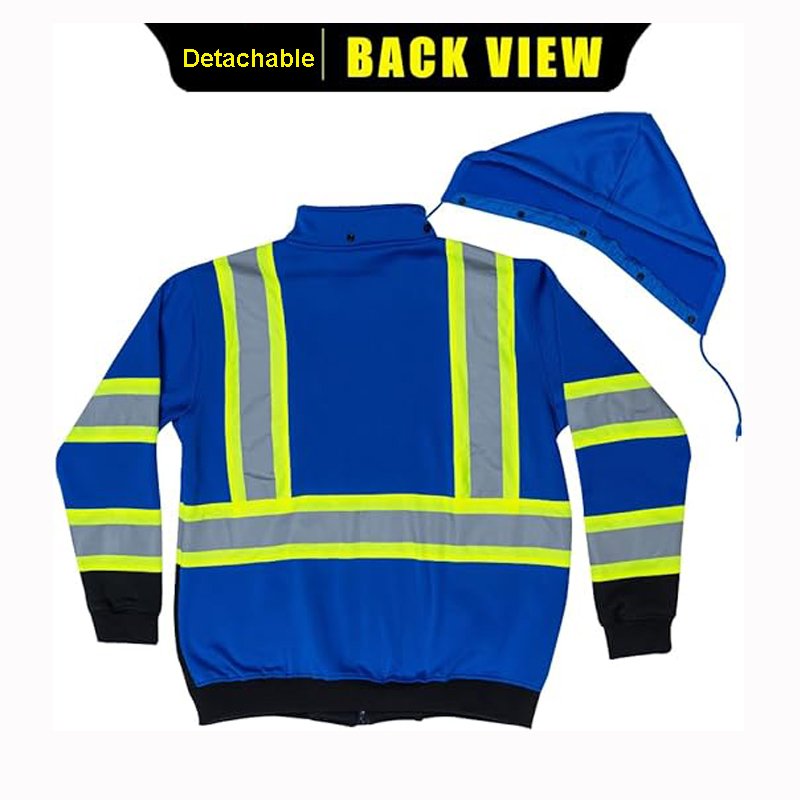
What is GSM in Workwear?
GSM stands for “grams per square meter” and is the standard unit of measurement for fabric weight in the textile industry. Specifically, it measures how much one square meter of fabric weighs in grams. This metric provides an objective, internationally recognized way to compare the density and thickness of different fabrics, regardless of the material composition (cotton, polyester, fleece blends, etc.).
When manufacturers specify that a hoodie is “320 GSM,” they’re telling you that every square meter of that particular fabric weighs 320 grams. This weight is a direct result of several factors:
- Yarn thickness: Thicker yarns result in higher GSM
- Weave or knit density: Tighter constructions increase weight
- Fiber type: Some fibers are naturally denser than others
- Finishing treatments: Brushing or fleece backing adds weight
Important Note: GSM only measures weight—it doesn’t automatically indicate quality. A 400 GSM hoodie isn’t necessarily “better” than a 280 GSM one; it simply serves a different purpose. The key is matching GSM to your operational needs.
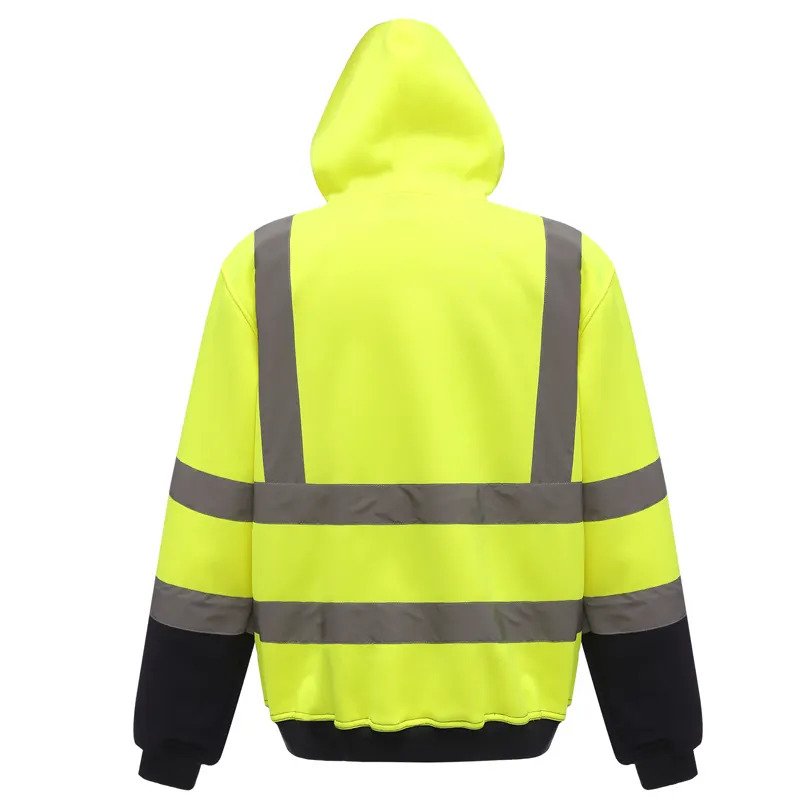
Why GSM Matters for Hoodies
For workwear hoodies—especially hi-vis sweatshirts and hoodies used in demanding industrial environments—GSM is far more than a technical specification. It’s a critical performance indicator that affects multiple aspects of worker experience and safety:
1. Thermal Insulation
Higher GSM fabrics trap more air between fibers, creating better insulation. A 350+ GSM fleece-lined hoodie can be the difference between productivity and cold-related downtime in sub-zero temperatures.
2. Durability & Longevity
Heavier fabrics (300+ GSM) generally withstand more abrasion and wear, which is crucial for workers who kneel, climb, or work in rugged environments daily. Lower GSM hoodies may need replacement sooner.
3. Breathability & Comfort
Paradoxically, lower GSM (280-300) hoodies breathe better, making them ideal for active work in moderate climates. They prevent overheating while still providing coverage and safety visibility.
4. Cost Efficiency
GSM directly correlates with fabric cost. Ordering the right GSM prevents overspending on unnecessarily heavy garments or under-buying garments that won’t last through a season.
Understanding GSM also helps when evaluating the best material for hi-vis hoodies, as different base materials (cotton-poly blends, 100% polyester, fleece) can achieve the same GSM with different performance characteristics.
Common GSM Ranges and Their Applications
Here’s a practical breakdown of GSM ranges you’ll encounter in the workwear hoodie market, along with their ideal use cases:
| GSM Range | Weight Category | Best For | Climate Suitability |
|---|---|---|---|
| 240-270 GSM | Lightweight | Summer layering, indoor warehouses, mild weather outdoor work | 15-25°C (60-77°F) |
| 280-320 GSM | Medium-Weight | All-season versatility, construction, logistics, road work in moderate climates | 5-20°C (41-68°F) |
| 350-400 GSM | Heavy-Duty | Cold weather work, winter construction, outdoor maintenance, northern regions | -10 to 10°C (14-50°F) |
| 400+ GSM | Extra Heavy | Extreme cold, oil & gas, mining in arctic conditions, specialty applications | Below -10°C (14°F) |
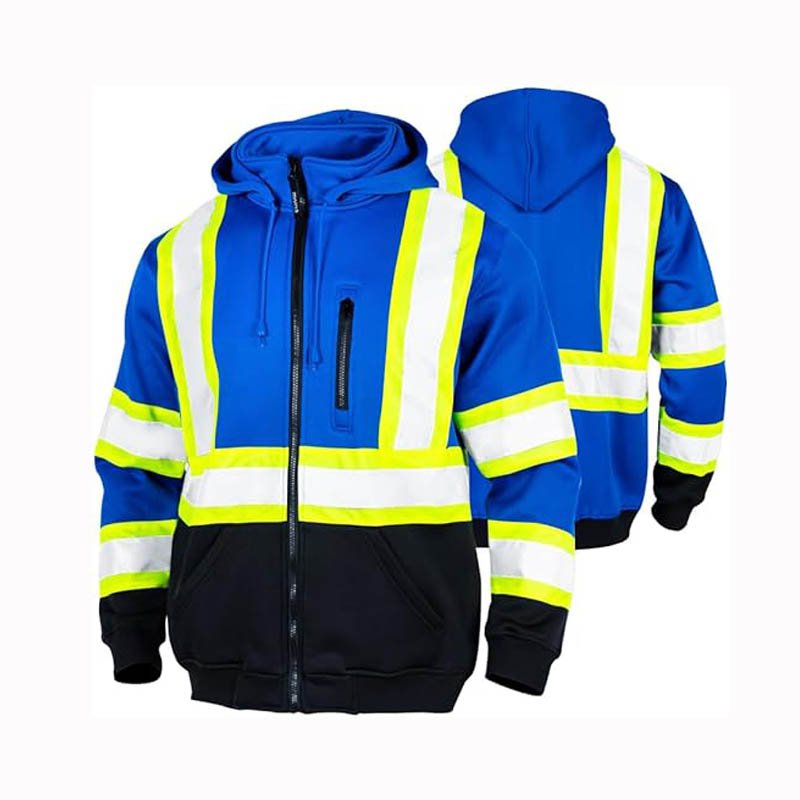
For specialized winter applications, explore our guide to heavy-duty winter work hoodies for cold climates, which focuses on 350+ GSM options designed for extreme conditions.
Expert Insight: Finding the “Right” GSM
“In all my years of exporting hi-vis workwear, the conversation about hoodies almost always pivots to GSM right after we confirm the safety class (like ANSI Class 3 or EN 20471). Many clients initially believe a higher GSM is automatically better, but I always reframe it: we’re not looking for the highest GSM, we’re looking for the right GSM for the application.
I’ll ask a client in Scandinavia about their winter needs, and we’ll discuss a 350+ GSM, heavy-duty fleece-lined hoodie. But for a client in Australia or the southern US, that same hoodie would be impractical. For them, a 280 GSM hoodie is far more versatile for layering or for cooler mornings. It’s a crucial balance.
GSM directly impacts price, durability, and most importantly, the worker’s comfort and productivity. Choosing the wrong GSM doesn’t just mean a less comfortable hoodie; it means you’ve bought the wrong tool for the job. I’ve seen entire orders returned because procurement bought 400 GSM hoodies for a Texas summer job site—workers refused to wear them, defeating the entire purpose of the investment in high-visibility safety apparel.
The lesson? Always start with your environment and activity level, then work backwards to the appropriate GSM. Don’t let “heavier is better” thinking drive your decision.”
— Senior Export Manager, VizGlo Safety
How to Choose the Right GSM for Your Team
Selecting the optimal GSM for your workwear hoodies requires a systematic evaluation of several factors. Follow this decision framework:
Step 1: Assess Your Climate & Season
- What are the average temperatures during your working season?
- Will workers be exposed to wind, rain, or snow?
- Is the work primarily indoors, outdoors, or mixed?
Example: A construction crew in Minnesota winters needs 350+ GSM; a Phoenix crew needs 280 GSM maximum.
Step 2: Consider Activity Level
- High-intensity work (loading, climbing, digging): Lower GSM prevents overheating
- Moderate activity (walking inspections, driving): Medium GSM offers flexibility
- Static/low movement (gate control, flagging): Higher GSM maintains warmth
Step 3: Factor in Layering Strategy
If your team wears base layers and mid-layers, you can use a lower GSM hoodie as an outer shell. For stand-alone use, higher GSM is necessary.
Step 4: Budget & Longevity Balance
Higher GSM costs more upfront but may last 1.5-2x longer. Calculate cost-per-wear rather than just purchase price. For insights on procurement, see our article on bulk ordering for safety apparel.
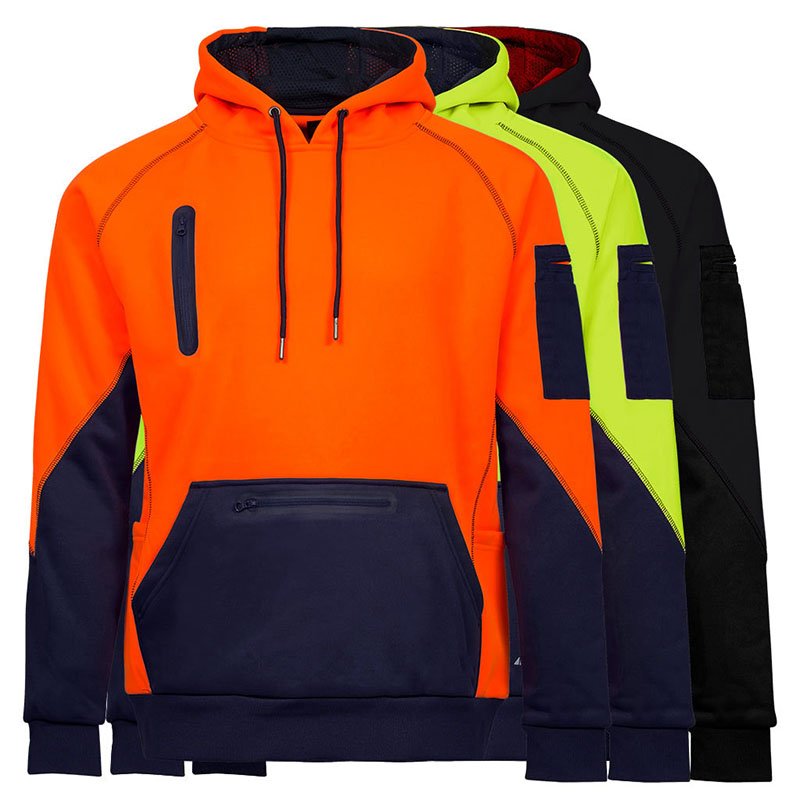
GSM vs. Other Performance Factors
While GSM is a crucial specification, it’s not the only factor determining a hoodie’s performance. A complete evaluation should include:
Fiber Composition
A 300 GSM cotton-poly blend performs differently than 300 GSM 100% polyester. Moisture-wicking, drying time, and warmth vary by material.
Fabric Construction
Fleece-lined, brushed interior, or tight-knit exterior constructions all affect warmth and durability independently of GSM alone.
Safety Features
Reflective tape quality, compliance with ANSI standards, and visibility are paramount regardless of weight.
When customizing hoodies for your team, consider integrating company logos and branding elements that won’t compromise the fabric’s core GSM performance.
Frequently Asked Questions About GSM in Workwear
Is a higher GSM always warmer?
Can I use GSM to compare different brands?
Does GSM affect reflective tape application?
What GSM is best for year-round use?
How do I verify the GSM of a hoodie?
Does GSM impact price significantly?
Need Help Choosing the Right GSM for Your Team?
Our workwear specialists can help you select the perfect hoodie weight based on your specific climate, industry, and budget.
Get Expert GuidanceOr explore our complete range of hi-vis sweatshirts and hoodies
Related Articles You May Find Helpful
Heavy-Duty Winter Work Hoodies for Cold Climates
Discover 350+ GSM options designed for extreme conditions
What’s the Best Material for Hi-Vis Hoodies?
Compare fabric types and how they interact with GSM
Best Hi-Vis Hoodies for Construction
Construction-specific GSM recommendations and features
Why Teams Are Switching to Custom Hi-Vis Hoodies
Learn about customization options across different GSM ranges