A Complete Guide to ANSI/ISEA 107 & EN ISO 20471 for Hi-Vis Polo Shirts
Sourcing globally? Don’t let regional standards become a costly mistake. Understand the crucial differences between US and EU compliance for your team’s apparel.
Choosing the Right Standard for Hi-Vis Polos
The primary difference between ANSI/ISEA 107 (the American standard) and EN ISO 20471 (the European/International standard) for hi-vis polo shirts lies in their core philosophy. ANSI 107 primarily focuses on the total minimum area of fluorescent and reflective materials to determine its class. In contrast, EN ISO 20471 is more prescriptive about the *design and placement* of reflective tape, often requiring two horizontal bands that completely encircle the torso. Therefore, a polo shirt designed for the US market might not be compliant in Europe, and vice-versa. The correct choice depends entirely on your target market and the specific regulations governing your worksite.
The American Standard: ANSI/ISEA 107 Explained
The International Safety Equipment Association (ISEA) develops the ANSI/ISEA 107 standard, which is the law of the land in the United States for worker visibility. The standard is performance-based, meaning it cares most about *how much* compliant material is on the garment.
For a hi-vis polo shirt, you’ll typically be looking at Type R (Roadway) certification, which falls into two possible classes:
- Class 2: This is the standard for most short-sleeve polo shirts. It requires a specific minimum area of both fluorescent background material and retroreflective tape. The tape must provide 360° visibility, usually with bands around the waist and stripes over the shoulders.
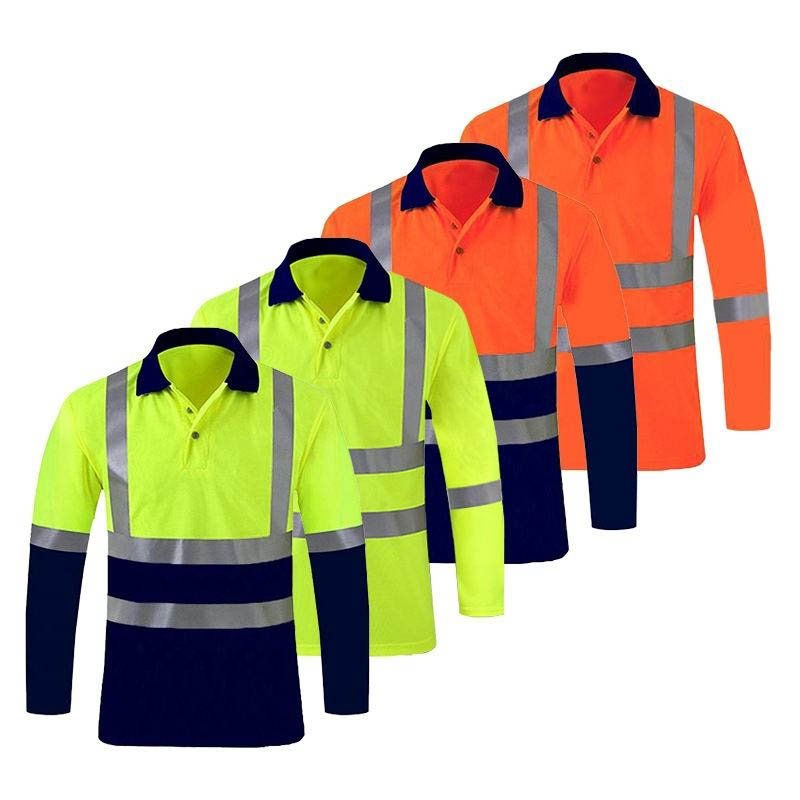
- Class 3: To achieve Class 3, a garment must have sleeves with reflective bands. This means a short-sleeve polo can only be Class 2 *on its own*. To reach Class 3, it must be a long-sleeve polo or be worn as part of an ensemble with Class E pants.
The philosophy is straightforward: more material equals a higher class and better visibility. Design flexibility exists as long as the minimum area and 360° visibility requirements are met.
The International Standard: EN ISO 20471 Explained
Recognized throughout Europe and many other parts of the world (including the Middle East and Australia/New Zealand, often with regional additions), EN ISO 20471 takes a more holistic approach. It not only specifies material amounts but also dictates the design and configuration of the reflective tape to ensure the human form is clearly defined.
Key aspects for polo shirts under EN ISO 20471:
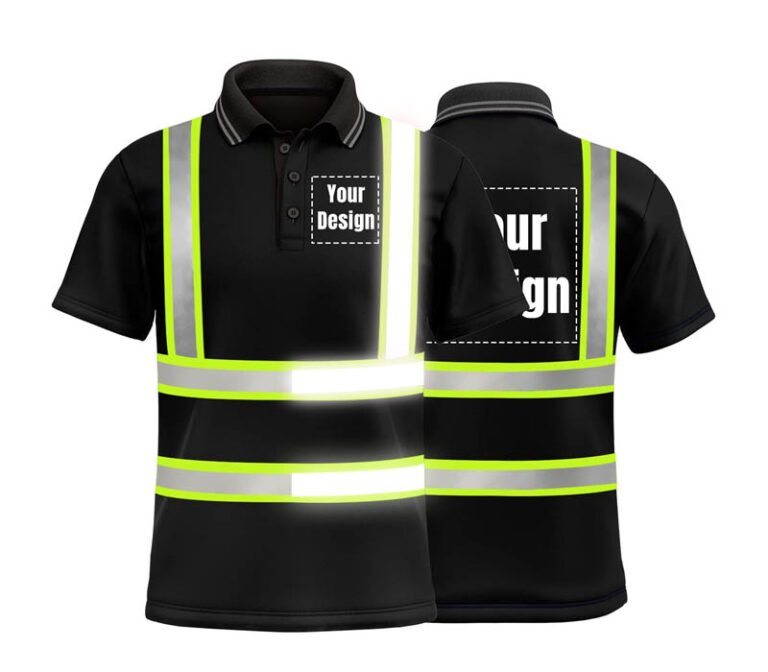
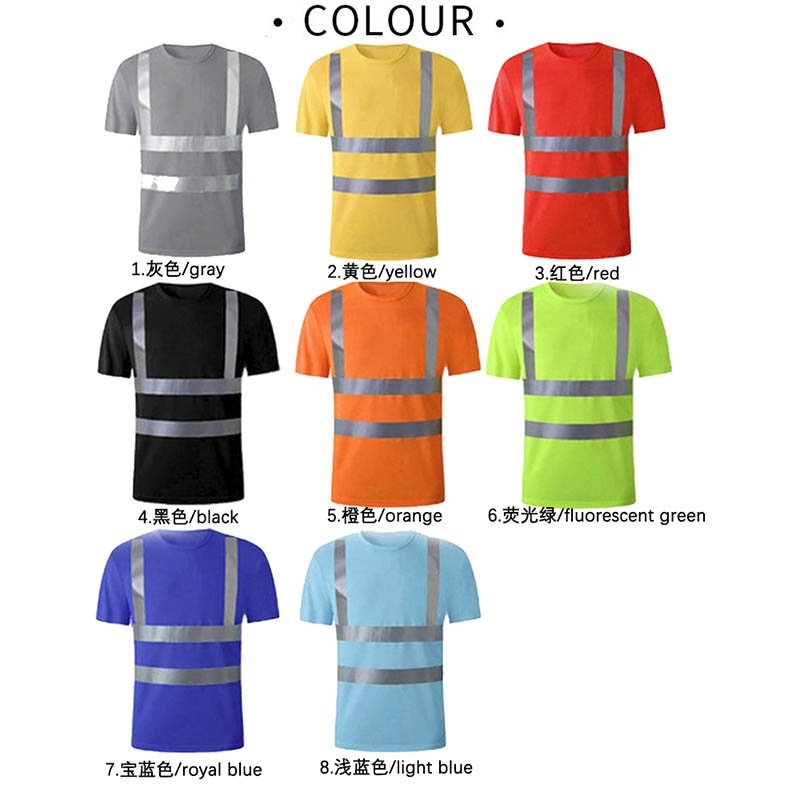
- Design is King: The standard is prescriptive about tape layout. For Class 2 and 3 garments, it typically requires two horizontal bands of reflective tape around the torso, plus stripes over the shoulders (harness pattern). A single horizontal band is usually only sufficient for Class 1.
- Rigorous Material Testing: The fluorescent fabric and reflective materials undergo more stringent testing, including colorfastness and reflectivity performance after a set number of industrial washes. This ensures the garment remains compliant throughout its service life.
- Classes for Polos: Similar to ANSI, a short-sleeve polo will typically achieve Class 2. A long-sleeve version is required to meet Class 3 as a single garment.
Side-by-Side: Key Differences at a Glance
To simplify, here’s a direct comparison of the two standards as they apply to polo shirts:
| Feature | ANSI/ISEA 107 (US) | EN ISO 20471 (EU/International) |
|---|---|---|
| Primary Philosophy | Amount-based: total area of materials. | Design-based: placement and configuration of tape. |
| Governing Region | United States | Europe, UK, Middle East, Australia/NZ, Asia |
| Tape Configuration | Flexible, as long as 360° visibility is achieved. | Prescriptive, often requires two horizontal torso bands. |
| Short-Sleeve Polo Class | Typically Class 2 (Type R) | Typically Class 2 |
| Material Testing | Focus on initial chromaticity and retroreflection. | Stricter tests for durability, including colorfastness and performance after multiple washes. |
From the Field: A Global Trader’s Advice
Understanding the technical sheets is one thing; applying them to global logistics and procurement is another. The nuances between these standards are where costly mistakes happen.
In my daily conversations with procurement managers from the US to the UAE, many initially believe that a “high-quality” hi-vis polo is universally compliant. The reality is that ANSI/ISEA 107 and EN ISO 20471 are fundamentally different. For polos, this is especially critical. I always guide my clients to see this not as a technical hurdle, but as a strategic choice. Are you aiming for US federal highway projects or equipping a logistics team in the EU? Your answer will determine the exact design, not the other way around. Getting this right from the start saves entire shipments from being rejected at customs.
Making the Compliant Choice for Your Market
Choosing the right polo shirt comes down to one question: Where will it be used?
- For use in the United States: You must source polo shirts compliant with ANSI/ISEA 107. Ensure the product is labeled as Type R Class 2 (for short sleeve) or Type R Class 3 (for long sleeve).
- For use in Europe, the UK, the Middle East, Australia, or Asia: You must source polo shirts compliant with EN ISO 20471. Look for the CE or UKCA mark and the correct class rating. The design will almost certainly feature two horizontal reflective bands.
- For a global workforce: The safest and most efficient solution is to source dual-certified polo shirts. These garments are designed to meet the strictest requirements of both standards, ensuring they are compliant regardless of the region.
As a leading OEM/ODM manufacturer, we specialize in producing hi-vis apparel that meets the specific standards of any global market. We can guide you to the perfect solution.
Find Your Compliant Hi-Vis Polo Solution
Don’t let compliance confusion compromise safety or your budget. Explore our wide range of fully certified Hi-Vis Polo & T-Shirts, designed for global standards and worker comfort. Our experts are ready to help you navigate the requirements for your specific market.
Frequently Asked Questions
Can a single hi-vis polo shirt be certified to both ANSI 107 and EN 20471?
Yes, it is possible for a polo shirt to be dual-certified. However, it must meet the strictest requirements of BOTH standards. This typically means it will have the reflective tape configuration required by EN ISO 20471 (e.g., horizontal torso bands) and also meet the minimum square-inch material requirements of the relevant ANSI class. These dual-certified garments offer great versatility for global companies but may have a slightly different look than a purely ANSI-compliant shirt.
Does adding a company logo affect a polo shirt’s compliance?
Yes, it can. Both standards have rules about logos. A logo placed on the fluorescent background material reduces the total compliant area. Large logos can potentially downgrade a garment’s class or invalidate its certification. To maintain compliance, logos should be small or placed on a non-fluorescent area (like a pocket flap). Alternatively, using reflective logos made from certified heat transfer film can add to visibility, but this must be done carefully according to the manufacturer’s guidelines.
What’s the highest class a short-sleeve polo shirt can achieve?
For both ANSI/ISEA 107 and EN ISO 20471, the highest class a standalone short-sleeve polo shirt can achieve is Class 2. To reach Class 3, the garment must have additional material on the arms or legs. This means you would need a long-sleeve polo shirt or wear a Class 2 short-sleeve polo in combination with Class E trousers/pants to create a Class 3 ensemble.
Is there a difference between a hi-vis polo and a t-shirt in terms of certification?
Functionally, for certification purposes, there is little difference. Both polos and t-shirts are evaluated based on the same criteria: the total area of fluorescent background material and retroreflective tape, and the placement of that tape. The choice between a polo with a collar and a t-shirt is typically based on corporate image, worker comfort, and job function rather than a specific requirement of the hi-vis standards.