Hi Vis Raincoat Regulations and Best Practices in the UK/EU
What Are the Key Regulations for Hi-Vis Raincoats in the UK/EU?
In the UK and EU markets, compliant hi-vis raincoats must meet a dual-standard system: EN ISO 20471 for high visibility (ensuring workers are seen in hazardous environments) and EN 343 for foul weather protection (guaranteeing waterproofing and breathability). These aren’t optional recommendations—they’re legally mandated requirements enforced at customs and through workplace safety inspections. A raincoat that fails either standard cannot be sold or used in professional settings, risking import rejections, costly recalls, and potential liability claims. Beyond meeting these certifications on paper, your garments must maintain performance through real-world conditions: at least 50 industrial wash cycles, exposure to UK’s persistent rain and low-light conditions, and daily wear by workers in construction, rail, logistics, and highway maintenance sectors.
Understanding the Dual-Standard System: Why One Certification Isn’t Enough
Here’s the reality that trips up most importers entering the UK/EU safety workwear market: a hi-vis raincoat isn’t just a waterproof jacket with reflective tape slapped on. The regulations demand simultaneous compliance with two entirely separate—and equally critical—European standards.
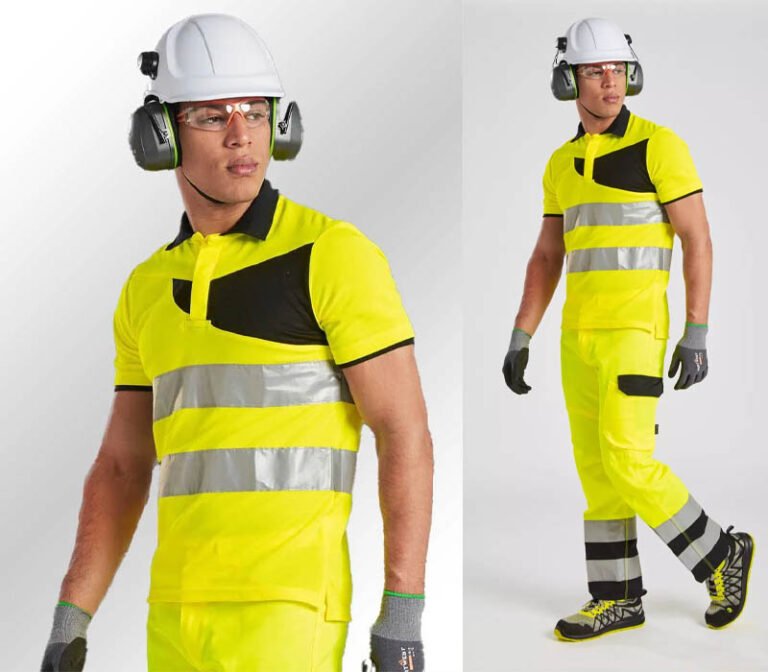
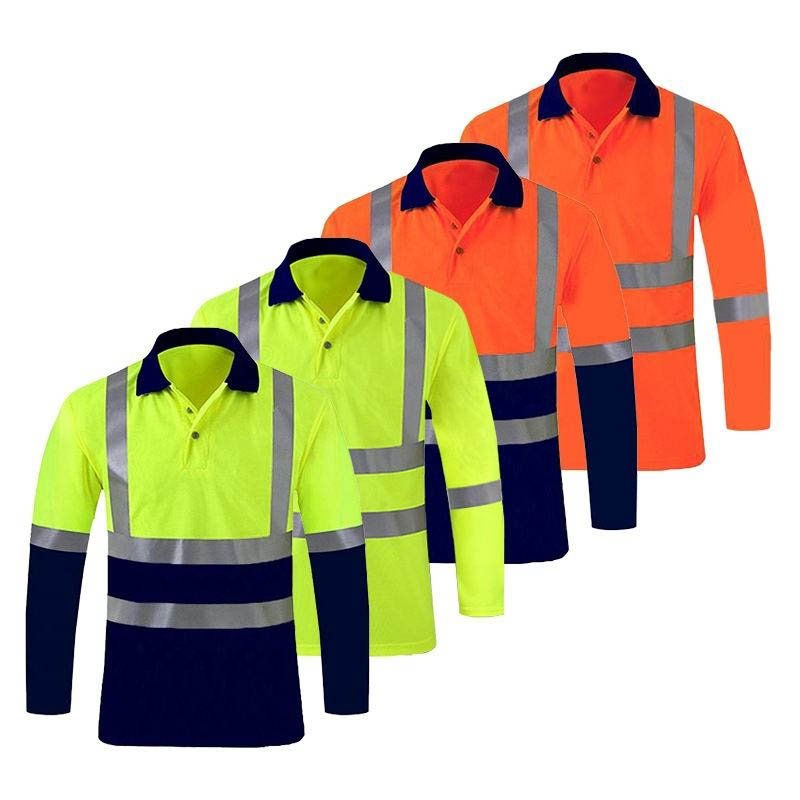
EN ISO 20471 governs high-visibility warning clothing. It specifies exactly how much fluorescent background material, reflective tape, and contrasting trim your garment must have to ensure workers are visible to vehicle operators and machinery drivers in low-light conditions, fog, or rain. This standard has three classes (1, 2, and 3), with Class 3 providing the highest level of visibility—typically required for roadway workers, railway personnel, and airport ground staff.
EN 343, on the other hand, addresses protective clothing against rain. It rates garments on two critical performance metrics: water penetration resistance (Classes 1-4, with 4 being the highest) and water vapor resistance/breathability (Classes 1-4). For UK weather—characterized by prolonged drizzle, sudden downpours, and high humidity—you need a minimum Class 3 waterproofing with Class 3 breathability to prevent workers from getting soaked either from external rain or internal condensation.
Manufacturer’s Insight
After shipping to UK markets for over a decade, I’ve seen countless importers get rejected at customs because their “hi-vis raincoats” only had EN ISO 20471 certification but lacked EN 343 testing—or vice versa. Both certifications must appear on the garment’s permanent label, accompanied by pictograms showing the specific class ratings. Missing either one means your entire container gets held up or sent back.
EN ISO 20471: Breaking Down High Visibility Requirements
To achieve EN ISO 20471 certification, your hi-vis raincoat must incorporate specific minimum areas of:
- Fluorescent background material (typically yellow, orange, or red) — measured in square meters based on garment class
- Retroreflective tape — must be at least 50mm wide, arranged in horizontal bands around torso and arms, with minimum coverage area requirements
- Combined-performance material (optional but recommended) — fabric that is both fluorescent and reflective
| Class | Background Material (m²) | Reflective Material (m²) | Typical Use Cases |
|---|---|---|---|
| Class 1 | 0.14 | 0.10 | Low-risk environments, warehouse work |
| Class 2 | 0.50 | 0.13 | Medium-risk, construction sites |
| Class 3 | 0.80 | 0.20 | High-risk: highways, railways, airports |
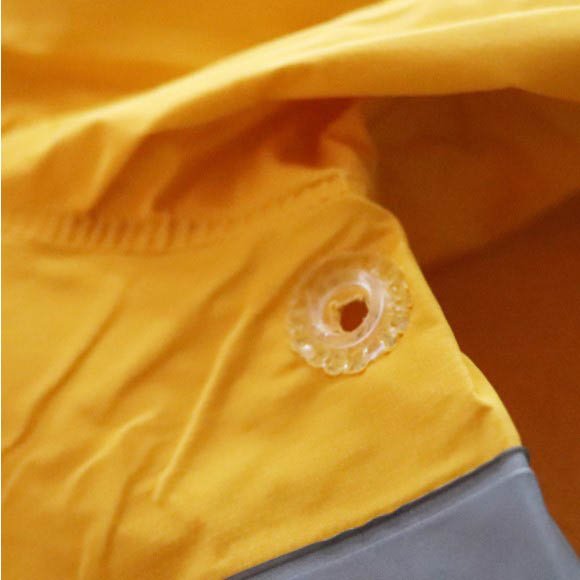
The tape configuration matters enormously. Regulations specify that reflective bands must encircle the torso and sleeves, with precise spacing requirements. Simply adding random reflective strips won’t pass certification testing. For UK markets specifically, where workers often operate in dawn/dusk hours and persistent fog, Class 3 certification is the de facto standard for professional-grade rainwear.
Critical Compliance Warning
Reflective tape must maintain its retroreflectivity after at least 50 industrial wash cycles at 60°C. Cheap PVC-based tapes crack and peel after 10-15 washes. This is where most import failures occur—the raincoat passes initial testing but fails the durability cycle. Always insist on glass-bead or ceramic-bead reflective materials with proven wash cycle performance.
EN 343: Weatherproof Performance Criteria for UK Conditions
EN 343 evaluates two critical parameters that directly impact worker comfort and safety in wet conditions:
1. Water Penetration Resistance (WP)
Measured using a water column test, this indicates how much water pressure the fabric can withstand before leaking. Classes range from 1 (lowest) to 4 (highest):
- Class 1: 8,000 Pa (light drizzle protection)
- Class 2: 8,000 Pa + seam performance
- Class 3: 13,000 Pa (moderate rain protection)
- Class 4: 20,000 Pa (heavy rain and prolonged exposure)
For UK weather patterns—where rain isn’t necessarily heavy but is persistent and often wind-driven—Class 3 minimum is recommended, with Class 4 preferred for outdoor workers in Scotland, Wales, and Northern England.
2. Water Vapor Resistance/Breathability (Ret)
This measures how well moisture from perspiration can escape through the fabric. Lower Ret values mean better breathability:
- Class 1: Ret > 40 (poor breathability, condensation risk)
- Class 2: 25 < Ret ≤ 40 (moderate breathability)
- Class 3: 15 < Ret ≤ 25 (good breathability, professional use)
- Class 4: Ret ≤ 15 (excellent breathability, active work)
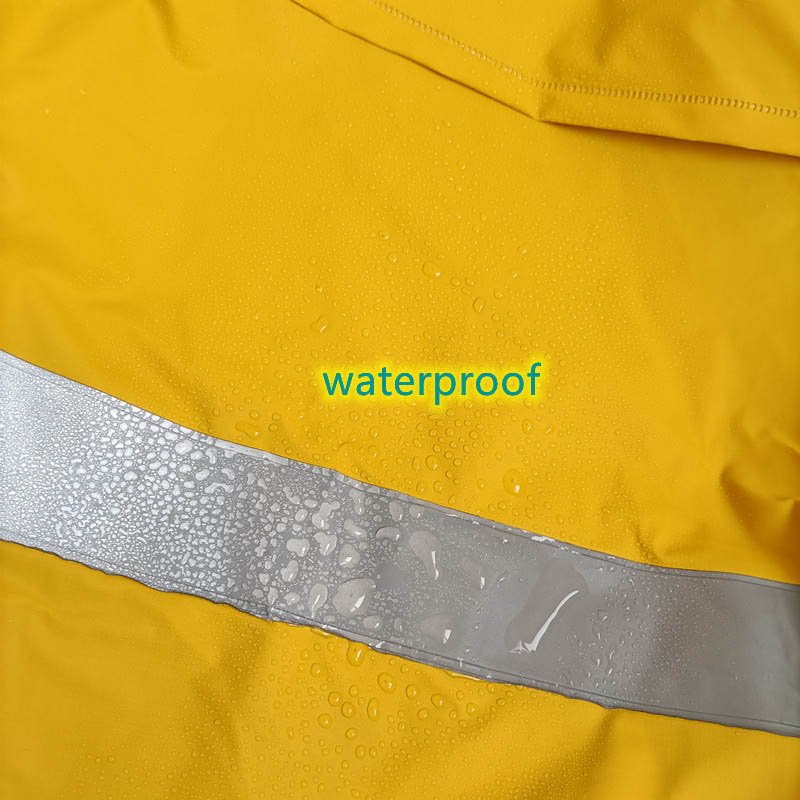
Here’s where many suppliers cut corners: achieving Class 3+ waterproofing is relatively easy with heavy PU coatings, but this typically results in Class 1 breathability—creating a “wearable sauna” effect where workers get just as wet from their own perspiration as they would from rain.
Best Practice Recommendation
For professional-grade UK/EU hi-vis raincoats, target a minimum rating of EN 343 3:3 (Class 3 waterproofing, Class 3 breathability). This typically requires microporous membranes (similar to Gore-Tex technology) or advanced PU coatings with hydrophilic properties. Yes, it costs 15-20% more than basic PVC-coated nylon, but it prevents the number-one complaint from end users: “I’m soaked after three hours of work.”
Best Practices for UK Weather Conditions: Beyond Minimum Standards
Meeting EN ISO 20471 and EN 343 certifications gets your product legally compliant, but surviving the UK market requires understanding the unique environmental challenges British workers face daily:
The UK Weather Reality Check
- Prolonged drizzle vs. heavy downpours: Unlike Mediterranean rain patterns (short, intense bursts), UK rain is often light but persistent for hours. This demands superior seam sealing—every stitch hole is a potential leak point over time.
- Wind-driven rain: Coastal areas and exposed sites experience horizontal rain. Standard waterproof ratings assume vertical water column pressure; real-world UK conditions require storm flaps, adjustable cuffs, and drop-tail hems.
- Temperature variability: Workers might face 5°C morning temperatures and 15°C afternoons. Ventilation features (underarm zips, back vents) aren’t optional—they’re essential for thermal regulation.
- Limited daylight hours: During winter months (October-March), workers often arrive before dawn and leave after sunset. Reflective visibility becomes critical for 10+ hours of the workday.
✓ Seam Sealing Excellence
All critical seams must be heat-taped or ultrasonically welded. Hand-sewn seams, even if sealed with liquid sealant, fail after 20-30 washes in industrial laundry cycles.
✓ Articulated Design
Pre-shaped elbows and shoulders prevent fabric bunching when workers bend or reach. This maintains reflective tape visibility and prevents water pooling in creases.
✓ YKK or Equivalent Zippers
Cheap zippers are the #2 warranty claim after reflective tape failure. Invest in corrosion-resistant, water-resistant zippers with storm flaps for front closures.
✓ Mesh Lining
A breathable mesh inner lining creates an air gap between the waterproof shell and the worker’s clothing, dramatically improving moisture management and comfort during active work.
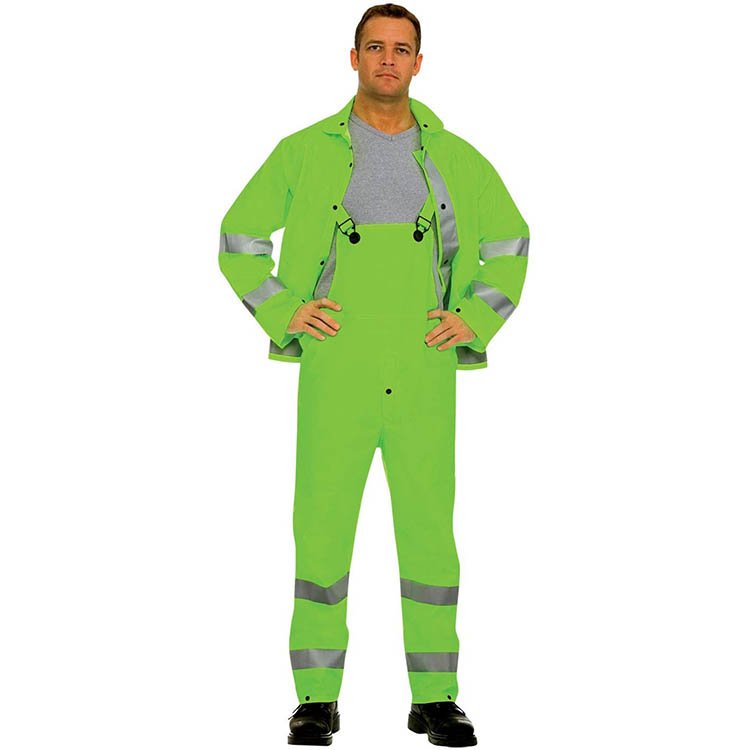
Sector-Specific Considerations
Different UK industries have additional requirements beyond base EN standards:
| Industry Sector | Additional Requirements |
|---|---|
| Railway (Network Rail) | Orange hi-vis color mandatory (not yellow); additional retroreflective striping on arms; flame-retardant treatment (RIS-3279-TOM compliant) |
| Highways (Highways England) | Class 3 mandatory for all personnel; reflective piping recommended for 360° visibility; high-visibility color retention after 50 washes |
| Construction Sites | Multi-pocket designs for tools/radios; reinforced shoulders/elbows; compatibility with harnesses and other PPE |
| Logistics/Warehousing | Lightweight construction (workers wearing for 8-12 hour shifts); easy on/off design; machine washable at lower temperatures |
Common Compliance Pitfalls: What Gets Importers Rejected at UK/EU Customs
Based on direct experience with UK customs authorities and client feedback, here are the top reasons hi-vis raincoat shipments get held up, rejected, or face post-import penalties:
❌ Pitfall #1: Incorrect or Missing Permanent Labeling
The Problem: EN standards require permanent labels (sewn-in, not printed on swing tags) displaying both EN ISO 20471 and EN 343 pictograms, class ratings, manufacturer details, care instructions, and CE marking.
The Solution: Work with your manufacturer to create multi-language permanent labels that meet UK/EU format requirements. The label must survive 50+ wash cycles without fading or detaching.
❌ Pitfall #2: Certification Documents Don’t Match Actual Product
The Problem: You receive test reports for “Sample A” but your production batch uses different fabric weight, different reflective tape supplier, or modified design. Customs can demand random sample testing—if it fails, entire shipment is rejected.
The Solution: Conduct pre-shipment inspections (PSI) that verify production units match certified samples. Any material substitution requires re-testing. Budget 4-6 weeks and €3,000-5,000 per style for proper certification.
❌ Pitfall #3: Wash Durability Failures
The Problem: Initial testing passes, but after 20-30 industrial washes (60°C with alkaline detergents), reflective tape cracks, fluorescent color fades below minimum luminance levels, or waterproof coating delaminates.
The Solution: Insist on full 50-cycle wash testing before production begins. Request retained samples from your manufacturer’s wash testing—they should show minimal degradation. This is where premium materials (glass-bead vs. PVC tape, bonded vs. coated fabrics) prove their worth.
❌ Pitfall #4: Incomplete Technical File (CE Documentation)
The Problem: UK/EU law requires a comprehensive Technical File covering risk assessment, test reports, declaration of conformity, and user instructions. Many manufacturers provide only test certificates without the complete dossier.
The Solution: Demand the complete Technical File before finalizing your order. A reputable manufacturer should provide this as standard—if they hesitate or claim “it’s extra,” that’s a massive red flag.
❌ Pitfall #5: Ignoring Brexit-Related Changes (UK vs. EU)
The Problem: Post-Brexit, UK now has UKCA marking requirements separate from CE marking. Products for UK market need UK-specific conformity assessment; products for EU need EU-specific assessment. Using the same certification for both markets can lead to compliance issues.
The Solution: Clarify your target market upfront. For dual UK+EU distribution, products currently need both CE and UKCA markings (though UK accepts CE marking temporarily). Work with a manufacturer experienced in post-Brexit compliance navigation.
Choosing a Compliant OEM/ODM Manufacturer: Red Flags and Green Lights
The difference between a smooth, profitable relationship and a costly compliance nightmare often comes down to selecting the right manufacturing partner. Here’s what to look for:
✅ Green Lights: Signs of a Reliable Partner
In-house or partnered testing laboratory certified to ISO/IEC 17025, capable of conducting both EN ISO 20471 and EN 343 tests without outsourcing
Portfolio of existing certified products with verifiable test reports showing successful wash cycle performance
Transparent material sourcing: Provides certificates of conformity for fabrics, reflective tapes, and trims from reputable suppliers (e.g., 3M, Orafol, Dominique for reflectives)
Established client base in UK/EU markets with referenceable customers who can verify quality and compliance track record
Quality management certification (ISO 9001 minimum) with documented procedures for production control and pre-shipment inspection
Proactive communication about regulatory changes, material substitutions, and potential compliance impacts before production begins
🚩 Red Flags: Warning Signs to Avoid
Prices significantly below market rate (if it’s 30-40% cheaper than other quotes, they’re cutting corners somewhere—usually materials or testing)
Vague or evasive answers about material specifications, testing procedures, or certification timelines
Reluctance to provide samples from actual production runs or previous client orders (not just “golden samples”)
Claims that “any logo/design can be EN certified” without conducting actual testing (some designs inherently cannot meet Class 3 requirements)
Offers to “share” certifications from other clients’ products (each unique design requires its own testing)
No clear policy on material substitutions or changes during production (reputable suppliers have strict change control procedures)
VizGlo Safety’s Advantage
At VizGlo Safety Technology, we’ve specialized in UK/EU compliant hi-vis rainwear for over 15 years. Our complete hi-vis raincoat collection features:
- Dual EN ISO 20471 Class 3 + EN 343 3:3 certification on all professional-grade styles
- Premium glass-bead reflective tapes (3M-equivalent) tested to 75+ industrial wash cycles
- Advanced microporous membranes delivering Class 4 breathability for UK’s humid conditions
- Complete Technical Files with CE/UKCA documentation ready for your market entry
- Sector-specific customization for railway, highways, construction, and logistics sectors
Frequently Asked Questions About UK/EU Hi-Vis Raincoat Regulations
Do I need separate certifications for UK and EU markets post-Brexit?
Currently (2025), UK still accepts CE marking during a transition period, but technically UKCA marking is the official UK conformity mark. For EU distribution, you need CE marking. Most manufacturers now dual-label products with both CE and UKCA markings to cover both markets. However, the conformity assessment procedures and technical files must meet both UK and EU regulatory requirements, which may involve working with both UK and EU-notified bodies depending on your distribution strategy.
How long does EN ISO 20471 and EN 343 certification typically take?
From sample submission to receiving full test reports, expect 4-6 weeks minimum. This includes initial photometric testing (for retroreflective and fluorescent materials), water penetration testing, breathability assessment, and the critical 50-cycle industrial wash test. If your design fails any parameter, add another 3-4 weeks for re-testing with modified materials. Rush testing is sometimes available for an additional fee but still requires at least 3 weeks due to the mandatory wash cycle duration.
What happens if customs randomly tests my shipment and it fails?
This is every importer’s nightmare scenario. If random sampling at UK/EU customs reveals non-compliance with stated certifications, the entire shipment can be refused entry, destroyed, or held until you arrange return shipping (at your cost). You’ll also face potential fines, blacklisting for future imports, and legal liability if the products were destined for end-users who might rely on the safety features. This is why pre-shipment inspection (PSI) by third-party agencies like SGS, Intertek, or Bureau Veritas is strongly recommended for first-time orders or new styles.
Can I add my company logo without affecting EN ISO 20471 certification?
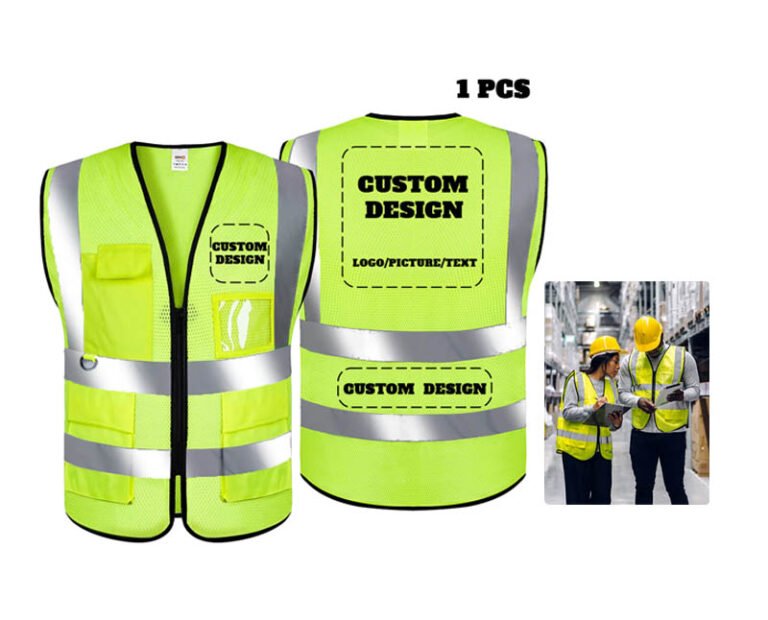
Yes, but with important limitations. Logos and branding can be added to non-critical areas (chest pockets, back shoulder area) as long as they don’t interrupt the required configuration of fluorescent background material and reflective bands. Large logos that cover significant portions of the fluorescent area can downgrade a Class 3 garment to Class 2. Additionally, the logo application method (embroidery, screen print, heat transfer) must not create raised areas that could catch on equipment or reduce the garment’s waterproofing. Always submit logo mockups to your testing laboratory before production to confirm compliance won’t be affected.
What’s the typical price difference between basic compliant and premium hi-vis raincoats?
For 1,000-unit orders at FOB China pricing: Basic EN 343 2:2 compliant raincoats (PVC-coated nylon, basic reflective tape) typically cost $12-18 per unit. Mid-tier EN 343 3:3 with decent breathability and glass-bead tapes runs $22-32. Premium EN 343 4:3 with microporous membranes, segmented reflective tapes, and sector-specific features (flame retardant, arc flash protection) costs $38-55. The 15-20% price premium for moving from basic to mid-tier compliance pays for itself by preventing returns, warranty claims, and reputation damage. For professional workwear distributors targeting UK’s construction, rail, and highway sectors, mid-tier minimum is non-negotiable.
How often do certifications need to be renewed?
EN ISO 20471 and EN 343 certifications don’t technically “expire” like permits, but they become invalid if you change any materials, construction methods, or design elements. Additionally, many major buyers (especially public sector procurement and large contractors) require certifications dated within the last 2-3 years as proof that testing was conducted on current materials (standards and material technologies evolve). Best practice: Re-certify every 3 years even if nothing has changed, and immediately upon any material substitution. Keep detailed records of batch testing for production runs to demonstrate ongoing quality control.
Ready to Source Compliant Hi-Vis Rainwear for UK/EU Markets?
Navigating UK and European hi-vis raincoat regulations doesn’t have to be overwhelming. With the right manufacturing partner who understands both the legal requirements and real-world performance demands, you can build a successful, compliant product line that stands up to British weather and passes customs inspections every time.
VizGlo Safety Technology brings 15+ years of UK/EU market expertise, complete certification support, and premium materials that survive 75+ wash cycles. Whether you need Class 3 hi-vis raincoats for highway work, flame-retardant options for railway crews, or breathable designs for warehouse logistics, we’ve got proven solutions ready for your brand.
Related Hi-Vis Clothing Resources
Hi-Vis Raincoats Collection →
Explore our complete range of EN-certified rainwear for UK and European markets
Hi-Vis Clothing Hub →
Complete guide to high-visibility workwear standards, styles, and applications
Reflective Materials →
Premium glass-bead and ceramic reflective tapes for maximum wash durability
Certifications & Compliance →
Our ISO 9001, BSCI, and EN testing credentials for peace of mind