How to Choose the Right Reflective Clothing Manufacturers? A Buyer’s Guide
Sourcing safety apparel is a high-stakes decision. Your choice impacts not just your budget, but worker safety and your company’s reputation. This guide will help you navigate the process like a pro.
Your Quick Answer
Choosing the right reflective clothing manufacturer involves a multi-step vetting process that goes far beyond comparing unit prices. The best approach is to prioritize partnership and safety assurance. Start by demanding and verifying current, full third-party test reports for key safety standards like EN ISO 20471 or ANSI/ISEA 107. Next, assess their manufacturing capabilities, including their expertise in both OEM and ODM production and their control over the supply chain, especially the quality and traceability of the reflective materials used. Scrutinize their quality control systems, looking for a multi-stage process (IQC, PQC, FQC) that covers everything from raw material inspection to final garment durability testing. Finally, evaluate their communication, expertise, and willingness to understand your specific market and safety requirements. A true partner acts as a consultant, not just a supplier, ensuring your products are compliant, durable, and truly protect the end-user.
From Supplier to Safety Partner: Avoiding the Price Trap
When sourcing Personal Protective Equipment (PPE), the initial quote is often the most misleading metric. A low price can blind buyers to hidden costs that surface long after the goods have been delivered—costs associated with product failures, non-compliance fines, failed tenders, reputational damage, and worst of all, accidents.
The search for a hi-vis clothing manufacturer isn’t about finding the cheapest needle in a haystack. It’s about qualifying a partner who will safeguard your brand and the people who wear it. This requires a shift in mindset: you are not just buying a product; you are investing in a safety-critical supply chain.
An Expert’s Insight: Beyond the Invoice
“Having navigated countless sourcing requests from around the globe, I’ve seen one consistent pattern: many buyers get fixated on the unit price. But for hi-vis clothing, the cheapest quote can be the most expensive mistake. The true cost isn’t on the invoice; it’s in the liability of a non-compliant garment, the reputational damage from a product that fades after three washes, and the ultimate risk to a worker’s life.
My core advice is to shift your focus from finding a ‘supplier’ to vetting a ‘safety partner’. Don’t just ask, ‘Are you certified?’ Ask, ‘Can I see your current, full test reports for EN ISO 20471 or ANSI/ISEA 107 from a third-party lab like SATRA or UL?’ A top-tier manufacturer won’t just send you a price list; they will ask about your end market, the work environment, and advise you on the right protection class. They are your first line of defense in quality control and compliance, a role that goes far beyond just stitching fabric together.”

The 5-Point Vetting Checklist for Manufacturers
Use this framework to systematically evaluate potential manufacturing partners and move beyond surface-level promises to concrete proof of capability.
1. Certification & Compliance: Your First Filter
This is the absolute baseline. A garment that doesn’t meet the legal standards of its target market is not just useless, it’s a liability. A professional manufacturer will have their certifications ready and will be transparent about them.
- Key Standards: Familiarize yourself with the primary standards for your region, mainly ANSI/ISEA 107 in North America and EN ISO 20471 in Europe.
- The Golden Question: As mentioned in the insight, don’t stop at a “yes.” Request the complete, unedited, and current test reports from an accredited third-party lab. Check the report date and the specific materials tested.
- Social Compliance: For brands concerned with ethical sourcing, ask for social audit reports like BSCI or Sedex. This proves the manufacturer adheres to fair labor practices.

2. Manufacturing Capability & Supply Chain Control
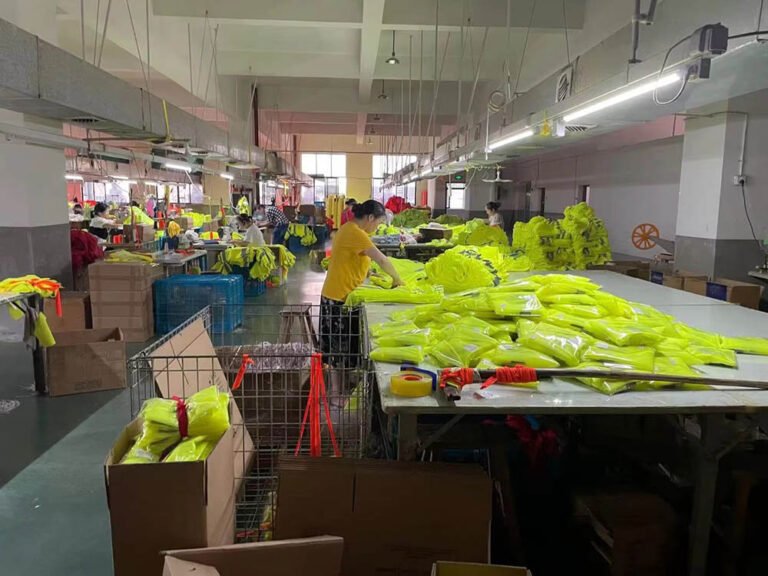
A factory’s capabilities determine its flexibility and reliability. You need a partner who can grow with you and control quality from start to finish.
- OEM vs. ODM: Does the manufacturer offer both OEM (your design) and ODM (their design) services? This flexibility is crucial whether you’re a startup brand or an established distributor.
- Vertical Integration: A huge green flag is a manufacturer who also produces their own core components, especially reflective materials. This gives them unparalleled control over quality and traceability.
- Capacity and Scale: Inquire about their monthly production capacity and lead times. Can they handle your volume, and are they transparent about their production schedule?
3. Unpacking the Quality Control Process
A simple “we have QC” is not enough. You need to understand their system. A professional manufacturer will proudly walk you through their process.
- Multi-stage Inspections: Look for a system that includes IQC (Incoming Quality Control for fabrics and tapes), PQC (In-Process Quality Control on the production line), and FQC (Final Quality Control) before shipment.
- Component Traceability: Ask how they track their reflective tapes and fabrics back to their certified batch. This is non-negotiable for compliance.
- In-House Testing: Do they have a lab to perform basic tests like washing, colorfastness, and reflectivity checks? This shows a commitment to proactive quality assurance.
Partner with a Manufacturer That Protects Your Brand & Your People
At VizGlo Safety, we are more than just a manufacturer; we are your OEM/ODM partner. With over 15 years of experience, a vertically integrated supply chain, and an unwavering commitment to quality and compliance, we provide the peace of mind you need to grow your brand.
Get a Custom Sourcing ConsultationFrequently Asked Questions
What’s the difference between an OEM and an ODM manufacturer?
OEM (Original Equipment Manufacturer) means the factory produces garments based on your specific designs and technical specifications. You provide the blueprint. ODM (Original Design Manufacturer) means the factory offers their own existing product designs which you can choose from and brand as your own, often with some minor modifications. A good manufacturer should be proficient in both, offering flexibility for your business model.
How can I verify a manufacturer’s EN ISO 20471 or ANSI/ISEA 107 certificate?
Never accept just the certificate itself, as it can be outdated or forged. Ask for the full, multi-page test report from the issuing third-party laboratory (e.g., SATRA, UL, BTTG). This report contains a unique number you can often verify with the lab. Check the dates to ensure it’s current and that it applies to the specific fabric and tape combination you intend to use.
What is a reasonable MOQ for custom hi-vis clothing?
MOQ (Minimum Order Quantity) varies greatly depending on the manufacturer and the complexity of the garment. For standard items like vests or t-shirts with simple logo printing, it might be 500-1000 pieces. For highly customized jackets with special fabrics or features, it could be higher. True manufacturing partners are often flexible and willing to discuss smaller trial orders to build a long-term relationship.
Why is the traceability of reflective tape so important?
The reflective tape is the most critical safety component for nighttime visibility. Its performance (retro-reflectivity) must meet strict standards. Traceability ensures the manufacturer can prove the tape’s origin and that it has been tested and certified. Without it, you risk using sub-standard tape that fails after a few washes, rendering the entire garment non-compliant and unsafe.