Are Black or Orange Hi Vis Hoodies ANSI Compliant? A Complete Buyer’s Guide
Understanding ANSI/ISEA 107 compliance for hi-vis hoodies: Why color matters—and why it doesn’t
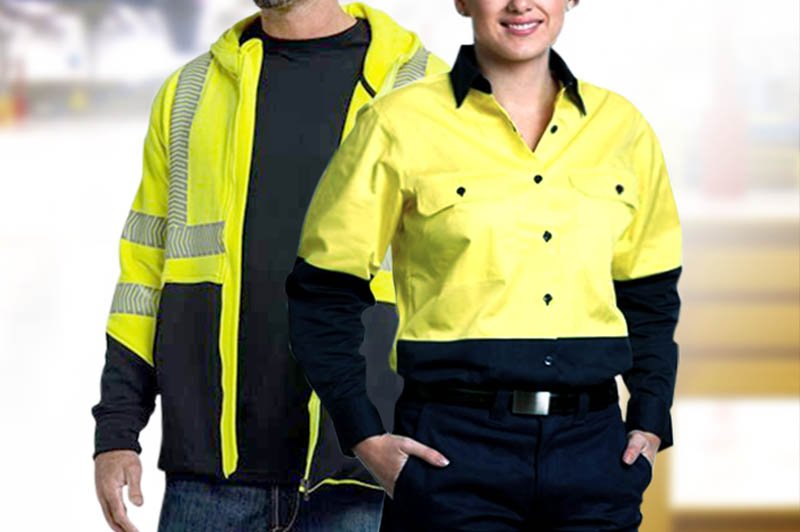
The short answer: An orange hi-vis hoodie can absolutely be ANSI/ISEA 107 compliant—often meeting Class 2 or Class 3 standards—because fluorescent orange is an approved background color under the standard. However, a predominantly black hoodie cannot be compliant for daytime visibility on its own, as black fabric provides zero fluorescence. The key to understanding compliance isn’t just about choosing “black or orange,” but rather about meeting the standard’s specific requirements for fluorescent background material area and retroreflective tape placement. Many modern “black-bottom” designs strategically use black fabric in non-critical areas while ensuring the upper torso meets all fluorescent material requirements, allowing workers to enjoy a practical, dirt-hiding design without sacrificing safety compliance.
Understanding ANSI/ISEA 107: Beyond Color Choice
Before we can answer whether a black or orange hoodie is compliant, we need to understand what ANSI/ISEA 107 actually requires. This American National Standard for High-Visibility Safety Apparel isn’t simply about picking a “safety color”—it’s a comprehensive system based on measurable quantities of specific materials.
The Three Core Requirements:
- Fluorescent Background Material: A minimum area of fluorescent fabric (yellow-green, orange-red, or red) that provides conspicuity in daylight. This is measured in square inches or square meters and varies by class.
- Retroreflective Material: Tape or trim that reflects light back to its source (like vehicle headlights) for nighttime visibility, also with minimum area requirements.
- Material Placement: Specific configurations (horizontal bands, vertical straps) that ensure 360-degree visibility from all angles.
The standard defines three main classes based on visibility needs and work environment risks:
- Class 1: Lowest risk, typically for workers in controlled areas away from traffic (e.g., warehouse workers, parking attendants).
- Class 2: Medium risk, for workers near roadways or equipment moving under 25 mph (e.g., utility workers, crossing guards).
- Class 3: Highest risk, for workers exposed to high-speed traffic or complex backgrounds requiring maximum visibility (e.g., highway construction, emergency responders).
Understanding this structure is crucial: the question isn’t “What color?” but rather “Does this garment provide the minimum required area of fluorescent and retroreflective material in the correct configuration?”
Orange Hi-Vis Hoodies: The Straightforward Path to Compliance
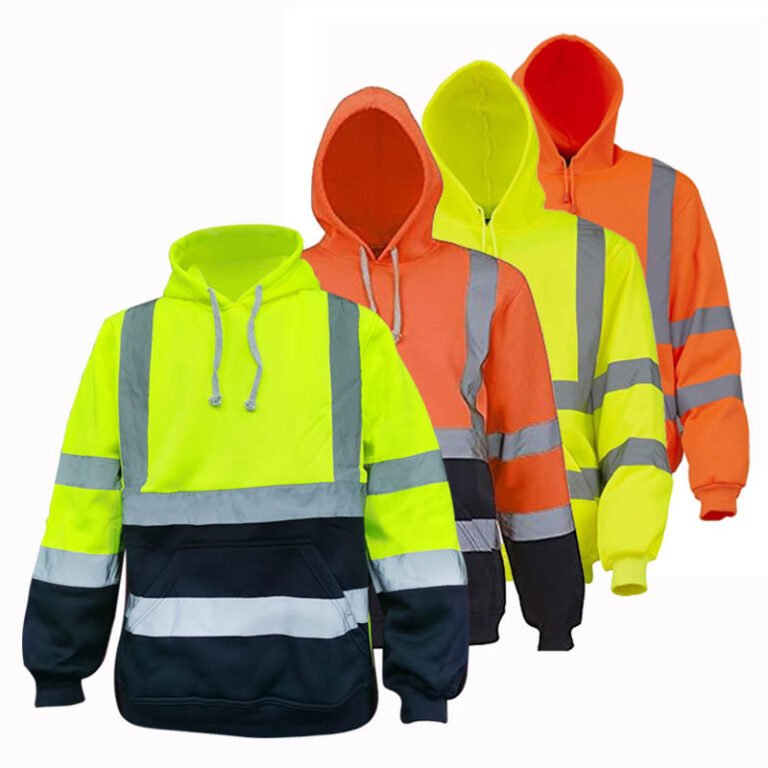
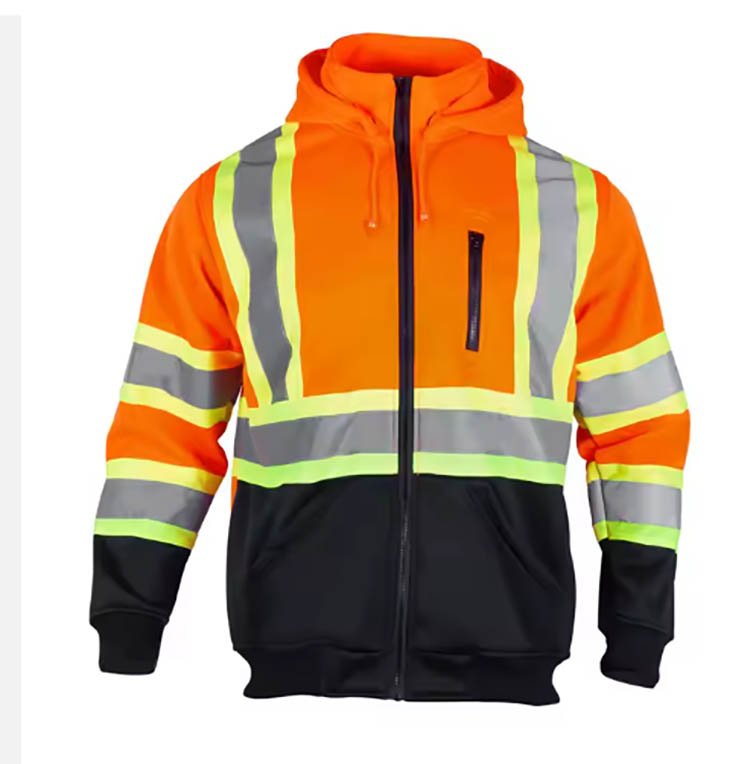
An orange (officially “fluorescent orange-red” per ANSI) hi-vis hoodie is one of the most straightforward options for achieving compliance. Here’s why:
✓ Approved Background Color
Fluorescent orange-red is one of the three colors explicitly approved by ANSI/ISEA 107 for background material. It provides excellent daytime contrast against most environments.
✓ Full-Body Coverage Potential
When the entire hoodie body is fluorescent orange, it’s easy to meet or exceed the minimum background material area for Class 2 or even Class 3 (when combined with sleeves).
✓ Industry Standard Recognition
Orange is universally recognized in industries like construction and road work, immediately signaling “safety apparel” to drivers and equipment operators.
✓ Versatile Performance
Modern fluorescent orange fabrics maintain their brightness even after repeated washing, ensuring long-term compliance.
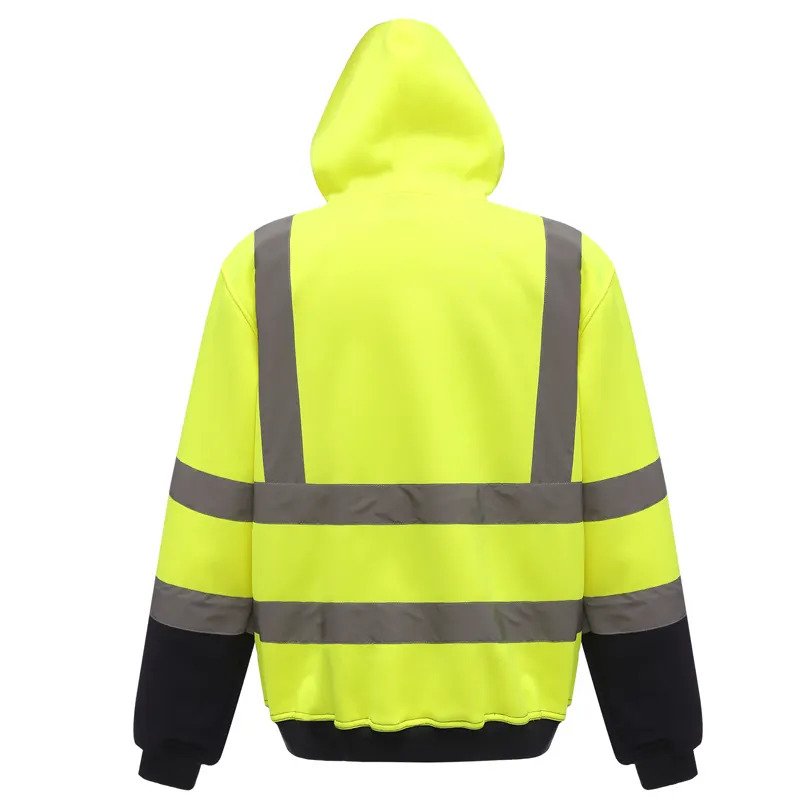
“For procurement officers looking for a ‘no-questions-asked’ compliant solution, a full fluorescent orange hoodie with properly placed 2-inch retroreflective tape is your safest bet. It visually screams compliance and meets the standard with room to spare.”
When purchasing orange hoodies for your team, ensure they come with a manufacturer’s certification stating the ANSI class rating. At VizGlo Safety’s hoodie collection, every garment is pre-certified and tagged with its compliance class, eliminating any guesswork for buyers.
The Black Hoodie Reality: Why Pure Black Can’t Comply
Let’s be direct: a predominantly black hoodie cannot be ANSI/ISEA 107 compliant for daytime use. This isn’t a regulatory quirk—it’s rooted in the fundamental physics of visibility.
Why Black Fabric Fails the Standard:
- ✗ No Fluorescence: Black fabric absorbs light rather than re-emitting it. The ANSI standard specifically requires fluorescent background material, which black cannot provide.
- ✗ Poor Daytime Contrast: In daylight conditions (when most workplace accidents occur), black blends into shadows, asphalt, and dark backgrounds—the opposite of what safety apparel should do.
- ✗ Cannot Meet Minimum Area: Even if you add retroreflective tape to a black hoodie (which helps at night), you’ve contributed zero square inches toward the required fluorescent background material area.
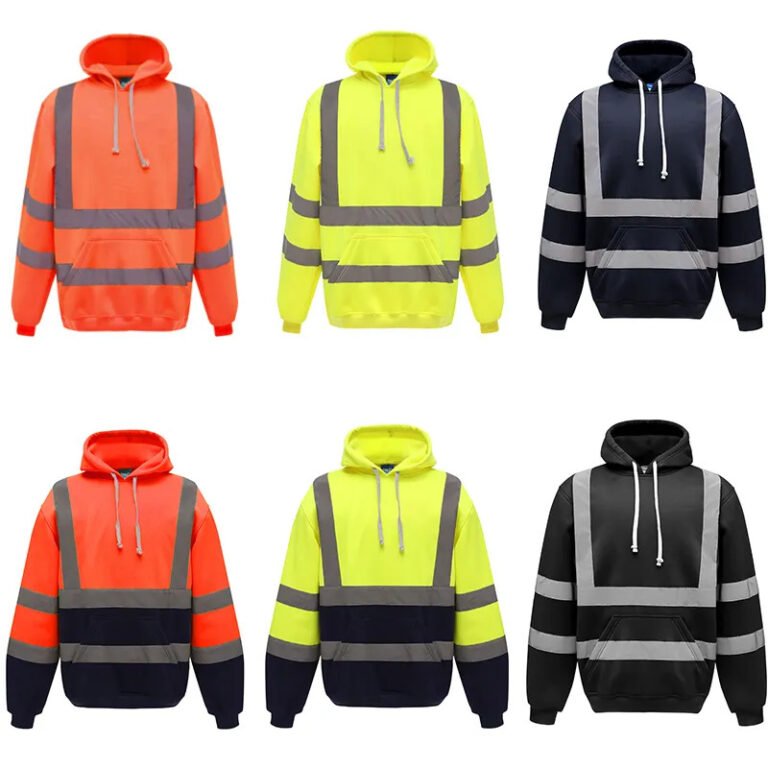
This is a crucial point that many buyers miss: retroreflective tape alone is not enough. A black hoodie covered in silver reflective stripes may look “safety-ish” and will indeed be visible in headlight beams at night, but it fundamentally fails the daytime visibility requirement that forms the backbone of ANSI compliance.
⚠️ Buyer Beware: Marketing vs. Reality
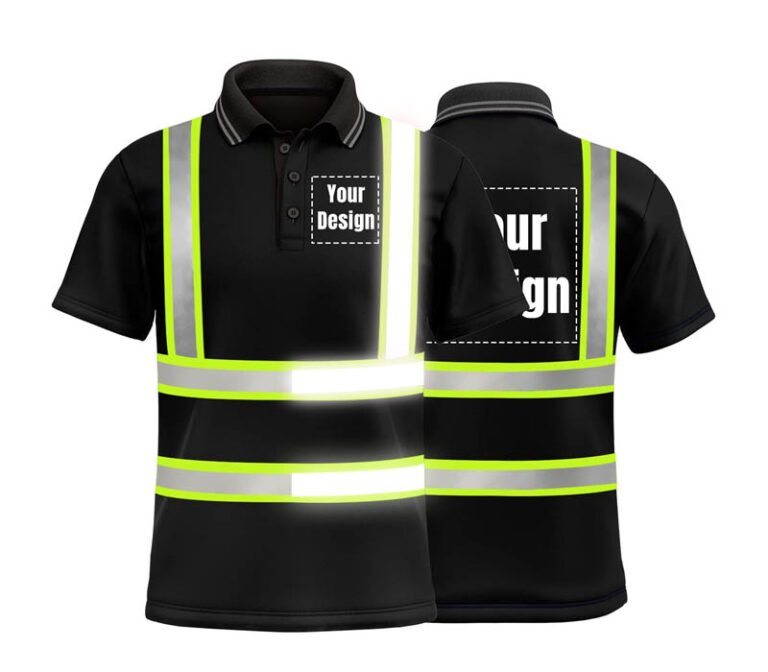
Some manufacturers market “black safety hoodies” or “tactical hi-vis gear” that feature heavy reflective trim on black fabric. While these may have niche uses (nighttime security, off-duty wear), they should never be purchased as ANSI-compliant safety apparel for daytime work environments.
Always ask for the ANSI certification tag or test report. If it’s not there, it’s not compliant—regardless of how much reflective material is sewn onto black fabric.
“Black-Bottom” Designs: The Best of Both Worlds?
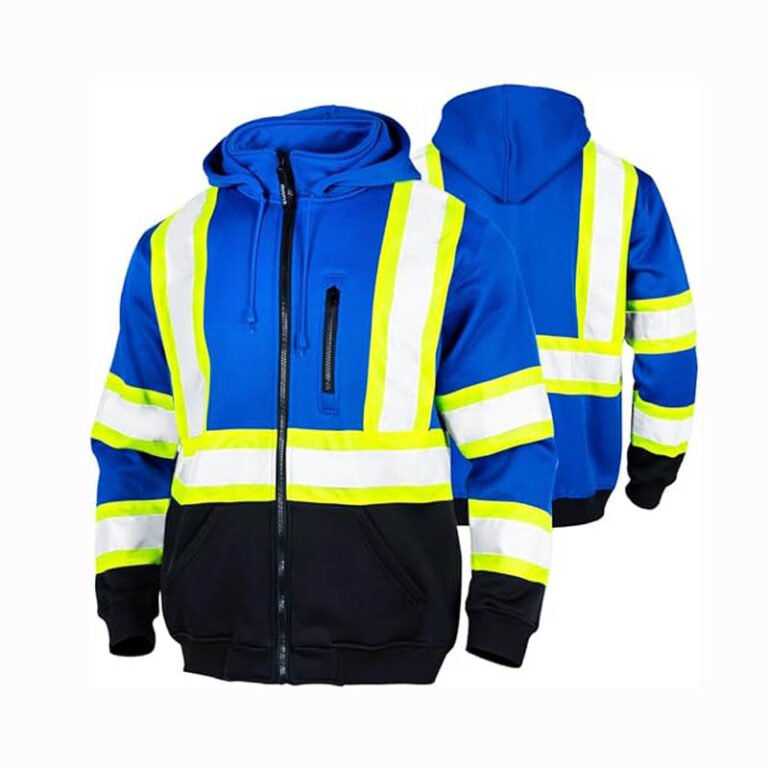
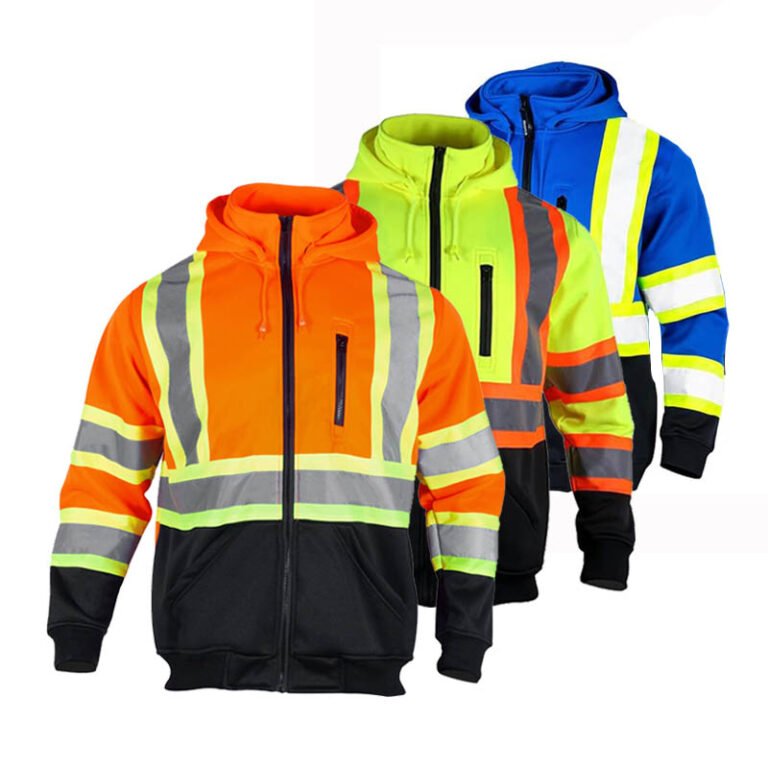
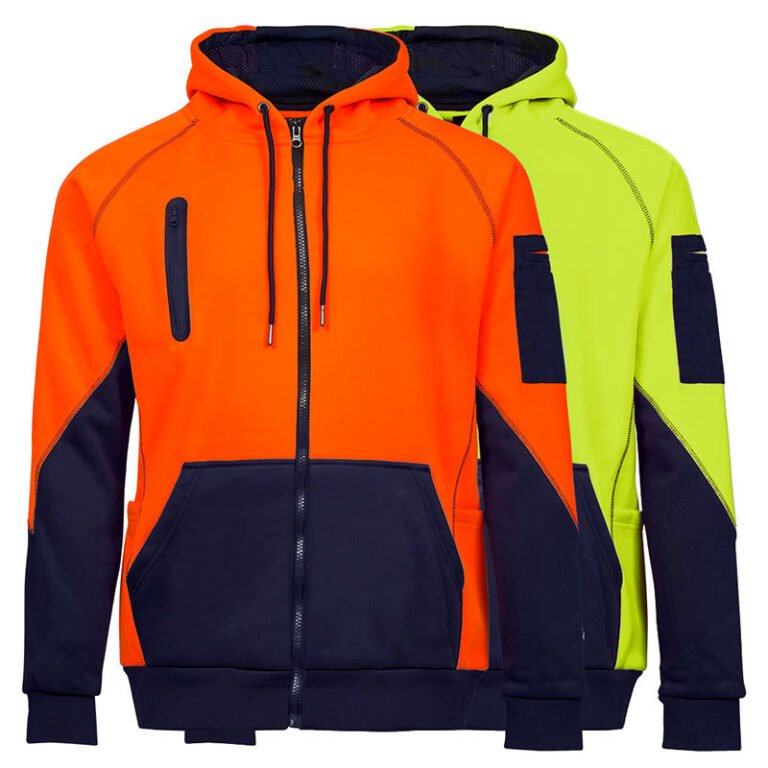
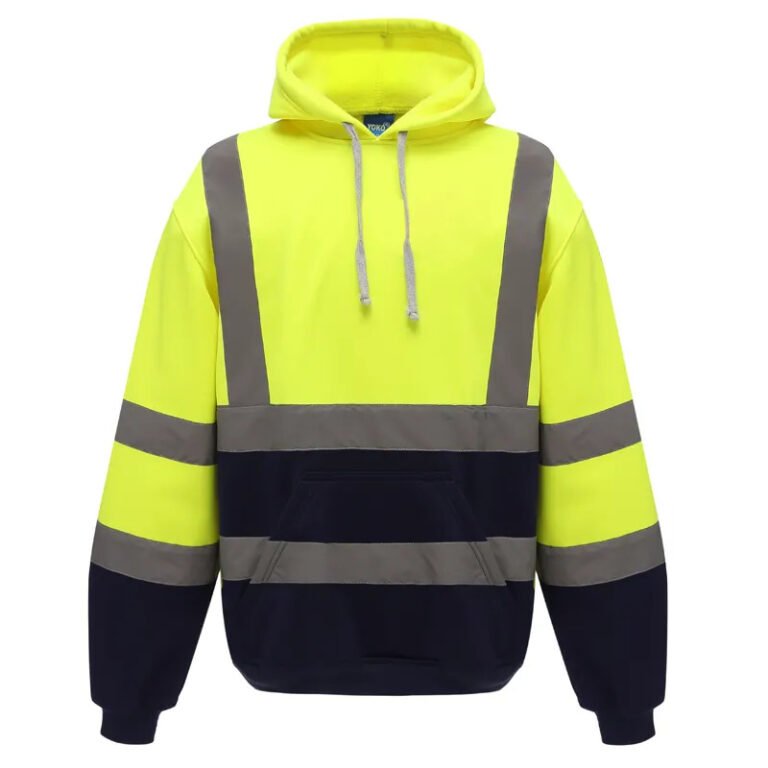
Now, here’s where things get interesting—and where smart manufacturers have found a practical compromise: the “black-bottom” or “two-tone” hi-vis hoodie.
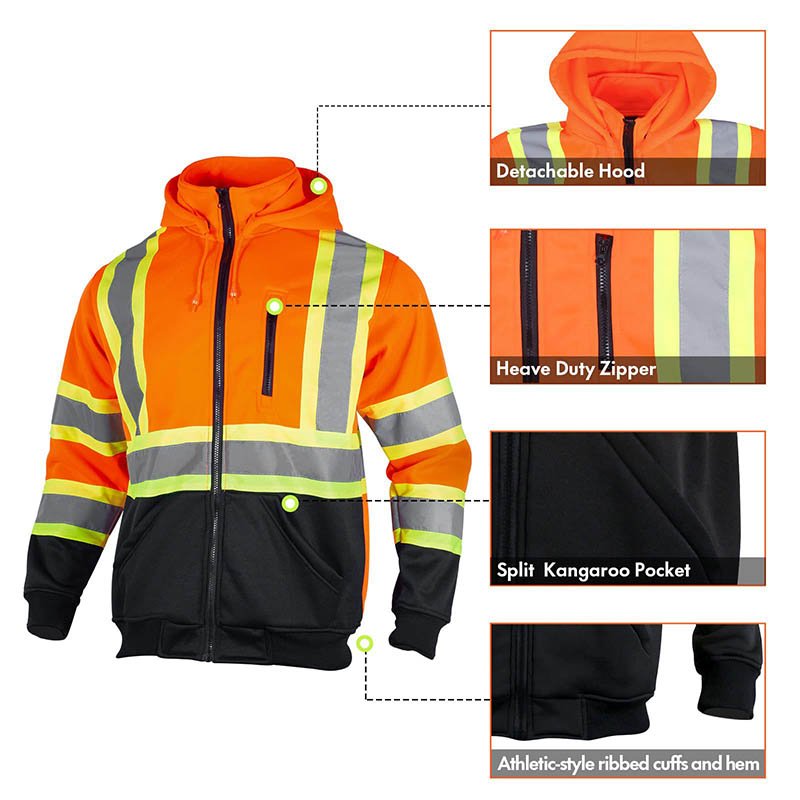
How Black-Bottom Designs Achieve Compliance
These designs strategically place black fabric in areas that don’t count toward ANSI’s minimum fluorescent area requirements, while ensuring the critical upper torso and sleeves remain fluorescent. Here’s the breakdown:
| Garment Area | Typical Color | ANSI Consideration |
|---|---|---|
| Upper chest & back | Fluorescent Orange/Lime | ✓ Counts toward background area |
| Sleeves (full or partial) | Fluorescent Orange/Lime | ✓ Counts toward background area (crucial for Class 3) |
| Lower torso (below waist) | Black | ✗ Does not count, but also not required for core visibility |
| Pockets, side panels | Black (optional) | ✗ Accent areas; don’t interfere with overall compliance |
✓ Practical Benefits of Black-Bottom Designs:
- Dirt & Stain Concealment: Black fabric in high-wear/high-soil areas (waist, lower torso) hides oil, grease, and mud far better than fluorescent colors, keeping workers looking professional longer.
- Extended Garment Life: Less visible wear means workers are more likely to keep wearing the hoodie rather than requesting replacements due to cosmetic issues.
- Style Appeal: Let’s be honest—many workers prefer the modern, athletic look of two-tone designs over full fluorescent garments. Higher satisfaction = better compliance wear rates.
- Cost Efficiency: Using less fluorescent fabric (which is more expensive) in non-critical areas can reduce material costs without compromising safety.
However, there’s a critical caveat: not all black-bottom hoodies are created equal. A poorly designed garment might skimp too much on fluorescent area and fail to meet even Class 2 requirements. This is why working with a reputable manufacturer who provides third-party test reports is essential.
“At VizGlo Safety, we engineer our black-bottom hoodies with precision. The black placement is calculated to maximize practicality while ensuring our garments meet or exceed Class 2 (and Class 3 for full-sleeve versions) through certified lab testing. We provide the documentation to prove it.”
How to Select the Right Compliant Hoodie for Your Team
Armed with an understanding of how color and design impact compliance, you can now make an informed purchasing decision. Here’s a step-by-step selection process:
Step 1: Identify Your Required ANSI Class
Determine the class based on your workers’ environment. Consult this comprehensive guide for safety managers if you’re uncertain. Highway workers near high-speed traffic? Class 3. Warehouse logistics? Class 1 or 2 may suffice.
Step 2: Choose Your Base Color Strategy
Full Fluorescent (Orange or Lime): Safest bet for maximum compliance with no questions asked. Ideal if aesthetics are secondary to safety assurance.
Black-Bottom Two-Tone: Best for teams who want practicality and style while maintaining compliance. Verify the manufacturer provides ANSI certification for the specific design.
Step 3: Evaluate Material Quality
Not all fluorescent fabrics are equal. Look for hoodies made with high-GSM (grams per square meter) fleece for warmth and durability. Inquire about colorfastness—cheap fluorescent dyes fade quickly, potentially dropping the garment below compliance thresholds.
Step 4: Verify Retroreflective Tape Specifications
Check that the tape meets ANSI requirements for width (typically 2 inches for Class 2/3) and placement (360-degree visibility). Ask about wash durability—how many cycles until reflectivity degrades?
Step 5: Request Certification Documentation
Never rely on marketing claims alone. A legitimate compliant hoodie will have:
- A sewn-in label stating the ANSI/ISEA 107 class
- Third-party test reports from accredited labs (e.g., SGS, UL)
- Manufacturer’s certificate of conformity
Bonus Considerations for Bulk Orders
If you’re outfitting a large team, explore customization options that don’t compromise compliance:
- • Company logo placement (screen printing vs. embroidery—ensure it doesn’t cover required fluorescent or reflective areas)
- • Bulk pricing structures for large orders
- • Size range availability (including extended sizes for big and tall workers)
- • Lead times for custom production runs
Expert Insight from the Field
As someone who speaks with safety managers and procurement officers every day, this is one of the most frequent—and critical—questions I field. The confusion stems from a simple misunderstanding: buyers often focus on the color or style—like a trendy black hoodie—instead of the actual ANSI/ISEA 107 standard itself. The standard isn’t just about a single color; it’s a system requiring a minimum amount of fluorescent background material and retroreflective tape.
So, let’s cut to the chase. An orange hi-vis hoodie can absolutely be fully ANSI compliant, often meeting Class 2 or Class 3, because fluorescent orange is an approved background color. A predominantly black hoodie, however, cannot be compliant for daytime visibility on its own, as black provides no fluorescence. You’ll often see them as “black bottom” designs, where the black portion is strategically placed to hide dirt, while the upper torso meets the fluorescent material requirements.
My advice to any buyer is to shift their mindset. The first question shouldn’t be “Black or orange?” but rather, “What ANSI Class does my team require for their specific work environment?” Once you know if you need Class 2, Class 3, or Type O, Class 1, you can then find a compliant garment—be it orange, lime, or a combination with black—that meets your non-negotiable safety needs first, and your team’s style preferences second.
— Insights from VizGlo Safety’s Customer Service Team, based on 15+ years of working with global safety professionals
Ready to Outfit Your Team with Certified Hi-Vis Hoodies?
Whether you need full fluorescent orange, practical black-bottom designs, or custom team branding, VizGlo Safety provides ANSI-certified hoodies with complete documentation. From small pilot orders to large bulk shipments, we’re your trusted manufacturing partner.
Get a Free Quote & Certification InfoOr explore our complete range: View All Hi-Vis Hoodies →
Frequently Asked Questions
Can I add reflective tape to a black hoodie to make it ANSI compliant?
No. While adding retroreflective tape improves nighttime visibility, it does not address the ANSI requirement for fluorescent background material. A black base fabric contributes zero square inches toward the required fluorescent area. The garment would fail compliance for daytime use, when most workplace incidents occur. You must have sufficient fluorescent orange, lime, or red fabric as the primary background.
What’s the difference between “black-bottom” and “black-out” hi-vis hoodies?
“Black-bottom” refers to compliant designs where black fabric is strategically placed in lower, non-critical areas while the upper torso and sleeves remain fluorescent—these can be ANSI certified. “Black-out” typically refers to fashion-oriented or tactical garments that are predominantly black with decorative reflective accents—these are NOT ANSI compliant and should never be used for regulated safety work. Always verify certification rather than relying on product names.
Is fluorescent orange or lime better for ANSI compliance?
Both fluorescent orange-red and fluorescent yellow-green are equally acceptable under ANSI/ISEA 107—neither is “better” from a compliance standpoint. The choice often comes down to industry norms (construction tends toward orange, roadway maintenance toward lime) or environmental contrast (lime stands out better against concrete and urban settings, orange against natural terrain). Some buyers choose based on company branding or worker preference. As long as the fabric meets the fluorescence specifications in the standard, either color works.
How do I verify a hoodie’s ANSI certification before purchasing?
Request three things from the manufacturer: (1) A photo of the garment’s sewn-in certification label showing ANSI/ISEA 107 and the class rating, (2) A third-party test report from an accredited laboratory (like SGS, Intertek, or UL) confirming compliance, and (3) A certificate of conformity from the manufacturer. Reputable suppliers like VizGlo Safety provide all of this documentation upfront. If a vendor hesitates or cannot produce these documents, do not purchase—regardless of price.
Can a black-bottom hoodie meet Class 3 requirements?
Yes, but it requires careful design. Class 3 demands significantly more fluorescent background material area (typically 1240 sq. in. or 0.8 sq. m) and full sleeves of fluorescent fabric. A black-bottom design can achieve this if the black is limited to the lower torso/waist area while the chest, back, and full sleeves are fluorescent with proper retroreflective tape placement. However, many black-bottom hoodies only meet Class 2. Heavy-duty winter hoodies with full fluorescent sleeves are more likely to hit Class 3 even with black accents.
Will washing affect my hoodie’s ANSI compliance over time?
Yes, repeated washing can degrade both fluorescent fabric and retroreflective tape over time. High-quality hoodies are tested to maintain compliance for a minimum number of wash cycles (often 25-50 home washes or 5-10 industrial washes). However, factors like detergent type, water temperature, and drying method impact longevity. Establish a garment replacement schedule and train workers to inspect their hoodies regularly. If the fluorescent color appears faded or the reflective tape is cracked/peeling, the garment should be retired. Read our guide on maintaining hi-vis garment reflectivity for best practices.
Related Articles You May Find Helpful
Crewneck vs. Hoodie: Which Hi-Vis Style for Your Team?
Compare comfort, protection, and compliance factors.
The Science Behind Hi-Vis: How Fluorescence Works
Understand the physics that makes safety apparel effective.
Best Hi-Vis Hoodies for Construction Workers
Industry-specific recommendations and features to look for.
Why Teams Are Switching to Custom Hi-Vis Hoodies
The benefits of branded, customized safety apparel programs.