Waterproof vs. Water-Resistant Hi-Vis Jackets: Understanding Breathability & EN 343 Ratings
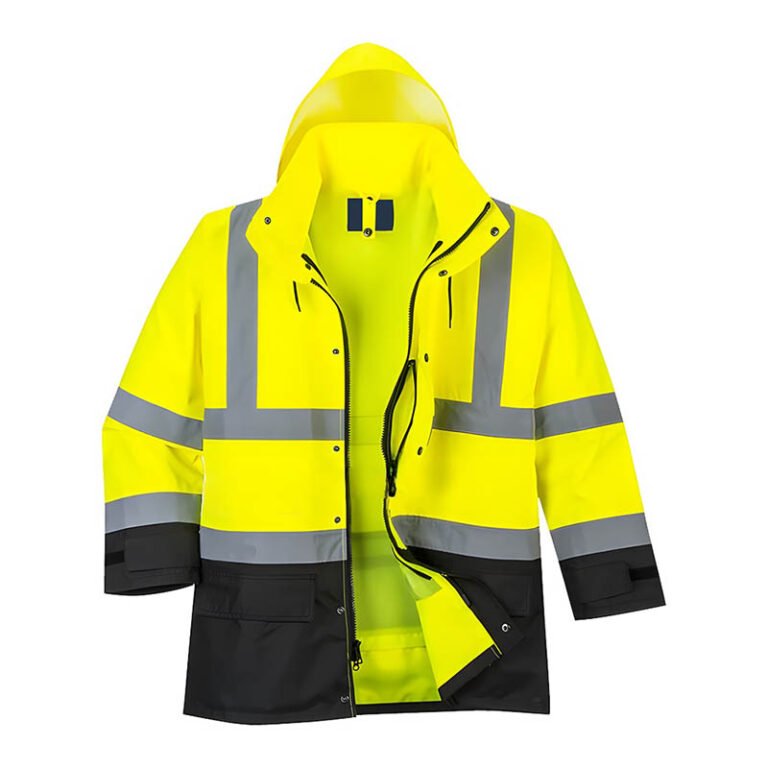
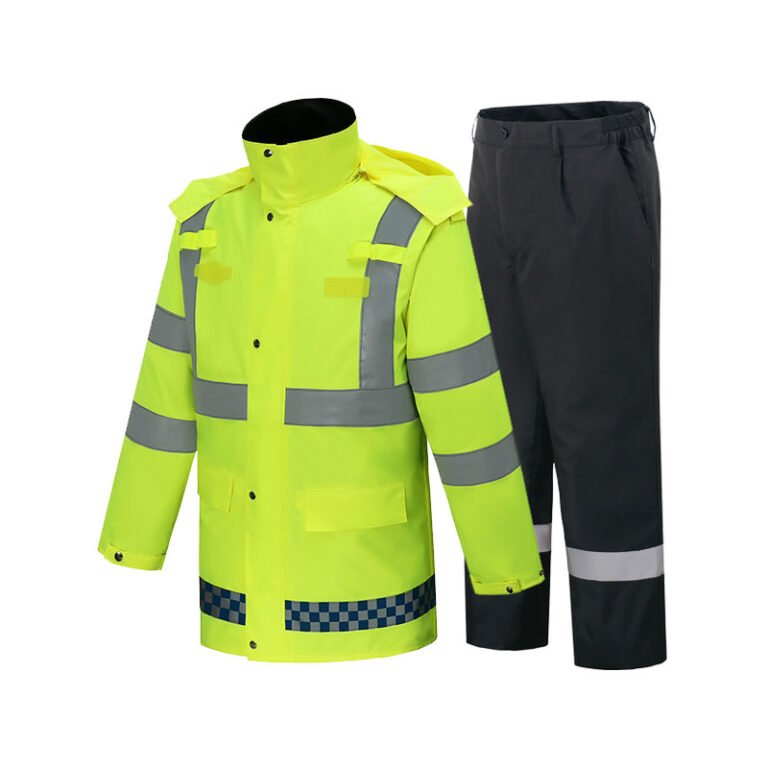
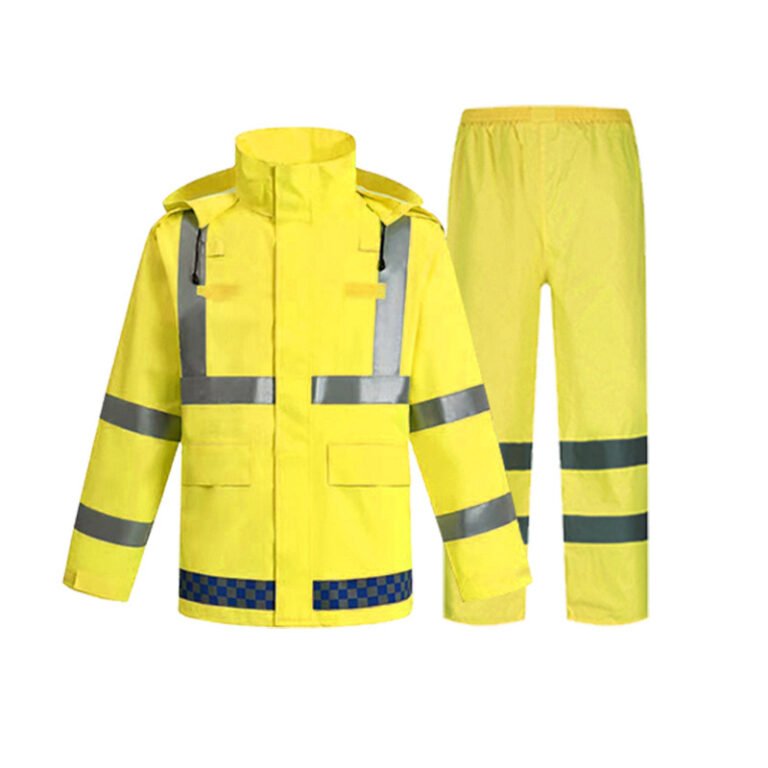
The key difference: Waterproof hi-vis jackets provide complete protection against water penetration (ideal for sustained rain exposure), while water-resistant jackets repel light moisture but will eventually allow water through. However, the most critical factor for active workers isn’t just water protection—it’s breathability. A jacket rated EN 343 Class 3,3 or higher ensures both superior waterproofing and vapor permeability, preventing dangerous moisture buildup from sweat. For workers in wet climates performing moderate to high activity, prioritize jackets with EN 343 Class 3,3 or 4,4 ratings to maintain both dryness and thermal comfort, reducing fatigue and safety risks.
Understanding the Basics: Waterproof vs. Water-Resistant
When selecting high-visibility jackets for your workforce, the terms “waterproof” and “water-resistant” are often used interchangeably—but they represent fundamentally different levels of protection. Understanding this distinction is the first step toward making an informed purchasing decision that truly protects your team.
Water-Resistant Jackets
Water-resistant hi-vis jackets are treated with a Durable Water Repellent (DWR) coating that causes water to bead up and roll off the fabric surface. Think of it as an umbrella effect—light rain and moisture are deflected, but under sustained pressure or prolonged exposure, water will eventually penetrate the fabric.
- Best for: Light drizzle, brief rain showers, misty conditions
- Typical rating: EN 343 Class 1 or 2 water penetration resistance
- Construction: Treated fabric without sealed seams or membrane
- Advantage: More breathable, lighter weight, often lower cost
- Limitation: Will saturate during heavy or prolonged rain
Waterproof Jackets
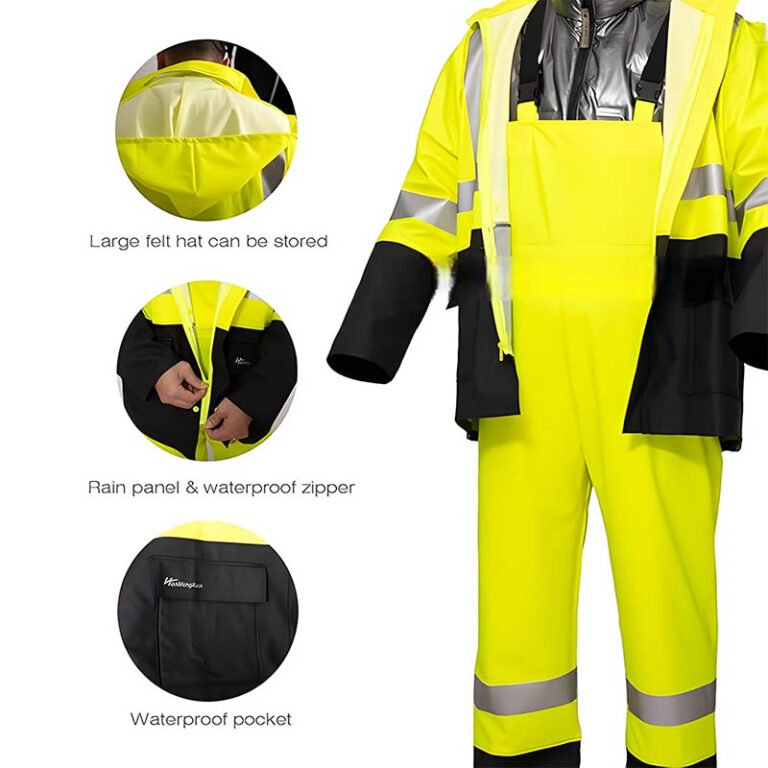
Waterproof hi-vis jackets feature a specialized membrane or laminated coating that creates an impermeable barrier to liquid water while still allowing water vapor (sweat) to escape. All seams are typically taped or welded to prevent any ingress points.
- Best for: Heavy rain, prolonged wet conditions, standing water exposure
- Typical rating: EN 343 Class 3 or 4 water penetration resistance
- Construction: Waterproof membrane + sealed seams
- Advantage: Complete protection against rain penetration
- Consideration: Must be paired with adequate breathability to prevent internal moisture buildup
The Breathability Factor: Why It Matters More Than You Think
Here’s the uncomfortable truth that many procurement managers discover too late: buying a jacket that keeps rain out is only half the battle. If that jacket traps moisture inside from your workers’ perspiration, they’ll end up just as wet—and far more uncomfortable—than if they’d been exposed to the rain itself.
“A cheap, non-breathable waterproof jacket is like wearing a plastic bag. Workers get soaked from the inside out, leading to discomfort, fatigue, and the dangerous practice of removing PPE in hazardous conditions.”
When workers are active—walking job sites, operating equipment, performing manual tasks—their bodies generate heat and moisture. A quality hi-vis work jacket must allow this moisture vapor to escape while still blocking external rain. This is measured by the jacket’s Resistance to Water Vapor (RET) value or breathability class.
The Hidden Cost of Poor Breathability
- ⚠️ Thermal stress: Trapped moisture prevents natural evaporative cooling, increasing heat stress risk
- ⚠️ Hypothermia risk: Wet skin against cold fabric drastically accelerates heat loss
- ⚠️ Reduced visibility: Uncomfortable workers remove or unzip safety gear, compromising high-visibility protection
- ⚠️ Productivity loss: Discomfort leads to frequent breaks and reduced work efficiency
- ⚠️ Shorter garment life: Internal condensation can degrade adhesives and coatings over time
EN 343 Ratings Explained: Decoding the Numbers
The EN 343 standard is your roadmap to selecting protective clothing for rain and wet weather. It’s the European standard that classifies garments based on two critical performance characteristics, expressed as two numbers (e.g., Class 3,3 or Class 4,4).
| Rating Component | What It Measures | Classes Available |
|---|---|---|
| First Number | Water Penetration Resistance (Waterproofness) | Class 1, 2, 3, or 4 (4 = highest) |
| Second Number | Water Vapor Resistance (Breathability) | Class 1, 2, or 3 (3 = most breathable) |
First Number: Water Penetration Resistance (Waterproofness)
WP ≥ 8,000 Pa
Basic water resistance. Suitable only for very light rain or brief exposure.
WP ≥ 8,000 Pa
Moderate protection. Handles light to moderate rain for limited duration.
WP ≥ 15,000 Pa
High waterproofing. Excellent for sustained heavy rain and harsh conditions.
WP ≥ 20,000 Pa
Premium waterproofing. Maximum protection for extreme weather and prolonged exposure.
Second Number: Breathability (Water Vapor Resistance – RET)
The breathability rating indicates how well moisture vapor from perspiration can escape through the fabric. Lower RET values = better breathability.
RET > 40 m²Pa/W
Low breathability. Can feel clammy during moderate activity. Only suitable for sedentary work in wet conditions.
20 < RET ≤ 40 m²Pa/W
Moderate breathability. Acceptable for light to moderate activity levels in most conditions.
RET ≤ 20 m²Pa/W
High breathability. Ideal for active workers. Allows efficient moisture vapor escape, maintaining comfort during sustained physical activity.
💡 Pro Tip: Understanding the Rating Combinations
- EN 343 Class 3,3: Excellent balance for most professional applications—high waterproofing with high breathability
- EN 343 Class 4,3: Premium option for extreme conditions with maximum breathability
- EN 343 Class 3,1 or 4,1: Waterproof but poorly breathable—avoid for active workers despite the high first number
Choosing the Right Jacket for Your Environment
The “best” hi-vis jacket isn’t a one-size-fits-all proposition. It depends on your specific work environment, climate, activity level, and duration of exposure. Our experience working with global procurement managers has revealed clear patterns in successful specifications.
🌧️ Heavy Rain / Prolonged Wet Exposure
Recommended: EN 343 Class 3,3 or 4,3
Industries: Road construction, utilities maintenance, railway work, outdoor emergency services
Workers face sustained heavy rain during active shifts. Prioritize high waterproofing (Class 3 or 4) paired with excellent breathability (Class 3) to prevent both external soaking and internal condensation. Look for fully taped seams, storm flaps, and adjustable cuffs.
🌦️ Intermittent Rain / Variable Conditions
Recommended: EN 343 Class 2,2 or 3,2
Industries: Logistics, warehousing, delivery services, airport ground operations
Workers move between sheltered and exposed areas or face unpredictable showers. A moderate waterproof rating with good breathability offers flexibility. Consider lightweight, packable designs for easy storage when not needed.
💨 Light Rain / Mostly Dry with Occasional Moisture
Recommended: Water-Resistant (EN 343 Class 1,2 or simple DWR coating)
Industries: Site management, inspections, light assembly work
Workers are primarily in dry conditions with brief exposure to drizzle or mist. Water-resistant softshell or treated fabric jackets provide adequate protection with superior comfort and mobility at a lower price point.
❄️ Cold + Wet Conditions
Recommended: EN 343 Class 3,3 or 4,3 + Thermal Insulation
Industries: Winter road maintenance, cold storage facilities, northern climate construction
The combination of wet and cold is particularly dangerous. Prioritize jackets that integrate waterproof-breathable shells with removable or built-in insulation. The breathability rating becomes even more critical as trapped moisture against skin accelerates heat loss. Consider 3-in-1 jacket systems for maximum versatility.
Real-World Scenarios and Recommendations
Drawing from our extensive work with procurement teams across five continents, here are actual case studies that illustrate the importance of matching jacket specifications to real working conditions.
Case Study: UK Highway Maintenance Crew
Challenge:
Workers complained that their “waterproof” jackets (Class 3,1) kept rain out but left them drenched in sweat during active roadwork. Many removed jackets, compromising both weather protection and visibility.
Solution:
Switched to EN 343 Class 4,4 jackets from our professional hi-vis jacket line. Result: 90% reduction in PPE removal incidents and worker feedback praised the “dry comfort” even during sustained rain.
Case Study: Southern California Utility Company
Challenge:
Procurement initially specified high-end Class 4,3 jackets, believing “more protection is always better.” However, workers in the mild, mostly dry climate found them too heavy and rarely wore them.
Solution:
After consultation, we recommended water-resistant softshell jackets for daily use, with a smaller inventory of Class 3,3 rain jackets for the brief winter rainy season. This dual-spec approach saved 35% on procurement costs while improving compliance.
Case Study: Scandinavian Railway Workers
Challenge:
Winter conditions combining rain, sleet, and freezing temperatures. Workers needed protection from moisture while maintaining body heat during track inspection walks. Standard rain jackets failed in the cold.
Solution:
Specified railway-compliant hi-vis jackets with EN 343 Class 4,3 rating plus fleece-lined interiors and storm hoods. The high breathability prevented sweat accumulation while insulation retained warmth—critical for preventing hypothermia.
⚡ Critical Buying Insights
- ✓ Don’t over-specify for your climate: A Class 4,4 jacket in Arizona is wasted investment. Match protection to actual weather patterns.
- ✓ Prioritize the second number for active workers: If your team is moving, lifting, or exerting themselves, breathability (second number) is as critical as waterproofing.
- ✓ Verify certification, not marketing claims: Demand to see actual EN 343 test certificates. “Waterproof” without certification is just a sales term.
- ✓ Consider total cost of ownership: A properly specified jacket that workers actually wear has infinitely better ROI than a cheaper option they refuse to put on.
When sourcing your hi-vis protective clothing, partner with manufacturers who understand these nuances. At VizGlo Safety, we don’t just manufacture jackets—we provide consultation on compliance with global safety standards and help you specify the right protection level for your specific operational context.
Ready to Specify the Right Hi-Vis Rain Protection?
Get expert guidance from our technical team. We’ll help you select the optimal EN 343 rating and breathability combination for your workforce.
Request Technical ConsultationOr explore our complete range of certified hi-vis jackets and customization options.
Frequently Asked Questions
What does the EN 343 rating actually certify? ›
EN 343 is the European standard for protective clothing against rain. It certifies two key performance attributes:
- Water Penetration Resistance (first number): How well the fabric resists liquid water pressure, tested in pascals (Pa). Classes range from 1 to 4, with 4 being most waterproof.
- Water Vapor Resistance or RET (second number): How easily perspiration moisture can escape through the fabric. Classes 1-3, with 3 being most breathable (lowest resistance).
The certification is only valid if the entire garment construction—including seams, zippers, and closures—meets the standard, not just the fabric alone.
Can a jacket be waterproof but not breathable? ›
Absolutely, and this is a common pitfall. A jacket can achieve a high waterproofing rating (Class 3 or 4 first number) but have poor breathability (Class 1 second number), resulting in ratings like EN 343 Class 3,1.
This typically happens with:
- PVC or rubber-coated fabrics
- Low-quality laminated films
- Non-porous waterproof membranes
While these jackets keep rain out, they trap perspiration inside, making workers uncomfortable and potentially creating a safety hazard. For active work, always check that the second number (breathability) is Class 2 or preferably Class 3.
How do I maintain the waterproof performance of hi-vis jackets? ›
Proper care is essential to maintain both waterproofing and breathability:
- Wash regularly: Dirt and oils clog fabric pores, reducing breathability. Use technical garment detergents.
- Avoid fabric softeners: They leave residue that blocks pores and degrades DWR coatings.
- Reactivate DWR treatment: After washing, tumble dry on low heat or iron on low (check care label) to reactivate the Durable Water Repellent finish.
- Re-proof when needed: When water no longer beads on the surface, apply a spray-on or wash-in reproofing treatment designed for waterproof-breathable fabrics.
- Inspect seams: Check taped seams periodically for peeling or damage. Professional seam sealing can extend garment life.
With proper care, a quality EN 343 certified jacket should maintain performance for 2-3 years of regular industrial use.
Is EN 343 the same as ANSI or other international waterproof standards? ›
No, EN 343 is specifically a European standard. Different regions have different testing protocols:
- EN 343 (Europe): Classifies waterproofing and breathability on a 1-4 and 1-3 scale respectively
- ANSI/ISEA (North America): Focuses primarily on high-visibility and does not have a specific waterproof rating system comparable to EN 343
- AS/NZS (Australia/New Zealand): Similar to ANSI, focuses on visibility rather than waterproof performance classification
For global procurement, look for manufacturers who can provide EN 343 certification alongside regional high-visibility compliance (compare global hi-vis standards here). At VizGlo Safety, our jackets are certified to meet multiple international standards simultaneously.
What’s the difference between 2-layer and 3-layer waterproof construction? ›
This refers to how the waterproof-breathable membrane is integrated into the jacket:
2-Layer (2L) Construction:
The waterproof membrane is laminated to the outer fabric, with a separate loose inner lining. More affordable, slightly less durable, but easier to repair and more comfortable against skin.
3-Layer (3L) Construction:
Outer fabric, membrane, and protective inner layer are bonded into a single laminate. More durable, lighter weight, packs smaller, but typically higher cost. Preferred for professional/industrial applications.
2.5-Layer (2.5L) Construction:
Membrane bonded to outer fabric with a thin protective coating instead of a full inner layer. Lighter than 3L, more affordable, but the coating can wear over time.
For demanding industrial use, we typically recommend 3L construction for its superior durability, while 2L works well for intermittent-use scenarios.
Why do some workers prefer water-resistant over waterproof jackets? ›
This preference is often environment-specific and activity-based:
- Weight and flexibility: Water-resistant fabrics (like treated softshells) are typically lighter and more flexible than fully waterproof constructions.
- Better breathability for low-risk scenarios: In climates with occasional light rain, water-resistant jackets often provide superior breathability for active work compared to entry-level waterproof options.
- Comfort for all-day wear: Workers may prefer a jacket they can comfortably wear all day even when it’s not raining, rather than donning and doffing waterproof gear.
- Cost efficiency: For operations where heavy rain is rare, water-resistant jackets offer adequate protection at 30-50% lower cost.
The key is honest assessment: if your workers face genuine rain exposure for more than 30 minutes at a time, invest in certified waterproof protection. For brief, light moisture exposure, water-resistant is often the smarter choice.
Making the Right Choice for Your Team
Understanding the distinction between waterproof and water-resistant hi-vis jackets—and more importantly, recognizing the critical role of breathability—transforms procurement from a checkbox exercise into a strategic safety investment.
The EN 343 rating system provides an objective, testable framework for making these decisions. Don’t just buy a jacket that keeps rain out; buy certified protection that keeps your workers both dry and comfortable, inside and out.
A worker who removes their PPE because it’s uncomfortable is more at risk than one in appropriate gear. The right specification—matched to your actual climate, activity level, and exposure duration—keeps your team protected, visible, and productive in any weather.
Ready to upgrade your team’s wet weather protection? Explore our certified hi-vis jacket collection or contact our technical team for personalized specification guidance.
Related Articles
Complete Guide to Selecting Hi-Vis Jackets
Comprehensive selection criteria for all hi-vis jacket types and applications
How to Choose a Hi-Vis Winter Jacket
Balancing insulation, waterproofing, and breathability for cold weather conditions
Why Material Choice Matters for Your Hi-Vis Jackets
Understanding fabric technologies and their impact on performance
Meeting European Hi-Vis Regulations
Navigate EN standards including EN 343, EN 20471, and workplace requirements