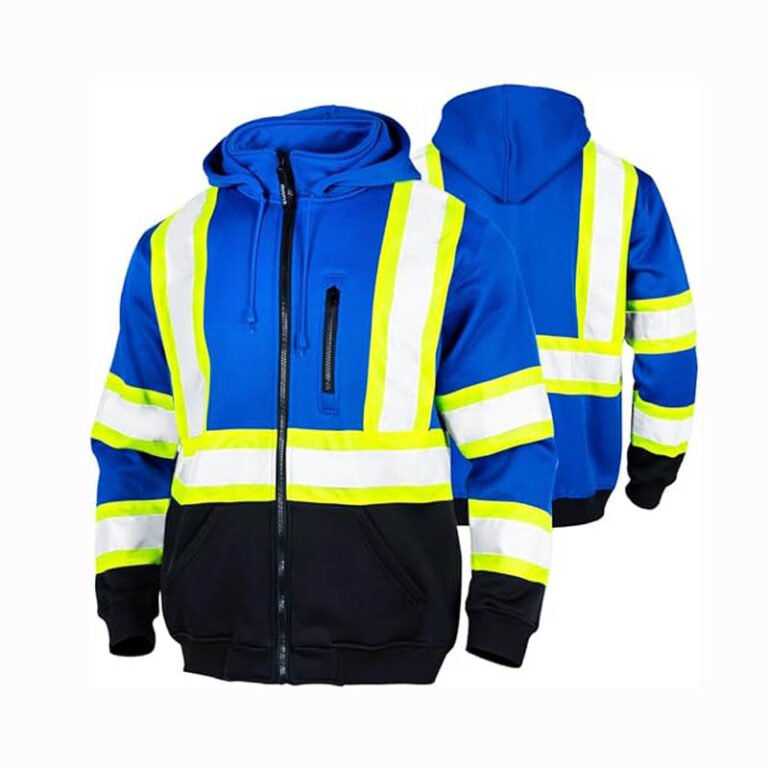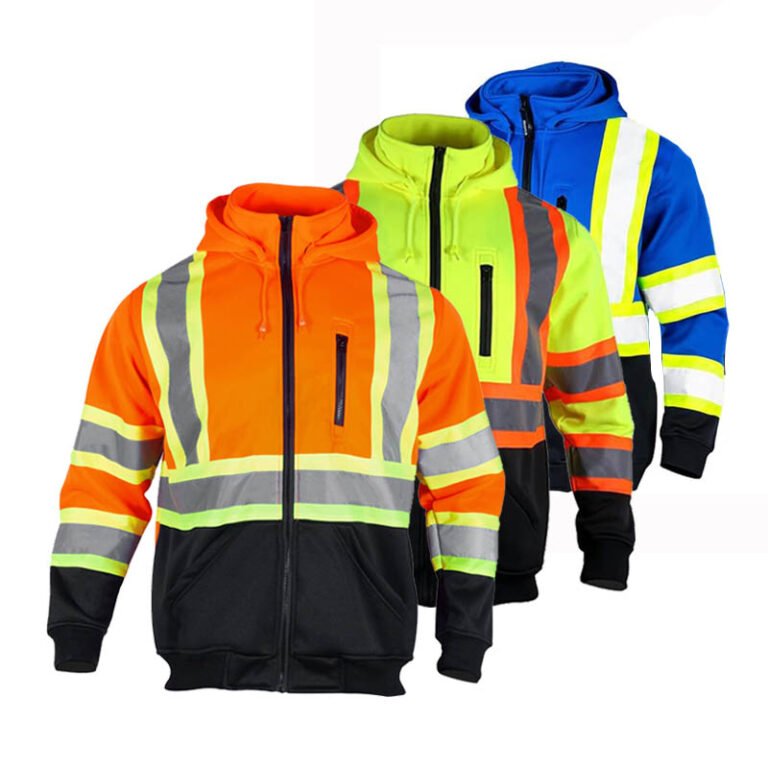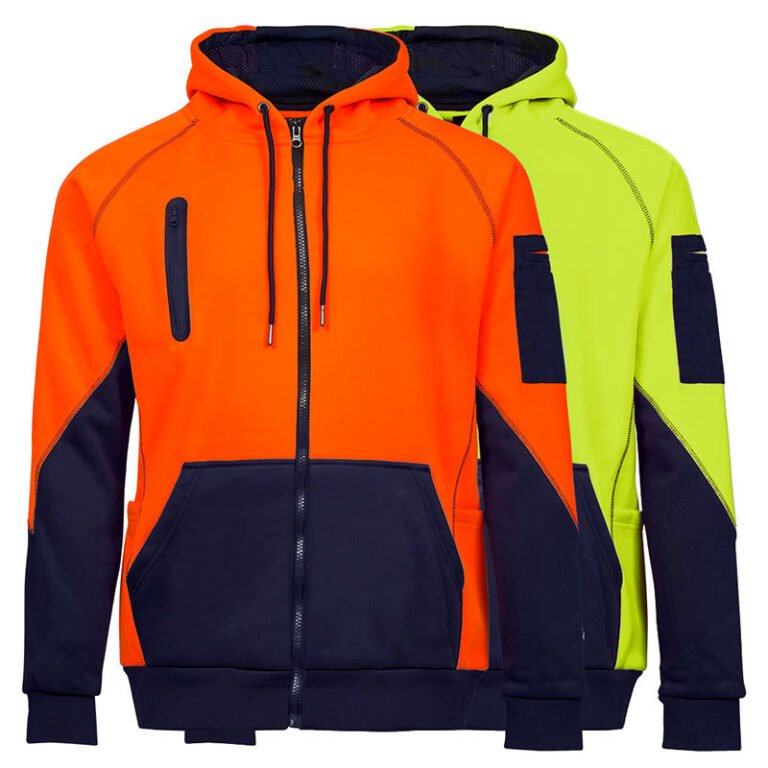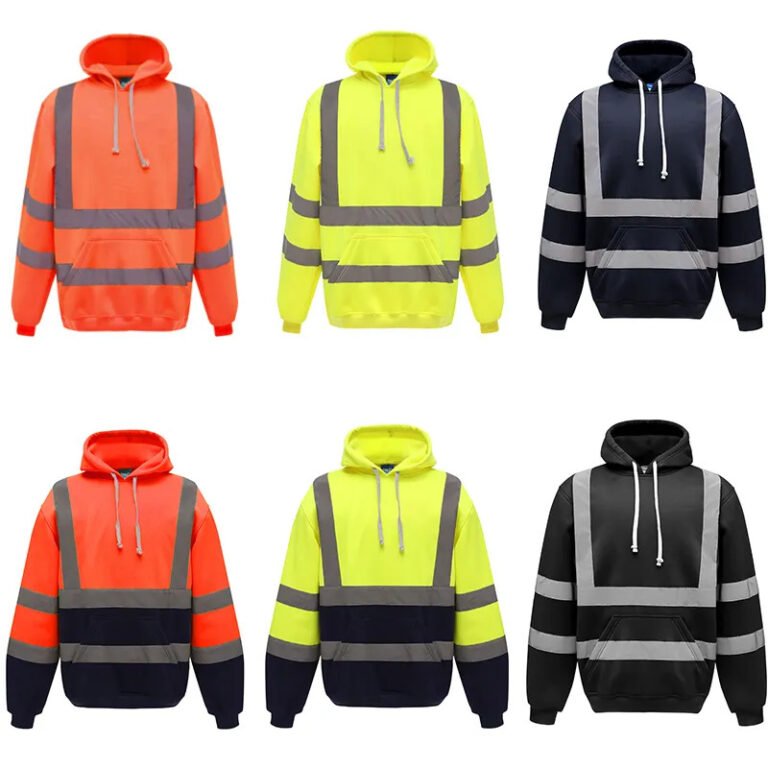
Waterproof vs. Water-Resistant: What’s the Best Fabric for Hi Vis Raincoats?
Published on | 8 min read
Quick Answer
The “best” fabric for hi-vis raincoats isn’t universally waterproof or water-resistant—it depends entirely on your work environment and activity level. Water-resistant fabrics (typically with DWR coatings) excel for highly active workers in intermittent rain, offering superior breathability to prevent internal moisture buildup. Waterproof fabrics (like PU-coated, PVC-coated, or Gore-Tex membranes) are essential for stationary roles or prolonged exposure to heavy downpours, providing absolute protection from external water. The critical differentiator for premium workwear is achieving both waterproofness and breathability—a balance best exemplified by breathable waterproof membranes with taped seams, which prevent both rain penetration and the uncomfortable “wet from the inside” phenomenon caused by trapped perspiration.
Understanding the Terminology: Water-Resistant vs. Waterproof
The distinction between water-resistant and waterproof isn’t mere marketing jargon—it represents fundamentally different levels of protection that directly impact worker safety and comfort. Understanding these differences is the first step in making an informed purchasing decision for your team’s hi-vis raincoats.
Water-Resistant: The First Line of Defense
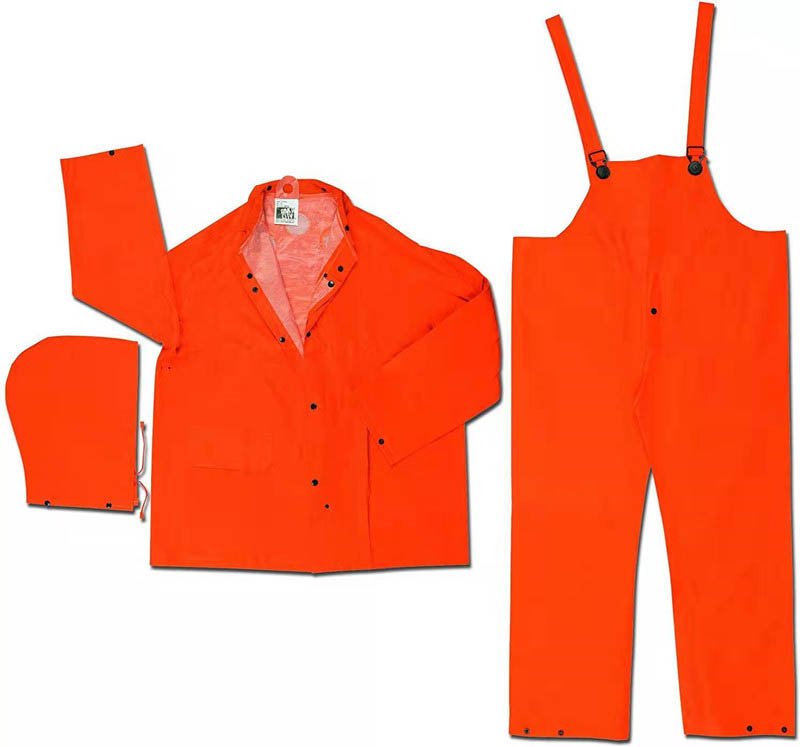
Water-resistant fabrics are treated with a Durable Water Repellent (DWR) coating that causes water to bead up and roll off the surface. Think of it as a temporary shield—excellent for light rain, mist, or brief exposure to moisture. These garments typically have a hydrostatic head rating between 1,500mm and 5,000mm, meaning they can withstand light to moderate water pressure before moisture begins to penetrate.
“Water-resistant doesn’t mean ‘sort of waterproof.’ It’s a distinct category designed for different conditions—primarily where breathability and freedom of movement trump absolute water barrier needs.”
Waterproof: Absolute Protection
Waterproof fabrics, by contrast, create an impermeable barrier against water ingress, typically featuring a hydrostatic head rating above 10,000mm—with premium options exceeding 20,000mm. These materials incorporate continuous membranes or heavy coatings (PU, PVC, or advanced laminations) that prevent water molecules from passing through, even under sustained pressure or submersion. The trade-off? Traditional waterproof materials often sacrifice breathability, though modern technologies have made significant strides in addressing this limitation.
Material Breakdown: PU, PVC, and Advanced Membranes
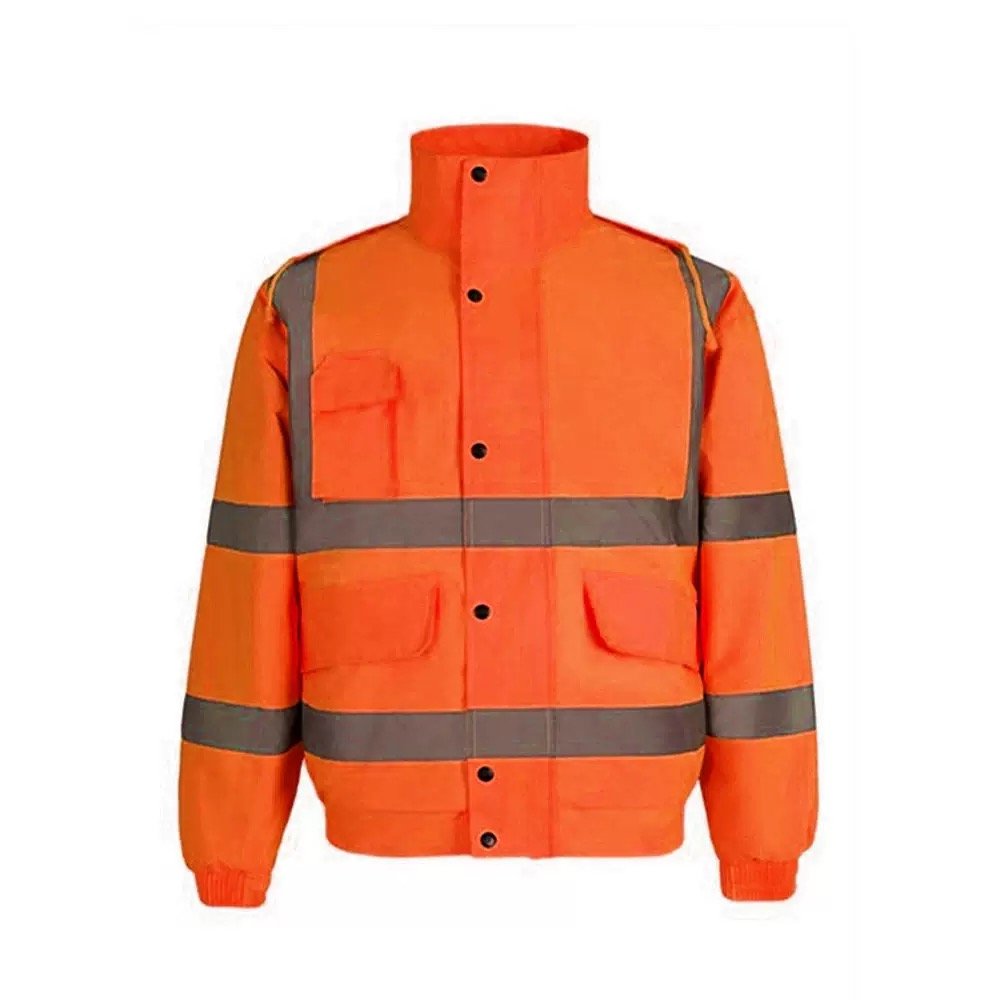
When sourcing the best waterproof material for workwear, understanding the core fabric technologies is essential. Let’s examine the three primary categories dominating the hi-vis rainwear market.
PU (Polyurethane) Coated Fabrics
Advantages:
- Superior flexibility and comfort—maintains drape even in cold conditions
- More environmentally friendly than PVC alternatives
- Excellent abrasion resistance for demanding work environments
- Can incorporate breathable microporous structures in premium versions
- Cost-effective for mid-range professional workwear
Limitations:
- May degrade faster under intense UV exposure than PVC
- Requires proper maintenance to preserve waterproofing longevity
- Lower-grade PU coatings can become sticky over time
PVC (Polyvinyl Chloride) Coated Fabrics
Advantages:
- Maximum waterproofness—virtually impenetrable barrier
- Outstanding chemical resistance for industrial applications
- Exceptional durability and UV stability
- Lower manufacturing costs, making it budget-friendly for large orders
- Easy to clean and maintain
Limitations:
- Minimal breathability—can cause significant perspiration buildup
- Heavier and less flexible than PU alternatives
- Environmental concerns regarding PVC production and disposal
- Can become stiff in extremely cold temperatures
The PU vs PVC rain gear debate ultimately hinges on your priority hierarchy: if absolute waterproofness and chemical resistance are paramount (think oil refineries or chemical plants), PVC excels. If worker comfort, flexibility, and moderate breathability are critical (construction sites, road crews), PU-coated fabrics offer a superior balance.
Advanced Breathable Waterproof Membranes (Gore-Tex & Equivalents)
The Premium Solution:
Gore-Tex work raincoats and similar microporous membrane technologies (eVent, Dermizax, proprietary branded membranes) represent the pinnacle of protective outerwear engineering. These fabrics feature microscopic pores—9 billion per square inch in Gore-Tex—small enough to block liquid water droplets yet large enough to allow water vapor (perspiration) to escape.
Key Benefits:
- Simultaneously waterproof (typically 28,000mm hydrostatic head) and highly breathable
- Prevents both external rain penetration and internal moisture accumulation
- Lightweight construction doesn’t compromise mobility
- Long-term durability when properly maintained
- Superior comfort for all-day wear in variable conditions
Investment Considerations:
Premium breathable membranes command significantly higher prices—often 3-5x more than standard PU/PVC options. However, for roles requiring sustained outdoor exposure with high physical activity (emergency responders, utility maintenance, surveying), the investment pays dividends in worker productivity, reduced heat stress incidents, and lower long-term replacement costs.
The Breathability Factor: Why It Matters More Than You Think
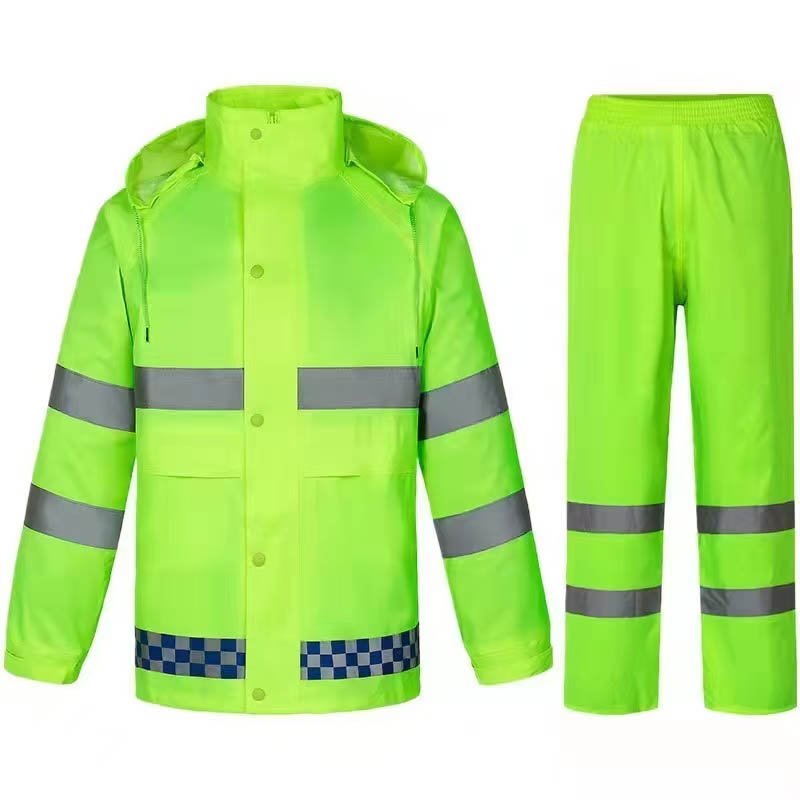
After equipping crews from Hamburg’s drizzly shipyards to Seattle’s construction sites, I’ve learned that the greatest threat to worker safety isn’t always the rain outside—it’s the moisture inside. A completely waterproof but non-breathable raincoat transforms into a personal sauna during physical labor, creating a dangerous internal microclimate that can lead to:
- Heat exhaustion and reduced productivity: Workers become fatigued faster when their bodies can’t efficiently regulate temperature
- Hypothermia risk: Sweat-soaked inner layers conduct cold more effectively than dry fabric, especially when work stops
- Reduced garment lifespan: Constant internal moisture promotes bacterial growth and accelerates material degradation
- Worker non-compliance: Uncomfortable PPE gets left in the truck, defeating its entire purpose
Real-World Insight
“I always ask my clients one simple question: ‘What’s more likely to make your team wet—the rain outside or the sweat inside?’ For a highly active road crew working through intermittent showers, a highly breathable water-resistant jacket is often the superior choice. It blocks most of the rain while allowing body heat and moisture to escape, preventing that awful ‘wet from the inside’ feeling. They stay comfortable, and a comfortable worker is a more productive and safer worker.”
Measuring Breathability: MVTR Explained
Breathability is quantified through MVTR (Moisture Vapor Transmission Rate), measured in grams of water vapor transmitted per square meter over 24 hours (g/m²/24hr). Here’s how different fabric technologies stack up:
| Fabric Type | MVTR (g/m²/24hr) | Best Application |
|---|---|---|
| PVC Coated | 0-1,000 | Stationary work, chemical exposure |
| Standard PU Coated | 3,000-5,000 | Moderate activity, general construction |
| Microporous PU | 8,000-12,000 | Active work, variable weather |
| Gore-Tex/Premium Membranes | 15,000-25,000+ | Highly active roles, all-day wear |
| DWR Water-Resistant | 20,000-30,000+ | Intense activity, light rain only |
Job-Specific Selection Criteria
The “right” fabric choice is never universal—it must align with the specific demands of your workforce’s environment and activity level. Here’s my field-tested selection framework:
🚧 Active Road Crews & Highway Maintenance
Recommended: Water-resistant with DWR coating OR microporous breathable waterproof (8,000+ MVTR)
These workers experience high physical exertion in intermittent weather. Breathability is crucial. A water-resistant shell handles brief showers while preventing internal moisture buildup. For regions with heavier rainfall, invest in breathable waterproof membranes.
👷 Construction Sites (General)
Recommended: PU-coated waterproof (10,000mm+ hydrostatic head)
Balanced protection for variable conditions. PU coatings provide reliable waterproofness for sudden downpours while maintaining reasonable flexibility and moderate breathability. Cost-effective for large-scale procurement.
🚨 Emergency Responders & Utility Workers
Recommended: Gore-Tex or equivalent premium breathable waterproof membrane
Extended duration in unpredictable conditions demands maximum protection without compromising mobility. The investment in breathable waterproof technology directly translates to response efficiency and personnel safety during critical operations.
🏭 Industrial & Chemical Plants
Recommended: PVC-coated waterproof with chemical resistance
When exposure includes not just rain but potentially corrosive chemicals or oils, PVC’s impermeability and chemical resistance become non-negotiable. Lower breathability is an acceptable trade-off for comprehensive barrier protection.
📋 Site Supervisors & Inspectors
Recommended: Premium breathable waterproof with professional styling
Extended outdoor presence with moderate activity levels. These roles benefit from all-day comfort provided by breathable membranes. Consider options with refined aesthetics that transition between field and office environments while maintaining full hi-vis raincoat compliance.
Key Performance Metrics to Evaluate
When comparing fabric options from manufacturers, demand transparency on these critical specifications:
📊 Essential Technical Specifications
Hydrostatic Head Rating
Minimum 10,000mm for reliable waterproof performance. Premium options reach 20,000mm+. This measures the water column height the fabric can withstand before leaking.
MVTR (Moisture Vapor Transmission Rate)
Target 8,000+ g/m²/24hr for moderate activity, 15,000+ for high-intensity work. Higher numbers indicate better breathability and comfort.
Seam Construction
Taped or welded seams are mandatory for true waterproofness. Unfinished seams create water ingress points regardless of fabric quality. Verify all critical seams (shoulders, hood, pockets) are sealed.
Abrasion Resistance
Request Martindale test results (minimum 20,000 rubs for workwear). Determines how well the fabric withstands friction from tools, harnesses, and rough surfaces.
Tear Strength
Critical for durability in demanding environments. Look for minimum 50N (newtons) in both warp and weft directions per ISO 13937-2 standards.
Reflective Material Quality
Ensure reflective components meet EN ISO 20471 Class 3 or ANSI/ISEA 107 Type R Class 3 standards for maximum visibility. Verify reflective tape maintains performance after washing (minimum 25 cycles).
💡 Pro Tip: Request Sample Testing
Before committing to bulk orders, request samples and conduct field testing with your actual crew. Have them wear test garments for a full shift in typical weather conditions. Their feedback on comfort, mobility, and moisture management is worth more than any specification sheet. Additionally, perform a simple water test: spray the garment intensely for 5 minutes and check for any internal dampness—this reveals seam quality and real-world waterproofness.
Maintenance and Longevity Considerations
Even the most advanced waterproof fabric will fail prematurely without proper care. Here’s how to maximize your investment:
Washing and Care Protocols
- Frequency: Wash regularly to remove oils, dirt, and salt that degrade waterproof coatings. Contrary to intuition, clean garments perform better.
- Detergent selection: Use mild, non-residue detergents specifically formulated for technical fabrics. Avoid fabric softeners and bleach—both destroy waterproof treatments.
- Temperature: Follow manufacturer guidelines, typically warm water (30-40°C/86-104°F). Excessive heat damages membrane structures.
- Drying: Tumble dry on low heat to reactivate DWR coatings (for applicable fabrics). Alternatively, air dry completely away from direct sunlight.
- Re-treatment: Reapply DWR spray or wash-in treatments annually or when you notice water no longer beads on the surface.
Storage Best Practices
Store raincoats in cool, dry conditions away from direct sunlight and extreme temperatures. Hang garments rather than folding to prevent creasing waterproof membranes. Ensure garments are completely dry before storage to prevent mildew and material degradation.
Expected Lifespan
| Fabric Type | Expected Lifespan (with proper care) |
|---|---|
| PVC Coated | 3-5 years of regular industrial use |
| PU Coated | 2-4 years depending on coating quality |
| Breathable Membranes (Gore-Tex) | 5-7 years with consistent maintenance |
| DWR Water-Resistant | 1-3 years; coating requires periodic renewal |
Ready to Equip Your Team with the Perfect Hi-Vis Raincoats?
At VizGlo Safety, we manufacture premium hi-vis rainwear using PU, PVC, and breathable waterproof technologies tailored to your specific requirements. Our OEM/ODM services ensure you get exactly the right balance of protection, breathability, and durability for your workforce.
Request a Custom Quote Today →Or explore our complete range of hi-vis raincoats and rain suits
Frequently Asked Questions
What’s the minimum hydrostatic head rating needed for professional workwear?
For reliable waterproof performance in construction and industrial settings, aim for a minimum 10,000mm hydrostatic head. This ensures the fabric can withstand sustained rainfall and pressure from kneeling, sitting, or leaning against wet surfaces. For extreme conditions (offshore work, emergency services), target 15,000mm or higher. Water-resistant options typically range from 1,500-5,000mm, suitable only for light intermittent exposure.
Is PU or PVC better for hi-vis rain gear?
Neither is universally “better”—the choice depends on your priorities. Choose PU if you need flexibility, moderate breathability, environmental friendliness, and comfort during active work. It’s ideal for construction, road crews, and general outdoor labor. Choose PVC if you require maximum waterproofness, chemical resistance, extreme durability, and budget-conscious bulk orders. It’s superior for stationary roles, chemical plants, and heavy industrial applications where breathability is secondary to absolute protection.
Are Gore-Tex work raincoats worth the higher price?
For high-activity roles requiring all-day wear in variable conditions, absolutely. Gore-Tex and equivalent breathable membranes prevent both rain penetration and internal moisture buildup, dramatically improving comfort and reducing fatigue. This translates to measurable productivity gains and lower heat-stress incidents. The higher upfront cost is offset by extended garment lifespan (5-7 years vs. 2-4 for standard PU) and reduced worker discomfort complaints. For stationary roles or intermittent use, standard waterproof options may provide better value.
How can I tell if my hi-vis raincoat is truly waterproof vs. just water-resistant?
Check the product specifications for the hydrostatic head rating: anything above 10,000mm is considered waterproof. Additionally, examine the seams—truly waterproof garments feature taped or welded seams, creating sealed barriers at stitching points. Water-resistant garments typically have exposed seams and rely on DWR coatings that cause water to bead on the surface but will eventually wet through under sustained pressure. Perform a simple test: spray water directly on the garment for 30 seconds. Water-resistant fabrics will darken as moisture penetrates; waterproof fabrics should show no internal dampness.
Can waterproof hi-vis raincoats be repaired if they develop leaks?
Yes, minor damage can often be repaired. Small punctures or tears can be patched using specialized waterproof repair tape or seam sealer. For seams that have delaminated, reapply seam sealant designed for the specific fabric type (PU, PVC, or membrane). However, extensive coating degradation or membrane damage typically requires replacement. Regular inspection and prompt repair of small issues prevents minor problems from becoming major failures. As a preventative measure, educate workers to avoid unnecessary abrasion and store garments properly when not in use.
What safety standards should hi-vis raincoats meet?
For high-visibility compliance, ensure garments meet EN ISO 20471 (Europe/International), ANSI/ISEA 107 (USA), or AS/NZS 4602.1 (Australia/New Zealand). Target Class 3 or Type R Class 3 for maximum protection, which requires specified amounts of fluorescent background material and retroreflective tape. Additionally, if raincoats incorporate breathable membranes, look for independent performance certifications. For specialized applications, consider garments also meeting EN 343 (rain protection rating) or flame-resistant standards like EN ISO 11612 if working near ignition sources.