High Visibility Clothing Regulations in Canada: What Employers and Buyers Need to Know
Published by VizGlo Safety Technical Advisory Team | Updated for CSA Z96-22 Standards
High visibility clothing regulations in Canada are governed nationally by the CSA Z96 standard (currently CSA Z96-22) and enforced provincially through individual Occupational Health and Safety (OHS) jurisdictions. Compliance requires employers and safety apparel buyers to select certified garments across three distinct hazard levels (Class 1, Class 2, and Class 3). The definitive requirement separating Canadian hi-vis from international standards—including US ANSI/ISEA 107—is the mandatory symmetrical “X” retroreflective pattern across the entire back of Class 2 and Class 3 garments, designed to immediately signal to machine operators whether a worker is facing toward or away from oncoming traffic.
1. Demystifying the Canadian Standard: CSA Z96-22 vs. Global Equivalents
Procurement managers, safety officers, and private label apparel distributors operating across North America often operate under the costly misconception that international compliance automatically transfers across borders. In Canada, workplace high-visibility apparel is evaluated under the rigorous framework of the Canadian Standards Association (CSA Group) standard CSA Z96-22 (High-visibility safety apparel).
While the standard harmonizes photometric and physical testing methodologies with international counterparts like the American ANSI/ISEA 107-2020 standard and Europe’s ISO 20471 framework, Canadian worksites dictate unique tape geometry, background color specifications, and contrast striping requirements.
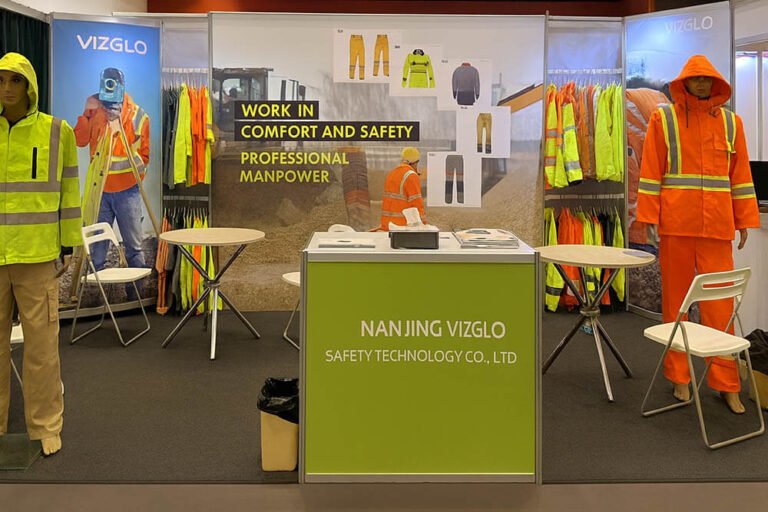
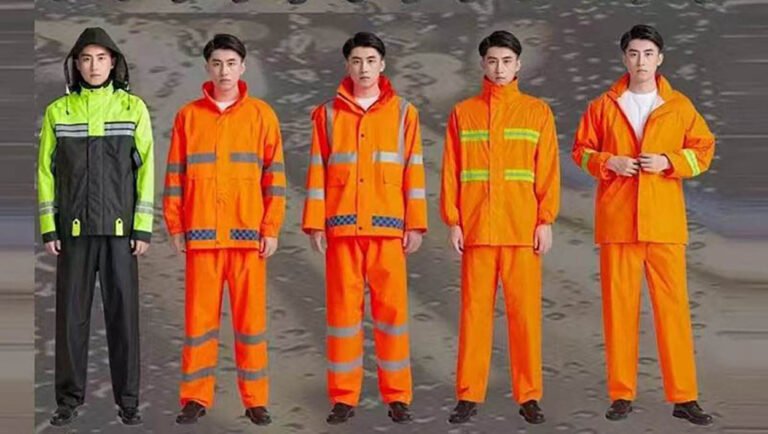
Precision placement of retroreflective tape and fluorescent background material engineered for Canadian CSA Z96 compliance.
The CSA standard specifies explicit performance ratings for both the fluorescent background material (providing daytime chromaticity and luminance against outdoor clutter) and the retroreflective tape (providing nighttime retroreflectivity measured in cd/(lx·m²)). For multi-climate operations spanning mining in Northern Ontario to municipal work in Vancouver, sourcing certified engineered hi vis workwear ensures risk protection against severe weather, mechanical stress, and compliance failure.
2. The Canadian “X” Factor: Why ANSI Compliance Is Not Enough
For B2B buyers importing directly from global apparel suppliers, the most common operational failure is procuring standard US ANSI Class 2 or 3 garments for use in Canadian operations. The critical distinction lies in The Canadian “X” Pattern.
Under CSA Z96-22 guidelines:
- Back Configuration: The retroreflective material on the back must form an unbroken “X” extending from the shoulders down to the waist. This pattern is engineered to provide an instantaneous visual indicator to vehicle drivers and equipment operators that a worker’s back is turned toward them.
- Front Configuration: The front must feature two vertical stripes running over the shoulders to the waist, connected by a continuous horizontal waistband stripe.
- Side and Limb Bands: Bands around the waist, sleeves, and trousers ensure 360-degree recognition under vehicle headlamps.

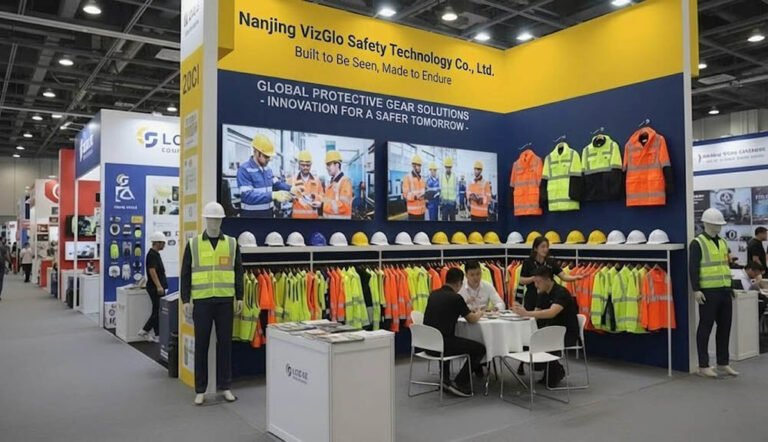
The distinctive CSA-compliant ‘X-Back’ retroreflective layout engineered on heavy-duty protective outerwear.
If your brand supplies private-label workwear or your procurement team distributes safety vests without the rear “X”, the equipment is non-compliant in almost every Canadian province. Sourcing specialized apparel with integrated certified reflective tapes ensures that tape width (minimum 50 mm / 2 inches) and back configurations fulfill legal standards upon site inspection.
3. CSA Z96 Garment Classes: Translating Standards to Jobsite Reality
To prevent overspending on heavy ensembles where light vests suffice—or endangering workers by deploying inadequate visibility classes—buyers must align garment selection with operational exposure risk. CSA Z96 categorizes apparel into three distinct classes based on minimum square meters of active material:
| CSA Class | Min. Background Fabric | Min. Reflective Material | Typical Real-World Use Case |
|---|---|---|---|
| Class 1 (Basic) | 0.14 m² (217 in²) | 0.10 m² (155 in²) | Warehousing, parking lot attendants, delivery drivers in low-speed zones (<40 km/h). |
| Class 2 (Moderate) | 0.40 m² (620 in²) | 0.13 m² (201 in²) | Road construction, utility crews, school crossing guards, airport ground staff (traffic 40–80 km/h). |
| Class 3 (High Risk) | 0.80 m² (1240 in²) | 0.20 m² (310 in²) | Highway flaggers, emergency responders, rail maintenance, heavy equipment operators near high-speed traffic (>80 km/h). |

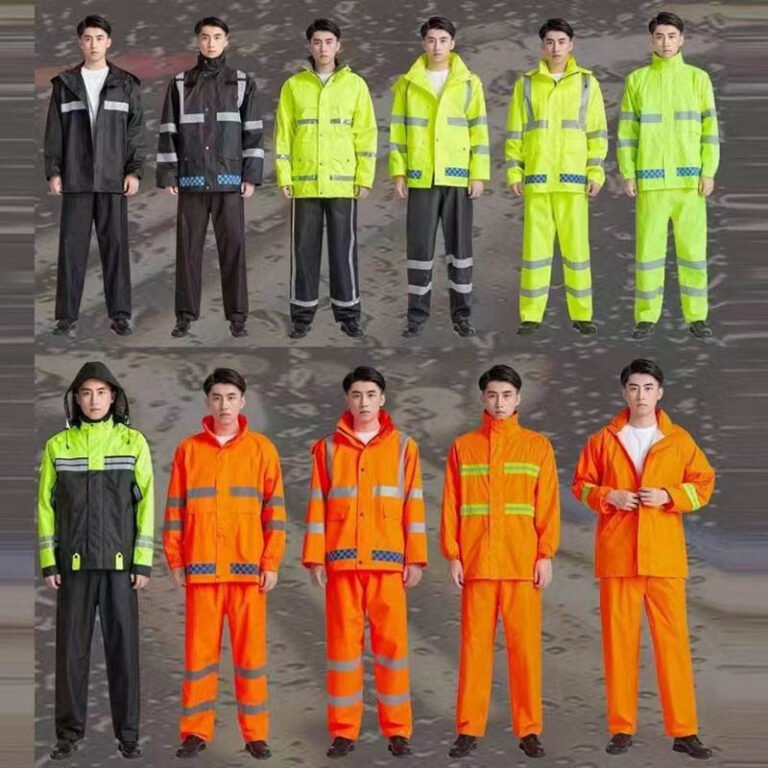
Class 2 and Class 3 safety garments engineered for extreme durability on Canadian industrial jobsites.
Ensemble Configurations (Class 3 via Class 2 + Class E): In Canadian operations, achieving Class 3 full-body compliance does not always necessitate a full one-piece coverall. Combining a certified Class 2 upper garment (such as a jacket, vest, or sweatshirt) with certified Class E retroreflective trousers or bib overalls legally constitutes a certified Class 3 Ensemble under CSA rules.
4. Navigating Provincial Nuances: WorkSafeBC, Alberta OHS, and Ontario MOL
While CSA Z96 provides the national technical baseline, enforcement is decentralized. Under Canada’s constitutional framework, labor safety falls under provincial jurisdiction. Safety officers and regional distributors must account for specific local variations:
British Columbia (WorkSafeBC)
WorkSafeBC Part 8 (Section 8.24) enforces strict high-visibility standards for traffic controllers and road workers. Traffic control persons must wear Class 3 apparel during low-light conditions and require wrist/ankle band visibility to ensure signaling motions are instantly readable by motorists.
Alberta (Alberta OHS Code)
The Alberta OHS Code (Part 18) mandates high-visibility garments for all workers exposed to moving mobile equipment. In the oil and gas sector, garments frequently require dual-compliance: CSA Z96 visibility paired with flame-resistant (FR) performance under ASTM F1506 or CGSB 155.20.
Ontario (Ministry of Labour, Immigration, Training and Skills Development)
Governed under Ontario Regulation 213/91 (Construction Projects), Section 69.1 mandates that workers exposed to vehicle traffic wear garments with fluorescent body panels covering at least 0.13 m² at the front and back, with 50 mm retroreflective side/arm/back striping.
5. Sourcing for Canada: Custom OEM/ODM Considerations Without Violating Compliance
Procuring compliant hi-vis garments for the Canadian market becomes challenging when brand owners and corporate buyers require customized logos, tailored functional pockets, radio tabs, or heavy thermal insulation for sub-zero Canadian winters.

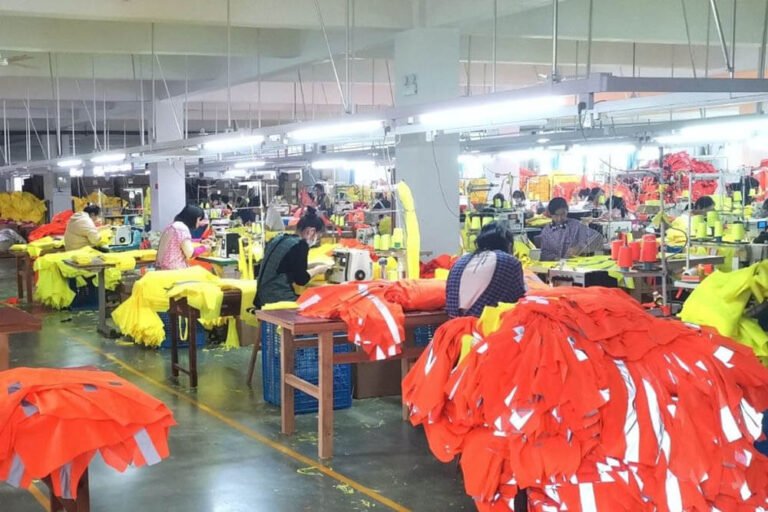
OEM custom workwear integrating heavy-duty hardware and winter insulation without reducing certified reflective surface area.
Key OEM/ODM Engineering Pitfalls:
- Oversized Branding: Heat-transfer or embroidered company logos placed on chest panels or back yokes reduce the active fluorescent background area. If not engineered precisely, this drops a garment below the 0.40 m² threshold required for Class 2.
- Thermal Lining Bulk: Heavy winter jackets with 200–300 GSM sherpa or quilted polyfill linings alter garment proportions. The retroreflective tape must be graded accurately across sizes (from XS to 7XL) to maintain geometric compliance.
- Tape Durability Under Sub-Zero Wash Cycles: Canadian industrial launderers use heavy washing protocols to strip oil and dirt. Using standard generic reflective tapes results in cracked or delaminated reflective glass beads.
As a vertically integrated manufacturer, Nanjing VizGlo Safety Technology Co., Ltd. controls every stage of production—from the precision weaving and dyeing of fluorescent polyester fabrics to in-house manufacturing of high-coefficient premium reflective materials. We engineer custom OEM/ODM hi-vis vests, winter parkas, rain suits, and fleece hoodies that guarantee full adherence to CSA Z96-22 specifications while seamlessly showcasing your corporate identity.
Need CSA Z96-22 Compliant Workwear for Canada?
Partner directly with a certified OEM/ODM manufacturer. We provide turn-key custom apparel design, test documentation, and guaranteed Canadian compliance.
6. Frequently Asked Questions (FAQ)
Can US ANSI/ISEA 107 hi-vis gear be legally used on Canadian worksites? ▼
Generally, no. While both standards specify fluorescent background and retroreflective materials, Canada’s CSA Z96 standard strictly mandates a full “X” pattern on the back for Class 2 and Class 3 garments. ANSI garments frequently feature parallel vertical back stripes without the cross configuration, making them non-compliant under most Canadian provincial OHS regulations.
What is the difference between CSA Z96 Class 2 and Class 3? ▼
Class 2 covers the torso with specific minimum surface areas for background (0.40 m²) and retroreflective tape (0.13 m²), featuring an X on the back. Class 3 provides full-body coverage (0.80 m² background, 0.20 m² retroreflective) and requires combined upper and lower limb bands, which can be achieved via a coverall, jacket-and-pant ensemble, or pairing Class E pants with a Class 2 top.
How does adding a custom corporate logo affect CSA Z96 certification? ▼
Custom silk screening, heat transfers, or embroidery reduce the active surface area of fluorescent background fabric. If logos are oversized or placed over retroreflective tape bands, they can void the garment’s certified safety class. Working with an experienced OEM manufacturer that calculates surface area ratios ensures complete compliance.
What are the approved background colors under Canadian hi-vis standards? ▼
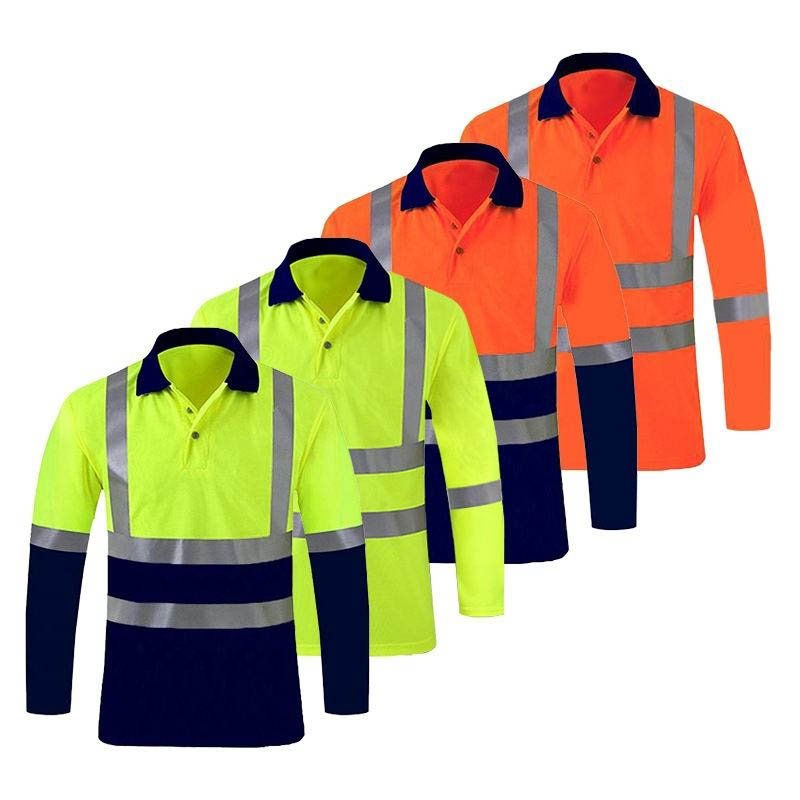
CSA Z96-22 recognizes three primary fluorescent background colors: Fluorescent Yellow-Green, Fluorescent Orange-Red, and Fluorescent Red. Contrasting trim strips may also be incorporated to enhance daytime distinction against complex industrial backgrounds.