High Visibility Clothing Testing: Methods, Requirements and Compliance
By Technical Sourcing Team | Updated Industry Guide | Nanjing VizGlo Safety Technology Co., Ltd.
High visibility clothing testing is a rigorous laboratory verification process that evaluates the colorimetric performance, luminance factor (β), retroreflectivity (RA), and structural durability of protective workwear under both pristine and degraded real-world conditions. Mandated by international safety standards such as EN ISO 20471 in Europe, ANSI/ISEA 107 in North America, and AS/NZS 1906.4 in Australasia, testing ensures that fluorescent background textiles and retroreflective tapes deliver 360-degree daytime and nighttime conspicuity even after extensive industrial washing, abrasion, UV exposure, and thermal stress.
1. Beyond the Lab: Why Compliance is Your Commercial Shield
For PPE distributors, procurement officers, and private label managers, high-visibility clothing compliance is rarely just a technical checkbox. A failed test report after container arrival triggers disastrous commercial outcomes: impounded customs shipments, mandatory product recalls, severed institutional contracts, and catastrophic liability in the event of an occupational accident.
Sourcing compliant hi vis clothing is an exercise in comprehensive risk management. When high-risk industries like highway construction, rail transport, and oilfield logistics issue purchase orders, they place their operational safety entirely within the technical envelope of your supply chain.
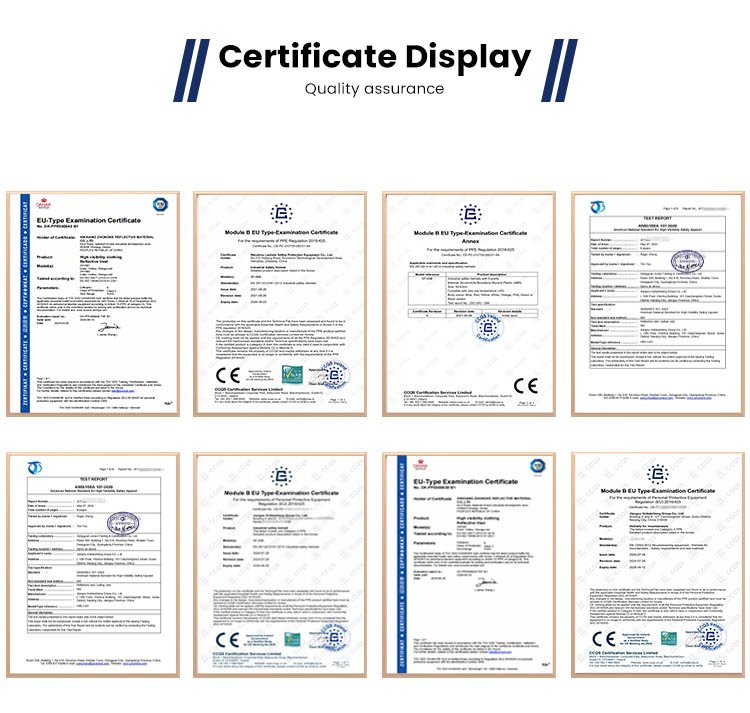
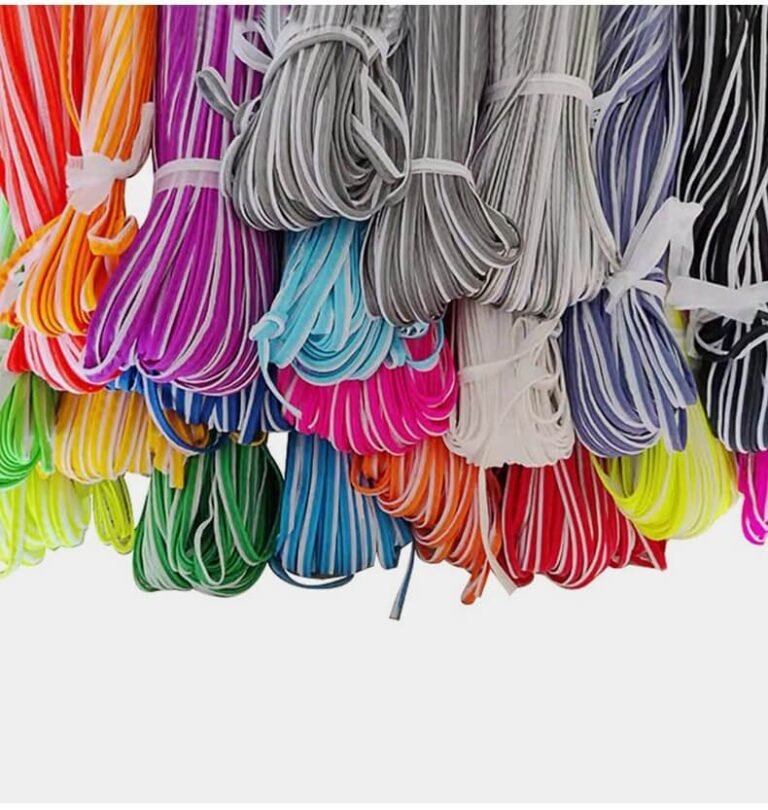
Figure 1: Certified third-party testing documentation provides an essential commercial and regulatory shield for importers.
2. Critical Testing Methods: What the Lab Actually Measures
High-visibility testing evaluates two distinct physical phenomena: fluorescence for daytime conspicuity and retroreflection for low-light night-time visibility. Both require highly specialized laboratory apparatus to quantify optical performance.
Colorimetric & Luminance Testing
Using a spectrophotometer under CIE standard illuminant D65 with a 45/0 or 0/45 geometry, technicians verify whether background fabrics fall within precise chromaticity coordinates:
- Fluorescent Yellow-Green: Maximum daytime visual contrast.
- Fluorescent Orange-Red: Superior contrast against natural green foliage.
- Fluorescent Red: Specified specialized safety environments.
- Luminance Factor (β): Measures total emitted light relative to a perfect diffuser.
Photometric Retroreflection Testing
Using a calibrated retroreflectometer, technicians assess reflective tapes by measuring the coefficient of retroreflection (RA):
- Observation Angle (α): Set at 12′ (0.2°) and 20′ (0.33°).
- Entrance Angle (β): Measured at multiple orientations (5°, 20°, 30°, 40°).
- Minimum Threshold: Premium Level 2 tape must achieve RA ≥ 330 cd/(lx·m²) at primary angles.
- Rain Performance: Retroreflectivity under simulated rainfall (EN ISO 20471 Annex C).
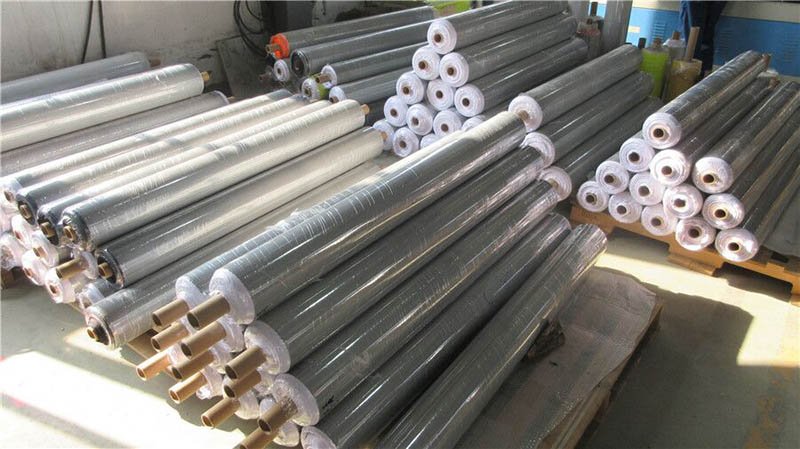
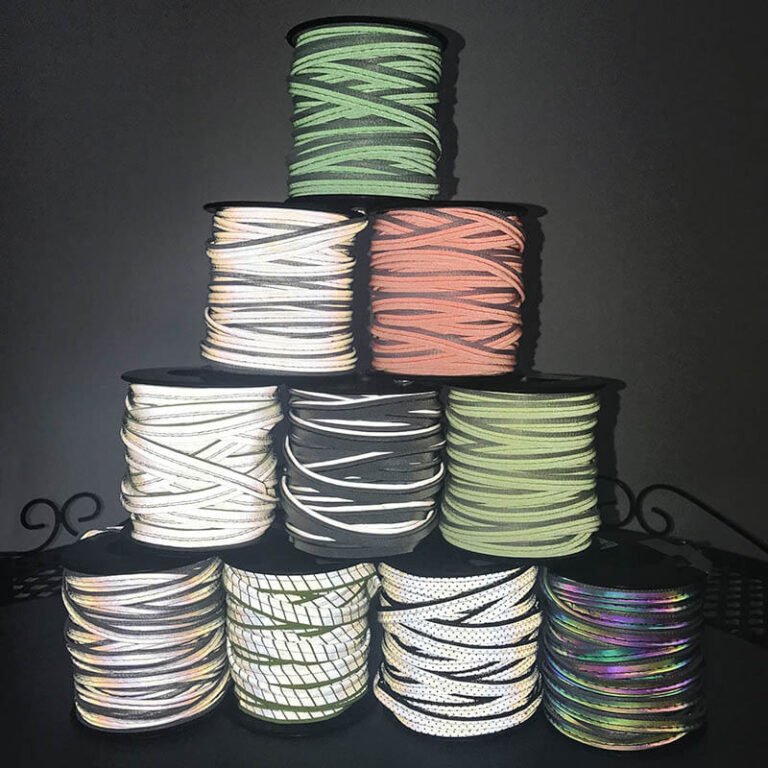
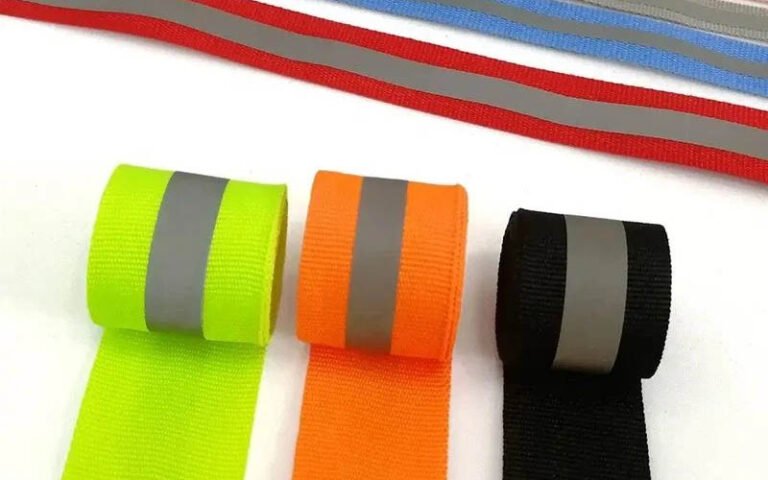
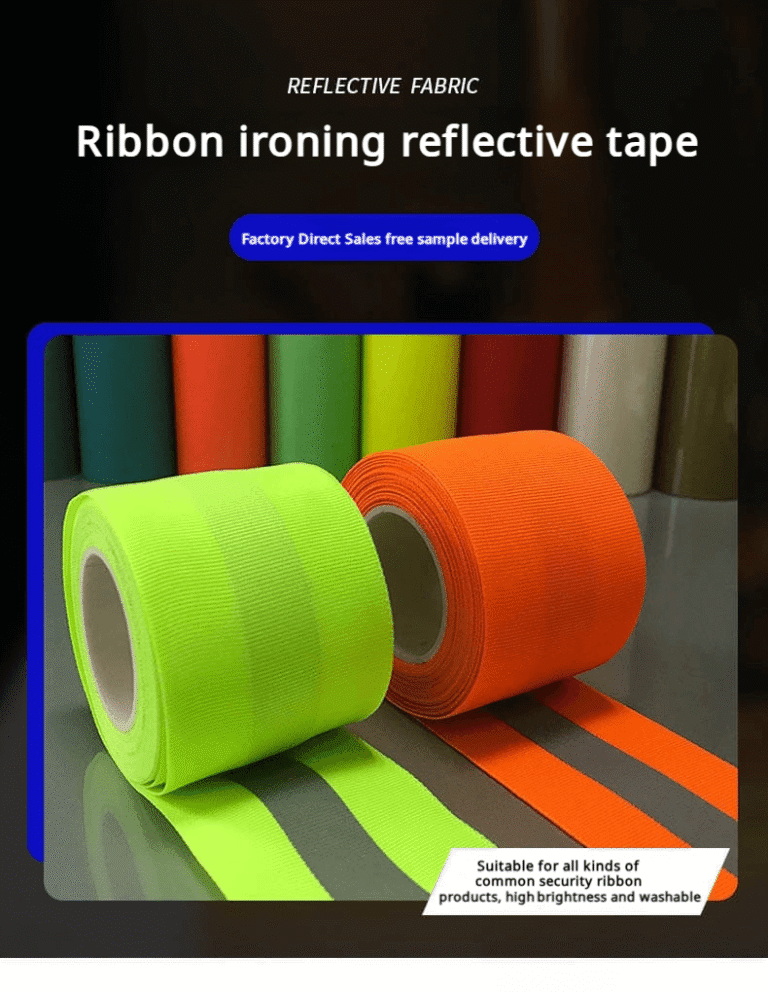
Figure 2: Micro-glass bead reflective material undergo rigorous photometric checks to guarantee optical return efficiency.
3. “Brand New” vs. “Real World”: The Durability Differentiator
Almost any low-cost supplier can submit a brand-new fabric swatch that squeaks past initial laboratory testing. However, the true differentiator between budget manufacturers and elite OEM/ODM facilities is performance retention after simulated workplace wear.
Under global standards, certified workwear must undergo rigorous pre-treatment testing before final optical evaluation:
| Test Procedure | Standard Test Method | Compliance Requirement |
|---|---|---|
| Laundering Durability | ISO 6330 / AATCC 135 | Maintains chromaticity & RA ≥ 100 cd/(lx·m²) after 25 to 50 wash cycles. |
| Xenon Arc Light Fastness | ISO 105-B02 / AATCC 16 | Color coordinates stay within fluorescent boundaries after intense simulated sunlight exposure. |
| Abrasion Resistance | EN 530 (Martindale Method) | 5,000 cycles with wool abradant without reflective bead detachment. |
| Flexing Resistance | ISO 7854 Method A | 7,500 flex cycles without micro-cracking or adhesion failure. |
| Cold Fold Performance | ISO 4675 | Exposure to -20°C followed by mechanical folding without brittle fracture. |
A garment that degrades into non-compliance after 5 washes represents a severe liability. Professional buyers specify maximum certified wash cycle ratings directly on the CE/OSHA care label.
4. The Chain of Compliance: Garments as Integrated Systems
A certified garment is not merely a collection of premium components; it is an engineered conspicuity system. The finest glass-bead tape sewn onto substandard fabric results in complete certification failure.
Our manufacturing engineering teams focus on the entire Chain of Compliance to eliminate hidden failure vectors:
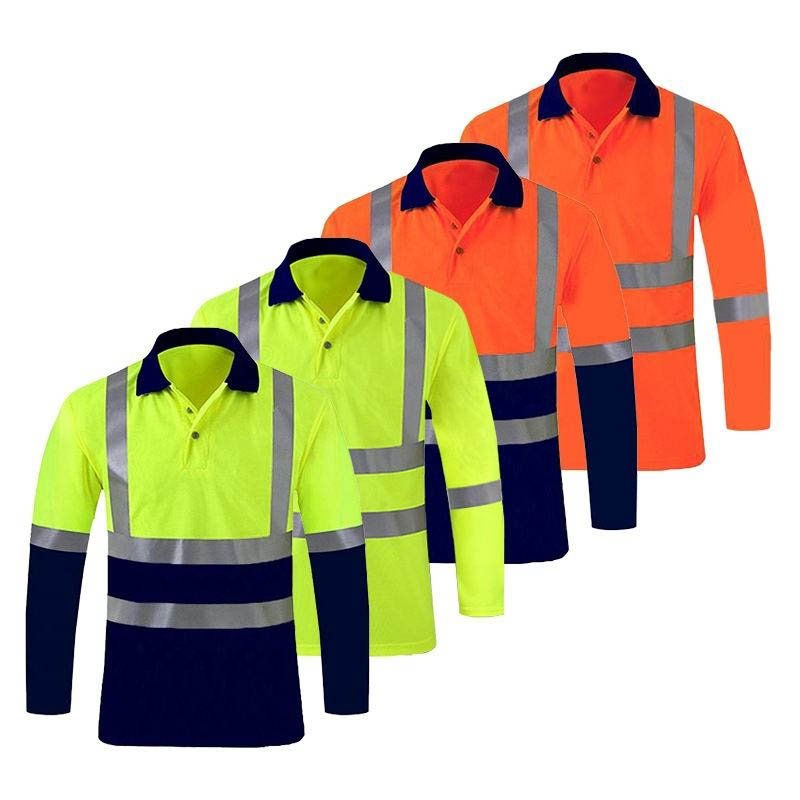
- ✔ Minimum Surface Area Thresholds: For instance, an EN ISO 20471 Class 3 garment mandates at least 0.80 m² of fluorescent background textile and 0.20 m² of retroreflective tape across the torso and limbs.
- ✔ Tape Geometry and Gap Limits: Horizontal reflective bands must maintain continuous 360-degree encircling. Discontinuities or side-seam gaps must never exceed 50mm.
- ✔ Logo Placement Integrity: Applying oversized custom corporate screen prints or heavy embroidery patches over fluorescent areas can decrease compliant surface area below legal limits.
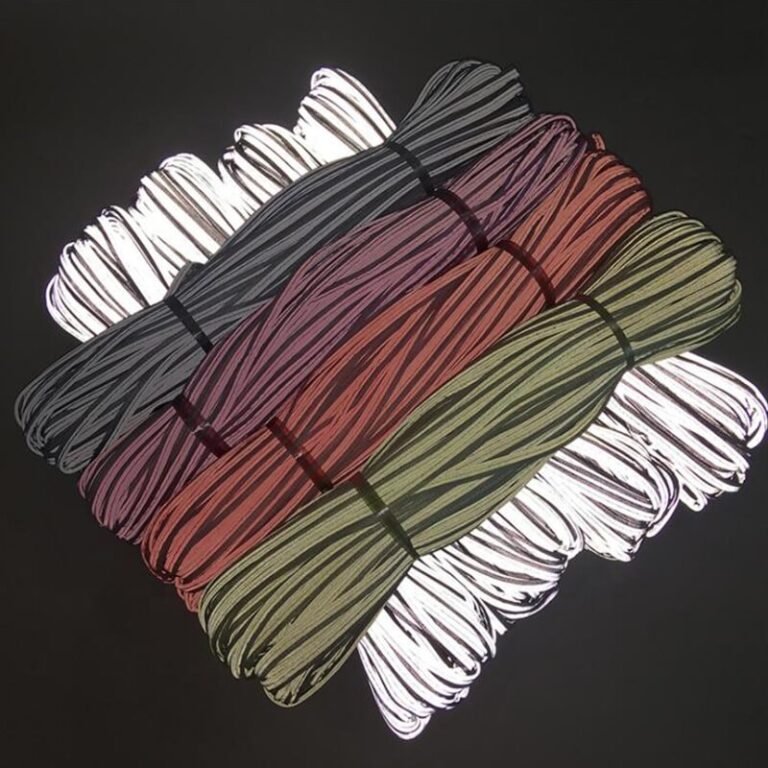
Figure 3: System-level quality audits ensure compliant tape angles, seam allowances, and surface area ratios across entire size runs.
5. Navigating Global Markets: ANSI vs. EN ISO vs. AS/NZS
Distributors managing cross-border portfolios must navigate regional regulatory divergences. While physical testing methodologies share common ground, market classifications differ significantly:
North America (ANSI/ISEA 107)
Incorporates Types and Classes.
- Type O: Off-road / non-roadway (Class 1).
- Type R: Roadway and traffic zones (Class 2 & 3).
- Type P: Public safety & emergency responders.
Europe (EN ISO 20471)
Strict 3-Tier Classification system.
- Class 1: Minimum risk (e.g., parking lots).
- Class 2: Intermediate risk (e.g., delivery, construction).
- Class 3: Maximum risk (full body/limbs, high-speed traffic).
Australia / NZ (AS/NZS 4602.1)
Classifies by Environmental Timing.
- Class D: Daytime use only (fluorescent material focus).
- Class N: Night-time use only (retroreflective focus).
- Class D/N: Combined day and night high visibility.
For technical buyers assessing complex product categories such as specialized hi vis raincoats or reflective fabrics, aligning exact product specifications with the destination market’s testing regime prevents severe regulatory hold-ups.
6. The 2026 Perspective: Testing Recycled & Stretch Hi-Vis Fabrics
As corporate ESG commitments accelerate across Fortune 500 fleets and European infrastructure contractors, the safety workwear sector faces novel laboratory challenges:
Recycled Polyester (rPET) Chromaticity Retention
Mechanical and chemical recycling can introduce polymer impurities that interfere with fluorescent disperse dyestuffs. Advanced testing tracks chromaticity coordinates through multiple accelerated weathering and industrial wash cycles to guarantee that sustainable rPET formulations meet identical safety thresholds as virgin polymers.
High-Elastic & Segmented Heat Transfer Films
Modern ergonomics favor 4-way stretch workwear and segmented heat transfer tape. Laboratories now test retroreflectivity under mechanical tension to ensure micro-prisms or glass beads do not distort or delaminate when the fabric elongates during active movement.

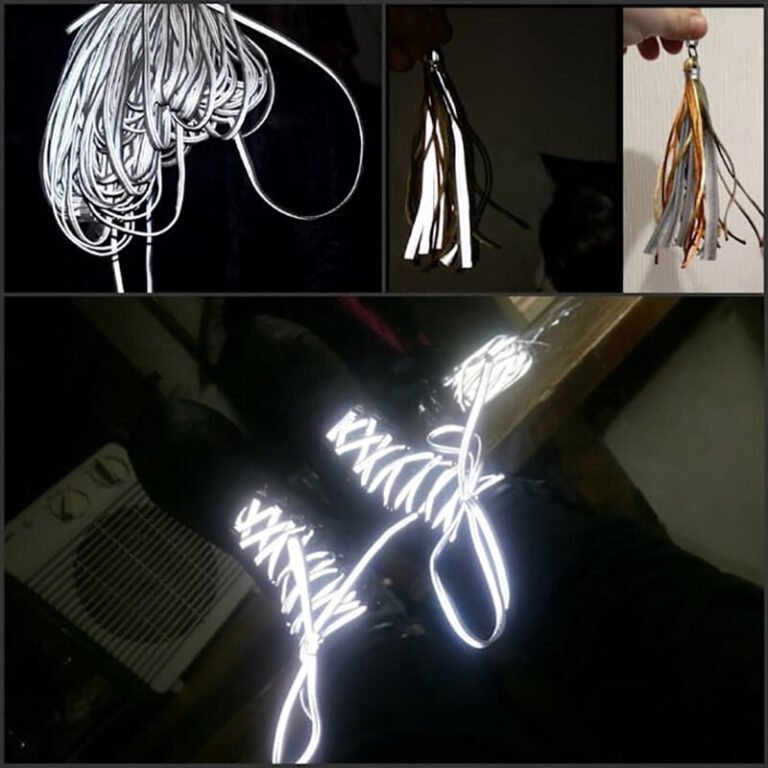
Figure 4: Flexible, segmented reflective films undergo tensile elongation testing to maintain adhesion and photometric performance.
7. Distributor & Sourcing Action Plan: Verifying Test Reports
When evaluating suppliers or receiving full production containers, your procurement team should apply this four-point laboratory verification checklist:
- Verify Notified Body Authenticity: Ensure test reports are issued by accredited international testing bodies (e.g., SATRA, SGS, TÜV Rheinland, Shirley Technologies). Check test certificate validity dates directly with the issuing body.
- Audit Full Size Run Layouts: Confirm that the manufacturer has engineered compliant surface areas on the smallest size produced (e.g., Small or XS), where garment surface area is minimal.
- Inspect Care Label Markings: Ensure permanent wash-care labels clearly state standard compliance, class, maximum wash cycles, and pictograms as required by law.
- Match Batch Testing to Inbound Shipments: Request in-house lot release reports showing spectral and photometric readings from the actual raw material dye lots used in your order.
Integrated Quality from Raw Material to Finished Garment
At Nanjing VizGlo Safety Technology Co., Ltd., we operate our own in-house photometric and textile testing facilities alongside fully certified OEM/ODM apparel lines. By vertically integrating raw reflective material production with specialized workwear assembly, we deliver certified protection that protects your brand and bottom line.
Note for industrial electrical equipment specifiers: To explore high-voltage substation switchgear engineering based on advanced arc-quenching principles, visit our specialized commercial hub for SF6 circuit breakers.