Choosing OSHA-Compliant Hi-Vis Rain Gear for the US Market
A Practical Guide to ANSI/ISEA 107 Standards and Avoiding Costly Compliance Mistakes
Quick Answer: What Makes Rain Gear OSHA-Compliant?
OSHA-compliant hi-vis rain gear for US workers must meet ANSI/ISEA 107 standards, which classify visibility apparel into three classes based on background complexity and traffic speed. Class 1 suits low-traffic areas with simple backgrounds (parking attendants), Class 2 covers roadway workers where traffic exceeds 25 mph, and Class 3 is mandatory for highway workers, utility crews, and anyone working near traffic exceeding 50 mph. The key to compliance—and avoiding expensive OSHA fines ranging from $15,625 to $156,259 per violation—is matching the rain gear class to your actual work environment’s traffic speed and visual complexity, not simply buying the highest class available. Each class requires specific amounts of fluorescent background material (155-1,240 square inches) and retroreflective tape (201-310 square inches) positioned to create a recognizable human silhouette visible from 1,000+ feet.
1. Understanding ANSI/ISEA 107: The Foundation of US Hi-Vis Standards
When OSHA mandates high-visibility safety apparel for workers exposed to vehicular traffic or equipment operators, they’re referencing the American National Standards Institute (ANSI) and International Safety Equipment Association (ISEA) standard 107. This isn’t just bureaucratic jargon—ANSI/ISEA 107 is a precisely engineered specification that determines whether a worker is visible enough to prevent fatal accidents in their specific work environment.
Why ANSI/ISEA 107 Matters for Rain Gear
Unlike standard hi-vis apparel, rain gear presents unique compliance challenges. The waterproof coating, seam sealing, and additional layers can interfere with retroreflectivity if not properly engineered. According to OSHA’s 1926.201 regulation, employers must ensure workers are “conspicuously visible” when exposed to moving equipment. During rain, fog, or low-light conditions, this visibility requirement becomes even more critical—and more difficult to achieve.
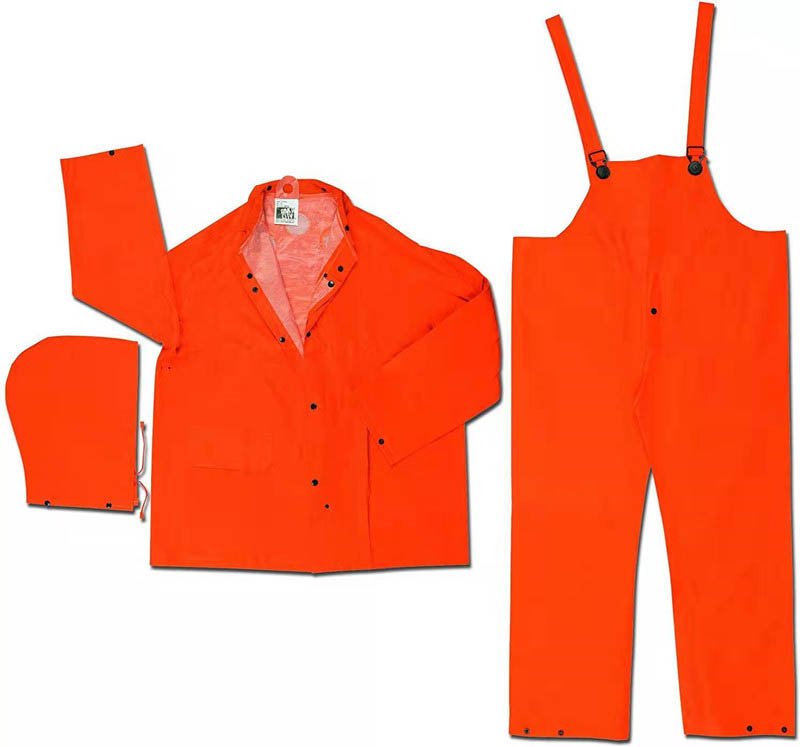
The standard specifies three performance classes (Class 1, 2, and 3), each designed for different risk levels. For rain gear specifically, you’re typically choosing between Class 2 and Class 3, as Class 1 rarely provides adequate coverage for weather protection garments. The classification depends on two measurable factors: the square inches of fluorescent background material and the square inches of retroreflective material configured to create a recognizable human form at distance.
Understanding this foundation is crucial because many suppliers claim “OSHA compliance” without specifying which ANSI class their rain gear meets. This ambiguity can lead to purchasing Class 2 jackets when your highway maintenance crew legally requires Class 3—a mistake that exposes you to both safety hazards and regulatory penalties.
2. Breaking Down the Three Classes: Which Does Your Team Need?
The distinction between ANSI/ISEA 107 classes isn’t arbitrary—each class correlates directly to worker exposure risk based on traffic speed, complexity of the work background, and worker tasks. Here’s the practical breakdown for rain gear selection:
1 Class 1
Minimum Requirements: 155 sq. in. background + 201 sq. in. reflective
Suitable For: Parking attendants, warehouse personnel, low-traffic retrieval workers
Traffic Speed: Under 25 mph in controlled environments
⚠️ Rarely suitable for rain gear applications
2 Class 2
Minimum Requirements: 775 sq. in. background + 201 sq. in. reflective
Suitable For: Municipal workers, roadway construction (under 50 mph), airport ground crew
Traffic Speed: 25-50 mph with moderate complexity backgrounds
✓ Most common for general rain gear
3 Class 3
Minimum Requirements: 1,240 sq. in. background + 310 sq. in. reflective
Suitable For: Highway workers, utility crews near highways, emergency responders
Traffic Speed: Over 50 mph or high complexity/risk environments
⚠️ Legally required for highway speeds
The Critical Sleeve and Lower Torso Requirement
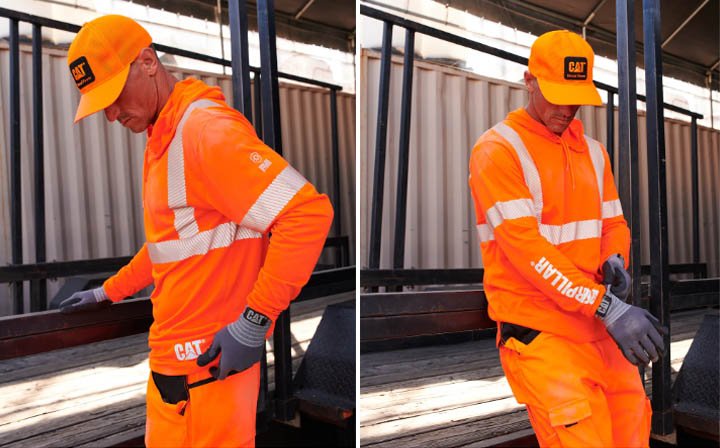
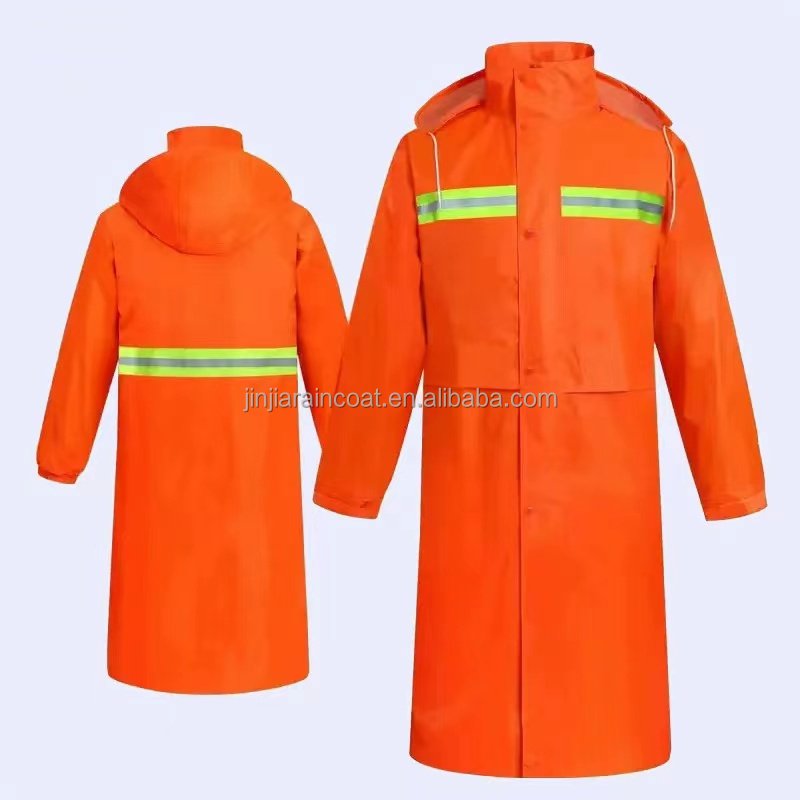
Here’s where many buyers make mistakes: Class 3 designation requires 360-degree visibility including retroreflective material on sleeves and lower torso. A rain jacket might have sufficient background and reflective material total square inches to technically qualify as Class 3, but if that reflective tape isn’t positioned on sleeves and extending below the waist, it fails Class 3 compliance when tested.
This is particularly important for rain gear because workers often layer jackets over other clothing. Your hi-vis workwear system must account for the outer rain layer being the primary visibility element when worn. If your Class 2 rain jacket covers a Class 3 vest, the combined ensemble reverts to Class 2 compliance during rain—potentially violating OSHA requirements for highway work.
3. Industry Expert Insight: The Most Common Procurement Mistake
“In my years of exporting hi-vis garments and reflective materials globally, the most common and costly mistake B2B buyers make is mismatching the workwear class to the actual work environment. Many either overspend on Class 3 gear when Class 2 is completely sufficient, or worse, risk severe safety hazards and compliance fines by using Class 1 in high-traffic zones.”
“In this guide, I’ll cut through the technical jargon of ANSI/ISEA 107 and EN ISO 20471. My practical advice? Always let the speed of nearby traffic and the worker’s task complexity dictate your choice. Finding that perfect balance between maximum safety compliance and procurement cost-efficiency is exactly what we will decode below.”
Real Cost Analysis: The Financial Impact of Getting It Wrong
| Scenario | What Happens | Financial Impact |
|---|---|---|
| Over-Specifying (Class 3 when Class 2 is adequate) | Unnecessary premium cost per garment ($45-85 vs $25-45) | 20-50% budget waste annually |
| Under-Specifying (Class 2 in highway zones requiring Class 3) | OSHA violation citations + accident liability exposure | $15,625-156,259 per violation + legal costs |
| Proper Match (Correct class for environment) | Full compliance + optimal budget allocation | Maximum ROI + zero regulatory risk |
The procurement sweet spot lies in conducting a proper job hazard analysis (JHA) before specifying rain gear. Document the actual traffic speeds your workers encounter, photograph the visual complexity of work backgrounds, and consult OSHA’s 1926.201 regulation for explicit guidance. This 30-minute analysis can save tens of thousands in both direct costs and potential liability.
4. Material & Construction Requirements for Rain Gear Compliance
ANSI/ISEA 107 doesn’t just specify how much reflective material—it also mandates performance characteristics that are particularly challenging for waterproof garments. Understanding these requirements helps you differentiate between legitimate compliant rain gear and products that merely look the part.
Fluorescent Background Material Standards
The fluorescent yellow-green, orange-red, or red background material must maintain chromaticity (color) values within strict coordinates even after laundering and UV exposure. For rain gear, the challenge is maintaining these values through:
- Waterproof coating processes that can alter fabric color
- Seam sealing heat application that may cause discoloration
- Extended UV exposure when working outdoors in all weather
- Chemical resistance requirements for certain industries
Quality manufacturers test fabric batches using spectrophotometers to verify chromaticity coordinates before and after waterproofing treatment. Look for suppliers who can provide colorimetric test reports—this documentation proves their fluorescent fabrics remain ANSI-compliant even after waterproofing.
Retroreflective Material Performance
The reflective tape on rain gear faces unique durability challenges. ANSI/ISEA 107 requires retroreflective material to maintain minimum coefficient of retroreflection (RA) values of 330 candelas per lux per square meter for combined-performance materials (the type used on rain gear). This must survive:
- • 50 home laundering cycles (or 25 commercial launderings) without degradation below minimum RA values
- • Abrasion resistance testing simulating 1,000+ cycles of rubbing against equipment, vehicles, or rough surfaces
- • Flex durability for sleeve and torso tape that bends repeatedly during normal movement
- • Water resistance maintaining retroreflectivity when wet—critical for rain gear applications
Cheap rain gear often uses reflective tape that meets initial brightness standards but fails after just 10-15 wash cycles or loses retroreflectivity when saturated. When evaluating suppliers, specifically ask for wash durability test reports from accredited labs like UL, Intertek, or SGS.
Construction Details That Affect Compliance
Beyond materials, proper construction is critical for maintaining ANSI/ISEA 107 compliance throughout the garment’s life cycle:
Tape Attachment Methods
Sewn-on reflective tape must use ANSI-compliant thread with proper stitch density (6-10 stitches per inch). Heat-sealed tape requires proper temperature/pressure to prevent delamination in rain/heat cycles.
Seam Sealing Compatibility
Waterproof seam sealing over reflective tape areas must not compromise retroreflectivity. Quality manufacturers use clear seam sealing tape specifically engineered for hi-vis applications.
Configuration Compliance
Tape placement must create the required “human silhouette” pattern per ANSI diagrams. Random placement of sufficient total square inches doesn’t qualify if it fails pattern recognition tests at distance.
Permanent Labeling
Compliant garments must have permanently attached labels identifying the performance class and care instructions. These labels must survive the rated wash cycles without detaching or fading.
When sourcing from international manufacturers, insist on seeing actual test reports from accredited third-party labs, not just compliance claims. The difference between legitimate ANSI/ISEA 107 rain gear and look-alike products often only becomes apparent after field use—by which time you’ve invested in a non-compliant inventory and potentially exposed workers to hazards.
5. Selecting a Reliable OSHA-Compliant Rain Gear Supplier
The complexity of ANSI/ISEA 107 compliance for waterproof garments means your supplier choice directly impacts your regulatory risk exposure. Here’s a practical evaluation framework based on real-world procurement experience:

Essential Supplier Qualifications
1. Vertical Integration Capabilities
Look for manufacturers who produce both the reflective materials AND the finished garments in-house. This vertical integration ensures:
- Consistent material specifications across production runs
- Better quality control from raw materials through final assembly
- Ability to customize reflective tape configuration for your specific needs
- Direct accountability for compliance at every production stage
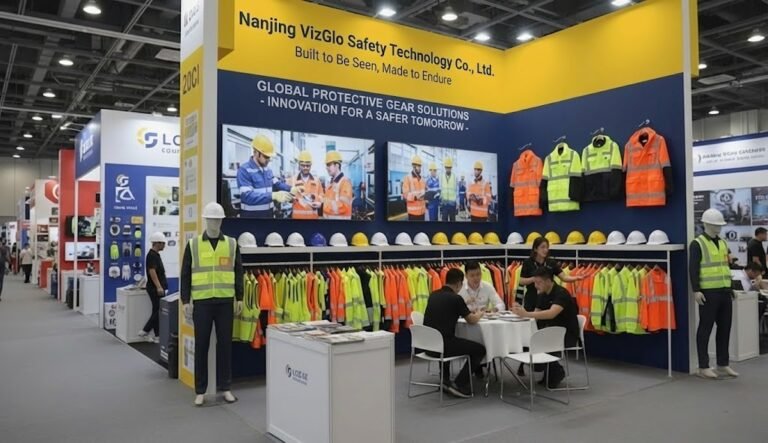
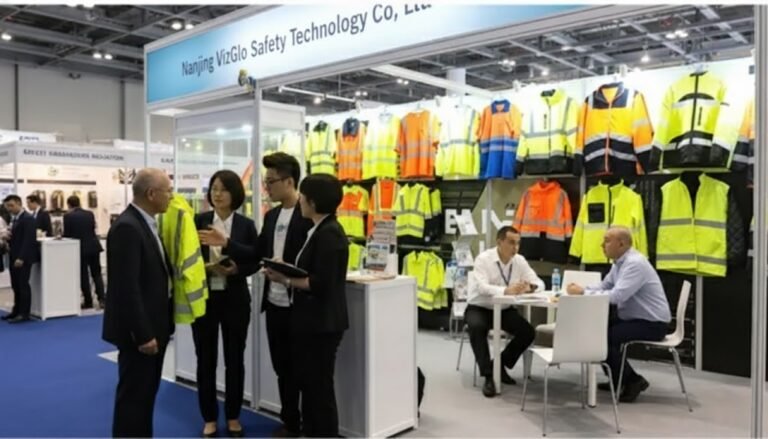
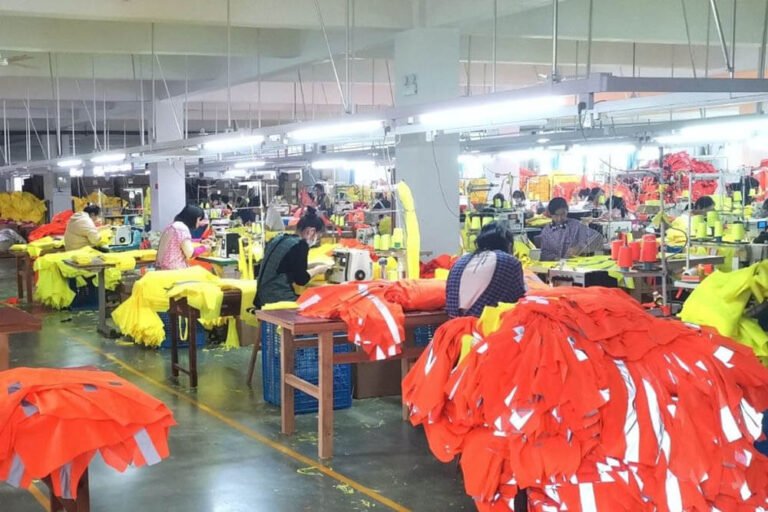
VizGlo Safety’s integrated production model—manufacturing both professional hi-vis workwear and the reflective materials that go into them—exemplifies this advantage. When a single facility controls the entire value chain, there’s no finger-pointing between material suppliers and garment assemblers when compliance issues arise.
2. Documented Testing & Certification
Request the following documentation before placing orders:
- Third-Party Test Reports: Photometric test data showing retroreflective coefficient values from accredited labs
- Wash Durability Results: Documentation proving reflective performance survives 25-50 industrial wash cycles
- Chromaticity Certificates: Proof that fluorescent colors remain within ANSI coordinates after waterproofing
- Product Certification: Official ANSI/ISEA 107 certification from bodies like UL or Intertek (not just self-certification)
3. Customization Flexibility for US Market
The best suppliers understand that OSHA compliance often requires customization beyond standard catalog items:
- Ability to modify reflective tape configuration for specific job requirements
- Willingness to add company logos without compromising compliant material placement
- Experience producing specialized sizes (tall, big & tall) while maintaining class rating
- Understanding of state-specific requirements (California’s more stringent Cal/OSHA standards, etc.)
4. Long-Term Supply Chain Stability
Rain gear compliance isn’t a one-time purchase—it’s an ongoing commitment. Evaluate whether your supplier can provide consistent availability, maintain consistent quality across multiple orders, and adapt to ANSI standard updates (the standard is periodically revised). Look for manufacturers with ISO 9001 quality management certification and established US distribution channels.
Red Flags to Avoid
- ⚠ Vague compliance claims without specific ANSI/ISEA 107 class designation
- ⚠ Inability to provide third-party test reports upon request
- ⚠ Prices significantly below market averages (suggesting material/construction shortcuts)
- ⚠ No permanent labeling on sample garments identifying performance class
- ⚠ Reflective tape that feels stiff, brittle, or cracks when flexed (indicates poor quality material)
Remember: The consequences of non-compliant rain gear extend far beyond the initial purchase price. A single OSHA citation can cost more than your entire annual PPE budget, and a worker injury in non-compliant gear creates liability exposure that could threaten your business’s existence. Invest the time to thoroughly vet suppliers upfront—it’s the most cost-effective risk management strategy available.
Need Expert Guidance on ANSI/ISEA 107 Compliance for Your Fleet?
VizGlo Safety’s technical team provides complimentary compliance assessments for bulk orders. Get personalized recommendations based on your actual work environments, traffic patterns, and regulatory requirements.
Request Free Compliance Consultation✓ No-obligation evaluation ✓ Custom specification recommendations ✓ Direct manufacturer pricing
6. Frequently Asked Questions About OSHA-Compliant Hi-Vis Rain Gear
Can Class 2 rain gear be upgraded to Class 3 by adding a reflective vest underneath?
No, this common workaround doesn’t achieve true Class 3 compliance. ANSI/ISEA 107 requires that the outermost visible garment meets the class requirement independently. When a Class 2 rain jacket covers a Class 3 vest, the ensemble’s visibility defaults to Class 2 because the vest’s reflective material is obscured. For workers requiring Class 3 protection, you must specify Class 3-rated rain gear with reflective material on the sleeves and lower torso of the jacket itself. This is particularly critical for highway maintenance crews and utility workers near high-speed traffic.
How long does ANSI/ISEA 107 compliant rain gear typically remain compliant with regular use?
The standard requires retroreflective materials to survive a minimum of 25 industrial launderings (or 50 home wash cycles) while maintaining minimum brightness values. However, field compliance life depends heavily on usage conditions. Quality rain gear from reputable manufacturers typically provides 12-18 months of compliant service under normal construction/utility usage, including weekly laundering. Factors that accelerate degradation include: excessive exposure to harsh chemicals, abrasion against rough surfaces, and improper washing (high heat, harsh detergents). Implement a garment inspection program checking for faded fluorescent material, cracked/peeling reflective tape, and torn seams. Replace garments immediately when visible deterioration occurs—degraded PPE creates both safety and compliance risks.
Are there different ANSI/ISEA 107 requirements for rain gear used at night versus daytime?
ANSI/ISEA 107 classification doesn’t change based on time of day—a Class 3 garment must meet Class 3 requirements 24/7. However, the standard addresses visibility under different lighting through two material types: fluorescent background material (visible during daylight through color contrast) and retroreflective material (visible at night/low-light by reflecting vehicle headlights back to drivers). This is why compliant rain gear requires BOTH material types in specified quantities. Some buyers mistakenly think highly reflective rain gear without fluorescent background material suffices for night work—this fails ANSI compliance because it provides inadequate daytime visibility. Similarly, fluorescent-only rain gear without sufficient reflective tape fails nighttime requirements. Your procurement specifications must demand both material types in class-appropriate quantities.
What’s the penalty for using non-compliant hi-vis rain gear if OSHA inspects our site?
OSHA violations for inadequate high-visibility PPE fall under 29 CFR 1926.201 (signaling) and typically result in “Serious” violation citations when workers are exposed to vehicular traffic without proper visibility protection. As of 2024, OSHA’s penalty structure is: Serious violations: $15,625 per instance; Repeat violations: $156,259 per instance; Willful violations: $15,625 to $156,259 per instance. A single inspection finding multiple workers in non-compliant rain gear can generate separate citations per worker, creating six-figure penalty exposure quickly. Beyond monetary fines, citations trigger enhanced inspection frequency, potential criminal charges if worker fatalities occur, and difficult insurance/bonding renewals. The financial and reputational risks of non-compliant PPE far exceed the marginal cost difference between compliant and non-compliant rain gear.
Can we use international hi-vis standards like EN ISO 20471 instead of ANSI/ISEA 107 in the US?
While EN ISO 20471 (European standard) and ANSI/ISEA 107 (American standard) share similar objectives, they’re not interchangeable for US OSHA compliance. When OSHA regulations reference high-visibility apparel requirements, they specifically cite ANSI/ISEA 107 as the consensus standard. Using EN ISO 20471-compliant rain gear in the US creates regulatory ambiguity—even though the European standard may provide equivalent or superior visibility protection. For multinational companies operating in both markets, some manufacturers (including VizGlo Safety) produce dual-certified garments meeting both standards simultaneously. This dual certification streamlines global procurement but requires explicit confirmation that both standards are met. For US-only operations, insist on clear ANSI/ISEA 107 certification to eliminate any compliance uncertainty during OSHA inspections.
Should we provide different rain gear classes for different roles within the same construction project?
Absolutely, and this is where significant cost optimization occurs without compromising safety. Within a single construction site, you might legitimately have: Class 3 requirements for flaggers and workers directly in traffic lanes (highway speeds); Class 2 requirements for equipment operators, general laborers in controlled traffic areas; Class 1 for warehouse personnel in material staging areas away from traffic. The key is conducting a proper Job Hazard Analysis (JHA) documenting the traffic exposure for each role, then specifying appropriate rain gear classes accordingly. This targeted approach typically reduces overall PPE spending by 20-35% compared to blanket Class 3 procurement while maintaining full compliance. Document your JHA thoroughly—OSHA inspectors will review your risk assessment justification for class selection decisions. Never downgrade class requirements to save costs; instead, rightsize them based on legitimate exposure analysis.
Conclusion: Making the Right Choice for Your Team
Selecting OSHA-compliant hi-vis rain gear for the US market isn’t simply about buying the brightest jackets available—it’s a strategic decision that balances regulatory compliance, worker safety, budget optimization, and supplier reliability. The ANSI/ISEA 107 framework provides clear guidelines, but successful implementation requires understanding the nuances of class selection, material performance, and construction quality.
Remember the core principle: match the rain gear class to your workers’ actual traffic exposure and task complexity, not to what seems like the “safest” or cheapest option. Document your decision-making process through formal Job Hazard Analysis, demand third-party test documentation from suppliers, and implement regular garment inspection programs to maintain ongoing compliance.
When you partner with manufacturers who understand both the technical requirements and real-world application challenges of OSHA-compliant rain gear—like VizGlo Safety’s integrated hi-vis workwear solutions—you gain more than just compliant products. You access expertise that helps navigate complex procurement decisions, customize solutions for your specific environments, and maintain consistent quality across multi-year supply relationships.