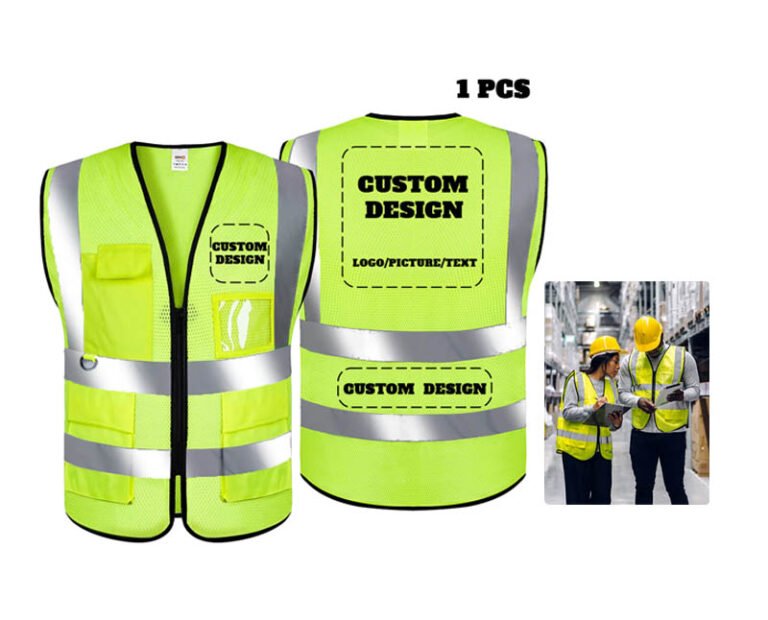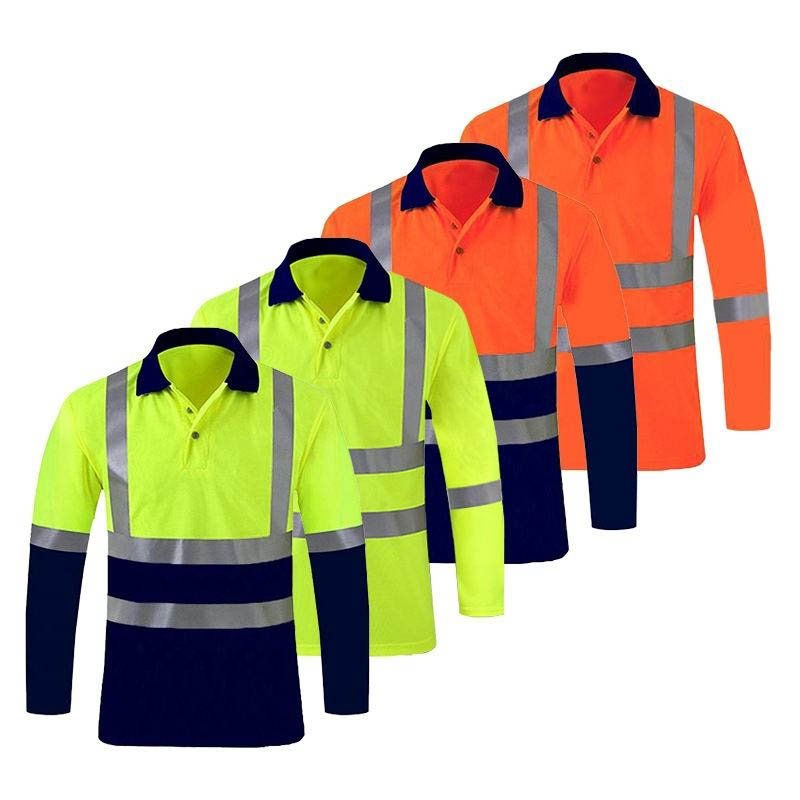
The Ultimate Guide to Custom Hi-Vis Jackets with Logo: Printing vs. Embroidery
Making the right choice between printing and embroidery for your team’s safety gear
Choosing between printing and embroidery for custom hi-vis jackets isn’t about selecting the “better” method—it’s about matching the right technique to your specific garment, logo design, and working environment. The decision hinges on three critical factors: the jacket’s fabric construction (especially waterproofing and breathability), your logo’s complexity and size, and the physical demands your team faces daily. While embroidery offers unmatched durability and a premium three-dimensional appearance on thick fabrics like fleece-lined softshells, it physically punctures materials—potentially compromising waterproof membranes in technical jackets. Conversely, modern heat transfer vinyl (HTV) and screen printing preserve fabric integrity while delivering sharp, vibrant graphics, making them ideal for high-performance outerwear. Most importantly, both methods must maintain the required fluorescent background area mandated by ANSI/ISEA 107 or EN ISO 20471 standards—because a logo that nullifies your jacket’s safety certification defeats its primary purpose of protecting your team.
Understanding the Core Methods: Printing vs. Embroidery
When you’re investing in custom hi-vis jackets for your team, the logo application method you choose becomes a strategic decision that impacts brand visibility, garment performance, and worker safety. Let’s break down what each method truly involves beyond the surface-level differences.
Embroidery: The Traditional Approach
Embroidery uses computerized machines to stitch your logo directly into the fabric using polyester or rayon threads. Each needle punctures the material thousands of times, creating a raised, textured design that’s physically part of the garment.
- Creates a premium, three-dimensional appearance
- Highly durable in low-abrasion environments
- Limited color complexity (typically 6-8 thread colors max)
- Best for simple, bold logos without gradients
- Adds slight weight and thickness to the garment
Printing Methods: Modern Versatility
Modern printing encompasses several techniques—heat transfer vinyl (HTV), screen printing, and reflective heat transfer films—each applying your logo without piercing the fabric’s protective membrane.
- Preserves waterproof and breathable membranes
- Supports unlimited colors and complex gradients
- Can incorporate reflective materials for enhanced visibility
- Lighter weight application
- Ideal for photographic or detailed designs
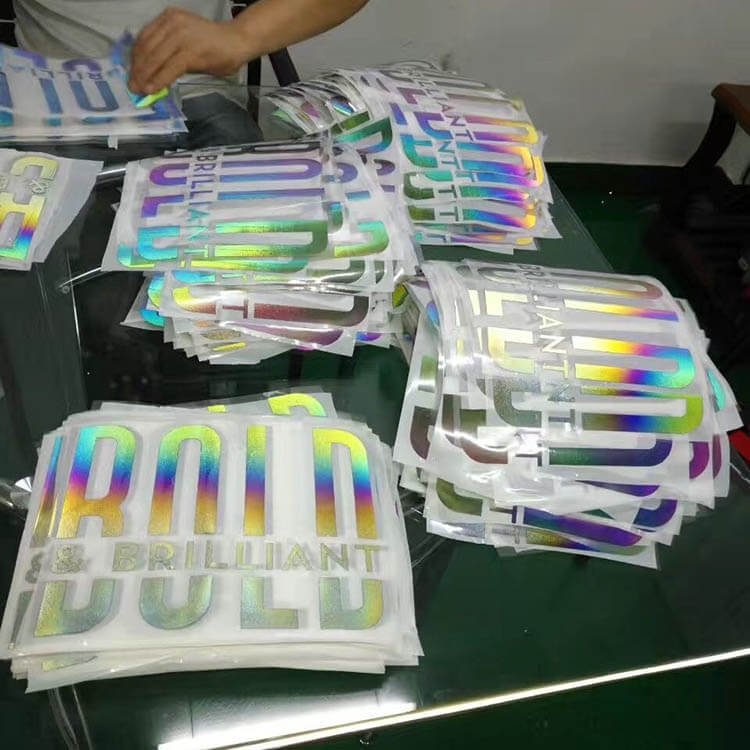
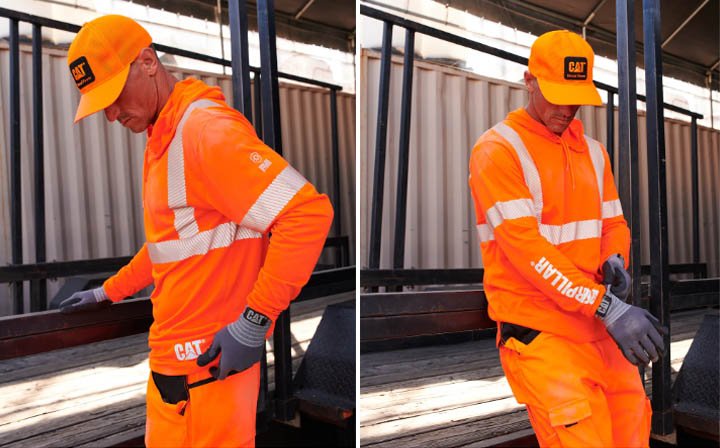
Various custom reflective logo applications demonstrating different printing techniques
How Your Jacket’s Fabric Dictates the Right Method
Here’s where theory meets reality in the field. The fabric composition of your hi-vis jacket determines which customization method will maintain both performance and safety standards.
⚠️ The Waterproof Jacket Dilemma
This is the scenario I encounter most frequently with clients. You’ve invested in high-quality waterproof hi-vis jackets with sealed seams and breathable membranes. Then embroidery creates thousands of tiny punctures across the chest or back panel. What happens?
- Water ingress: Each needle hole becomes a potential leak point
- Membrane damage: The internal waterproof layer (often Gore-Tex or similar) gets permanently compromised
- Reduced breathability: Damaged membranes can’t regulate moisture properly
- Delamination risk: Stitching can cause layers to separate over time with washing
Solution: Use heat transfer vinyl (HTV) or reflective heat transfer films that bond to the surface without penetration.
✅ Embroidery Works Well On:
- ✓ Thick fleece linings: The dense fabric supports stitching without puckering
- ✓ Heavy-duty softshells: Multiple fabric layers distribute tension
- ✓ Canvas work jackets: Rugged weave handles needle penetration
- ✓ Insulated bomber jackets: (on non-waterproof versions) Quilted structure works well
✅ Printing Excels On:
- ✓ Waterproof shells: Maintains sealed integrity
- ✓ Lightweight windbreakers: No fabric distortion
- ✓ Breathable mesh-lined jackets: Preserves airflow design
- ✓ High-stretch fabrics: HTV flexes with the material
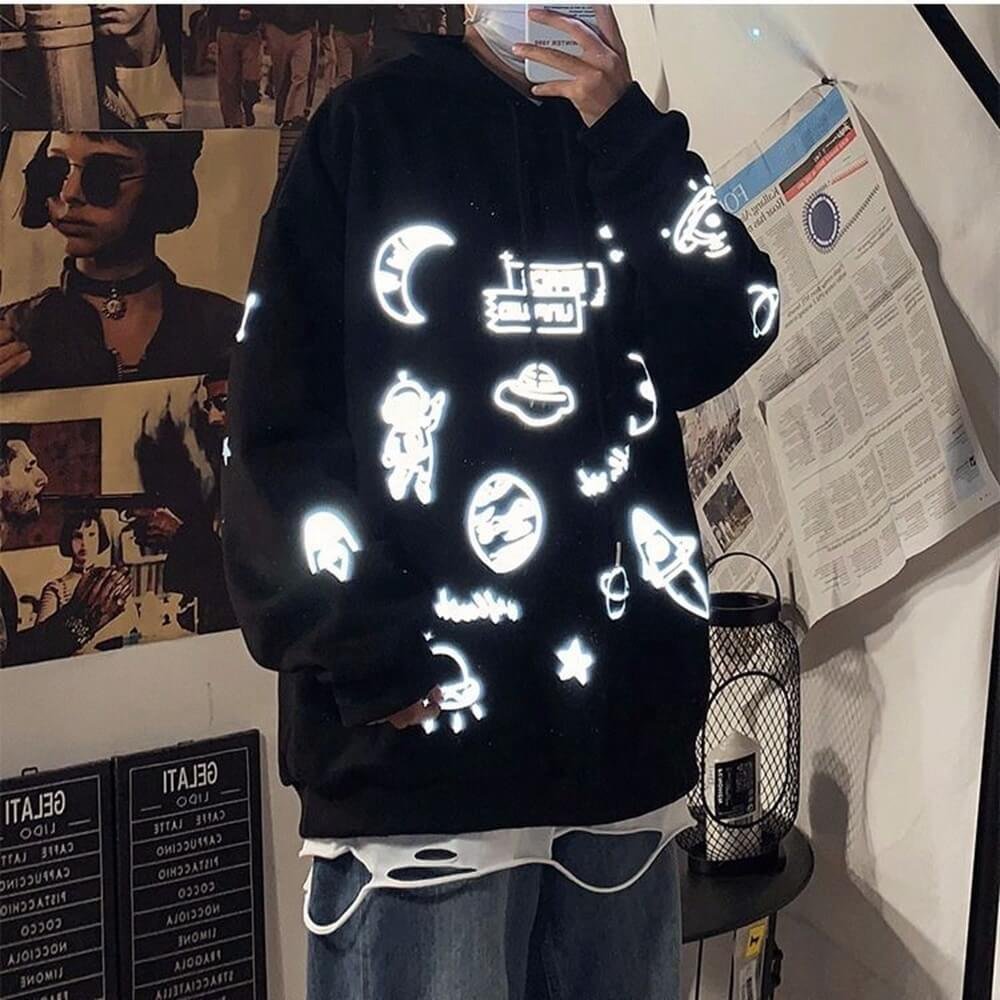
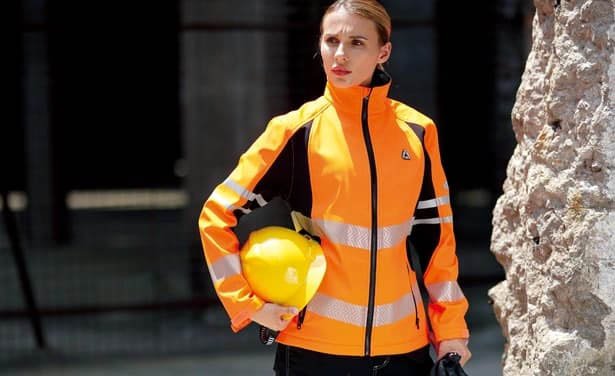
Heat transfer reflective logos preserve fabric integrity while providing excellent visibility
Logo Design Complexity: Which Method Wins?
Your brand’s logo design significantly influences which customization method delivers the best visual impact. Let me walk you through real-world scenarios I’ve helped clients navigate.
When Embroidery Shines
Embroidery creates that unmistakable premium texture that elevates your brand’s perceived quality. It’s perfect when your logo features:
- Bold, simple shapes: Clean lines with minimal detail translate beautifully into thread
- Limited color palette: 2-4 solid colors produce striking results
- Text-based designs: Company names or department labels in clear fonts (minimum 6mm letter height)
- Traditional corporate looks: When you want that established, professional appearance
Example: A construction company’s logo with a solid shield emblem and bold sans-serif lettering—embroidery makes this stand out with a tactile quality that commands respect on the job site.
When Printing Dominates
Modern printing techniques—especially reflective heat transfer—open up creative possibilities embroidery simply can’t match:
- Complex gradients: Smooth color transitions that embroidery thread can’t replicate
- Photographic elements: Detailed images or realistic graphics
- Fine text: Small lettering below 6mm height remains crisp and legible
- Multi-color designs: Unlimited color combinations without thread changes
- Reflective enhancement: Logos that incorporate retroreflective materials for nighttime visibility
Example: A logistics company logo featuring a truck silhouette with gradient sunrise behind it—heat transfer vinyl captures every color nuance while adding reflective properties for enhanced safety.
“I’ve seen companies attempt to embroider intricate logos only to be disappointed when fine details turn into muddy blobs of thread. The honest conversation I have with clients is this: if you can’t simplify your logo to 4-6 solid colors with clear spacing, printing will deliver a result you’ll actually be proud to wear.”
Durability Across Different Working Environments
This is where the rubber meets the road—literally. The working environment your team operates in daily should heavily influence your decision. Different industries demand different performance characteristics from their hi-vis jackets.
Construction & Heavy Industry
Environment: Constant abrasion from tools, materials, vehicle contact, concrete dust
Recommendation: Embroidery on thick softshells or heavy-duty canvas jackets
Why: Embroidered logos won’t peel or crack when scraped against rough surfaces. The stitching is integral to the fabric, not a surface application. I’ve seen embroidered logos on construction jackets last 3+ years of daily wear with minimal fading.
Transportation & Logistics
Environment: Frequent entering/exiting vehicles, loading docks, moderate abrasion, weather exposure
Recommendation: High-quality HTV or screen printing with reflective properties
Why: These workers need maximum visibility day and night. Reflective heat transfer logos provide superior nighttime detection while maintaining flexibility during constant movement. Modern HTV easily handles 50+ industrial wash cycles.
Railway & Trackside Work
Environment: All-weather exposure, high visibility requirements, stringent railway safety standards
Recommendation: Reflective printing methods on waterproof shells
Why: Railway specifications often mandate specific reflective performance. Heat transfer reflective films meet these requirements while preserving the waterproof barrier essential for trackside work. Plus, logo placement won’t compromise the required background fluorescent area.
Emergency Services & First Responders
Environment: Unpredictable conditions, chemical exposure, frequent washing, extreme visibility needs
Recommendation: Combination approach—embroidered patches for department emblems, reflective printing for ID and visibility
Why: Emergency service jackets often feature removable embroidered patches that can be replaced without discarding the entire garment. Reflective printed elements ensure maximum visibility in critical situations.
Utilities & Maintenance
Environment: Moderate weather exposure, varied tasks, professional appearance requirements
Recommendation: Embroidery for permanent crews, printing for seasonal workers
Why: Permanent utility workers benefit from the longevity and professional appearance of embroidery. For seasonal or temporary staff, cost-effective printed logos on standard jackets make more economic sense.
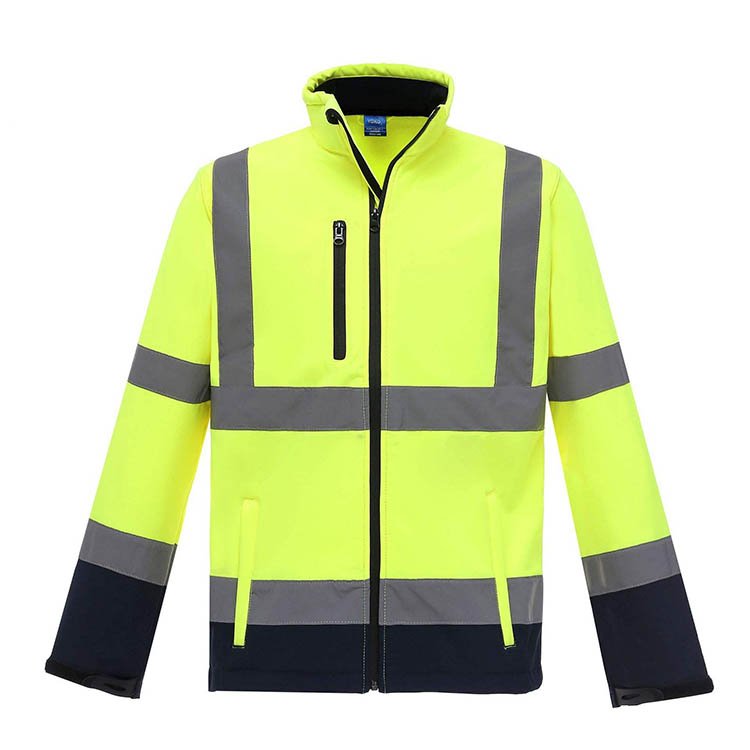
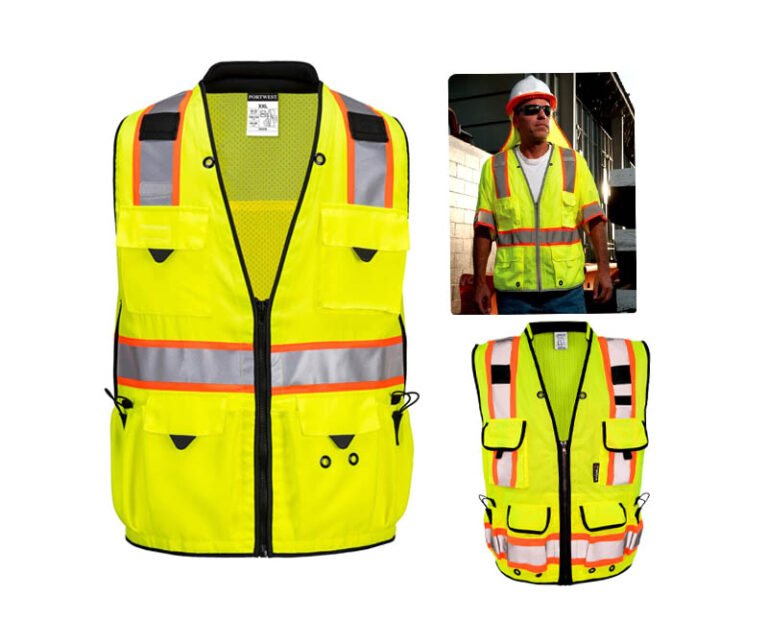
Hi-vis jackets customized for demanding industrial environments requiring both branding and safety compliance
The Non-Negotiable: Safety Standards Compliance
⚠️ Critical Warning: Logo Placement Can Invalidate Safety Certification
This is the single most important consideration that many buyers overlook, and it’s where my frontline experience proves most valuable to clients.
Both ANSI/ISEA 107 (North America) and EN ISO 20471 (Europe/Global) mandate specific minimum areas of fluorescent background material. Your logo—whether printed or embroidered—must not reduce this required area below the standard’s threshold.
ANSI/ISEA 107 Requirements
-
Class 3 (Highest visibility):
Minimum 1240 cm² fluorescent background
-
Class 2 (Medium visibility):
Minimum 775 cm² fluorescent background
-
Retroreflective tape:
Minimum 201 cm² (Class 3) or 155 cm² (Class 2)
A logo covering more than 10% of the required fluorescent area can drop your jacket from Class 3 to Class 2, or even render it non-compliant.
EN ISO 20471 Requirements
-
Class 3 (Highest visibility):
Minimum 0.80 m² fluorescent material
-
Class 2 (Medium visibility):
Minimum 0.50 m² fluorescent material
-
Retroreflective tape:
Minimum 0.13 m² arranged in specific patterns
European regulations are particularly strict about logo placement interfering with reflective tape continuity.
Safe Logo Placement Strategies
-
Left chest placement (most common):
Typically 4″ x 4″ maximum on upper left chest. This area is usually outside the required fluorescent zone on Class 3 jackets.
-
Upper back placement:
Above the horizontal reflective stripe, centered. Maximum recommended size: 8″ x 8″ for large logos, ensuring it doesn’t block the fluorescent panel required for Class 3 compliance.
-
Sleeve placement:
Left or right sleeve, positioned between shoulder and elbow. Keep logos under 3″ x 3″ to avoid interfering with sleeve reflective bands.
-
Use reflective logos:
By using reflective printing materials for your logo, you can actually contribute to the jacket’s overall reflective area rather than detract from it.
“I once worked with a client who wanted a massive company logo covering the entire back of their Class 3 winter jackets. When I explained that this would eliminate the Class 3 certification and potentially expose them to liability if a worker was injured, they immediately understood. We redesigned using a reflective heat transfer logo that maintained compliance while still creating strong brand presence. Safety always comes first—the logo supports that mission, it doesn’t compromise it.”
Cost Analysis: Beyond the Initial Price Tag
When evaluating costs, most buyers focus solely on the price per unit. But the true cost calculation for custom hi-vis jackets requires a longer-term perspective that factors in setup fees, volume requirements, durability, and replacement cycles.
| Cost Factor | Embroidery | Printing (HTV/Screen) |
|---|---|---|
| Setup Cost | $50-150 digitizing fee (one-time) | $25-75 screen/film setup (one-time) |
| Per-Unit Cost (100+ qty) | $3-8 per location | $1.50-5 per location |
| Minimum Order | Usually 12-24 pieces | Can be as low as 1-6 pieces |
| Reorder Flexibility | Easy—file stored digitally | Very easy—minimal setup time |
| Expected Lifespan | 3-5+ years (low abrasion) | 2-4 years (high-quality HTV) |
| Washing Durability | 100+ commercial washes | 50-75+ commercial washes (quality dependent) |
| Complex Design Cost | Increases significantly (more thread changes) | Minimal increase (same process) |
Total Cost of Ownership Example: 50 Jackets Over 3 Years
Embroidery Route:
- Setup: $100
- Initial order (50 jackets @ $5 each): $250
- Replacement after Year 2 (15 jackets @ $5): $75
- Total: $425
Printing Route (HTV):
- Setup: $50
- Initial order (50 jackets @ $3 each): $150
- Replacement after Year 2 (25 jackets @ $3): $75
- Replacement after Year 3 (10 jackets @ $3): $30
- Total: $305
Note: This assumes moderate-wear environment. In high-abrasion settings, embroidery’s superior durability may result in lower total cost despite higher per-unit pricing.
Expert Recommendations by Jacket Type
After advising hundreds of companies on their custom hi-vis jacket orders, here are my specific recommendations based on jacket type. When working with manufacturers, communicating these specifications clearly ensures you receive exactly what your team needs.
Waterproof/Breathable Shells
Recommended Method: Heat Transfer Vinyl (HTV) or Reflective Heat Transfer Film
Reasoning: Preserves the waterproof membrane’s integrity. Embroidery creates thousands of needle holes that will leak.
Best Application: Small chest logo (4″x4″) + larger reflective back logo (6″x8″)
💡 Pro Tip: Request welded (heat-sealed) logo application for premium waterproof jackets to eliminate even the minor penetration of standard HTV.
Fleece-Lined Winter Jackets
Recommended Method: Embroidery
Reasoning: The thick, multi-layer construction supports embroidery beautifully. The raised texture adds to the premium winter jacket aesthetic.
Best Application: Left chest logo (3.5″x3.5″) + optional large back emblem (up to 10″x10″ on non-fluorescent panel)
💡 Pro Tip: Use a backing stabilizer during embroidery to prevent puckering on thick insulation layers.
Softshell Work Jackets
Recommended Method: Either—depends on specific fabric
Reasoning: Most softshells handle embroidery well due to their dense weave. However, if it has a water-resistant membrane, stick with HTV.
Best Application: Embroidered chest logo (4″x4″) for premium look, or HTV if waterproofing is critical
💡 Pro Tip: Do a test application on a fabric swatch before committing to full production.
Lightweight Rain Jackets
Recommended Method: Screen Printing or Reflective Transfer
Reasoning: Thin nylon fabrics show every imperfection. Embroidery will pucker and distort. Printing lays flat and maintains the jacket’s sleek profile.
Best Application: Small printed logo on chest, large reflective transfer on back for visibility
💡 Pro Tip: Use plastisol ink for screen printing on nylon—it flexes without cracking.
Bomber/Quilted Jackets
Recommended Method: Embroidery (for non-waterproof) or Combination
Reasoning: The quilted pattern and padding support embroidery well. For waterproof bombers, use HTV instead.
Best Application: Embroidered chest patch + embroidered name/department on sleeve
💡 Pro Tip: Position embroidery in the center of quilted sections to avoid stitching through seams.
4-Season All-Weather Jackets
Recommended Method: Combination Approach
Reasoning: These versatile jackets often have removable liners. Embroider the outer shell (if non-waterproof areas) and use HTV for technical panels.
Best Application: Reflective HTV on back and sleeves + small embroidered chest logo
💡 Pro Tip: Place logos on panels that won’t be covered when the jacket is unzipped or the liner is removed.
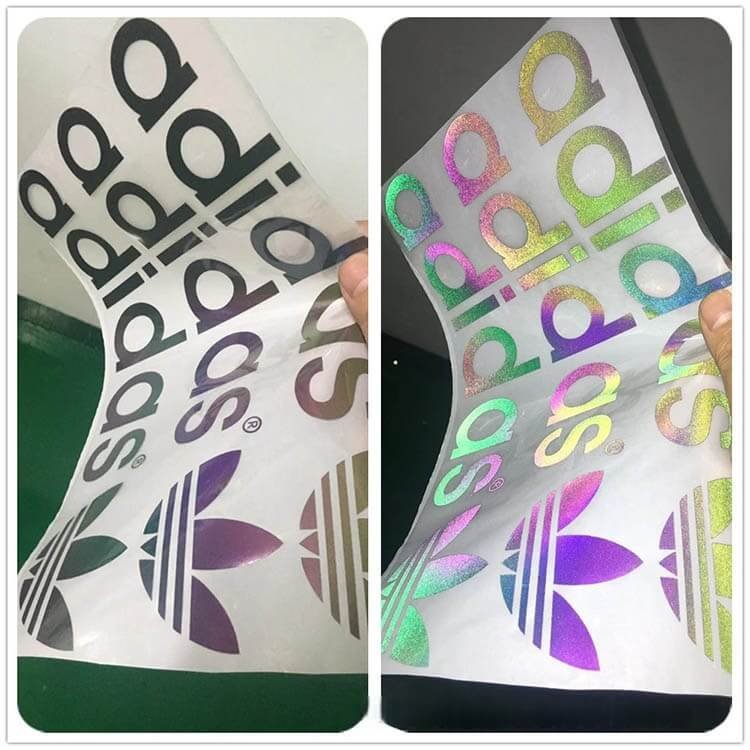
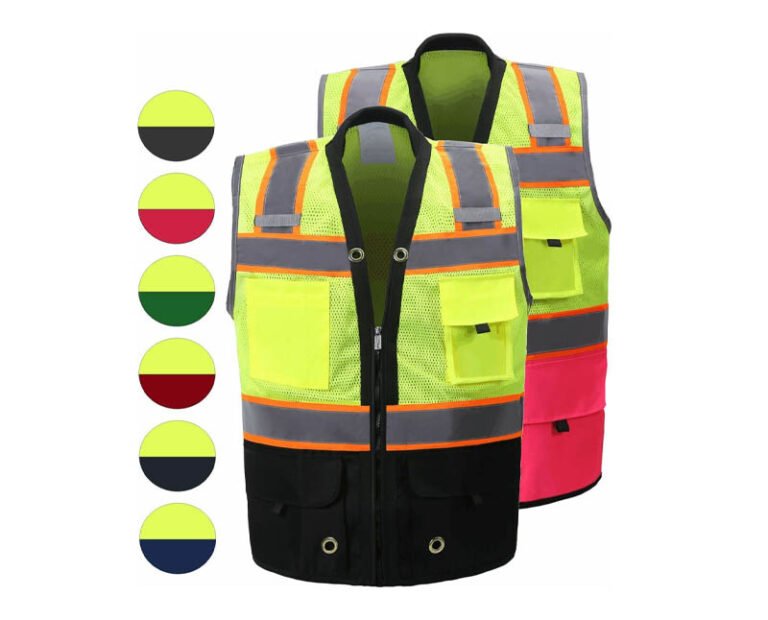
Professional logo applications demonstrating different techniques optimized for specific jacket types
Ready to Create Your Custom Hi-Vis Jackets?
At VizGlo Safety, we help you navigate every decision—from choosing the right jacket style and fabric to selecting the optimal logo application method. Our expert team ensures your custom hi-vis jackets meet all safety standards while representing your brand with pride.
Get Your Free Custom Quote Today →Expert guidance • Fast sampling • Global shipping • Compliance guaranteed
Frequently Asked Questions
Can I combine embroidery and printing on the same jacket?
Absolutely! This combination approach often delivers the best results. For example, you might embroider your company name on the left chest (premium, professional look) while using reflective heat transfer for a large, highly visible logo on the back. Just ensure that the total covered area doesn’t compromise the jacket’s safety classification. We frequently recommend this hybrid approach for clients who want both brand prestige and maximum visibility.
How do I know if my logo will work for embroidery?
Send us your logo file (vector format preferred: AI, EPS, or PDF) and we’ll provide a free digitization assessment. Generally, logos with 2-6 solid colors, clear shapes, and text above 6mm height work beautifully. If your logo has gradients, fine details, or more than 8 colors, we’ll recommend printing methods instead. We never digitize a design that we know won’t produce excellent results—your satisfaction is our priority.
Will embroidery make my waterproof jacket leak?
Yes, potentially. Each needle creates a hole through the waterproof membrane. While some manufacturers use seam-sealing tape over embroidery, this isn’t 100% effective and adds cost. For truly waterproof jackets (rated above 10,000mm water column), we strongly recommend heat transfer vinyl or welded logo applications. For water-resistant jackets (5,000-10,000mm), embroidery with seam sealing can work, but HTV remains the safer choice for maintaining performance.
How many washes will a printed logo last?
Quality matters enormously here. Our commercial-grade heat transfer vinyl withstands 50-75 industrial wash cycles at proper temperatures (60°C/140°F maximum). Screen printing with plastisol inks can last even longer—100+ washes. The key is following care instructions: wash inside-out, avoid bleach, and don’t exceed recommended temperatures. We’ve seen clients still wearing jackets with printed logos looking sharp after 3+ years of weekly washing. Cheap HTV from unverified suppliers might start peeling after 10-15 washes, which is why we source only certified materials.
What’s the minimum order quantity for custom logo jackets?
This depends on the customization method. For embroidery, we typically recommend minimum orders of 12-24 pieces to make the digitizing setup worthwhile. For printing methods, especially digital transfers, we can work with orders as small as 6 pieces, though per-unit costs are higher. For large corporations needing 500+ jackets, we offer significant volume discounts on both methods. If you’re unsure about quantities, start with a small sample order to test sizing and quality before committing to your full fleet.
Can I get reflective logos that glow at night?
Yes! Reflective logos don’t actually “glow”—they retroreflect light back to its source (like car headlights), making them appear incredibly bright at night. We offer several reflective logo options: silver reflective (classic bright silver), colored reflective films (maintain your brand colors while reflecting), and even segmented reflective designs for enhanced flexibility. For maximum nighttime visibility combined with daytime branding, reflective heat transfer is our top recommendation. These logos can contribute to your jacket’s overall reflective area, potentially helping maintain or upgrade its safety classification.
How do I ensure my logo placement meets safety standards?
This is exactly why working with an experienced manufacturer is crucial. We provide placement templates for each jacket style showing the “safe zones” where logos won’t compromise certification. Generally: keep chest logos under 4″x4″, position back logos above the horizontal reflective stripe, and ensure sleeve logos don’t interfere with reflective bands. We calculate the fluorescent background area for your specific jacket and logo size, then confirm compliance before production. We can also use reflective materials for your logo, which actually adds to the required reflective area rather than detracting from it. Never guess—always verify with your manufacturer or a certified safety professional.
What if I need to add employee names or IDs to jackets?
We offer several solutions for individual personalization: (1) Embroidered names on chest or sleeve—professional and permanent, (2) Printed name labels with reflective background—cost-effective for larger teams, (3) Velcro-attached embroidered name patches—allows jackets to be reassigned if staff changes, or (4) Direct-to-garment printing for complex information like QR codes or ID numbers. For safety officers or supervisors who need distinctive identification, we can combine custom colored jackets with unique badging systems. The most popular option is embroidered first names on the right chest with company logo on the left.
Final Thoughts: Choose Method, Protect People
The printing versus embroidery debate for custom hi-vis jackets isn’t about finding a universal “best” method—it’s about making an informed decision that balances three equally critical priorities: representing your brand professionally, ensuring long-term durability under real working conditions, and above all, maintaining the safety certifications that protect your team.
Throughout my years guiding global clients through these decisions, I’ve learned that the companies who invest time in understanding these nuances—who ask the right questions about fabric construction, who consider their workers’ actual daily environments, who prioritize safety compliance over aesthetic preferences—are the ones whose teams wear their branded hi-vis jackets with genuine pride and confidence.
Whether you choose the time-tested permanence of embroidery, the versatile precision of modern printing, or a strategic combination of both, make that choice deliberately. Your custom hi-vis jackets are more than corporate apparel—they’re life-saving equipment that happens to carry your brand. Treat them accordingly.
Ready to make the right choice for your team? Contact our customization specialists for personalized guidance based on your specific requirements. We’ll help you create custom hi-vis jackets that your team will trust, wear proudly, and rely on for years to come.