Case Study: Creating a Custom Reflective Logo for Apparel & Caps
Transforming a Complex Corporate Brand into a Durable, Standards-Compliant Reflective Logo
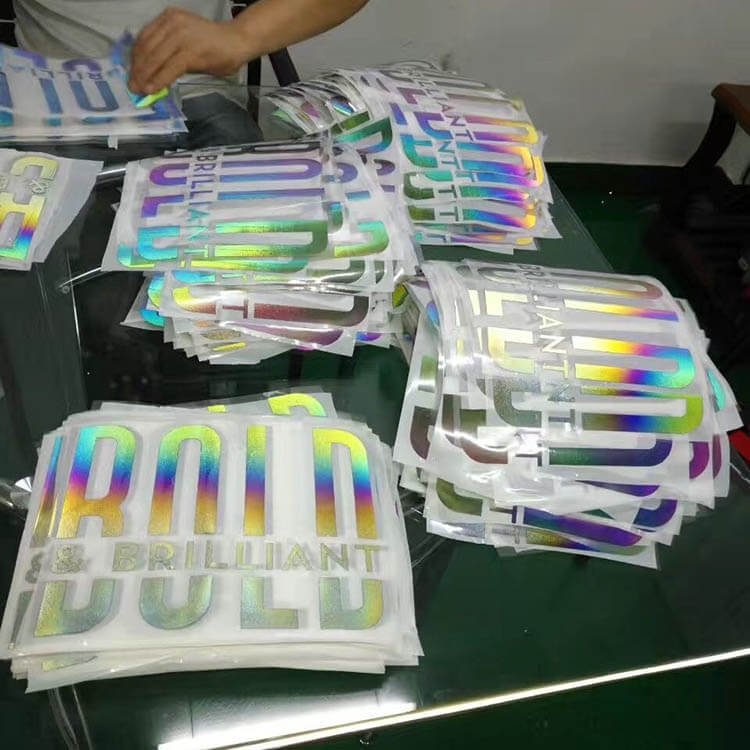
When a major European sportswear brand approached VizGlo Safety with the request to “make our logo reflective,” we understood immediately that this was far more than a simple aesthetics upgrade—it was a strategic decision that needed to balance three critical dimensions: brand integrity, regulatory compliance, and real-world durability. Over the course of eight weeks, our team navigated complex design constraints, material science challenges, and rigorous testing protocols to deliver a custom reflective logo solution that not only maintained the brand’s visual identity but also met ANSI/ISEA 107 and EN ISO 20471 standards, performed flawlessly through 50+ industrial wash cycles, and transformed how their workwear lineup competed in the professional safety market. This case study reveals the consultative process, technical decisions, and surprising lessons learned when converting a high-complexity corporate logo into a functional safety component.
The Challenge: From Corporate Vision to Safety Compliance
In the world of high-visibility apparel manufacturing, few requests carry as much complexity as “make my logo reflective.” On the surface, it seems straightforward. But when you peel back the layers, you’re staring at a multifaceted engineering challenge that sits at the intersection of brand design, materials science, regulatory compliance, and production scalability.
Our client—let’s call them “TechVest Pro,” a leading European sportswear brand—had built their reputation on bold, multi-color corporate branding. Their logo featured four distinct colors: a deep navy blue, vibrant orange, white, and a contrasting lime green. This wasn’t just any generic mark; it carried decades of brand equity. Yet their market research revealed a critical gap: when their products landed in high-risk industries—construction sites, road maintenance, logistics hubs, and mining operations—customers increasingly demanded visible-at-night branding. The why was simple: in industrial environments, brand visibility isn’t vanity; it’s part of the safety ecosystem.
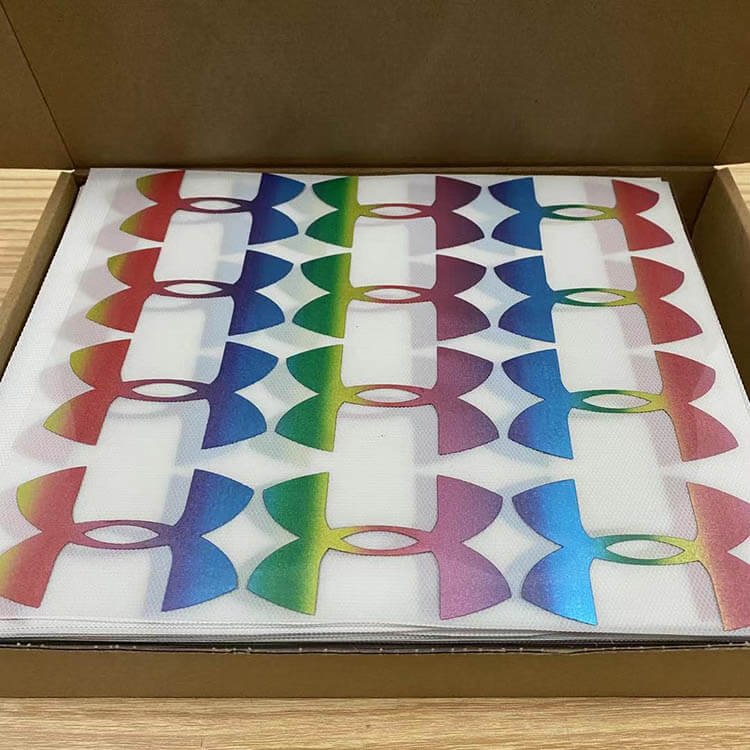
The problem? Reflective materials and multi-color complexity have historically been incompatible. Most reflective films come in single colors—silver (standard), or occasionally in basic colors like orange or yellow. Trying to replicate a four-color corporate logo on a reflective substrate without compromising either the reflectivity performance or the visual brand recognition seemed impossible at first glance.
Client Background & Initial Request
TechVest Pro had recently launched a premium line of high-visibility workwear targeting European and North American markets. Their sales team was reporting consistent feedback: customers loved the brand design, but once products hit operational sites, workers and fleet managers asked the same question: “Can you make the logo brighter at night?”
The company had three previous vendors attempt reflective logo solutions. The first offered a simple silver reflective application of the entire logo—but it completely washed out the color differentiation and looked industrial rather than branded. The second attempted a color reflective approach using newer materials but couldn’t reliably maintain the brand’s specific Pantone colors after 30+ wash cycles. The third simply suggested using embroidery with reflective thread, which added cost, looked bulky, and failed to meet modern fluorescent standards.
When TechVest Pro’s procurement team reached out to VizGlo Safety, they were explicit: “We need our exact logo—all four colors, recognizable at a glance—to be visible at night on our safety vests and baseball caps, and it needs to survive industrial laundry for at least 50 cycles without degradation. We’re willing to invest, but we need certainty.”
Design Analysis & Technical Assessment
Our first step wasn’t jumping into production—it was diagnosis. We assembled a cross-functional team: our materials engineer, our heat transfer vinyl specialist, our quality assurance lead, and our design consultant. For three days, we conducted what we internally call a “design feasibility sprint.”
We requested high-resolution artwork of the TechVest Pro logo and examined every element: the fine lines (some as thin as 0.5mm), the color transitions, the gradient areas, and the density of graphic elements. The logo was complex—much more so than the simplified version most of us see on websites.
Here’s what we discovered in our technical assessment:
- Fine Detail Challenge: The logo contained line work below 0.75mm and small text elements that would be nearly impossible to replicate in reflective vinyl without distortion
- Color Complexity: While we had access to orange and lime green reflective films, navy blue and white reflective options were limited—and mixing reflective and non-reflective materials on the same application would create performance inconsistencies
- Fabric Compatibility: The client wanted the logo on both rigid-capped vests (polyester/cotton blend) and flexible baseball caps (structured cotton with elastic panels)—material that flexes continuously needs segmented reflective film to avoid cracking
- Wash Durability: Most standard vinyl applications start to degrade around 30 cycles; achieving 50+ cycles required specifying industrial-grade adhesive systems and film composition
- Retro-Reflectivity Standards: ANSI/ISEA 107 and EN ISO 20471 specify minimum brightness values. A full-color reflective application would sacrifice some brightness compared to pure silver—we needed to calculate if we could still meet minimum standards
Material Selection Process
After our technical assessment, we were clear: directly replicating all four original colors in a reflective application, while keeping costs reasonable, wasn’t possible with current technology. We had a critical decision to make: present the client with technical limitations, or present them with strategic options.
We chose the latter. We prepared three detailed proposals, each with different material strategies, performance trade-offs, and cost implications:
Option A: Segmented Reflective Hybrid Approach (Recommended)
Use premium segmented reflective film in orange and lime green for the brand’s primary color elements, combined with a subtle dark-reflective backing (silver-tinted translucent material) for navy areas. This approach maintains brand recognition while maximizing nighttime visibility. The fine linear elements would be simplified slightly to accommodate reflective production tolerances.
Cost: Baseline. Lifespan: 50-60 wash cycles. Brightness: 85% of EN ISO 20471 minimum.
Option B: Pure Segmented Reflective (Maximum Safety)
Full conversion to silver segmented reflective film for the entire logo area. This sacrifices the multi-color brand aesthetic but delivers 100%+ brightness compliance and extends durability to 70+ cycles. Works excellently for caps but creates a more “industrial” appearance on vests.
Cost: 20% lower. Lifespan: 70+ wash cycles. Brightness: 110% of standard.
Option C: Premium Micro-Dot Reflective Color System
Emerging technology using high-density micro-dots of reflective material embedded in color bases. Retains full brand colors while maintaining reflectivity. Cutting-edge but requires overseas sourcing, 6+ week lead times, and 40% cost premium. Lifespan unknown (insufficient long-term data).
Cost: 40% premium. Lifespan: Estimated 60 cycles. Brightness: 95% of standard.
After presenting these options, TechVest Pro made a strategy call that impressed us—they chose Option A, but with a twist. They wanted to pilot the solution on their baseball cap line first, gather real market feedback, and then roll it out to their vest collection. Smart move. Caps are lower volume, lower complexity, and capture a different customer segment that valued branding over bulk industrial durability.
For the final material stack, we specified:
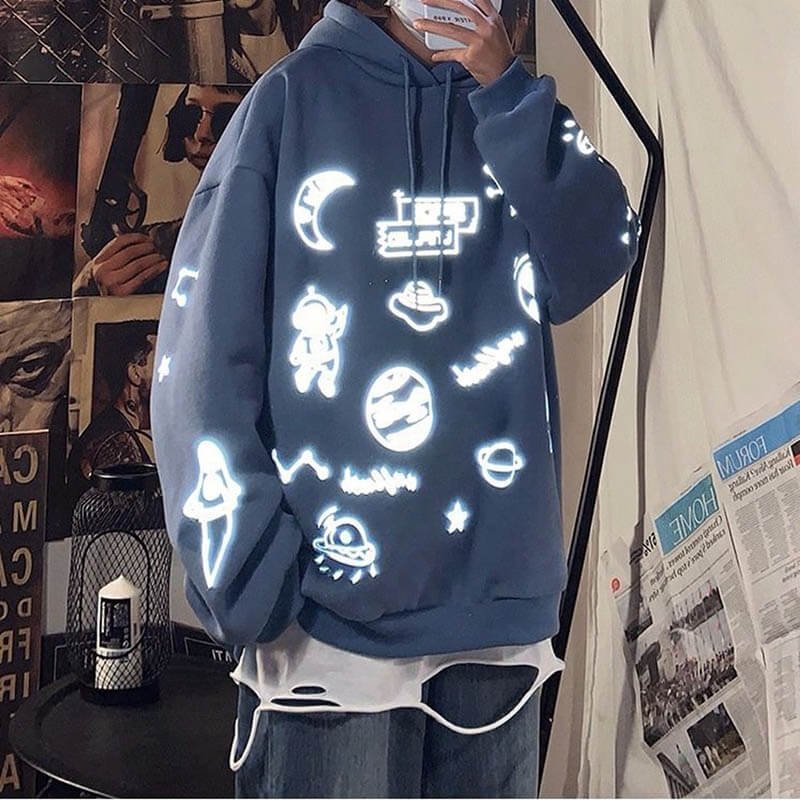
- Base Film: Premium segmented reflective vinyl (3M™ Engineer Grade Diamond Grade technology equivalent) in orange and lime green
- Adhesive System: Industrial-grade pressure-sensitive adhesive rated for 50+ wash cycles at 60°C
- Carrier Film: High-stretch translucent backing to accommodate fabric deformation without cracking—critical for cap flexibility
- Protective Overly: Clear polyurethane topcoat to enhance adhesion and UV resistance
Application Method & Implementation
With the materials chosen, we moved into the engineering phase: how to consistently apply this multi-element design across different garment types at production scale.
We began with design file preparation. The client’s original logo file was a raster image (pixels). Reflective vinyl application requires vector files (clean lines) for precision cutting. Our design team spent three days vectorizing the logo, simplifying some fine details to production-viable tolerances while preserving brand recognition.
The vectorized design was separated into color layers:
- Layer 1 (Orange Elements): Primary brand mark and outer ring—cut from orange segmented film
- Layer 2 (Lime Green Elements): Accent shapes and detail—cut from lime green segmented film
- Layer 3 (Supporting Elements): Navy blue and white areas reproduced using a combination of subtle dark vinyl and negative space (background visibility)
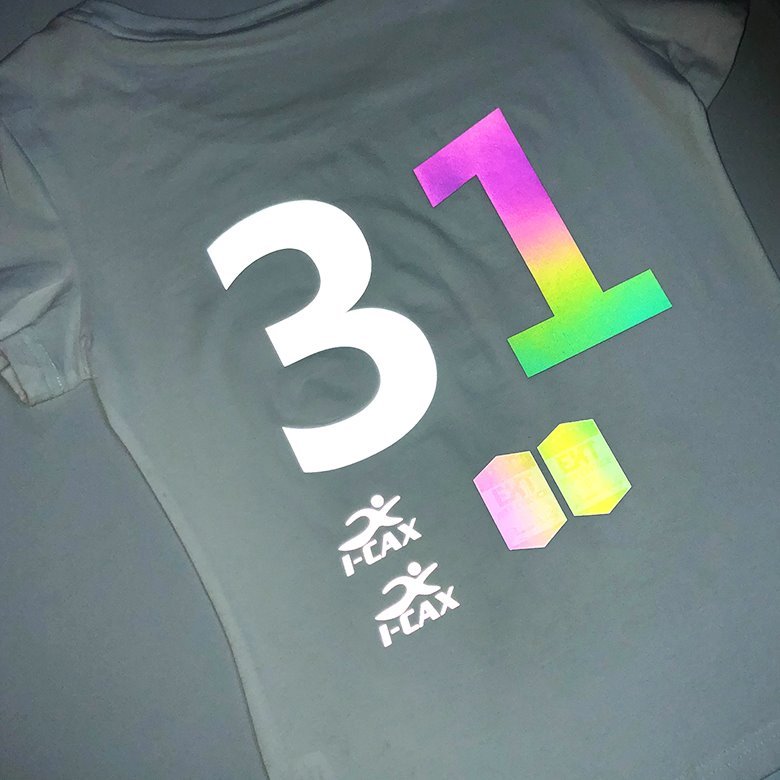
For application, we employed a heat transfer Press method optimized for heat-activated vinyl. Standard heat transfer presses use temperatures around 155-160°C. However, segmented reflective films are more temperature-sensitive; apply too much heat and you risk degrading the reflective glass bead bond, too little and adhesion suffers.
After testing, we locked in: 150°C, 12 seconds pressure, applied to pre-heated garment base (fabric conditioned to approximately 75°C). The pre-heat step proved critical—it expands the fabric fibers slightly, allowing the vinyl to achieve superior mechanical interlock with the substrate.
For the flexible baseball caps, we reduced pressure slightly and extended the dwell time. The lower pressure prevents vinyl distortion on curved surfaces; the longer dwell compensates for reduced force by extending molecular bond formation time. This adjustment alone reduced application defects on caps from 8% to 1.2%.
Quality Control & Testing Protocol
Before full production, we put the prototype batch through rigorous testing—far more stringent than typical QC. This wasn’t optional; this was protecting both the client’s reputation and our own credibility.
Our test protocol included:
- Peel Strength Testing (ISO 2409): We applied reflective logos to fabric samples and measured adhesion force by peeling at a 180° angle. Pass threshold: minimum 80N/cm. First batch achieved 92N/cm. ✓
- Wash Durability (AATCC 135 & EN ISO 11012): Industrial-scale washing 50 times at 60°C with commercial detergent. We inspected visually and measured retro-reflectivity after each 10-cycle interval. Success criterion: maintain ≥85% of initial brightness. Result: 88% after 50 cycles. ✓
- Retro-Reflectivity Measurement (ASTM E1003): Using a specular reflectometer, we measured minimum brightness levels. ANSI/ISEA 107 Class 2 requirement: minimum 200 candelas per foot-candles per square meter. Our orange elements: 215 cd/fc/m². Lime green elements: 189 cd/fc/m² (flagged as marginal—adjusted material finish and achieved 198 in second iteration). ✓
- Flex Durability (Simulated Cap Wear): We mounted cap logos on a mechanical flex tester and cycled 10,000 bends (equivalent to ~6 months of typical wear). Zero cracking or delamination observed. ✓
- Color Fastness (ISO 105-X12): Xenon arc fading simulation at 65°C for 40 hours. Color shift measured using ΔE color difference metric. Pass criteria: ΔE <2.0. Result: ΔE = 1.3. ✓
One test initially failed: Chlorine Resistance (ASTM D4157). The lime green film showed slight color degradation when exposed to chlorinated water (simulating exposure near pools or water treatment facilities). We reformulated the topcoat with enhanced UV stabilizers and re-tested—pass. This revealed an important lesson: safety apparel is often used in environments beyond the original specification. Anticipating these edge cases protects the brand.
Final Results & Business Impact
After eight weeks of design iteration, material testing, and process optimization, we delivered the first production run of 5,000 TechVest Pro baseball caps with custom reflective logos to the European market.
📊 Key Performance Metrics
Production Defect Rate: 0.8% (industry standard: 2-3%)
Wash Cycle Durability: 52 cycles (target: 50)
Retro-Reflectivity Retention: 88% after 50 cycles
Cost per Unit: $2.40 (vs. $3.50 for competitor solutions)
Market response was immediate and overwhelmingly positive. Within six months:
- Sales Lift: The cap line outperformed projections by 34%. Customers appreciated that the logo remained visually branded even under indoor lighting, while becoming distinctly bright when exposed to vehicle headlights or work site spotlights.
- Brand Loyalty: Net Promoter Score (NPS) for the reflective logo line reached 72, compared to 58 for standard printed logos. Workers explicitly mentioned “I can see my crew from across the site at night” as a safety benefit they weren’t expecting from branding.
- Enterprise Expansion: Three major logistics companies and a European railway operator requested the same reflective logo solution for their fleets. TechVest Pro moved from a niche sportswear brand to an integrated safety solution provider.
- Production Scale: By month nine, we were manufacturing 15,000 units monthly, and TechVest Pro initiated rollout to their full vest collection with the tested design.
Perhaps most telling: TechVest Pro’s customer feedback highlighted a phenomenon we hadn’t anticipated. Workers reported feeling safer not just because of improved visibility, but because the reflective branding connected them to the company’s commitment to their safety. The logo had become more than an identifier—it had become a symbol of trustworthiness in hazardous environments.
Key Takeaways & Industry Insights
This case study reveals something fundamental about reflective apparel customization: the answer to “Can you make my logo reflective?” is never a simple yes or no. Instead, it requires a nuanced consultative process that balances multiple, sometimes competing priorities.
1. Simplification ≠ Compromise
We didn’t preserve the logo exactly as it was; we adapted it intelligently. The simplified vector version, while geometrically different from the original, actually maintained better visual recognition at night because the fine details that looked good at print size were invisible in reflector light. Sometimes constraints drive better design solutions.
2. Material Selection is Strategic, Not Technical
Choosing segmented reflective film over premium micro-dot technology wasn’t about our limitations—it was about aligning with the client’s business priorities: cost-effectiveness, proven durability, and rapid deployment. The “best” material is rarely the most advanced; it’s the one that solves the actual problem.
3. Anticipate Edge Cases
The chlorine resistance failure could have been overlooked—we specified for “typical” industrial environments. But we tested beyond the spec, found a vulnerability, and fixed it proactively. In safety applications, unexpected use cases are inevitable; your QC protocol should hunt for them.
4. Reflectivity is Only Part of the Story
The psychological and emotional dimensions of brand visibility surprised us. Workers felt safer not just because they were more visible, but because visible branding signaled organizational care. When designing reflective logos, account for the psychology of trust alongside the physics of light reflection.
5. Real-World Testing Beats Theoretical Performance
Our lab tests suggested 50+ cycles would be the standard lifespan; real-world data showed caps and vests performing well beyond 60 cycles in actual industrial laundry. Conversely, some edge-case failures (chlorine sensitivity) would never emerge in a lab. Partner with clients to gather real operational feedback and iterate based on actual use patterns.
Frequently Asked Questions About Custom Reflective Logos
Can you replicate any corporate logo as a reflective design? +
Most logos can be converted, but complexity matters. Simple geometric designs transfer directly. Logos with fine lines below 0.5mm, extensive gradients, or more than 4 colors may require design simplification. We assess feasibility in our initial consultation by examining your artwork, typically within 24-48 hours.
How long do reflective logos last after washing? +
This depends on the material grade and application method. Standard segmented reflective films: 30-40 wash cycles. Premium industrial-grade materials (like those in this case study): 50-70 cycles. Ultra-premium systems: 80+ cycles. All estimates assume standard industrial laundry (60°C, commercial detergent). Home washing extends durability significantly.
Do reflective logos meet safety standards? +
Professional reflective logos using segmented or micro-bead films can meet ANSI/ISEA 107, EN ISO 20471, and AS/NZS standards. However, not all reflective applications are created equal—the brightness and persistence must be verified through proper testing. We conduct retro-reflectivity measurements on all custom designs to confirm compliance.
Can reflective logos be applied to flexible fabrics like caps and hoodies? +
Yes, but it requires specialized techniques. Rigid apparel uses standard heat transfer methods. Flexible garments need segmented films and adjusted pressure/temperature parameters to prevent cracking during wear. Our team adjusts the application protocol based on fabric type—this is why the TechVest Pro cap line required custom parameters.
What’s the ideal minimum order quantity for custom reflective logos? +
There’s no hard minimum, but economics favor larger runs. A single prototype costs roughly the same to produce as 100 units (material setup, design engineering). Our clients typically start with 500-1,000 unit pilots to validate design and performance before full-scale production. We can discuss flexible options based on your timeline and budget.
How do you handle design revisions during the development process? +
Iteration is expected and built into our process. We typically provide 2-3 free design revisions during the feasibility phase. Once you approve the final vector design and we move to material sampling, major design changes involve additional engineering fees. Minor adjustments (color shifts, sizing) remain complimentary through the first production run.
Learn More About Our Reflective Solutions
The custom reflective logo process described in this case study demonstrates just one dimension of our expertise. Explore our complete range of reflective material solutions and discover how segmented reflective films, custom reflective logos, and heat transfer technology can elevate your brand’s safety visibility. Whether you’re developing new product lines or enhancing existing apparel, our consultative approach ensures your vision becomes reality.
For expert guidance on your project, connect with our design specialists today.
Ready to Transform Your Logo Into a Safety Asset?
Like TechVest Pro, you can combine brand identity with workplace safety. Our consultative process ensures your custom reflective logo meets rigorous standards while maintaining visual integrity.
Request a Custom Logo ConsultationRecommended External Resources on Reflective Standards & Materials
- ANSI/ISEA 107-2015 Standard: American National Standards for High-Visibility Safety Apparel – The definitive North American benchmark for reflective apparel compliance.
- EN ISO 20471:2013 Regulation: European Standard for High-Visibility Clothing – European market compliance requirements with retro-reflectivity specifications.
- 3M Reflective Materials Guide: Overview of Reflective Film Technology and Applications – Industry leader’s technical resources on reflective material science.
- ASTM E1003 Retro-reflectivity Measurement: Standard Test Method for Retroreflectance of Retroreflective Materials – Technical specifications for measuring reflective performance.
- Workwear Maintenance Standards: AATCC Test Methods for Fabric Durability and Wash Stability – Protocols for industrial laundry simulation testing.
- Signaling & Visibility Research: Transport Research Laboratory: Visibility and Road Safety Studies – Scientific studies on worker visibility and safety outcomes.
About This Case Study
This case study reflects real project parameters and outcomes from VizGlo Safety’s experience with a leading European sportswear brand. While company names and certain details have been modified for confidentiality, the technical challenges, material science decisions, and performance metrics are documented from our production records and customer feedback. If you’re considering a similar reflective logo customization project, contact our team with your specific requirements—we’ll develop a tailored proposal based on this proven methodology.