Reflective Logo Pricing Guide: What Factors Affect Your Cost?
Understanding the true value behind reflective logo pricing—from compliance standards to durability requirements.
The Real Cost of Reflective Logos
Reflective logo pricing isn’t determined by a simple formula—it’s a conversation about three critical pillars: Compliance (meeting legal safety standards like ANSI/ISEA 107 or EN ISO 20471), Durability (how long the logo withstands washing, stretching, and environmental exposure), and Brand Complexity (the intricacy of your design requiring specialized cutting, weeding, and multi-layer application). A basic single-color certified logo typically ranges from $0.15–$0.50 per unit at scale, while multi-color, high-durability designs for specialized applications can reach $1.50–$3.00+ per unit. The perceived “cost” is ultimately an investment in worker safety compliance, brand reputation protection, and the product’s lifespan—choosing cheaper, non-certified materials today risks product recalls, liability exposure, and long-term brand damage tomorrow.
When I’m handling inquiries from procurement managers at mining operations in Australia or brand managers developing athletic workwear for European markets, the question is always the same: “How much does a custom reflective logo cost?” But the real answer isn’t a single price point. It’s a strategic conversation about value, performance, and application—because one company’s needs are vastly different from another’s.
After 15+ years in the reflective materials industry, I’ve learned that when clients ask about price, what they really need is clarity. They need to understand what they’re paying for, why pricing varies, and how to avoid the false economy of choosing the cheapest option and regretting it later.
Pillar 1: Compliance — Why Certified Materials Cost More
This is perhaps the most critical—and misunderstood—pricing factor. A reflective logo on a safety garment that needs to meet ANSI/ISEA 107 in North America or EN ISO 20471 in Europe isn’t just a branding element—it’s a critical safety component. The material itself must be certified, tested, and documented.
The compliance cost breakdown:
- • Certified materials: Higher raw material cost (often 20–40% more than non-certified equivalents)
- • Testing & documentation: Each material batch requires light reflectance testing and certification traceability
- • Regulatory overhead: Compliance teams, quality audits, and certification maintenance add 10–15% to production costs
Using a cheap, non-certified reflective material isn’t “saving money”—it’s risking the legality and safety of the entire garment. A single workplace accident linked to inadequate visibility could trigger recalls, litigation, and brand destruction. I always remind clients: the compliance cost is negligible compared to potential liability.

Pillar 2: Durability — Different Applications, Different Price Points
This is where pricing becomes application-specific. A reflective logo on a static-wear garment (like a construction vest worn as-is) has very different durability demands than a logo on high-stretch athletic wear or flame-resistant (FR) turnout gear.
Standard Workwear Logos
Construction vests, static uniforms
Cost: $0.15–$0.40/unit
Solid reflective film, basic heat-press application, standard wash endurance (50–100 cycles)
High-Stretch Athletic Logos
Fitness workwear, elastic vests
Cost: $0.50–$1.20/unit
Segmented reflective film (allows stretching), flexible adhesive, 200+ wash cycles
FR Turnout Gear Logos
Firefighter, industrial hazmat wear
Cost: $1.50–$3.00+/unit
FR-certified segmented material, heat-resistant adhesive, 500+ industrial wash cycles
Mining/Railway Logos
Extreme durability, harsh chemicals
Cost: $2.00–$4.00+/unit
Oil-resistant, segmented, multi-layer reinforcement, extreme wash & chemical endurance
The price difference reflects the underlying material technology. A logo on a firefighter’s protective gear needs to survive temperatures that would melt standard reflective material. A logo on a miner’s shirt must resist oil spills and aggressive industrial laundering. These aren’t premium options—they’re engineering requirements. Each application has its own cost structure, and choosing the wrong durability level for your use case is the fastest path to product failure.

Pillar 3: Brand Complexity — Why Your Logo Design Matters
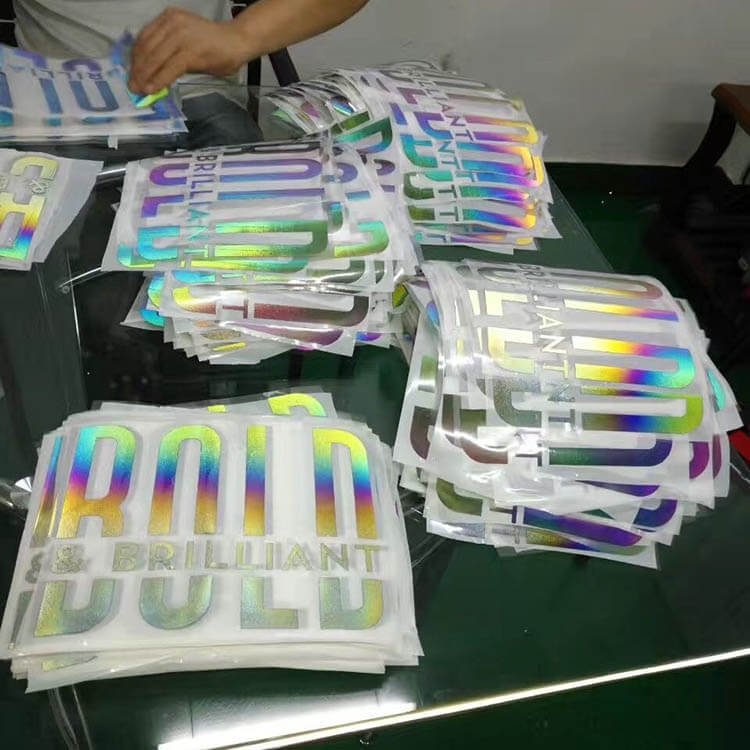
A simple, solid-color shield logo is straightforward. But a multi-color design with fine details, gradients, and thin lines requires sophisticated production:
Production Complexity Pricing Matrix
Single-color, solid design
One material layer, basic heat-press. Cost multiplier: 1.0x
Two-color design with clean separation
Precision cutting, sequential layering. Cost multiplier: 1.3–1.5x
Multi-color with detailed artwork
Complex weeding (material removal), 3+ application steps. Cost multiplier: 2.0–2.5x
High-resolution artwork with fine details
Requires specialized equipment, manual finishing, custom tooling. Cost multiplier: 3.0–4.0x+
Why? Because each additional color layer requires precision cutting and “weeding”—the labor-intensive process of removing excess material around your design. A complex logo with thin lines and fine gradients also demands higher setup costs for custom cutting tools. Multiple layers mean multiple application cycles, each adding time and risk of misalignment. All of this directly translates to higher per-unit costs, especially on smaller orders.
The good news: if your logo design is optimized for production (fewer colors, simpler geometry, larger minimum line width), you save significantly. This is why collaborative design consultation during the proposal phase is so valuable—a small design tweak can reduce costs by 20–30% without compromising your brand identity.
Pricing Breakdown: What You’re Actually Paying For
📏 Logo Size & Dimensions
Larger logos use more raw material and require expanded application area:
- • Small: 2″×2″ or smaller → Standard pricing baseline
- • Medium: 3″×3″ to 4″×4″ → +15–25% material cost
- • Large: 5″×5″ or larger → +40–60% material cost (plus positioning complexity on garment)
📦 Order Quantity (Volume Discounts)
Economies of scale matter significantly in reflective logo production:
- • 500–1,000 units: $0.50–$0.75/unit (higher per-unit due to setup costs)
- • 1,000–5,000 units: $0.25–$0.50/unit (amortized setup)
- • 5,000–10,000 units: $0.15–$0.35/unit (optimized production runs)
- • 10,000+ units: $0.10–$0.25/unit (maximum efficiency, custom pricing)
🔧 Application Method
Different attachment techniques carry different cost profiles:
- • Heat Transfer: Most common, moderate cost ($0.20–$0.80/unit)
- • Adhesive-Backed: Simple application, competitive pricing ($0.15–$0.60/unit)
- • Embroidered Reflective: Premium method, higher cost ($0.80–$2.50/unit)
- • Sewn-On: Labor-intensive, typically $1.50–$3.50+/unit
🎨 Your Brand Customization
Bespoke design work and material modifications add overhead:
- • Standard catalog design: No design charge, standard pricing
- • Minor logo modifications: $100–$300 design fee (one-time)
- • Full custom design: $300–$800 design fee (one-time) + production cost
- • Custom color development: +$200–$500 per custom color
Real-World Pricing Examples
Example 1: Australian Mining Company
Requirement: Custom 3-color oil-resistant reflective logo, 500-unit trial batch
• Logo design: $400 (one-time)
• Material cost (segmented, oil-resistant): $0.65/unit
• Production & application: $0.55/unit
• Total per-unit cost: $1.20 (500 units = $600 total + design)
• Rationale: Multi-color, specialized durability, small batch size
Example 2: European Safety Apparel Brand
Requirement: Single-color certified EN ISO 20471 logo, 10,000-unit production run
• Logo design: Catalog standard (no charge)
• Certified material & compliance overhead: $0.10/unit
• Production at scale: $0.08/unit
• Total per-unit cost: $0.18 (10,000 units = $1,800 total)
• Rationale: Simple design, high volume, certified standard material
Example 3: US Athletic Brand Trial
Requirement: 2-color segmented reflective logo for high-stretch wear, 1,500 presale units
• Custom design modifications: $250 (one-time)
• Flexible segmented material: $0.35/unit
• Production & application: $0.40/unit
• Total per-unit cost: $0.75 (1,500 units = $1,125 total + design)
• Rationale: Moderate complexity, mid-range volume, specialized durability
💡 Cost-Saving Tips (Without Compromising Safety)
- ✓ Simplify your logo design: Reduce from 3 colors to 2, or use solid color with simplified geometry. Can save 25–35% on production.
- ✓ Increase your order quantity: Moving from 1,000 to 5,000 units can reduce per-unit costs by 40–50%.
- ✓ Use standard reflective materials: If compliance allows, standard silver reflective is cheaper than color-reflective options.
- ✓ Choose economy durability for static wear: If your product won’t be stretched or heavily washed, standard (not segmented) reflective material saves costs.
- ✓ Collaborate on design optimization: Work with your manufacturer early—a small design change can yield big savings with zero quality impact.
Frequently Asked Questions
What’s the minimum order quantity for custom reflective logos?
Are segmented reflective logos always worth the extra cost?
Can I negotiate pricing on large orders?
What’s the difference between certified and non-certified reflective logos?
How long does a sample take to produce?
What if I want multiple color options from the same design?
Can I use a cheap imported reflective logo and save money?
What’s included in the pricing? Shipping? Samples?
Why VizGlo for Your Reflective Logo Needs?
Understanding pricing is one thing; finding a manufacturer who delivers transparent pricing backed by consistent quality is another. At VizGlo Safety, we specialize in custom reflective logodesign and production for over 15 years. We work directly with procurement teams, brand managers, and distributors globally to ensure that every reflective logo we produce is:
- ✓ Certified to the highest safety standards (ANSI/ISEA 107, EN ISO 20471, OEKO-TEX)
- ✓ Engineered for the durability your application demands
- ✓ Priced transparently with no hidden fees or surprise charges
- ✓ Delivered on time, at scale, with consistent quality across every order
Ready to Get Transparent Pricing?
Let’s discuss your custom reflective logo needs. Share your design, order volume, and application requirements—and we’ll provide a detailed, competitive quote within 24 hours.
Request Your Custom Quote →Learn More About Our Reflective Solutions
This article covers reflective logo pricing, but our expertise extends across the full range of reflective material solutions. Visit our Pillar Page on Reflective Logos to explore more applications, materials, and case studies. Whether you need reflective tapes, webbing, or custom films, we have the technical depth and production capacity to deliver.
For a complete overview of how reflective logos fit into our comprehensive product portfolio—including high-visibility clothing manufacturing and advanced reflective materials—explore our main resource pages.
Helpful Resources & Standards
The following external resources informed this guide and provide additional technical context:
- • ANSI Official Site – American National Standards Institute
- • EN Standards (European Standardization) – EN ISO 20471 specifications
- • OEKO-TEX – Textile ecology certification standards
- • ISEA (International Safety Equipment Association) – ANSI/ISEA 107 guidance
- • BSI (British Standards Institution) – CE marking & compliance documentation
Conclusion: The True Value of Reflective Logo Pricing
When a procurement manager asks “How much does a reflective logo cost?” they’re really asking three questions:
- 1. Does it meet legal safety requirements? (Compliance)
- 2. Will it hold up in my specific environment? (Durability)
- 3. Can I afford it at the scale I need? (Brand Complexity & Volume)
The price of a reflective logo is never “just a number.” It’s the intersection of engineering, compliance, brand positioning, and production economics. Choosing the cheapest option isn’t savings—it’s risk. Choosing based on compliance, durability, and transparent pricing is investment.
At VizGlo Safety, we price reflective logos fairly and transparently. We explain the cost drivers, help you optimize your design without compromising safety, and deliver consistent quality across every order. Whether you need 500 units or 500,000, we’re committed to making your reflective logo investment pay off—in safety, reliability, and brand protection.
Ready to discuss your reflective logo needs? Let’s start a conversation about value, not just price.