The True Cost of Reflective Films: A Wholesale Pricing Guide for 2026
“The price tag is the most misleading number in our industry. The real cost isn’t on the invoice; it’s in the risks you take with a ‘cheap’ roll.” — Industry Insight from VizGlo Safety
Understanding the True Cost of Reflective Films
The true cost of reflective films extends far beyond the price per meter on your invoice. While standard silver reflective films range from $1.50–$4.00 per meter in wholesale markets, the real expense materializes through compliance verification costs ($0.30–$0.80/meter for EN ISO 20471 certification), durability failures that shorten product lifespan, supply chain risks, and potential customer rejections due to non-compliance. A case study from 2024 illustrates this perfectly: a European workwear manufacturer purchased “budget” reflective film at €2.50/meter to save on a €50,000 order—only to have the entire shipment rejected by their customer because the material failed independent testing for the required EN 471 standard, costing them not just the order but €500 in expedited replacement shipping and potential contract termination. Total Cost of Ownership (TCO) analysis reveals that cheap films often cost 40–60% more when accounting for rework, waste, and reputation damage. In 2026, as regulations tighten across Europe, North America, and the Asia-Pacific region, procurement managers must evaluate suppliers not on unit price alone, but on verified compliance, guaranteed wash-cycle durability, supply chain resilience, and batch-to-batch consistency—factors that collectively determine whether a reflective film investment becomes a profitable asset or a financial and reputational liability.
1. Why Price Tags Mislead: The Raw Cost vs. True Cost
In the B2B safety apparel industry, the most dangerous question is often the first one: “What’s your price per meter?” This question reduces reflective films—a critical component in personal protective equipment (PPE) that literally saves lives—to a single commodity dimension. But this frame obscures a much more complex reality.
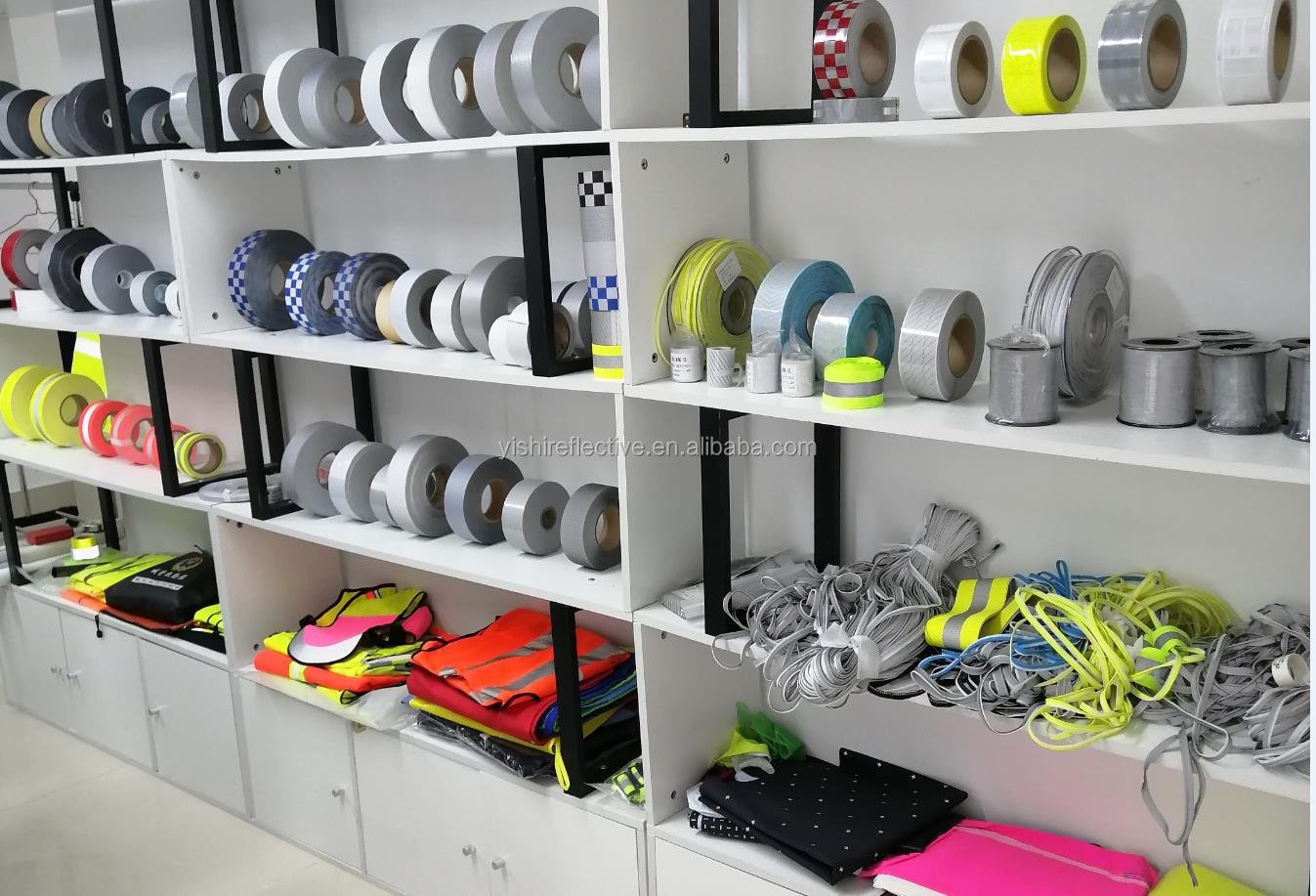
The raw cost—what appears on your purchase order—typically accounts for only 30–40% of the total cost your organization will actually bear. Consider these overlooked variables:
The Hidden Cost Multiplier Effect
- • Quality Testing & Verification: Every responsible buyer must batch-test for reflectivity (lux output), water-resistance, color-fastness, and heat resistance. This runs $500–$2,000 per batch.
- • Rework & Scrap: If 5% of your material fails quality standards mid-production, you’ve immediately lost 5% of your material cost plus labor.
- • Shelf Life Degradation: Cheap reflective films often degrade faster due to poor adhesive chemistry—losing brilliance within 12–18 months of storage.
- • Customer Rejection & Returns: A single rejected shipment (due to non-compliance or durability failure) can cost $10,000–$50,000+ in logistics, replacement, and expedited shipping.
The real story: A mid-sized workwear distributor in Germany once selected a Chinese supplier offering reflective film at €2.30 per meter—undercutting their established supplier by 25%. After six months of production, a customer complaint surfaced: vests made from this film lost significant reflectivity after just eight wash cycles (well below the 50-cycle industry standard). Investigation revealed the supplier had used a cheaper backing latex and undersized reflective particles. The distributor faced:
- €15,000 in retained customer credits
- €8,000 in expedited replacement film shipment
- 50 hours of internal QA rework and documentation
- One customer relationship downgraded from “strategic partner” to “occasional vendor”
- Total impact: €35,000+ damage from a €500 “savings”
This scenario isn’t unique. It’s the norm in industries where buyers haven’t established a TCO (Total Cost of Ownership) framework.
2. 2026 Wholesale Pricing Breakdown by Film Type
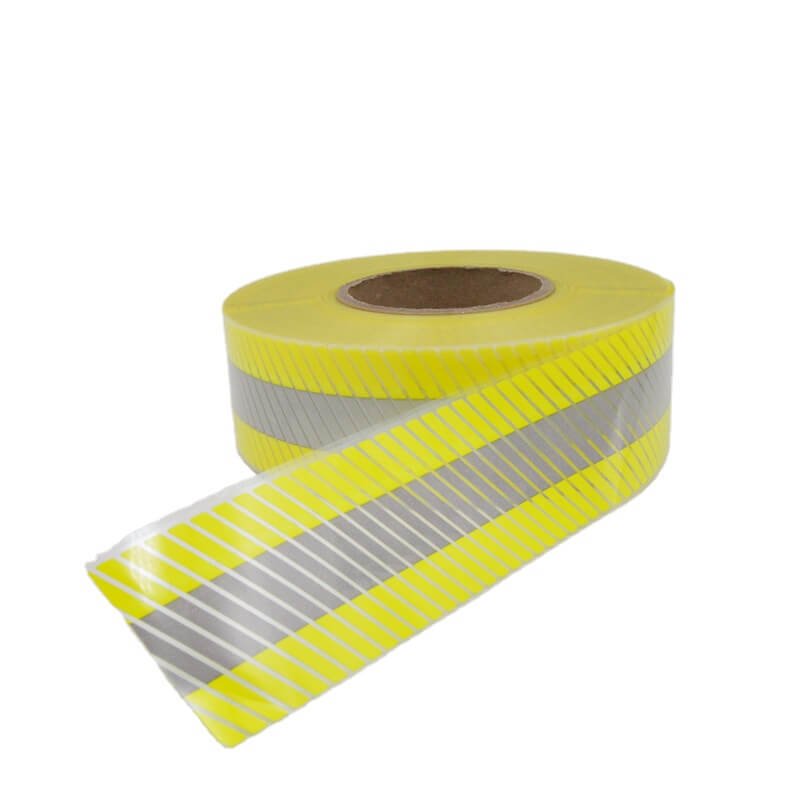
To understand pricing, you must first categorize the types of reflective films in the market. Each serves different applications and carries different cost profiles:
| Film Type | 2025 Price Range (per meter) | 2026 Forecast | Primary Use |
|---|---|---|---|
| Standard Silver (Micro-prismatic) | $1.50–$2.80 | $1.65–$3.10 (+10%) | Basic vests, entry-level workwear |
| High-Performance Silver (3M-equivalent) | $2.50–$4.50 | $2.75–$5.00 (+12%) | Premium branded apparel, fleet uniforms |
| Colored (Red, Orange, Yellow) | $2.80–$5.50 | $3.00–$6.20 (+12%) | Branded segments, visibility campaigns |
| Fire-Retardant Reflective | $3.50–$6.50 | $4.00–$7.30 (+15%) | Mining, oil/gas, railway operations |
| Elastic/Stretch Reflective | $4.00–$7.00 | $4.40–$7.95 (+11%) | Athletic wear, stretch fabrics |
| EN ISO 20471 Certified (Premium) | $3.50–$6.50 | +$0.50–$1.00 certification premium in 2026 | EU-regulated safety apparel |
Key observation for 2026: Prices are climbing faster than inflation due to raw material constraints (glass bead and reflective coatings rely on petrochemicals experiencing supply volatility) and compliance infrastructure investments. Bulk discounts remain the primary lever—orders of 50,000+ meters typically unlock 15–30% reductions from list prices.
3. Hidden Costs That Impact Your Bottom Line
Beyond purchase and testing, consider these often-overlooked cost drivers:

💰 Logistics & Inventory Holding Costs
Cheap suppliers often demand minimum orders of 100,000+ meters to hit target margins. If your monthly consumption is 30,000 meters, you’re holding 3+ months of inventory (costing 1–2% monthly storage, plus refrigeration if needed).
Impact: $500–$2,000 per production cycle in excess carrying costs.
🔍 Supply Chain Traceability & Audit Costs
Major workwear brands (especially in EU/UK) now require third-party audits of their suppliers’ suppliers. Unverified suppliers incur additional external audit costs ($2,000–$5,000 per year) borne by the buyer to maintain compliance certifications.
Impact: $2000–$5000 annually per supplier relationship.
⚙️ Production Downtime & Line Adjustments
Different film suppliers have slightly different heat-seal temperatures, backing thicknesses, and adhesive cure times. Switching suppliers means line re-calibration, test runs, and QA holds—typically 4–16 hours of production idle time.
Impact: $1,000–$4,000 per supplier transition in lost throughput.
📋 Documentation & Regulatory Compliance
Maintaining batch records, traceability documentation, and technical data sheets for non-compliant suppliers consumes internal resources. Non-EU suppliers require additional export/import documentation, material safety data sheets (MSDS) verification, and tariff classification work.
Impact: 20–40 hours monthly in administrative overhead; valuing at $25–$50/hour = $500–$2,000/month.
⚠️ Real-World Case Study Impact Summary
A distributor saving $0.50 per meter on 200,000 meters/year ($100,000 raw savings) incurs: $25,000 in excess inventory costs, $8,000 in audit/compliance work, $12,000 in production adjustments, and $15,000 in administrative overhead = $60,000 in hidden costs. Net savings: a mere $40,000 on a $100,000 “deal”—and that’s before accounting for a single quality failure.
4. Compliance & Certification: A Non-Negotiable Cost Factor
If your reflective films don’t meet EN ISO 20471 (Europe), ANSI/ISEA 107 (North America), or AS/NZS 1906.4 (Australia), your finished products are legally non-compliant PPE—rendering them unmarketable in regulated sectors like construction, utilities, and transportation.
Certification Requirements & Associated Costs (2026)
EN ISO 20471:2013+A1:2016 (European High-Visibility Clothing)
Requires independent accredited lab testing for reflectivity (minimum 250 cd/lx/m²), fluorescence, and durability. Test cost: $3,000–$6,000 per material batch. Manufacturers must maintain batch records for 10 years. Estimated compliance overhead per supplier: $0.40–$0.80 per meter.
ANSI/ISEA 107 (U.S. & Canada)
Slightly less stringent than EN 20471 but requires both daytime visibility and nighttime reflectivity verification. Lab testing: $2,500–$5,000 per batch. Compliance overhead: $0.25–$0.50 per meter.
AS/NZS 1906.4 (Australia & New Zealand)
Combines performance standards with specific fabric durability (50+ wash cycles). Lab testing: $3,500–$7,000 per batch. Compliance overhead: $0.50–$1.00 per meter.
Critical point for 2026: Regulatory agencies worldwide are moving toward stricter enforcement. The UK Health and Safety Executive (HSE) has already increased PPE compliance audits by 40% year-over-year. Using non-certified films now poses legal liability—if a worker is injured and the PPE is found to be non-compliant, your organization faces criminal charges, not just civil liability.
Budget Impact: A conscientious buyer should assume $0.30–$1.00 per meter in certification and compliance verification costs when evaluating reflective film suppliers. This isn’t optional; it’s the cost of legal and ethical business.
5. Durability, Wash Cycles & Long-Term ROI
A reflective film’s true value emerges over its operational lifespan. Industrial workwear undergoes regular laundering (weekly in many sectors). The question isn’t “Does your film reflect?” but rather “For how many wash cycles does it maintain 90%+ reflectivity?”

| Film Grade | Guaranteed Wash Cycles (90%+ Retention) | Annual Replacement Cost Impact (per 100 vests) |
|---|---|---|
| Budget Grade | 8–15 cycles | $800–$1,200 (3–4 replacements/year) |
| Mid-Range Grade | 25–35 cycles | $200–$400 (1 replacement/year) |
| Premium Grade (EN 20471) | 50+ cycles | $50–$100 (minimal replacement) |
5-Year Total Cost of Ownership Calculation
Assume a workwear operator manages 500 vests, washing weekly (52+ cycles/year):
Budget Grade Film ($1.50/meter)
- • Initial cost: 500 vests × $8/vest = $4,000
- • Annual replacements needed: 3–4 cycles → 4 cycles/52 weeks = 13× per year
- • 5-year replacements: 13 × 5 = 65 vest replacements = $520
- • Labor (management + logistics): $500/year × 5 = $2,500
- 5-Year TCO: $7,020
Premium Grade Film ($4.50/meter)
- • Initial cost: 500 vests × $20/vest = $10,000
- • Annual replacements needed: <1 cycle → negligible
- • 5-year replacements: 2–3 vests = $60
- • Labor (minimal): $100/year × 5 = $500
- 5-Year TCO: $10,560
Apparent premium: $3,540 higher for premium film. But factor in worker safety, brand reputation, and zero compliance risk: the premium film’s TCO becomes the smarter investment.
This illustrates why smart procurement executives evaluate reflective films on a 3–5 year horizon, not on annual price quotes. Premium suppliers often offer warranties and batch consistency that justify higher upfront costs.
6. 2026 Market Trends & Price Forecasting
Three major forces will shape reflective film pricing in 2026:
📊 1. Regulatory Tightening
The EU’s Corporate Sustainability Due Diligence Directive (CSDD) and similar regulations in UK, U.S., and Australia are mandating supply chain transparency and compliance verification. Suppliers who can demonstrate third-party certification and audit trails will command premiums of 8–15% over non-certified competitors.
🔄 2. Raw Material Volatility
Glass microspheres and reflective coatings depend on petrochemical supply chains experiencing post-pandemic disruptions. Crude oil volatility is expected to increase material costs 5–10% in 2026. Suppliers investing in alternative sourcing or recycled materials will face additional R&D costs, passed partially to buyers.
🌱 3. Sustainability & Circular Economy Mandates
By 2026, major EU and North American retailers will demand “circular” PPE—designs enabling material recovery or biodegradable alternatives. Developing reflective films compatible with such processes requires R&D investment, estimated to add $0.15–$0.35/meter to production costs.
Price Forecast for 2026
- Standard Silver Films: +8–12% increase (from $1.50–$2.80 to ~$1.65–$3.10)
- Certified Premium Films: +10–15% increase + $0.40–$0.80 compliance surcharge
- Sustainability-Focused Films: +15–25% premium over conventional options
- Bulk Discounts: 15–30% remain standard for orders >50,000 meters, but minimum order quantities may increase 10–20%
Strategic recommendation: Lock in supplier agreements now for 2026–2027 delivery to avoid price volatility.
7. TCO Framework: Making Smarter Procurement Decisions
Here’s a practical framework to evaluate reflective film suppliers through a True Cost of Ownership lens:
TCO Calculation Template
A. Direct Acquisition Costs
Unit price/meter × annual volume (meters) + freight/handling = Baseline Cost
B. Quality Assurance & Testing
Annual lab testing + batch verification + rework costs (estimated % of volume)
C. Compliance & Documentation
Certification costs + audit fees (amortized) + internal compliance labor
D. Durability & Lifecycle Costs
(Annual failure/replacement rate) × (cost per replacement unit)
E. Risk & Opportunity Costs
Potential customer rejections + supply chain disruption impact + reputational risk premium
Total TCO = A + B + C + D + E
Example Calculation (Annual, 100,000 meters):
- A. $2.50/meter × 100,000m = $250,000
- B. Testing ($5,000) + rework (2%, $5,000) = $10,000
- C. Certification ($3,000) + audit ($4,000) + labor ($8,000) = $15,000
- D. Replacement vests (1% failure, $600) = $600
- E. Risk premium (5% of baseline) = $12,500
- Annual TCO: $288,100 (vs. $250,000 invoice)
- True unit cost: $2.88/meter (vs. $2.50 quoted)
Supplier Evaluation Checklist
The suppliers who tick all or most of these boxes typically command 10–20% price premiums—but when you run sophisticated TCO analysis, they often deliver 20–40% lower true costs due to reduced risk, rework, and compliance overhead.
Ready to Optimize Your Reflective Film Sourcing?
Let our experts analyze your current supplier agreements and build a customized TCO framework that aligns with your 2026 procurement strategy.
Get Your Free TCO AssessmentFrequently Asked Questions
What is the average wholesale price per meter for reflective film in 2025-2026? ▼
Standard silver reflective films range from $1.50–$4.00 per meter depending on width, thickness, and adhesive type. Premium certified films (EN ISO 20471 compliant) range from $2.50–$6.00 per meter. Bulk orders (10,000+ meters) typically receive 15–30% discounts. Prices are expected to increase by 8–12% in 2026 due to raw material and compliance costs.
What is total cost of ownership (TCO) for reflective films? ▼
TCO includes purchase price, compliance verification, quality testing, rework costs, shelf life loss, and potential customer rejection. A “cheap” film at $1.50/meter may result in $0.75–$2.00 per meter in hidden costs, making the true cost $2.25–$3.50 per meter—sometimes matching premium suppliers when fully calculated.
How do EN ISO 20471 and ANSI 107 compliance requirements impact pricing? ▼
Compliance certification requires independent third-party testing ($2,000–$8,000 per batch), quality assurance protocols, and ongoing batch verification. This adds $0.30–$0.80 per meter to certified films. Non-compliant materials can trigger entire order rejections, resulting in losses of thousands per shipment.
What are the typical wash cycle durability standards? ▼
Premium reflective films maintain 90%+ reflectivity after 50+ industrial wash cycles. Mid-range films degrade to 60–70% after 25–30 cycles. Budget films may fail after just 10–15 cycles. Industry standards (EN ISO 6330) require minimum 50-cycle durability for workwear applications.
How much will reflective film prices increase in 2026? ▼
Market analysts predict 8–12% price increases due to stricter PPE regulations, rising petrochemical costs, and supply chain resilience investments. Early procurement or pre-2026 contracts can lock in current pricing and avoid future volatility.
How can I reduce my reflective film sourcing costs without sacrificing quality? ▼
Focus on TCO, not unit price. Consolidate supplier relationships, negotiate longer-term agreements for volume discounts, implement predictive inventory management to reduce carrying costs, and partner with suppliers offering integrated OEM/ODM services (design, testing, warehousing) that reduce your overhead. Work with a trusted partner offering supply chain transparency and quality guarantees.
What should I look for in a reflective film supplier in 2026? ▼
Certification credentials (EN 20471, ANSI 107, AS/NZS), documented durability data (50+ wash cycles), supply chain transparency, technical support, scalability, and a sustainability roadmap. References from existing customers in your industry are invaluable—ask about their experience with compliance, quality consistency, and post-sale support.
Learn More: Explore our comprehensive resource on industrial reflective tape and film solutions to dive deeper into product specifications, technical data, and custom options available in 2026.
Related Industry Resources
- EN ISO 20471:2013+A1:2016 Standard Document: ISO Official Standard (English & Multi-language Versions)
- ANSI/ISEA 107 High-Visibility Clothing Standard: International Safety Equipment Association (ISEA)
- PPE Compliance & Regulatory Guide (UK HSE): Health and Safety Executive – PPE Regulations
- Reflectivity Testing & Lab Accreditation (NATA Australia): National Association of Testing Authorities
- Supply Chain Transparency & CSDD Requirements (EU): European Commission – Corporate Sustainability Reporting Directive
- Textile Durability Standards (IEC 6330): International Electrotechnical Commission
- OEM/ODM Manufacturing Best Practices for Safety Apparel: ISO 9001:2015 Quality Management Systems
The Bottom Line: True Cost Requires Strategic Partnership
In 2026, the procurement conversation around reflective films must shift from “What’s your lowest price?” to “What is your lowest total cost of ownership?” The suppliers who survive and thrive in this new landscape aren’t the cheapest—they’re the ones demonstrating compliance expertise, durability guarantees, supply chain transparency, and a genuine partnership approach to solving their customers’ problems.
Budget film at $1.50/meter that fails compliance or deteriorates after 10 wash cycles isn’t a bargain; it’s a liability. Premium certified film at $4.50/meter from a verified supplier with documented 50+ cycle durability? That’s an investment protecting your brand, your workers’ safety, and your bottom line.
The true cost of reflective films isn’t determined at the negotiating table—it’s proven over months and years of reliable performance, zero compliance rejections, and the peace of mind that comes from knowing your PPE will protect workers when it matters most.