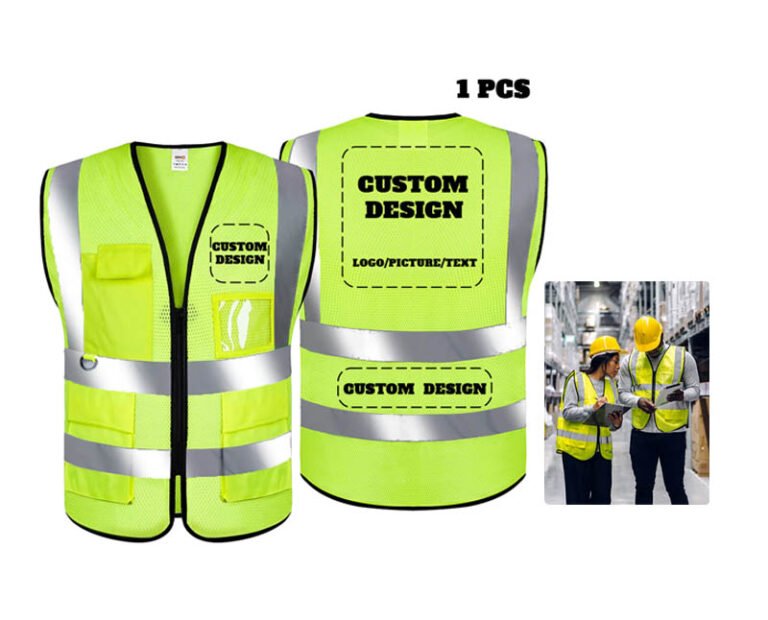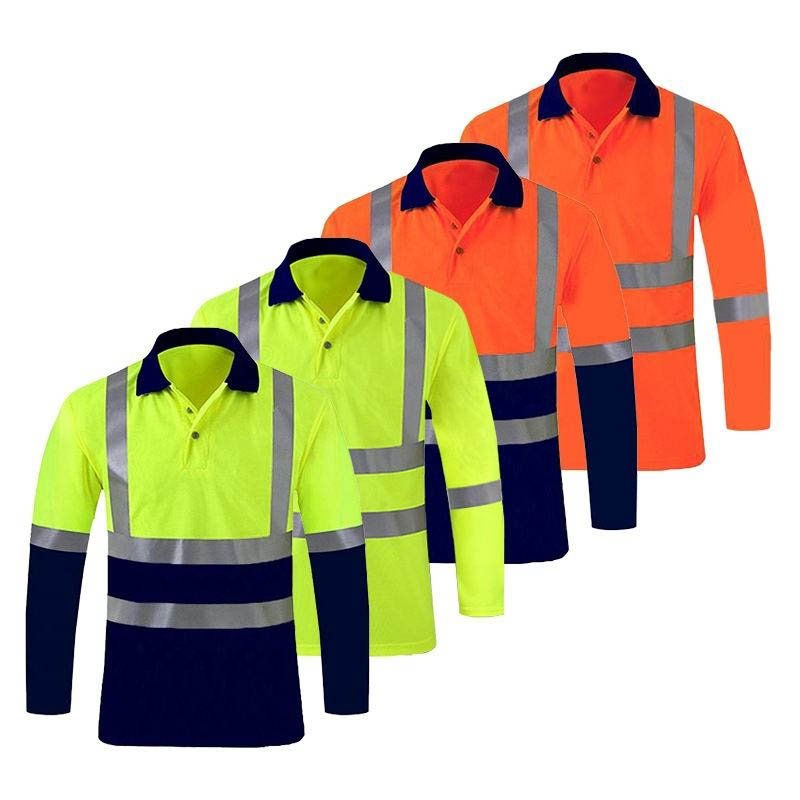
A Guide to ANSI/ISEA 107 Compliance for High-Visibility Apparel in the US
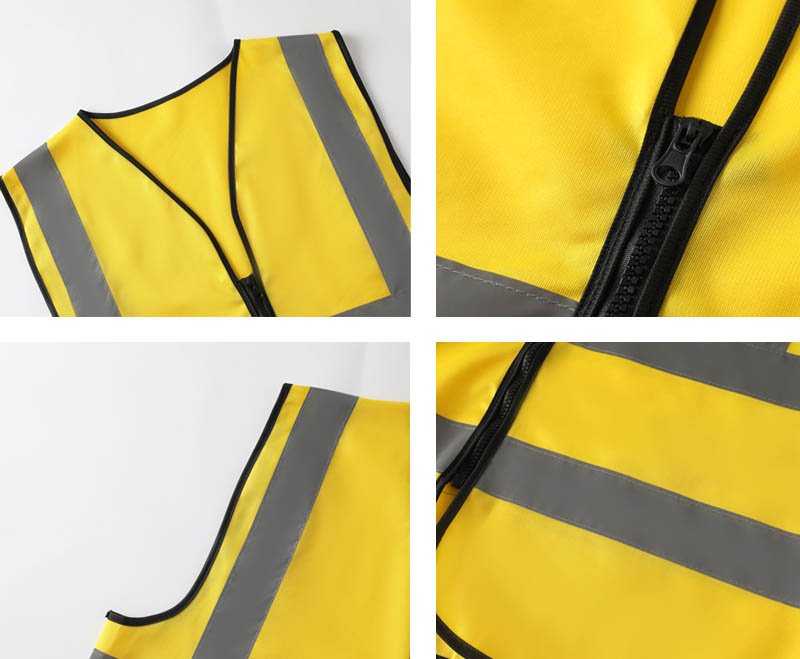
Quick Answer
ANSI/ISEA 107 compliance means your high-visibility apparel meets the rigorous North American standard for worker protection, with scientifically validated retroreflectivity performance, correct fabric placement, and comprehensive labeling that ensures visibility in both daytime and nighttime conditions. However, true compliance transcends merely purchasing a labeled garment. It requires maintaining complete documentation including Declaration of Conformity certificates, valid test reports from accredited laboratories, and continuous verification that your supplier’s manufacturing processes meet the standard’s technical specifications. From my years advising US importers and safety managers, I’ve observed that this distinction—between cosmetic compliance and substantive risk management—separates responsible manufacturers from those cutting corners. The most expensive product you can buy is a low-cost garment with questionable compliance documentation, because a single workplace accident’s potential liability far exceeds any procurement savings. Choosing a manufacturing partner who maintains meticulous compliance records and treats ANSI 107 as a non-negotiable pillar of their business is the most critical sourcing decision a safety manager will make.
What is ANSI/ISEA 107?
ANSI/ISEA 107 is the American National Standard developed jointly by the American National Standards Institute (ANSI) and the International Safety Equipment Association (ISEA). This standard establishes the performance requirements for high-visibility safety apparel worn by workers in the United States. It’s designed to ensure that workers in hazardous environments—particularly roadside workers, construction crews, and emergency responders—remain visible to motorists and equipment operators in both daytime and nighttime conditions, potentially saving lives on a daily basis.
The standard addresses every critical aspect of visibility, from the minimum area of retroreflective material to the color specifications of the fluorescent background fabric. Unlike informal “high-visibility” clothing that may simply appear bright, OSHA regulations frequently reference ANSI/ISEA 107 as the baseline standard for worker protection, making compliance not merely advisable but often legally mandatory depending on your industry sector.
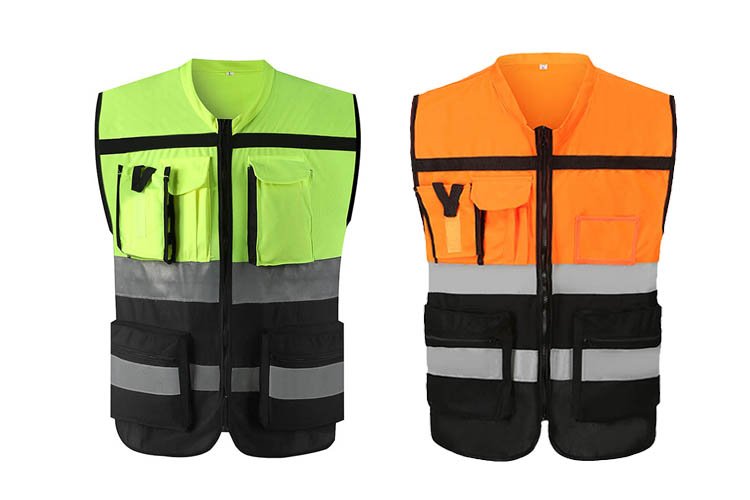
The standard has evolved through multiple revisions, with the current version reflecting decades of research into human visibility perception, motion, and color science. Each revision introduces more rigorous retroreflectivity requirements and better precision regarding material placement, ensuring that the standard keeps pace with modern vehicle speeds and highway conditions.
Understanding the Three Classification Levels
ANSI/ISEA 107 establishes three distinct classification levels, each designed for specific workplace environments and traffic speeds. Selecting the correct classification for your workforce is foundational to compliance—choosing a lower classification than your hazard analysis requires is insufficient protection, while a higher classification may be unnecessarily expensive.
Class 1: Low-Speed/Ambient Light Environments
Minimum visible area: 155 square inches of fluorescent background and retroreflective material combined
Typical applications: Parking lot attendants, equipment operators in low-speed environments, warehouse personnel, landscapers
Speed environment: Recommended for work zones where vehicles travel at speeds up to 25 mph
Class 2: Moderate Traffic Speed Environments
Minimum visible area: 310 square inches of fluorescent background and 155 square inches of retroreflective material
Typical applications: Highway construction workers, road maintenance crews, toll collectors, traffic control personnel
Speed environment: Designed for work zones with traffic speeds between 25 and 55 mph
Class 3: High-Speed/Complex Travel Environments
Minimum visible area: 465 square inches of fluorescent background and 240 square inches of retroreflective material strategically placed
Typical applications: Interstate highway work crews, emergency responders, railway workers, rescue personnel, mining operations
Speed environment: For environments with traffic speeds exceeding 55 mph or complex visibility challenges

Performance Requirements & Testing Standards
Compliance extends far beyond mere material requirements. The standard specifies precise performance metrics that must be validated through rigorous third-party testing. Understanding these requirements helps you evaluate manufacturers and verify that your supplier’s claims are substantiated.
Retroreflectivity Requirements
Retroreflectivity is measured in candelas per lux per square meter (cd/lux/m²), essentially quantifying how much light returns to the driver’s eye. The standard establishes minimum retroreflectivity values measured at specific angles using a coefficient of retroreflection (RA) test. These values must be maintained after washing and exposure testing, ensuring durability throughout the garment’s service life.
Fluorescent Color Requirements
The standard specifies two approved fluorescent colors: lime-yellow and orange-red. These colors aren’t chosen arbitrarily—they represent the colors most visible to human eyes, particularly in dim lighting. The fabric must meet precise chromaticity specifications, which explains why a generic “yellow” safety vest may not comply. Testing includes color measurement under standardized lighting conditions and fade testing to ensure the color maintains its required properties over time.
Durability Testing
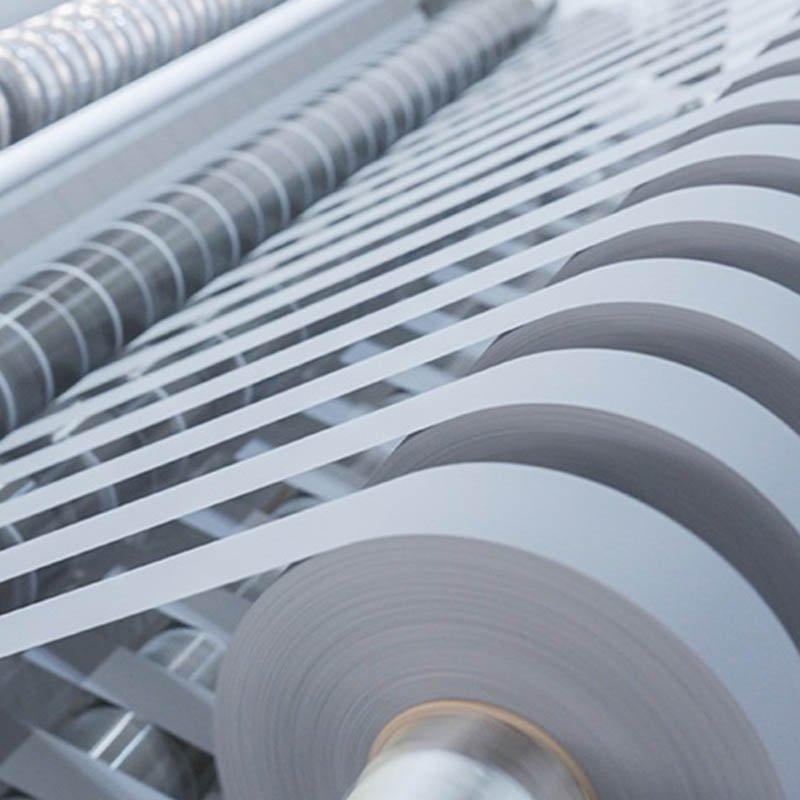
Compliance certification requires extensive durability testing. Garments must withstand multiple washing cycles (typically 20-50 cycles depending on the specification) while maintaining minimum retroreflectivity levels. This includes:
- Industrial and home washing simulation
- Dry cleaning cycles
- Color fastness testing—measuring resistance to fading and color transfer
- Physical abrasion testing to simulate normal workplace wear
- UV exposure testing to ensure retroreflective properties remain stable in sunlight
Critical Insight: A Declaration of Conformity is meaningless without backing test data. When evaluating suppliers, always request the actual test reports from an accredited third-party laboratory. Look for NRTL (Nationally Recognized Testing Laboratory) accreditation, such as those operated by major certified test labs. Many non-compliant garments circulate with paperwork that lacks this critical documentation.
Critical Labeling & Documentation Requirements
Compliance isn’t just about what the garment does—it’s about what the garment communicates. The standard mandates specific information be permanently attached to every compliant garment, serving as your proof of compliance and critical documentation in the event of a workplace incident.
Required Permanent Label Information
Every ANSI/ISEA 107 compliant garment must include a permanent label containing:
- Classification level (Class 1, 2, or 3) clearly displayed
- Standard reference: “Complies with ANSI/ISEA 107”
- Manufacturer name or registered identification number
- Garment size and color
- Care instructions with washing symbol and conditions
- Fire rating (if applicable, such as NFPA 2112 for flame-resistant applications)
- Date of manufacture (recommended for quality tracking)
Documentation You Must Maintain
Beyond labeling, maintaining comprehensive documentation is critical for liability protection. Your files should include:
- 1. Declaration of Conformity (DoC): Manufacturer’s official statement that the product meets ANSI/ISEA 107—absolutely required
- 2. Accredited test reports: Third-party laboratory results validating retroreflectivity, color specifications, and durability testing
- 3. Material specifications: Technical sheets for fabrics and reflective materials used
- 4. Quality control records: Manufacturing facility’s in-process testing documentation
Sourcing & Verification Best Practices
The marketplace contains numerous non-compliant or marginally-compliant garments. Protecting your organization requires a systematic verification approach when selecting manufacturers or distributors.
What to Verify Before Purchasing
✓ Ask for Complete Documentation
Request the full Declaration of Conformity and test reports from day one. Any manufacturer who hesitates is a red flag. Legitimate suppliers maintain these proactively.
✓ Verify Third-Party Testing
Confirm tests were conducted by NRTL-accredited laboratories, not in-house facilities. Compare retroreflectivity values across suppliers; unusually low costs often correlate with lower performance specifications.
✓ Check Label Information
Request pre-production samples and verify all required information appears in permanent form. Labels should be stitched or directly printed, not merely glued stickers that could detach during washing.
✓ Conduct Periodic Testing
For large orders, consider retesting samples after several washing cycles to verify durability claims. This provides additional liability protection and verifies the manufacturer’s quality consistency.
Industry Standard: Request Conformance to Multiple Standards
Forward-thinking companies specify compliance with ANSI/ISEA 107 and EN ISO 20471 (European standard). This demonstrates that your supplier meets the most rigorous global requirements, as EN 20471 includes additional performance specs. When a manufacturer can meet both standards, you can be confident their quality exceeds minimum US requirements.
Common Compliance Mistakes to Avoid
Based on extensive experience working with US importers and safety managers, certain compliance errors appear repeatedly across organizations. Learning from these pitfalls can protect your workforce and your organization’s liability exposure.
❌ Assuming “High-Visibility” = Compliant
Many bright yellow or orange garments sold as “safety apparel” aren’t actually tested or certified. Just because something looks bright doesn’t mean it meets retroreflectivity specifications. Demand documentation.
❌ Choosing the Wrong Classification Level
Conducting a formal hazard assessment determines the correct classification. A Class 1 vest won’t provide adequate protection for interstate highway workers, yet some facilities still use it to reduce costs—a false economy with serious consequences.
❌ Not Requesting Durability Test Data
Retroreflectivity when new means nothing if it fades after three washings. Always review wash-durability test results, not just initial retroreflectivity measurements. Request data showing retroreflectivity after 20, 30, and 50 wash cycles.
❌ Ignoring Label Permanence
Labels that peel, fade, or deteriorate cannot serve as documentation in an incident investigation. Verify that classification level and manufacturer information are printed or embroidered permanently, not merely attached as stickers or loose labels.
❌ Failing to Document Your Supply Chain
In a workplace incident, you’ll need to quickly produce test reports and declarations of conformity for that specific batch of garments. Disorganized documentation creates liability exposure. Maintain a filing system keyed by purchase order number and lot number.
❌ Assuming One Supplier Equals Ongoing Compliance
Manufacturers sometimes change suppliers for reflective materials or modify production processes to reduce costs. Specify that you require notification of any material or process changes, and conduct periodic re-testing for ongoing orders.
Frequently Asked Questions
What happens if my organization provides non-compliant apparel? ▼
Beyond direct liability for workplace injuries, providing non-compliant safety equipment can result in OSHA citations, penalties ranging from thousands to hundreds of thousands of dollars depending on violation severity, and potential criminal liability if negligence is established. More critically, inadequate worker protection violates a fundamental duty of care.
How long is ANSI/ISEA 107 certification valid? ▼
The certification itself doesn’t expire, but market conditions and technologies evolve. The standard is periodically updated (recent revisions in 2015). Manufacturers should provide tests referencing the current version. Request test reports that explicitly state which version of ANSI/ISEA 107 was used for certification.
Can garments designed for fashion be classified as compliant high-visibility apparel? ▼
Absolutely not. High-visibility apparel for workplace safety must meet specific performance criteria. Fashion items that happen to be bright yellow or orange don’t undergo required retroreflectivity testing and material durability validation. Always verify test reports and declarations of conformity.
What does “retroreflectivity” actually measure? ▼
Retroreflectivity quantifies how effectively a material returns light in the direction from which it came. Think of it as the “brightness” of reflected light reaching a driver’s eyes. Measured in cd/lux/m², it’s expressed as a coefficient of retroreflection (RA). Higher values mean the material appears brighter when headlights illuminate it—critical for nighttime visibility. The standard sets minimum values at specific observation and entrance angles.
Are there special requirements for weather-resistant or flame-resistant variants? ▼
Yes. Waterproof or water-resistant high-visibility apparel must maintain retroreflectivity performance after water exposure testing. Flame-resistant variants must comply with both ANSI/ISEA 107 AND NFPA 2112 standards. When garments serve dual purposes (visibility + flame protection), test reports must demonstrate compliance with both standards simultaneously, as the treatments can sometimes affect retroreflective performance.
How can I verify a manufacturer’s compliance claims? ▼
Request the following documentation: (1) Signed Declaration of Conformity, (2) Complete test reports from an NRTL-accredited laboratory including retroreflectivity measurements at all required angles, (3) Durability test data showing performance after multiple wash cycles, (4) Test reports specifically referencing the ANSI/ISEA 107 version tested, (5) Color measurement data confirming fluorescent color compliance. Any legitimate manufacturer will provide this immediately—if they hesitate, find another supplier.
Key Takeaways for Implementation
- • Compliance is documentation, not just apparel. A compliant garment without proof of compliance is as problematic as non-compliant apparel with false documentation.
- • Classification level is site-specific. Conduct hazard assessments to determine whether Class 1, 2, or 3 applies—choosing incorrectly undermines the entire compliance effort.
- • Durability matters as much as initial performance. Request wash-durability test data; retroreflectivity that degrades rapidly isn’t truly compliant.
- • Third-party testing is non-negotiable. Manufacturer claims without NRTL-accredited test reports aren’t sufficient for liability protection.
- • Permanent labeling is your evidence. Ensure required classification and manufacturer information is permanently applied—these labels may be critical documentation in litigation.
Ensure Your Organization is Fully Compliant
Protect your workforce with ANSI/ISEA 107 compliant high-visibility apparel backed by complete documentation. Our OEM/ODM manufacturing team specializes in producing garments that meet or exceed all standard requirements with comprehensive test reports and Declaration of Conformity.
Request Compliance Documentation & SamplesLearn More About Our Manufacturing Capabilities
VizGlo Safety manufactures premium industrial reflective tape and high-visibility apparel with full ANSI/ISEA 107 compliance. Our integrated manufacturing process ensures retroreflective materials meet exact specifications before assembly, and every garment includes complete test documentation.
For detailed information about our manufacturing processes, certifications, and custom OEM/ODM services, visit our product center page to explore how we can support your compliance requirements.
Authoritative Resources for Further Reading
Official Standards: American National Standards Institute (ANSI) – International Safety Equipment Association (ISEA)
Regulatory Guidance: OSHA Regulations on Personal Protective Equipment
Third-Party Testing Verification: NRTL (Nationally Recognized Testing Laboratory) Directory
Related Standards: NFPA 2112 (Flame-Resistant Apparel)
Conclusion: Make Compliance a Strategic Priority
ANSI/ISEA 107 compliance represents far more than regulatory checkbox-ticking—it’s a fundamental commitment to worker protection and organizational risk management. The standard exists because visibility failures result in preventable tragedies. When you choose to work with manufacturers who treat compliance as a core value, maintain meticulous documentation, and provide complete test reports backed by accredited laboratories, you’re not just purchasing garments; you’re implementing a comprehensive safety strategy.
The most expensive product you can buy is a low-cost, non-compliant garment. The potential liability from a single workplace incident—human suffering aside—far exceeds any procurement savings. By implementing the verification processes outlined in this guide, maintaining organized documentation systems, and partnering with manufacturers who understand compliance’s true nature, you position your organization to protect workers effectively while minimizing liability exposure. Compliance isn’t a destination; it’s an ongoing commitment to excellence in worker safety.
About VizGlo Safety
VizGlo Safety is a leading OEM/ODM manufacturer of high-visibility apparel and reflective materials, serving distributors and enterprises across five continents. With over 15 years of industry expertise, we specialize in delivering fully ANSI/ISEA 107 compliant garments backed by complete test documentation and Declaration of Conformity certificates. Our manufacturing facility maintains ISO 9001 certification and adheres to international safety standards.