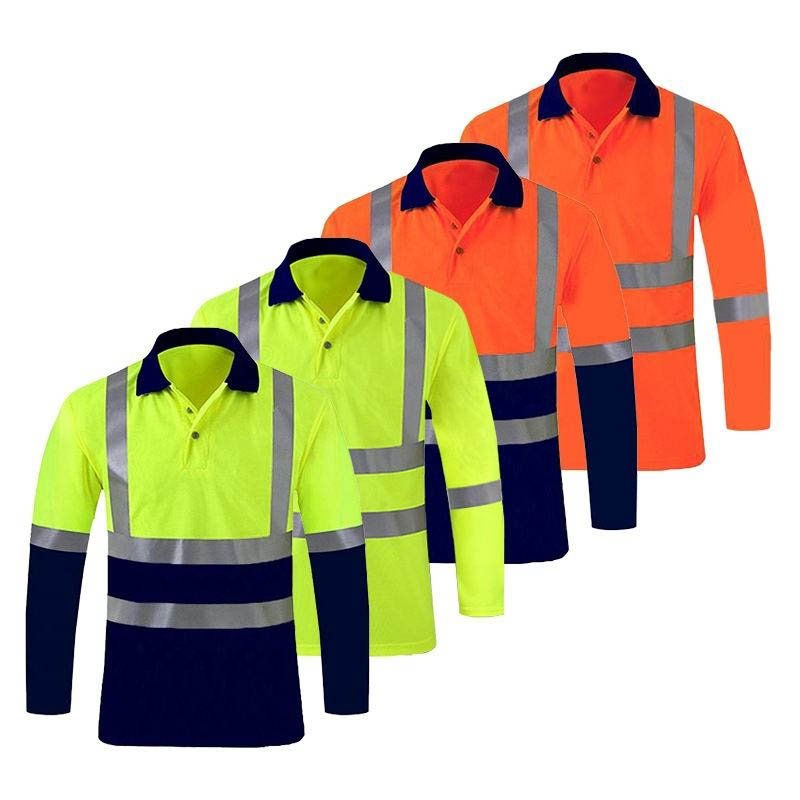
Top 10 Reflective Logo Design Trends for 2026
From segmented patterns to full-color reflectivity: How modern safety branding is revolutionizing workplace apparel
The Evolution of Reflective Logo Design in 2026
Reflective logo design in 2026 represents a fundamental shift from compliance-driven afterthoughts to strategic brand assets that perform across both daylight visibility and nighttime reflectivity. The industry is experiencing a convergence of three major trends: performance integration through segmented and perforated transfer technology that allows logos to stretch with modern, flexible workwear without cracking, brand fidelity through advanced full-color reflective printing that translates exact Pantone colors into permanently reflective surfaces, and durability-focused sustainable manufacturing that ensures logos withstand industrial wash cycles while maintaining environmental responsibility. These trends are driven by end-user demand for apparel that’s comfortable to wear, maintains brand identity throughout the day and night, and can prove compliance with stringent EU and North American safety standards while meeting corporate sustainability commitments.
Trend #1: Segmented & Perforated Design for Performance Integration
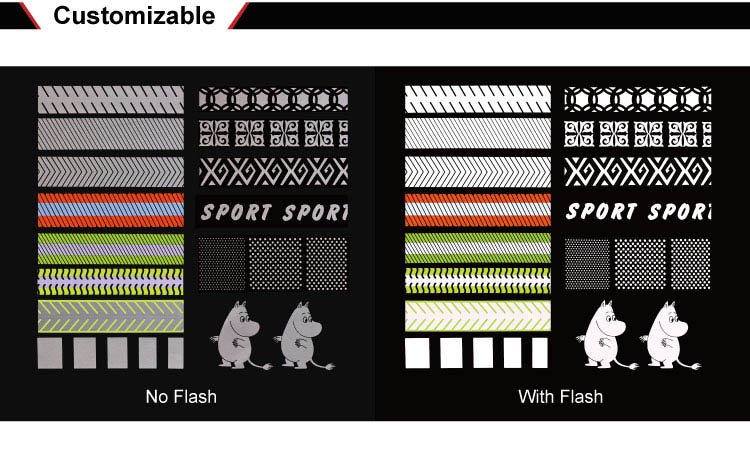
The most significant shift in reflective logo design we’re witnessing is the move away from solid, rigid transfers. For years, HR managers and safety coordinators complained about workers peeling off logos because they felt stiff and uncomfortable. Segmented and perforated reflective logos solve this real-world problem.
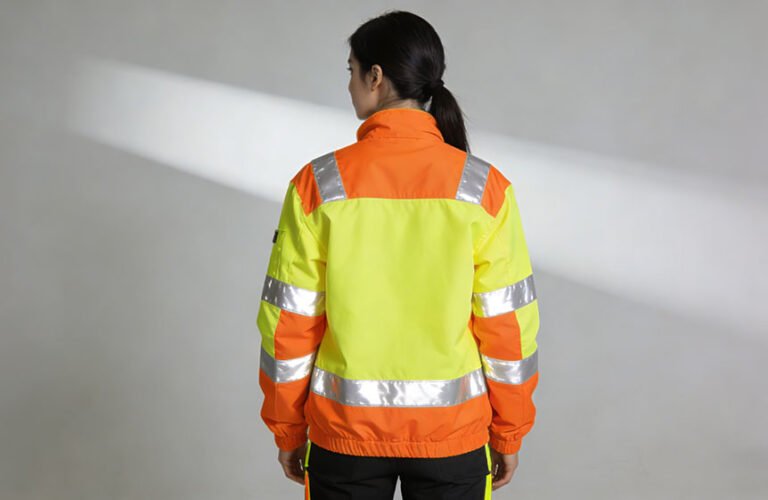
Segmented designs feature strategically cut patterns in the reflective material—think honeycomb or linear arrays—that allow the underlying fabric to breathe while maintaining the reflective properties. OSHA guidelines and ISO 20471 standards specify minimum reflective coverage—they don’t mandate solid material. This regulatory flexibility has enabled manufacturers to innovate dramatically.
Perforated logos go one step further. By punching micro-holes through the reflective transfer, manufacturers preserve the fabric’s moisture-wicking properties underneath. Workers in construction, logistics, and mining environments generate significant heat; a breathable logo design means better comfort compliance—workers actually keep the safety apparel on. This is a game-changer from a practical safety standpoint.
“We moved to segmented reflective logos two years ago, and worker complaints about discomfort dropped by 68%. More importantly, we saw a measurable increase in workwear compliance on job sites—people were actually wearing the reflective gear as intended.”
Trend #2: Full-Color Reflective Printing for Brand Fidelity
For decades, reflective logos were limited to one color: silver. The limitation wasn’t regulatory—it was technological. Early reflective printing couldn’t reproduce the light-refracting properties across a full color spectrum reliably. That barrier has collapsed.
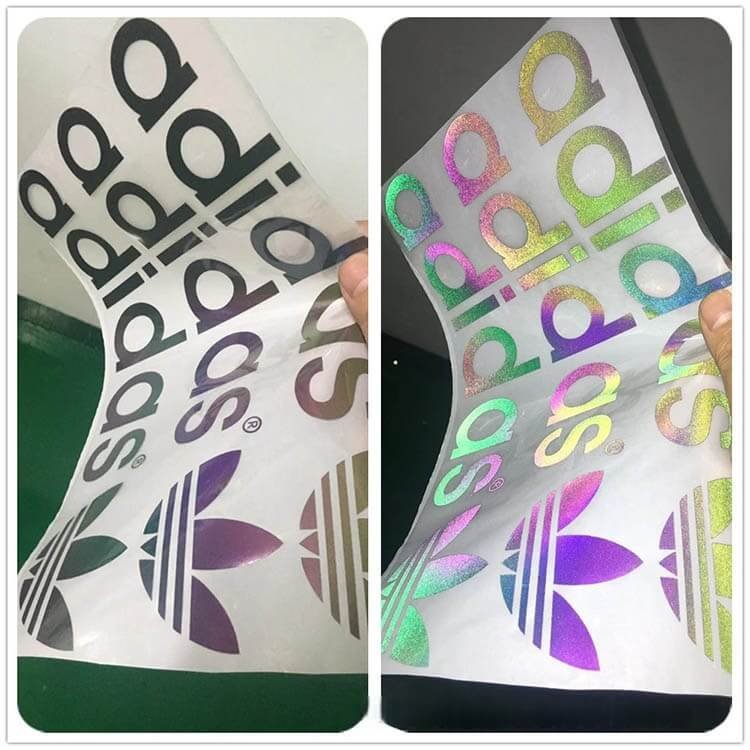
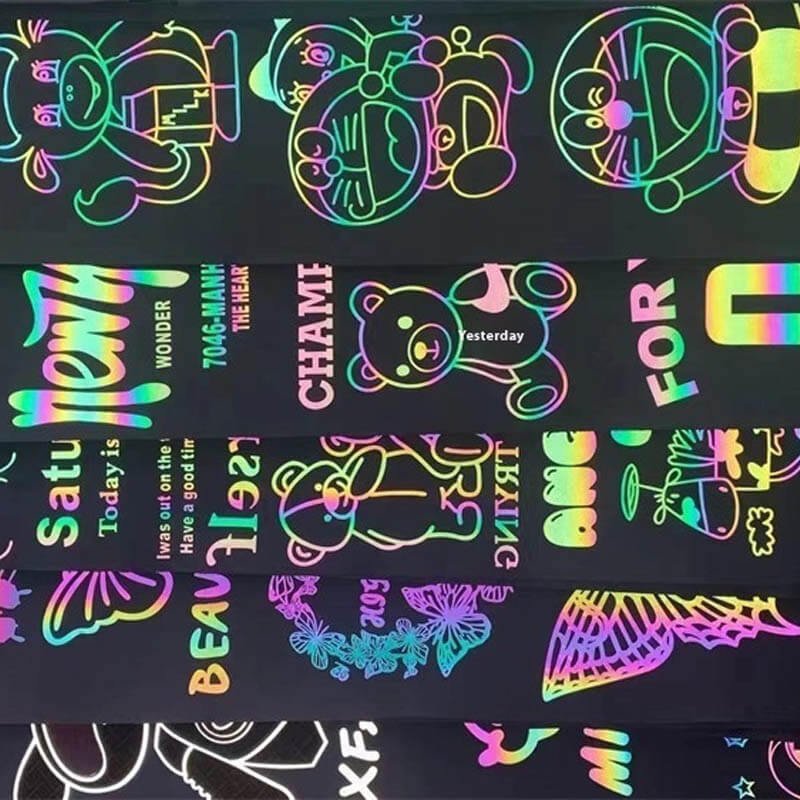
Modern full-color reflective printing technology allows manufacturers to apply a company’s exact Pantone-matched colors to reflective surfaces. Imagine a construction company logo that’s perfect hunter green during the day and brilliantly reflective at night—not a compromise, but both properties simultaneously. This transforms the safety vest from a compliance inconvenience into a genuine brand asset.
From a business perspective, this is huge. Brand identity drives employee pride and customer perception. A logistics firm with vibrantly colored, branded reflective logos creates a cohesive, professional image. The ANSI/ISEA 107 standard (North American) allows for colored reflective materials as long as they meet minimum brightness coefficients—which modern full-color reflective inks do. The EU’s EN ISO 20471 similarly permits this innovation.

Trends #3-5: Perforated Excellence, Gradient Artistry & Minimalist Geometry
Perforated Reflective Patterns
Building on segmentation technology, perforated designs use micro-perforation equipment to create thousands of tiny holes in the reflective material. This achieves two objectives: it reduces material usage (offering cost savings) and dramatically improves fabric breathability beneath the logo. The perforations are too fine to compromise reflectivity at night but make a noticeable comfort difference during the workday.
Gradient & Iridescent Effects
Fashion-forward design trends are bleeding into safety apparel. Gradient reflective logos—where color transitions smoothly from one hue to another—are becoming popular with younger workforces and modern companies. These aren’t frivolous: gradients prove that a logo is engineered to be visible at specific angles, creating additional visual interest while maintaining compliance. 2026 design forecasts suggest iridescent and rainbow-effect reflective logos will gain traction in demographic-conscious sectors.
Minimalist Geometric Design
The counter-trend to complexity is minimalist geometric design. Simple, bold geometric shapes—hexagons, triangles, bold horizontal stripes—create visual clarity and are easier to manufacture consistently at scale. Minimalist designs also age well: they won’t look dated in 2028 or 2030 the way overly trendy graphics might.
Durability Engineering: The Hidden Trend
What doesn’t make marketing headlines but drives procurement decisions is durability. Corporate purchasing managers are asking tough questions: “How many industrial wash cycles will this logo withstand before degradation?” “What’s the adhesion strength after 50 washings?” “Will the reflectivity remain above 80% after one year of daily workplace use?”
In 2026, reflective logo specifications increasingly include quantified durability metrics. The ASTM D7084 standard for reflective tape aging provides test frameworks. Leading manufacturers now conduct accelerated aging tests—UV exposure, temperature cycling, mechanical abrasion—to predict real-world performance and warranty their logos accordingly.
This shift is driven by corporate risk management and environmental consciousness. A poorly manufactured logo that peels after three months forces a company to re-equip workers, creating waste and downtime. Durable logos reduce total cost of ownership and align with ESG (Environmental, Social, Governance) commitments that major corporations now track.
Trend #6-10: Sustainability, Customization & Digital Integration
Sustainable Reflective Materials
European procurement regulations (particularly via the EU Extended Producer Responsibility directive) increasingly require manufacturers to validate sustainable supply chains. For reflective logos, this means:
- Eco-friendly adhesives: Replacing solvent-based glues with water-based or hot-melt alternatives
- Recycled backing materials: Using recycled polyester backing instead of virgin plastic
- Chemical transparency: Full disclosure of heavy metals, phthalates, and other restricted substances per OEKO-TEX standards
- Manufacturing footprint: Carbon-neutral production facilities and regional sourcing to reduce logistics emissions
Advanced Customization & Digital Integration
Digital integration into logo design is emerging as well. QR codes integrated into reflective logos (visible by smartphone during the day, reflective enough to photograph at night) enable traceability, warranty tracking, and worker identification. However, the trend is nascent—logo size constraints and readability concerns still limit adoption.
Flexible & Stretchable Reflective Technology
As activewear-inspired workwear grows (yoga pants with safety logos, stretchy performance shirts), reflective materials must stretch too. 4-way stretch reflective films and elastic-backed reflective transfers are rising in demand. This addresses the real-world scenario where workers need mobility for their tasks while maintaining constant visibility.
Why These Trends Matter for Your Business
If you’re sourcing reflective logos for corporate apparel, a safety equipment distributor, or a workwear brand, understanding these trends directly impacts your competitive position. Companies that adopt segmented/perforated logos see higher worker adoption rates. Those investing in full-color reflective branding command premium pricing. And firms that can prove durability and sustainability gain contracts with major corporations and government agencies.
The future of reflective logo design isn’t just about visibility—it’s about integration. Logos that perform (comfort + durability), represent (brand identity + color fidelity), and prove (standards compliance + sustainability certification) are becoming table-stakes for market leadership.
How to Implement These Design Trends
For Corporate Buyers
- Specify segmented/perforated requirements in RFQs
- Request durability test certificates (ASTM standards)
- Require OEKO-TEX or similar eco-certification
- Pilot with 10-20% of workforce first
- Measure worker comfort feedback after 4 weeks
For Distributors & Resellers
- Stock segmented and full-color reflective options
- Create comparison guides for your sales team
- Develop case studies showing ROI (lower replacement rates)
- Establish relationships with certified manufacturers
- Market sustainability credentials to procurement teams
Frequently Asked Questions
▶ Do segmented logos meet ANSI and ISO standards?
Yes. ANSI/ISEA 107 and ISO 20471 specify minimum reflective coverage percentages and brightness coefficients but don’t mandate solid material. Segmented designs, when engineered correctly, meet or exceed these standards while improving comfort.
▶ How long do reflective logos last with regular washing?
Premium reflective logos engineered for industrial laundering can withstand 75-100+ wash cycles at commercial temperatures (60°C) without significant degradation. Look for products tested to ASTM D7084 or equivalent. Lower-quality options may fail after 20-30 cycles.
▶ What’s the cost difference between standard and advanced reflective logos?
Full-color reflective logos typically cost 15-25% more than standard silver. Segmented and perforated versions have similar costs to solid designs. However, the durability improvement often justifies the premium through reduced replacement cycles and higher worker compliance.
▶ Can I use my company’s Pantone colors in a reflective logo?
Absolutely. Modern full-color reflective printing technology can reproduce nearly any Pantone color while maintaining reflective properties. However, some extremely light colors may show reduced nighttime reflectivity. A professional manufacturer will conduct testing to ensure compliance.
▶ Is there a minimum order quantity for custom reflective logos?
MOQs vary by manufacturer and complexity. Standard designs typically have 500-1,000 unit minimums per color. Complex multi-color or segmented designs may have 2,000+ minimums. Work with your manufacturer on sample development before committing to full orders.
Our Industry Perspective
After 15 years manufacturing reflective materials and safety apparel across 50+ countries, we’ve observed that the markets most advanced in adopting these design trends are Northern Europe (driven by strict regulations and corporate sustainability mandates), North America (where large construction firms demand performance and brand integration), and Australia (where mining operations require extreme durability). The lagging regions are parts of Asia and Latin America, though rapid globalization is changing that.
The single biggest catalyst for trend adoption is worker feedback. When safety managers conduct anonymous surveys and workers report that segmented logos feel more comfortable or that full-color branding makes them feel more professional, budgets shift rapidly. This human-centered design approach is reshaping the entire industry.
Ready to Upgrade Your Reflective Logo Strategy?
Explore how our custom reflective logo solutions combine the latest 2026 design trends with proven durability and compliance.
Get Your Custom Reflective Logo ConsultationExplore Our Reflective Logo Solutions
Discover how our professional reflective logo offerings implement every trend discussed in this article. From segmented patterns to full-color customization, we provide OEM/ODM solutions that meet global safety standards while exceeding performance expectations.
Key Regulatory Resources
- • ISO 20471:2019 – High visibility apparel specifications
- • ANSI/ISEA 107-1:2020 – High-visibility safety apparel (North America)
- • ASTM D7084 – Reflective tape aging and durability testing
- • OEKO-TEX STANDARD 100 – Textile safety and sustainability certification
Looking Ahead: The Future of Reflective Logo Design
The reflective logo design trends for 2026 represent a maturation of the safety apparel industry. We’re moving beyond “Does it meet the minimum standard?” to “How does it enhance brand identity, improve worker comfort, prove durability, and demonstrate sustainability?”
Companies and distributors that adopt these trends—segmented designs for comfort, full-color printing for branding, engineered durability for cost-effectiveness, and sustainable materials for compliance—will capture market share from competitors clinging to outdated silver-logo approaches.
The competitive advantage isn’t in any single trend but in the integration of all of them: a reflective logo that looks professional, feels comfortable to wear, performs reliably across industrial washing, proves compliance with changing regulations, and can be manufactured responsibly. That combination defines market leadership in 2026.