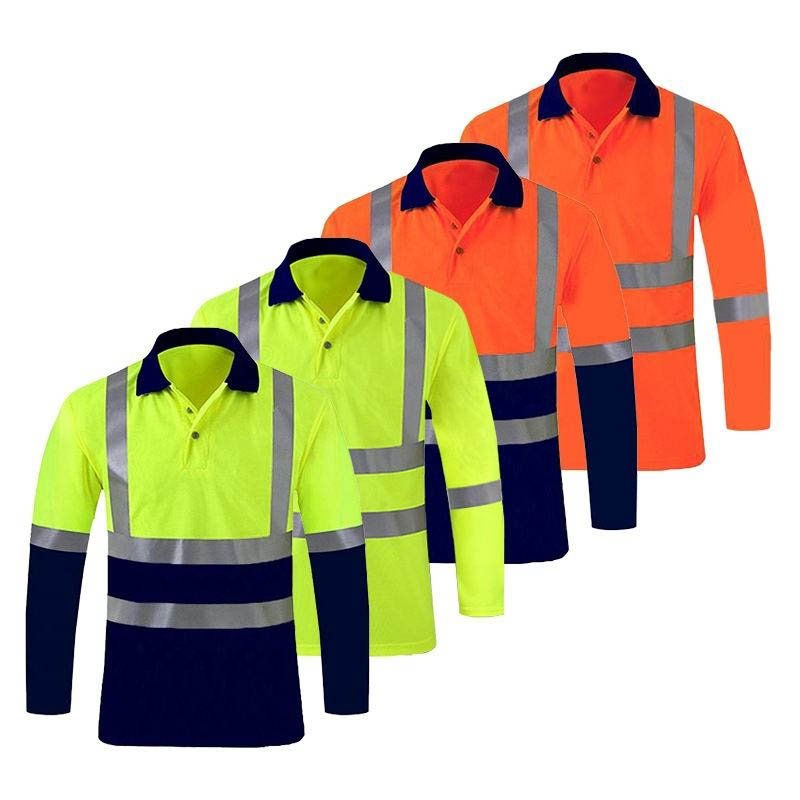
A Beginner’s Guide to Different Types of Reflective Materials for Clothing
Understanding Glass Bead vs Microprismatic Technology for Safety Apparel
Quick Navigation
What Are the Different Types of Reflective Materials for Clothing?
The two primary types of reflective materials used in safety apparel are glass bead and microprismatic (retroreflective) materials. Glass bead reflective fabrics use microscopic glass spheres embedded in an adhesive binder that reflect light straight back to its source—offering excellent visibility, especially in wet conditions, and are more cost-effective for basic applications. Microprismatic materials (also called retroreflective materials) employ precision-engineered corner cube prisms that maintain consistent brightness across a much wider viewing angle and under diverse lighting conditions, making them superior for high-performance safety applications. Your choice depends critically on application context: ISO 20471 Class 2 and Class 3 standards typically mandate microprismatic materials for maximum visibility in high-risk environments, while Class 1 applications may leverage glass bead as a cost-effective solution. Additionally, performance varies significantly by environment—road work in wet climates demands superior moisture resistance that microprismatic excels at, whereas outdoor construction in arid regions may find glass bead acceptable. The decision is not about choosing the “best” material universally, but rather about matching material properties to your specific occupational hazard, climate, washing frequency, and compliance requirements.
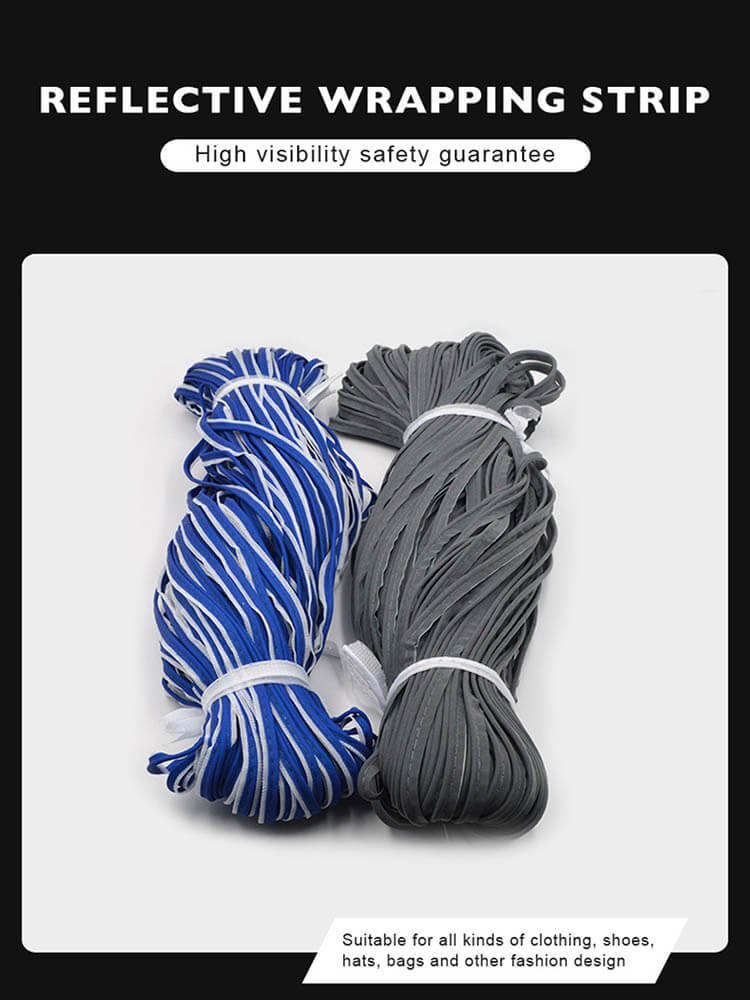
Close-up demonstration of reflective material construction showing the difference in surface structure between glass bead and advanced retroreflective technologies.
Understanding Glass Bead Reflective Materials
Glass bead reflective technology is the foundation upon which modern safety materials were built. This method remains the most economical and widely used approach for beginner-level applications. The process involves embedding thousands of tiny glass spheres (typically 40—100 microns in diameter) into an adhesive backing layer. When light strikes these glass beads, they refract the light rays and reflect them back toward the original light source, creating that distinctive bright glow you see on safety vests and jackets.
How Glass Bead Reflection Works
Each glass sphere acts like a tiny lens. Light enters the top surface, travels through the sphere, and bounces off the reflective coating on the back, returning along almost the same path it came from. This is called “retroreflection.” For maximum brightness, glass beads perform best when the observer is positioned close to the light source—essentially when a driver’s headlights are shining directly at a highway worker’s safety vest. The intensity of reflection can reach 75—150 candelas per lux per square meter (cd/lx/m²), depending on the bead quality and backing material.
Advantages of Glass Bead Materials
- Cost-Effective: Significantly cheaper per meter than microprismatic alternatives
- Excellent Wet-Weather Performance: Water does not significantly degrade reflection—actually, wet glass beads may perform better than dry due to the refractive index of water
- Proven Track Record: Over 40 years of industrial use with established performance data
- Wide Availability: Easy to source from manufacturers worldwide
- Good for Basic Standards Compliance: Suitable for EN ISO 20471 Class 1 and many ANSI/ISEA 107 Type O applications
Limitations of Glass Bead Technology
- Angle-Dependent Brightness: Reflection intensity drops sharply when viewing angle exceeds 15—20 degrees from the straight-back position
- Durability Issues: Glass beads can dislodge through repeated washing and abrasion, leading to brightness loss over time
- Lower Performance Standards: Cannot achieve the highest ISO 20471 Class 3 requirements without supplementary materials
- Scratching & Delamination: The adhesive layer can deteriorate in harsh industrial laundering environments
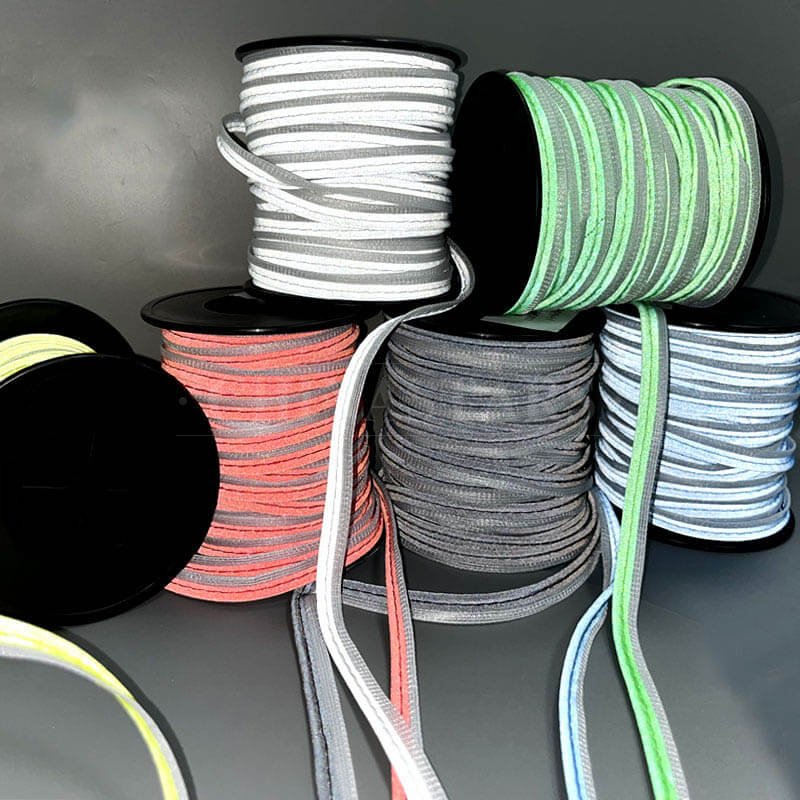
Custom color reflective tapes showcase the versatility of reflective materials—available in silver, white, and color-integrated designs for safety applications.
The Superiority of Microprismatic Reflective Materials
Microprismatic reflective technology represents the pinnacle of retroreflection science. Instead of glass beads, this technology uses precisely engineered microscopic prisms—essentially three-dimensional corner cubes—that achieve retroreflection through geometric optics. Each prism cluster is manufactured to exact tolerances, creating a surface that reflects light back to its source with remarkable efficiency across a much wider range of viewing angles.
The Physics Behind Microprismatic Reflection
Microprismatic materials employ the corner cube geometry principle: light entering a corner cube (formed by three mutually perpendicular reflective surfaces) bounces off each surface once and exits parallel to its entry direction, regardless of incident angle. This means a driver approaching a worker at a low angle—or from the side—still sees near-maximum brightness. The coefficient can reach 300—500 cd/lx/m² or higher, roughly triple to six times more efficient than glass bead materials.
Advantages of Microprismatic Materials
- Superior Angle Performance: Maintains brightness even at 45—60 degree angles, covering approaching vehicles from multiple directions
- Exceptional Wet-Weather Visibility: Microscopically precise surface geometry resists water contamination better than glass beads
- Durability Under Industrial Laundering: Prisms are molded into the material structure, not bonded, making them resistant to mechanical abrasion
- Highest Standards Compliance: Can easily achieve EN ISO 20471 Class 3 (the highest visibility class) and ANSI/ISEA 107 Type P requirements
- Longer Service Life: Maintains 70—80% of initial brightness even after 50+ industrial wash cycles
- Ideal for Premium Applications: Emergency response, railway workers, high-traffic road construction
Limitations and Considerations
- Premium Cost: Microprismatic materials cost 2—4x more per meter than glass bead equivalents
- Manufacturing Complexity: Fewer suppliers globally; longer lead times can apply
- Potential for Micro-scratches: While durable, the prismatic surface can develop superficial scratches that marginally reduce brightness if subjects are not careful with storage
- Overkill for Low-Risk Applications: Premium performance may not be justified for basic indoor warehouse work or stationary positions
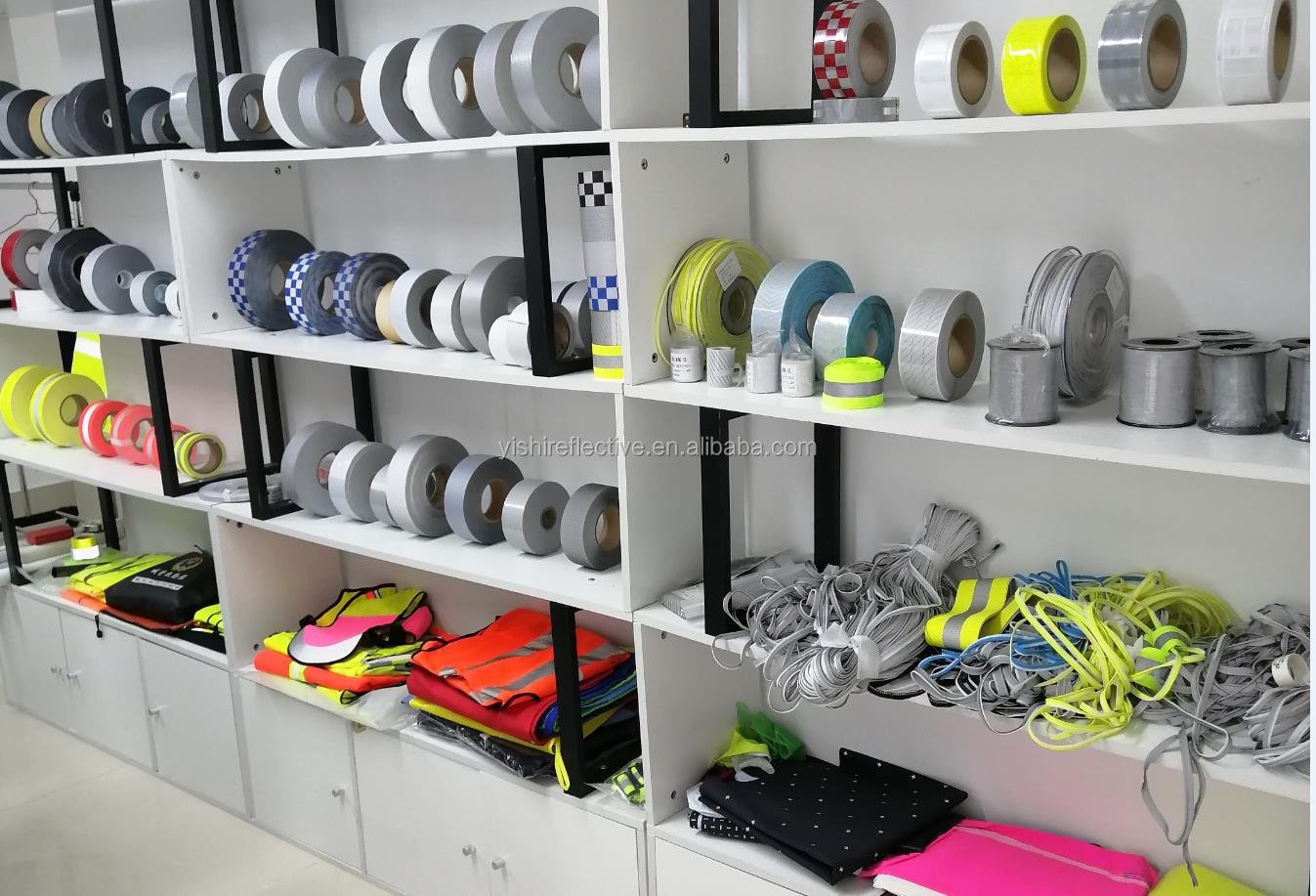
Professional display of reflective heat transfer films showing the range of customization options available for branded safety apparel production.
Glass Bead vs Microprismatic: The Complete Comparison
| Property | Glass Bead | Microprismatic |
|---|---|---|
| Initial Brightness (cd/lx/m²) | 75—150 | 300—500+ |
| Ideal Viewing Angle | 0—15° | 0—60° |
| Wet-Weather Performance | Good | Excellent |
| Laundry Durability (wash cycles) | 20—30 | 50+ |
| Cost per Meter | $2—5 | $8—20 |
| Maximum ISO 20471 Class | Class 1 | Class 3 |
| Best Application Type | Low-risk, indoor, budget-conscious | High-risk, outdoor, premium standards |
“From my experience working with buyers across 50+ countries, I’ve seen procurement teams make costly mistakes by selecting materials based purely on unit price, only to face reorders due to premature fading or non-compliance with customer standards. The real cost is not the per-meter price; it’s the total cost of ownership—including compliance, performance, durability, and liability. A $15/meter microprismatic material that lasts 50 washes often outperforms a $3/meter glass bead that lasts 20 washes when you factor in reordering, quality issues, and potential safety incidents.”
How to Select the Right Reflective Material for Your Application
Selecting the correct reflective material requires a structured evaluation of your specific operational parameters. This is not a one-size-fits-all decision—it’s a risk-assessment exercise.
Step 1: Define Your Hazard Environment
- Traffic Speed: Highway environments (80+ km/h) demand superior angle performance → consider microprismatic
- Lighting Conditions: Predominantly nighttime work (mining, road construction) benefits from higher brightness → microprismatic excels
- Weather Exposure: High rainfall regions → microprismatic’s superior water resistance is justified
- Worker Approach Vectors: If workers are exposed to vehicles approaching from multiple angles (not just head-on) → microprismatic is essential
Step 2: Review Applicable Standards
Your industry likely has mandatory standards. Research them early:
- ISO 20471: European standard mandating Class 2 or Class 3 for high-visibility apparel (typically requires microprismatic)
- ANSI/ISEA 107: North American standard with Type O (introductory), Type R (recommended), and Type P (premium) classes
- National Railway Standards: Many countries mandate Class 3 or equivalent for railway workers
- Customer/Client Requirements: Large contractors often specify material requirements in Safety Method Statements
Step 3: Assess Durability Requirements
How often will garments be laundered? This dramatically affects material selection:
- Daily Industrial Laundering: Gas-heated extraction equipment runs at 70—80°C with abrasive agitation → microprismatic only
- Weekly or Bi-weekly Laundering: Standard workplace washing → Glass bead acceptable, but microprismatic preferred
- Infrequent Washing (Monthly): Light-use or climate-controlled environments → Glass bead can be adequate
- Single-Use or Limited-Life Garments: Disaster response, temporary events → Glass bead is cost-justified
Step 4: Budget Reality Check
Calculate total cost of ownership, not just material cost. If a glass bead vest needs replacement after 15 months due to fading, versus a microprismatic vest lasting 36+ months, the monthly cost favors the premium material despite higher upfront expense.
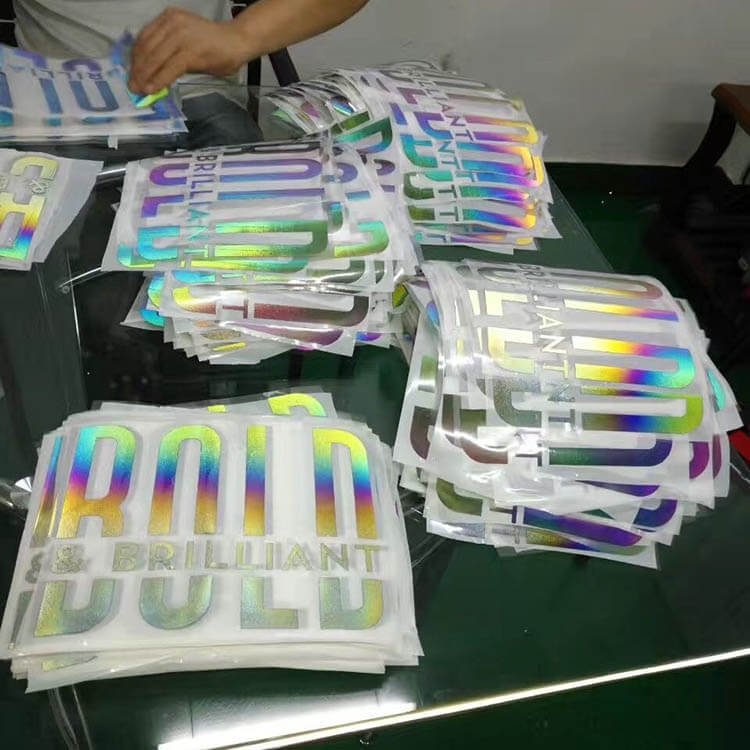
Custom reflective logos demonstrate how branded safety apparel combines visibility requirements with company identity—an important consideration in material selection.
International Safety Standards & Material Classification
EN ISO 20471 (Europe, most of world)
This is the gold standard for safety apparel visibility. It defines three classes:
- Class 1: Lowest visibility requirement (600 m² minimum retroreflective material). Glass bead can achieve this.
- Class 2: Medium visibility (0.5 m² retroreflective + 0.25 m² fluorescent). Microprismatic recommended but glass bead + supplementary materials can work.
- Class 3: Highest visibility (0.2 m² retroreflective + 0.5 m² fluorescent). Microprismatic materials typically required. Workers in high-speed traffic zones, railway proximity, or nighttime outdoor work must wear Class 3.
ANSI/ISEA 107 (North America)
Divides visibility garments into three performance categories:
- Type O: Introductory visibility—intended for low-speed environments. Glass bead acceptable; widely available and budget-friendly.
- Type R: “Recommended” visibility for moderate-hazard environments. Typically combines glass bead or microprismatic with fluorescent materials.
- Type P: Premium visibility for high-risk environments. Requires Class 3–equivalent retroreflection (almost always microprismatic).
AS/NZS 1906.4 (Australia & New Zealand)
Similar to ISO 20471 with Class 1, 2, and 3 designations. Increasingly, Australian mine operators and road authorities mandate Class 3, driving demand for microprismatic materials in this region.
Care, Maintenance & Lifespan Optimization
Washing Guidelines
- Temperature: Glass bead materials should not exceed 50°C; microprismatic can tolerate 60—70°C but prefer lower temperatures
- Detergent: Use mild, pH-neutral detergents; avoid bleach or optical brighteners which can degrade fluorescent and reflective components
- Agitation: Gentle cycles extend material life; industrial harsh-wash cycles can reduce performance by 10—15% per cycle
- Drying: Air-dry when possible; excessive heat (tumble drying above 60°C) accelerates material degradation
Storage Best Practices
- Store reflective materials in cool, dark environments (UV exposure fades even inactive fluorescent dyes)
- Keep away from sharp objects or rough surfaces that could scratch microprismatic coatings
- Maintain 40—60% relative humidity to prevent adhesive degradation on glass bead materials
- Do not store unrolled reflective fabric in tight coils for extended periods—flatten or use tubes to prevent permanent creasing
Expected Lifespan
- Glass Bead: 12—18 months (light use with weekly washing), 6—9 months (daily industrial laundering)
- Microprismatic: 24—36+ months (light use), 18—24 months (daily industrial laundering)
- Garments should be retired when reflective brightness drops below 50% of original specification—usually quantified via ISO luminance measurement protocols
Frequently Asked Questions About Reflective Materials
Can I mix glass bead and microprismatic materials on the same garment?
Yes, this is common in performance apparel. High-visibility areas (chest, back, sleeves) often use microprismatic for maximum brightness, while secondary areas (shoulders, sides) may use glass bead to reduce cost. This “hybrid” approach balances performance and budget, though it’s less common than uniform material selection. Ensure the materials are compatible with your intended washing protocol.
What’s the difference between “retroreflective” and “reflective”?
Retroreflective materials specifically return light to its source (glass bead and microprismatic materials). Reflective is a broad term that includes any light-bouncing surface—regular white cotton is “reflective” but not “retroreflective.” For safety apparel, you specifically need retroreflective materials to create the bright glow visible to approaching vehicles.
Why does my reflective vest appear dimmer after a few washes?
This is usually due to two factors: (1) Adhesive degradation in glass bead materials—the beads gradually dislodge and collect in the washing machine filter, and (2) Surface contamination—dirt, detergent residue, or lint accumulates on the reflective surface, reducing light transmission. Proper washing (gentle cycles, correct temperature, air-drying) helps, but some brightness loss is inevitable. If loss exceeds 50% in under 12 months, upgrade to microprismatic materials for longer service life.
Are colored reflective materials as effective as silver/white?
No. Silver and white retroreflective materials achieve 90—95% of theoretical maximum brightness. Colored reflective materials (red, yellow, lime) sacrifice 30—50% brightness because the dyes absorb light energy before it can be retroreflected. However, colored materials offer branding advantages and may meet ISO 20471 Class 2 requirements in combination with supplementary white retroreflective bands. Always verify standards compliance before specifying colored-only solutions.
Can reflective materials be applied to existing garments?
Yes, absolutely. Reflective logos, heat transfer films, and adhesive tapes can be applied via heat press, sewing, or adhesive backing to upgrade existing workwear. This is cost-effective for seasonal adjustment or compliance upgrades. However, hand-applied materials on pre-owned garments may not achieve the durability of factory-integrated reflective materials. Always ensure the base fabric’s condition (non-degraded, intact seams) before upgrade application.
What international certifications should I look for in reflective materials?
Look for ISO 20471 certification (Europe), ANSI/ISEA 107 compliance (North America), and OEKO-TEX Standard 100 for environmental safety. Manufacturers should provide test certificates from accredited labs showing luminance, coefficient of retroreflection, and durability after washing. If certificates are unavailable or vague, view this as a red flag regarding material quality.
Ready to Source Premium Reflective Materials?
At Nanjing VizGlo Safety Technology, we specialize in supplying both glass bead and microprismatic reflective materials tailored to your specific application requirements. Whether you need cost-effective solutions for introductory compliance or premium materials for high-risk environments, our expertise spans 15+ years of global OEM/ODM manufacturing.
Our team can guide you through material selection, standards compliance, and customization options—ensuring your safety apparel meets the highest performance and regulatory standards.
Contact Our Safety Experts TodayExplore Our Complete Reflective Material Solutions
Now that you understand the fundamentals of reflective materials, explore our comprehensive range of custom reflective logos and solutions. From heat-transfer films to branded retroreflective materials, we provide OEM/ODM services that transform your safety apparel designs into compliance-ready products.
→ Visit Our Reflective Logo Services →Additional Resources & Standards References
- • ISO 20471:2013 High-visibility Apparel — Official standard document defining visibility classes and material requirements
- • ANSI/ISEA 107 High-Visibility Safety Apparel — North American standard for occupational high-visibility apparel
- • Retroreflective Materials Performance Analysis — Technical research on glass bead vs. microprismatic performance metrics
- • OEKO-TEX Standard 100 Certification — Environmental and health safety certification for textiles and reflective materials
- • Australian Safety Standards (AS/NZS) — Region-specific high-visibility apparel requirements