How to Find a Reliable Reflective Piping Manufacturer in China
A buyer-focused guide for safety apparel brands, distributors, and OEM workwear companies that need reflective piping that actually performs after production, washing, and real field use.
Table of Contents
Quick Answer: What Makes a Reflective Piping Manufacturer Reliable?
To find a reliable reflective piping manufacturer in China, do not choose only by the lowest price per meter. Start by checking whether the supplier is a real factory with in-house reflective material knowledge, stable coating or lamination control, and experience with safety apparel markets. Ask for full third-party test reports for EN ISO 20471 or ANSI/ISEA 107, verify retroreflectivity values before and after washing, request batch-to-batch QC data, and test actual samples on your own garment fabric before bulk order approval. A dependable partner should be able to explain backing choices such as T/C, polyester, nylon, or stretch base, adhesive performance, wash resistance, color consistency, packing method, and application suitability. If you are sourcing wholesale reflective piping for workwear, rainwear, sportswear, bags, or PPE, the safest approach is to evaluate the manufacturer as a technical partner, not just a commodity supplier.
Why “Reliable” Means More Than Cheap Pricing
Reflective piping often looks simple from a distance: a narrow corded strip with a reflective surface. In real production, however, it is a performance component. It must bend smoothly around seams, survive stitching tension, resist delamination, maintain retroreflective brightness, and remain visually consistent across thousands or millions of meters. If the piping fails, your finished garment may fail visual inspection, customer wash tests, or even compliance audits.
Many first-time importers send the same vague inquiry to ten suppliers and compare only FOB price. That approach can work for basic packaging materials, but not for reflective safety components. The lowest quotation may hide weak adhesive, unstable glass bead distribution, poor backing fabric, uneven cord diameter, or unverified compliance claims. When the product is used on hi-vis jackets, road work uniforms, railway garments, children’s outdoor wear, or cycling apparel, those hidden weaknesses become commercial risk.
For reference, buyers serving regulated safety apparel markets should understand the visibility framework behind standards such as EN ISO 20471 high visibility clothing, ANSI/ISEA 107, and local PPE requirements. Even when piping itself is used as supplementary trim rather than the main reflective tape area, poor reflective performance can still damage your buyer’s confidence.
Step 1: Confirm Whether You Are Talking to a Factory or a Trading Middleman
China has excellent reflective material manufacturers, but it also has many trading companies using factory photos, generic catalogues, and copied test certificates. A trader is not automatically bad, but if you need consistent long-term supply, private-label development, special colors, stretch piping, FR compatibility, or high wash durability, you need direct technical communication with the production side.
Practical verification questions
- Can they show production photos or videos of reflective piping being made, not only finished rolls?
- Do they control coating, lamination, slitting, cording, and packing in-house?
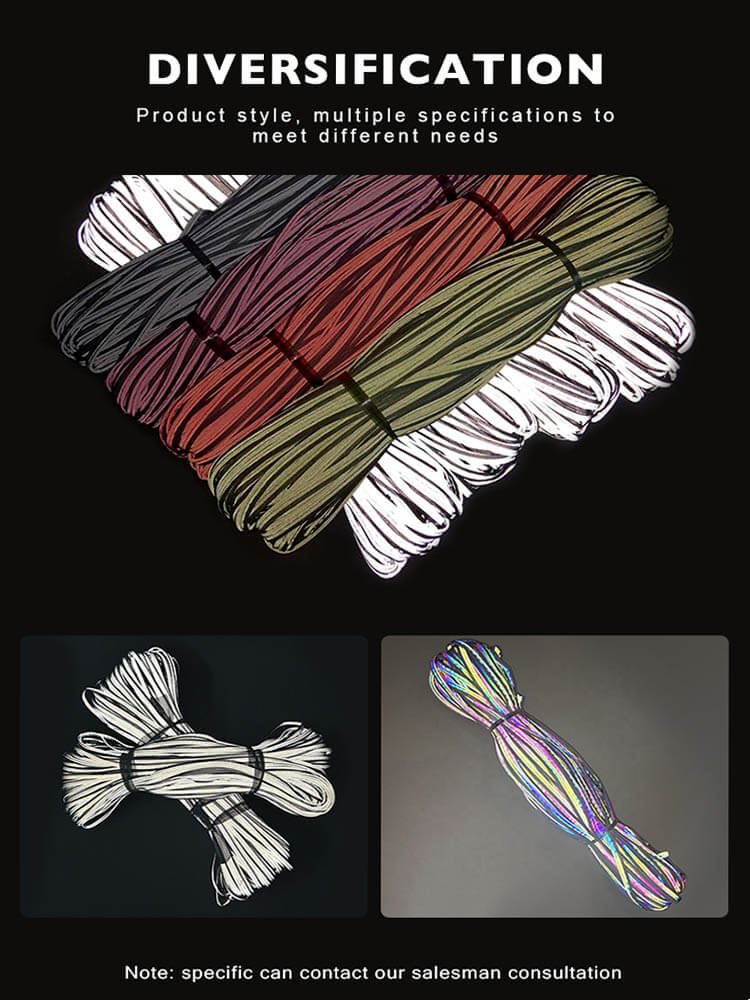
- Can they customize cord diameter, piping width, backing fabric, color, reflectivity level, and roll length?
- Can their technical team explain why one construction works better for rainwear while another suits stretch workwear?
- Can they provide a factory audit, ISO 9001 certificate, or BSCI documentation if your customer requires it?
A serious manufacturer will not avoid these questions. In fact, good factories usually welcome technical discussions because they separate informed buyers from price-only inquiries.
Step 2: Evaluate Material Science Capability
The reflective piping market in 2026 is more advanced than it was even a few years ago. Buyers no longer ask only for “silver reflective piping.” They ask for stretchable piping for active workwear, colored reflective piping for fashion-safety crossover products, fire-retardant compatible trims, soft piping for children’s jackets, durable piping for industrial laundry, and customized reflective effects for branded collections.
A capable manufacturer should discuss the difference between glass bead technology and micro-prismatic reflective structures. Glass bead reflective piping is widely used because it is flexible, sewable, and cost-effective for many garments. Micro-prismatic structures may deliver strong brightness in certain applications but can be less suitable for some soft-sewn trims depending on construction. The supplier should help you choose based on your final product, not push one material blindly.
Backing fabric matters just as much. A T/C backing may be suitable for standard workwear. Polyester backing can support better synthetic garment compatibility. Nylon backing may be used where strength and abrasion resistance are priorities. Elastane or stretch backing can support ergonomic garments, sports jackets, or modern active workwear. If the manufacturer cannot explain these differences, they may be assembling trim rather than engineering it.
Buyer’s rule: do not ask “What is your cheapest reflective piping?” Ask “Which construction is suitable for my fabric, washing requirement, certification target, and sewing process?”
Step 3: Ask for Full Test Reports, Not Just Certificate Screenshots
A common red flag is a supplier who sends only a cropped certificate image. Serious buyers should request complete, unedited third-party reports from recognized laboratories such as SGS, TÜV SÜD, SATRA, or Intertek. A proper report should show the tested product description, model number, sample photo or identification, test method, measured values, washing conditions if applicable, report date, lab stamp, and page numbers.
Do not stop at “pass.” Look at the measured coefficient of retroreflection, often called RA value. Ask whether the values were measured before washing, after washing, after abrasion, after flexing, or after temperature exposure. If you are buying reflective piping for garments that claim compliance with high-visibility standards, your compliance team or customer may need supporting documentation for the reflective components used.
If the supplier claims EN ISO 20471 or ANSI/ISEA 107 suitability, ask them to connect the report to the exact product construction you plan to buy. A report for a different reflective tape, different backing, or different coating line does not automatically validate your piping order.
Step 4: Check Their QC System Before You Place Bulk Orders
Quality control for reflective piping should happen before production, during production, and before shipment. A manufacturer that checks only the final cartons may discover problems too late. Reliable factories monitor raw material input, reflective layer consistency, coating adhesion, slitting width, cord diameter, roll tension, surface defects, color deviation, and retroreflectivity values batch by batch.
Ask for internal QC data
- RA value range per batch
- Width tolerance records
- Adhesion or peel strength testing
- Wash-test results at 25, 50, or 60+ cycles
- Color consistency under daylight and reflective conditions
Inspect shipment details
- Roll length accuracy
- Joint quantity per roll
- Labeling and batch traceability
- Moisture-proof packing
- Carton strength for sea shipment
For large orders, consider pre-shipment inspection through your own inspector or third-party service. You can also study general supplier verification practices from global sourcing organizations such as QIMA supplier inspection resources. The key point is simple: do not wait until the piping reaches your sewing line to discover it cannot meet your specifications.

Step 5: Use Sampling to Test the Supplier’s Real Professionalism
Sampling is not just about receiving a few meters of material. It is a rehearsal for future cooperation. A strong reflective piping manufacturer will ask about your application: garment type, base fabric, sewing method, target market, washing method, color requirement, and expected certification. If they send samples without asking any technical questions, they may not fully understand the risk of mismatched material.
When you receive samples, do not evaluate them only by appearance. Sew the piping onto the actual garment fabric. Check how it curves around seams. Wash it repeatedly. Test whether the reflective surface cracks, dulls, peels, or becomes cloudy. If possible, measure reflectivity before and after washing. For safety apparel programs, share the sample with your certification consultant or testing lab before confirming mass production.
You should also judge communication quality. Does the supplier respond with specific answers or generic promises? Can they provide a clear quotation sheet with material construction, width, cord size, roll length, MOQ, packing, lead time, tolerance, and payment terms? Do they keep the same specification in the proforma invoice, sample tag, and production order? Reliable manufacturing is built on disciplined details.
Red Flags When Sourcing Reflective Piping in China
- The supplier offers an unusually low price but cannot explain material construction.
- They provide only certificate screenshots, not full test reports.
- They avoid questions about wash durability or RA value after washing.
- Sample quality looks good, but bulk order specification is vague.
- They cannot guarantee color consistency between batches.
- They refuse to provide batch number, QC records, or shipment photos.
- They claim every product is suitable for every market, every garment, and every washing method.
What a Strong Manufacturer Should Offer
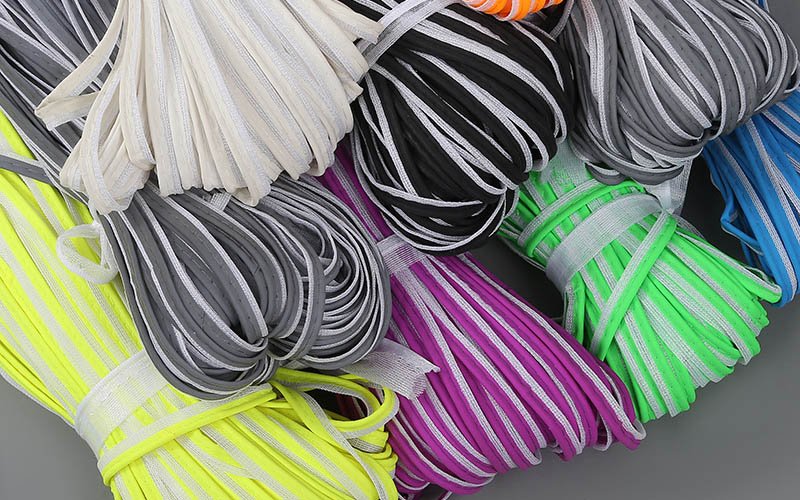
A dependable Chinese reflective piping partner should combine manufacturing capacity with technical support. This includes standard silver reflective piping, colored reflective piping, custom width options, different backing choices, OEM roll labels, stable packaging, and support for safety apparel brands that require traceable documentation.
At VizGlo Safety, reflective piping is part of a broader reflective materials and hi-vis clothing manufacturing system. That matters because we understand how piping behaves not only as a roll material but also as a sewn component on vests, rainwear, jackets, trousers, bags, and workwear. The best sourcing decisions happen when the trim supplier understands the final garment.
Need reflective piping samples or OEM advice?
Tell us your garment type, target market, washing requirement, and preferred specification. Our team will recommend a suitable construction.
Final Buyer Checklist
| Checkpoint | What to Ask | Why It Matters |
|---|---|---|
| Factory Identity | Production process, audit documents, factory photos | Avoids unstable middleman sourcing |
| Compliance | Full EN ISO 20471 or ANSI/ISEA 107 reports | Supports regulated safety apparel programs |
| RA Value | Initial and after-wash retroreflectivity data | Confirms visibility performance |
| Wash Durability | 25, 50, or 60+ cycle test results | Prevents delamination and customer claims |
| Customization | Width, cord size, backing, color, roll length, labeling | Matches your product and brand requirements |
FAQ: Finding a Reflective Piping Manufacturer in China
What is the most important factor when choosing a reflective piping manufacturer?
The most important factor is verified performance consistency. A reliable manufacturer should provide test reports, RA value data, wash-test results, and batch control records—not only a low price or attractive sample.
Should I buy reflective piping from Alibaba suppliers?
Alibaba can be a starting point, but it should not be your full vetting process. You still need to verify factory identity, test reports, production capability, QC system, sample performance, and bulk order consistency.
How many wash cycles should reflective piping withstand?
It depends on your market and garment use. Basic garments may require fewer cycles, while professional workwear may need 25, 50, or even 60+ wash cycles. Always confirm brightness and adhesion after washing.
Can reflective piping be customized?
Yes. A capable manufacturer can customize width, cord diameter, backing fabric, color, reflectivity level, roll length, packaging, and sometimes special effects or brand-specific constructions.
Is reflective piping suitable for certified hi-vis clothing?
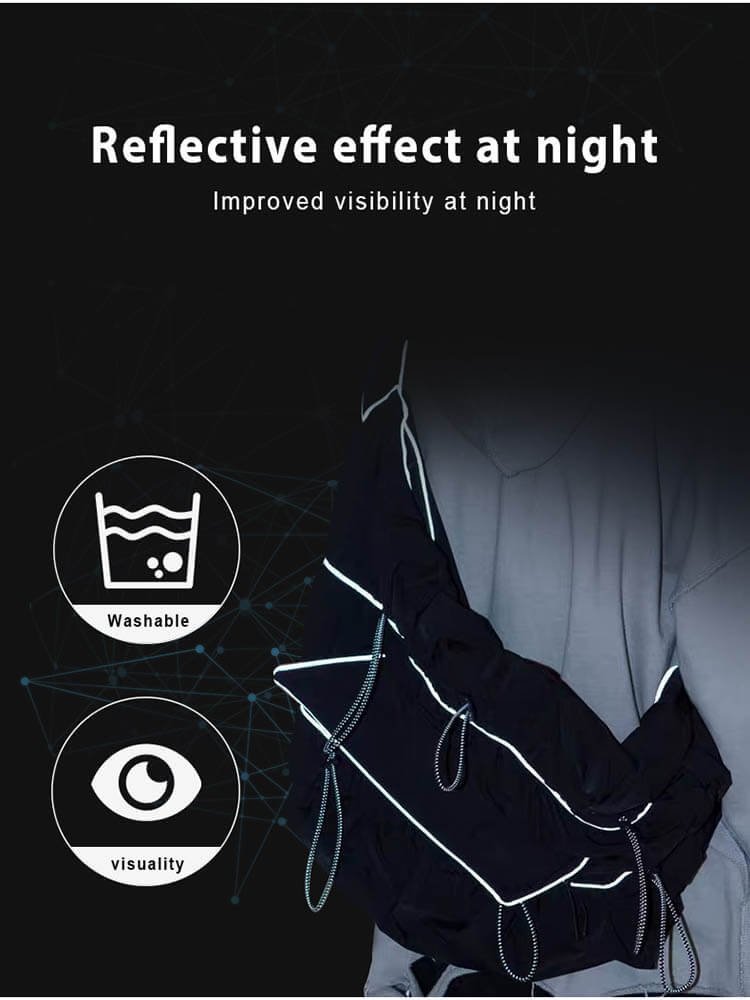
Reflective piping is often used as supplementary visibility trim. For certified hi-vis clothing, the main reflective area and garment design must meet applicable standards. Always confirm with your testing lab or compliance consultant.