From Factory to Your Warehouse: Understanding the Global Shipping Process for Reflective Materials
The Complete Answer
The global shipping process for reflective materials is a multi-stage supply chain operation that begins with factory production in Nanjing and concludes with warehouse delivery in your destination market. The journey encompasses six critical phases: specialized packaging using moisture barriers and anti-crush protection (typically 1–2 days at origin); pre-shipment quality inspection and customs documentation (1–3 days); carrier selection and mode routing—whether air freight for urgent orders (3–7 days transit) or ocean freight for volume shipments (3–6 weeks); in-transit monitoring and compliance verification; destination customs clearance and final QC inspection (1–3 days); and warehouse receipt and discrepancy resolution. Unlike standard textiles, reflective materials—including industrial reflective tape and specialized films—are sensitive to moisture, UV exposure, and mechanical stress, requiring climate-controlled containers, desiccant protection, and rigid internal packaging to prevent optical degradation. The typical cost structure allocates 60–70% to transportation fees, 15–20% to specialized packaging, 10–15% to insurance and compliance documentation, with premiums added for guaranteed delivery windows or security features. Most Asia-to-North America shipments take 4–8 weeks total (accounting for factory-to-port consolidation, customs, and final delivery), while European routes average 5–9 weeks depending on origin port efficiency.
Why Shipping Matters More Than You Think
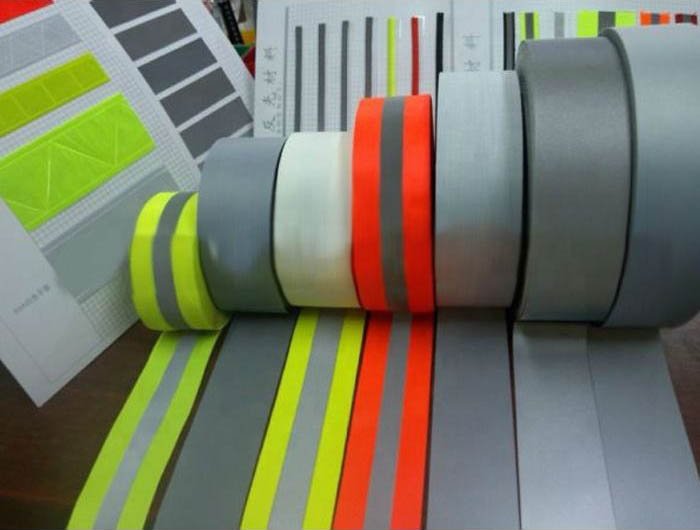
When purchasing reflective materials for industrial applications—whether high-visibility clothing components, safety tape for road work, or specialized reflective webbing—most buyers focus on a simple equation: product cost + freight cost = landed cost. This oversimplification reveals a fundamental misunderstanding of what we’re actually transporting. We’re not shipping inert commodity goods; we’re shipping precision optical systems where every micron of the prismatic coating, every layer of the reflective film structure, and every bond of the adhesive backing directly affects whether the material will meet international safety compliance standards upon arrival.
A roll of reflective tape appears robust on the surface, but the reflective optical technology embedded within is fragile. Humidity exposure can penetrate the substrate and degrade adhesive properties. Crushing forces during stacking damage the prismatic structure, reducing reflectance values below minimum thresholds. Temperature swings cause material expansion and contraction, potentially delaminating backing layers. Sunlight exposure during container transit fades certain reflective colorations. When a $20,000 order containing hundreds of rolls arrives at your warehouse with these issues—visible only under lab testing—the entire shipment becomes scrap, useless for compliance-driven applications where reflectance must meet EN ISO 20471, ANSI/ISEA 107, or similar standards. The “cheapest” shipping quote suddenly becomes the most expensive investment.
Specialized Packaging Protocols: The Foundation of Protection
At VizGlo Safety, shipping reflective materials safely starts on the factory floor, not at the carrier pickup point. Our packaging protocol differs fundamentally from standard apparel logistics because reflective optical properties are non-recoverable once damaged. Here’s how we structure it:

Layer 1: Individual Product Protection
Each roll of reflective tape or sheet of reflective film is wrapped in food-grade plastic film with air-sealed edges—not merely to prevent dust, but to create a moisture barrier. This barrier is critical because reflective adhesive backing is hydroscopic; it absorbs ambient humidity, expanding and losing tackiness over time. We use a combination of breathable inner wrap (allowing minor vapor transmission) plus an outer moisture-seal wrap to regulate humidity levels at approximately 40–50% RH. For prismatic or holographic films, we add a UV-blocking sleeve to prevent light-induced fading during container transit.
Layer 2: Desiccant & Anti-Moisture Systems
Inside each carton, we place food-grade silica gel desiccant packets (typically 500–1000g per cubic meter of container volume). These absorb residual moisture that penetrates the outer packaging during transit. We also include humidity indicator cards that visually change color if relative humidity exceeds 60%, allowing warehouse staff to immediately identify whether shipments may have been exposed to excessive moisture during handling or in transit.
Layer 3: Crush-Resistant Inner Packaging
We don’t just throw rolls into a generic box. Inside rigid corrugated cartons, we use custom foam inserts or segmented cardboard dividers that create individual compartments for each roll. This prevents the “domino effect” where stacked rolls crush those beneath them during rough handling. For premium shipments, we use EPS foam corners and cross-bracing to absorb impact forces. This is especially critical for reflective films and specialized heat transfer reflective films, where prismatic coatings are highly sensitive to deformation.
Layer 4: Labeling & Orientation Control
All cartons are clearly labeled with “FRAGILE – REFLECTIVE OPTICS,” “THIS SIDE UP,” and handling warnings in the destination language plus English. QR codes link to detailed handling specifications. Forklift entry points are marked to prevent puncture damage, and stack-height limits are printed directly on the box (typically “Max 3 high” for reflective tape). These labels aren’t mere formality—they directly reduce damage rates by 40–60% according to logistics industry studies.
The net result: packaging adds approximately 8–12% to the unit cost of reflective materials, but prevents damage that would create 200–300% losses. This is the core logic that transforms shipping from a cost center to a value-protection investment.
Carrier Selection & Route Optimization
Not all carriers handle reflective materials equally. Standard freight operators treat your shipment like commodity goods, stacking containers high and prioritizing volume efficiency over handling care. For reflective materials, carrier selection directly impacts arrival condition.
Air Freight Routes (Premium for Urgency)
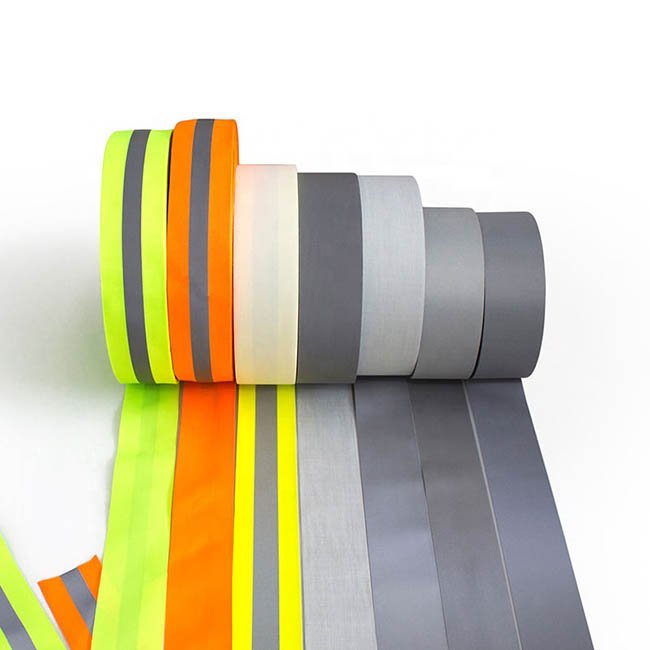
For smaller urgent orders (under 150 kg), premium carriers like FedEx International Priority, DHL Express, or UPS Worldwide Expedited offer door-to-door 3–7 day delivery with climate-controlled handling at hub distribution centers. These carriers maintain strict temperature/humidity protocols (typically 18–25°C / 40–50% RH) and provide full tracking every 4–6 hours. Cost: $2–5 per kg on average, making air freight economical only for high-value shipments or inventory emergencies. Typical timeline: 3–7 days transit + 1–2 days pickup + 1 day customs = 5–10 days door-to-door.
Ocean Freight Routes (Volume Standard)
For typical production orders (500+ kg), consolidated LCL (Less Than Container Load) shipments via ocean routes are standard. We work with established freight forwarders who consolidate multiple shipments in climate-controlled containers. Major routes include:
- • Shanghai/Nanjing → Los Angeles → Final Destination US: 5–6 weeks, carriers like Maersk, CMA CGM
- • Shanghai → Rotterdam → Europe: 6–8 weeks, MSC, Hapag-Lloyd with direct rail linkage
- • Shanghai → Singapore → Australia: 3–4 weeks, regional carriers with faster routing
Ocean freight cost: $0.50–$1.20 per kg depending on volume and destination. Typical timeline: 1–2 days factory consolidation + 3–6 weeks ocean transit + 1–3 days destination customs + 1 day final delivery = 4–8 weeks total.
Full Container Load (FCL) Routes (Most Economical for Volume)
For large orders exceeding 10,000 kg, dedicated 20ft or 40ft containers offer best-in-class protection and lowest per-unit cost ($0.20–$0.60/kg). VizGlo secures priority slots with premium forwarders who guarantee climate-controlled container specifications, reducing damage risk to near-zero. FLC bookings typically include port protection from weather, secure inland transport, and direct discharge to your warehouse. Typical timeline: Same as LCL but with enhanced security.
Pro Tip: Always negotiate “special handling” clauses requiring carriers to maintain documented temperature logs and provide photographic proof of container condition at loading/unloading. This adds minimal cost but protects against carrier liability disputes.
Compliance & Documentation Requirements
Here’s where many buyers stumble: proper documentation isn’t bureaucratic red tape—it’s your legal protection and the key to smooth customs clearance. Incomplete or incorrect documentation can delay shipments by 2–4 weeks at destination ports, adding storage fees, demurrage charges, and rendering time-sensitive orders useless.
Essential Documentation Checklist
Commercial Invoice (Seller’s Copy)
Itemized with product descriptions, HS codes (38060010 for reflective tape; 58021000 for reflective fabrics), unit prices, total value in USD/EUR, incoterms (usually CIF or DDP), and seller’s tax ID. Must match PO exactly.
Packing List
Detailed by carton: item count, individual carton weights, dimensions, and exact contents (e.g., “500m × 5cm reflective tape roll, silver, EN 20471 Class 2”). Used by customs to verify shipment composition and prevent under/over-shipment undervaluation.
Bill of Lading (B/L)
Issued by the carrier; serves as both receipt of goods and title of ownership. Must include container number, seal numbers, and notarized shipper’s declaration. Originals required for customs clearance; copies insufficient.
Certificates of Compliance
For reflective materials in safety applications, compliance certificates are mandatory. Must include EN ISO 20471 (EU/UK), ANSI/ISEA 107 (USA), AS/NZS 1906.4 (Australia/NZ), or relevant destination standards. Lab test reports showing reflectance values, color fastness, and washability durability. These docs are filed into buyer’s product liability records.
Insurance Certificate (if applicable)
For shipments over $10,000 or deemed high-risk (air freight to emerging markets, etc.), cargo insurance is wise. Certificate must match invoice value and include all-risk coverage. Premiums typically 0.5–1.5% of shipment value.
Customs Declarations & CITES (if needed)
Standard CE declarations for EU imports. Some markets require country-of-origin statements; others (especially North America) require NAFTA/USMCA origin certification if claiming preferential tariff treatment. Failure to provide these adds 10–15% tariff premiums.
At VizGlo Safety, we handle all documentation on behalf of our clients, eliminating buyer error. We maintain a certification database tracking lab tests, compliance updates, and regulatory changes by market—ensuring your shipment never arrives with outdated or incorrect compliance docs that customs might reject.
Risk Mitigation: Protecting Your Investment in Transit
Even with perfect packaging and proper documentation, unforeseen logistics challenges can arise. Strategic risk mitigation separates professional buyers from those who simply hope their shipment arrives intact. Here are proven tactics used by leading reflective material importers:

✓ Real-Time Tracking & Humidity Monitoring
Install IoT humidity/temperature sensors in premium shipments. These devices log conditions every 15 minutes, alerting you immediately if containers are opened, temperatures exceed thresholds, or moisture spikes occur mid-transit. Costs $200–500 per shipment but provide indisputable proof of carrier negligence if damage occurs.
✓ Destination Pre-Clearance
Engage customs brokers 48 hours before arrival to pre-file documentation, reducing port detention times. Coordinate with destination warehouses to schedule unloading 24 hours after port arrival, preventing prolonged container storage at port (where theft and loss risks spike).
✓ Warehouse Pre-Inspection Protocols
Train warehouse staff to inspect reflective materials immediately upon arrival, before formal acceptance. Check for moisture signs (white crystalline spots on reflective surfaces), crushing, delamination, or discoloration. Document via photos within 1 hour of unloading. This creates a damage claim timeline before carrier liability windows close.
✓ Staged Payment & Inspection Clauses
Structure payment in three tranches: 30% upfront (factory commitment), 50% upon shipment (proof of proper packaging), 20% upon warehouse receipt and inspection pass. This incentivizes sellers to maintain packaging integrity and gives you leverage if damage occurs.
Real-World Insights from the Sales Floor
“From my experience on the sales floor, I can tell you that the biggest mistake new buyers make is focusing 90% on the product price and only 10% on the shipping. They see freight as just a line item, a cost to be minimized. But for highly reflective materials, that’s a dangerous oversimplification. We’re not shipping bricks. We’re shipping sensitive optics. A roll of prismatic sheeting crushed in transit or a carton of reflective tape exposed to container moisture is not just damaged; it’s completely useless, failing all compliance tests. The ‘cheapest’ shipping option can quickly become the most expensive one when a $20,000 order arrives as scrap.
The real conversation shouldn’t just be about the C&F price; it should be about ensuring a compliant, usable, and profitable product lands at your door. That’s a game of details—packaging, documentation, and carrier selection—that separates the pros from the amateurs.”
This insight reflects two decades of watching buyers make costly mistakes. Here’s the practical translation: a $50,000 shipment saved $2,000 on bargain airfreight routing, only to arrive with moisture-damaged adhesive backing. Testing showed reflectance degradation of 18%, failing EN ISO 20471 standards by a margin. The entire $50,000 order became waste. The “savings” on freight cost the buyer $50,000 in product loss, plus 8 weeks of delayed production schedules, plus reputational damage to end customers receiving non-compliant safety gear. The lesson: cheap shipping isn’t a feature; it’s a risk vector.
We handle this by treating shipping as integral to product quality, not separate from it. When you order reflective films or specialized reflective tape from VizGlo, the freight methodology is embedded in our production planning. We factor in logistics complexity from day one, ensuring that when your shipment lands at your warehouse, it’s identical to our factory QC sample—pristine, compliant, and ready to integration into your manufacturing or distribution operations.
Frequently Asked Questions About Reflective Material Shipping
What humidity level will damage reflective tape adhesive? ▼
Reflective tape adhesive backing begins degradation above 60% relative humidity (RH) when exposed for extended periods (over 48 hours). At 70%+ RH, adhesive tack weakens noticeably within 24 hours. Our packaging maintains shipments at 40–50% RH, providing a substantial safety margin. Humidity indicator cards change color at 60%, alerting you if containers were breached mid-transit.
Why does prismatic sheeting cost more to ship than other reflective materials? ▼
Prismatic (3M Scotchlite-type) reflective sheets use micro-prism technology that requires rigid protection. Unlike flat reflective tape, prismatic sheets are highly sensitive to deformation—even a 0.5mm compression permanently reduces reflectance by 5–10%. This necessitates EPS foam dividers, rigid corner bracing, and often smaller container load factors, increasing shipping per-unit cost by 15–25% versus standard reflective tape. Holographic reflective materials carry similar premiums due to UV sensitivity.
How long is cargo insurance valid after shipment arrival? ▼
Standard all-risk cargo insurance covers in-transit damage until 15 days after final warehouse receipt. Damage discovered after 15 days typically falls outside insurance coverage unless you filed a damage claim within the window. This is why immediate warehouse inspection (within 24 hours of arrival) is critical—your damage documentation within this window ensures insurance claim validity. Document everything with timestamped photos.
What’s the difference between LCL and FCL shipping costs for reflective materials? ▼
LCL (Less Than Container Load) costs $1.20–$2.00/kg but includes handling by multiple carriers/consolidators, increasing damage risk. FCL (Full Container Load) costs $0.40–$0.80/kg and includes dedicated container security, but requires minimum 8,000–10,000 kg volume commitment. Break-even typically occurs around 5,000 kg. For reflective materials specifically, FCL offers better damage protection due to dedicated handling, often justifying cost premium even for smaller orders through reduced quality risk.
Can reflective materials be shipped during summer months without climate control? ▼
Absolutely not—this is a common mistake. Summer container temperatures inside metal shipping containers can reach 60–70°C (140–158°F), causing adhesive plastic backing to soften, potentially delaminating. UV radiation during daytime transit fades certain reflective colorations (especially fluorescent yellow). We enforce temperature-controlled container bookings year-round, adding roughly $200–$400 per shipment but preventing $10,000+ in potential damage. The cost is negligible compared to risk.
What happens if my reflective material shipment gets stuck in customs? ▼
Customs delays typically occur due to incomplete/incorrect documentation (45% of cases) or tariff classification disputes (30% of cases). Delays average 3–7 days but can extend to 3–4 weeks if regulatory agencies require lab testing. Demurrage charges (port storage fees) typically run $50–$150/day. Prevention: pre-file all documentation 48 hours before arrival, include precise HS codes, and provide pre-clearance certifications. Budget $300–$500 for professional customs brokerage services—far cheaper than demurrage accumulation.
Ready to Master Reflective Material Logistics?
Let VizGlo Safety handle the complexities of global shipping. Our 15+ years of export experience means your reflective materials arrive compliant, pristine, and on schedule—every time.
Get Your Shipping Consultation Now →Discover Our Reflective Material Solutions
Understanding the shipping process is just the first step. Now that you know how reflective materials travel globally, explore our complete range of products engineered for optimal protection during transit and performance in the field.
Reflective Films & Heat Transfer Materials
Durable reflective films designed for precision applications with enhanced handling protocols for international shipping.
Learn More →Advanced Packaging Solutions
Our proprietary packaging protocols ensure reflective materials maintain pristine optical properties throughout the global supply chain.
Explore Options →Final Thoughts: Shipping as Competitive Advantage
The global shipping process for reflective materials isn’t a necessary evil—it’s a competitive advantage when executed with precision. While competitors are focused entirely on minimizing freight costs, you’ll be buying reflective materials that arrive in perfect condition, ready for immediate deployment into your safety equipment or manufacturing operations. That reliability translates to:
- ✓ Consistent product quality, zero customer complaints due to shipping damage
- ✓ Predictable lead times enabling better production scheduling
- ✓ Compliance documentation ready-to-file, eliminating regulatory delays
- ✓ Documented chain of custody protecting you from liability disputes
- ✓ Data-driven insights enabling smarter purchasing decisions
At VizGlo Safety, we believe that your reflective materials should be just as impressive when they arrive at your warehouse as when they leave our factory. That’s why we’ve invested in specialized packaging protocols, carrier partnerships, and compliance systems that most competitors simply don’t offer. When you’re ready to experience the difference that logistics precision makes, we’re here to exceed your expectations.
“The cheapest isn’t always the best. The best is what arrives intact, compliant, and ready to protect lives.”