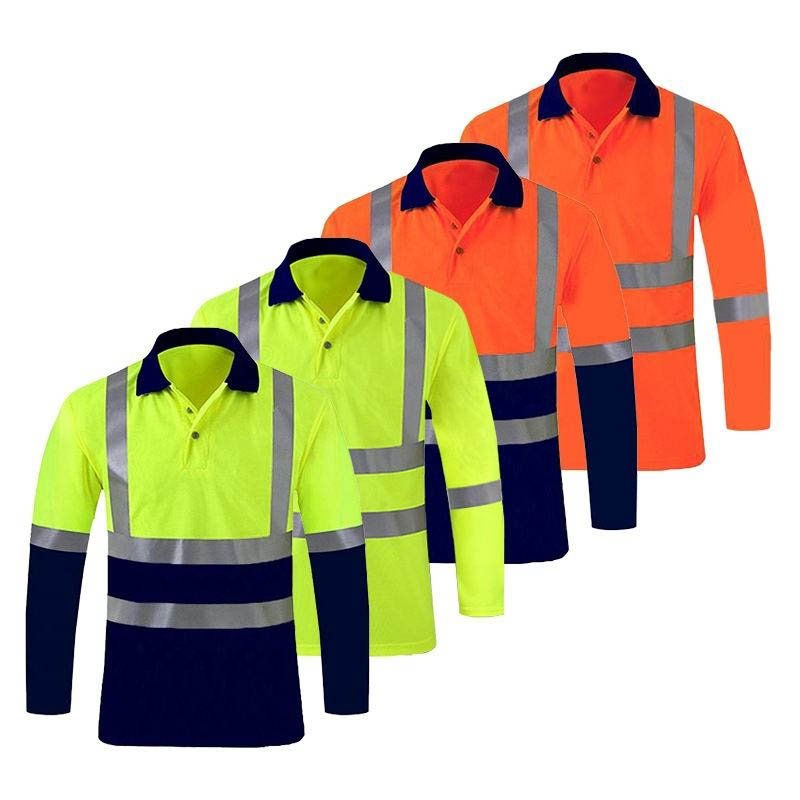
The Science Behind Retro-Reflective Technology: How Our Webbing Works
Retro-reflective webbing looks simple from the outside: a woven strap that lights up when headlights hit it. In reality, its performance depends on precise optical geometry, surface chemistry, bead or prism uniformity, bonding strength, wash durability, and the way light returns to a driver’s eyes at night.
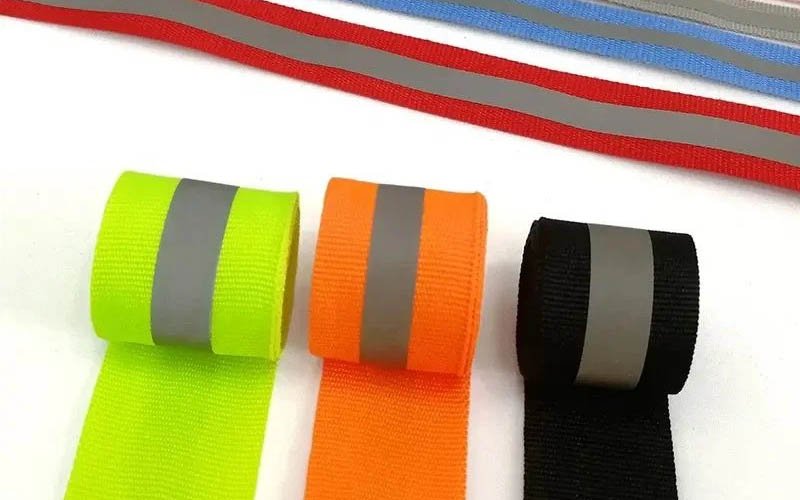
Quick Answer: How Does Retro-Reflective Webbing Work?
Retro-reflective webbing works by using tiny optical elements—usually glass microspheres or microprismatic cube-corner structures—to return incoming light back toward its original source instead of scattering it in all directions. When vehicle headlights strike the reflective surface, the optical layer bends, reflects, and redirects the light toward the driver’s eyes, making the webbing appear bright at night. In glass bead webbing, millions of precision-coated beads refract light through the bead and reflect it from a backing layer; in microprismatic webbing, molded prism cells bounce light internally through three angled surfaces. The final visibility depends not only on initial brightness but also on coefficient of retroreflection, observation angle, entrance angle, rain performance, abrasion resistance, bonding quality, and brightness retention after repeated industrial washing.
Retro-Reflection Is Not Ordinary Reflection
To understand reflective webbing, it helps to separate three types of reflection. A mirror produces specular reflection, where light bounces away at an equal opposite angle. A white wall produces diffuse reflection, scattering light in many directions. Retro-reflective material is different: it sends a large portion of light back toward the light source. That is why a safety harness, backpack strap, dog leash, industrial belt, or hi-vis workwear trim can appear dramatically bright to a driver even though it has no battery, LED, or internal power source.
The principle is closely related to road signs, license plates, lane markings, and safety garments. For readers who want to explore the broader optical principle, the U.S. Federal Highway Administration provides useful background on traffic safety and retroreflective visibility. In workwear and webbing applications, however, the challenge is tougher: the material must flex, bend, rub against hardware, survive laundering, maintain tensile integrity, and still deliver dependable nighttime brightness.
Diffuse Reflection
Typical of fabric, paper, or matte painted surfaces.
Mirror Reflection
Bright only when the viewing angle is perfectly aligned.
Retro-Reflection
The key mechanism behind reliable nighttime visibility.
Glass Bead Technology: Millions of Tiny Lenses Working Together
Glass bead retro-reflective webbing uses microscopic glass spheres embedded or bonded into a polymer layer on the surface of woven tape. Each bead works like a tiny optical lens. When light enters the bead, it bends because glass has a different refractive index than air. The light travels through the bead, reaches a reflective layer behind it, and then returns through the bead toward the light source.
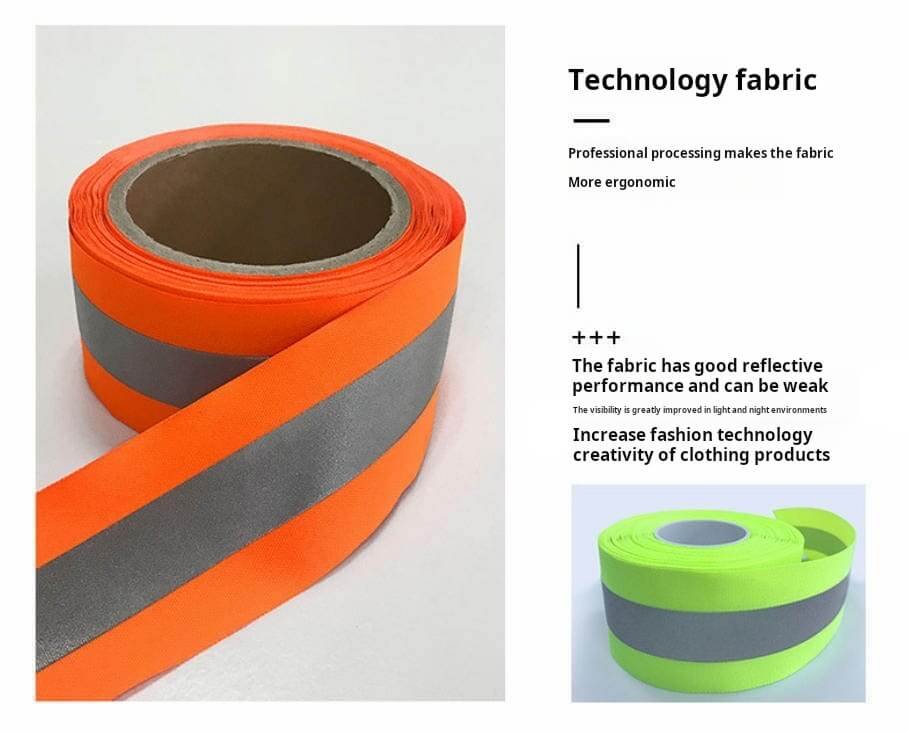
Simplified Light Path in Glass Bead Retro-Reflection
Headlight beam enters bead
Light refracts inside glass
Backing layer reflects light
Light returns to driver
The beauty of glass bead technology is its balanced performance. It is flexible, comfortable, sewable, suitable for many webbing constructions, and often more forgiving when applied to curved or moving surfaces. For straps that bend around a worker’s shoulder, wrap around a tool bag, or run along a pet leash, this flexibility matters. But quality varies widely. Low-grade bead systems may look acceptable during a short flashlight demonstration yet lose brightness quickly after abrasion, rain exposure, or washing.
Serious buyers now ask for measurable values: not just “is it reflective?” but how reflective after 25 or 50 industrial wash cycles? How consistent is the reflective coefficient across the entire roll? How does it perform when the viewer is not directly behind the light source? For safety compliance, buyers may also compare material behavior against standards such as EN ISO 20471 high-visibility clothing requirements or ANSI/ISEA 107 high-visibility safety apparel guidance.
Microprismatic Technology: Cube-Corner Geometry for Strong Optical Return
Microprismatic retro-reflective materials use an array of tiny molded prisms, often described as cube-corner structures. Instead of relying on glass beads and a backing layer, microprisms redirect light through internal reflection. A ray enters the front surface, bounces off three mutually perpendicular prism faces, and exits back toward the source. This geometry can produce very high brightness, especially when the material surface remains clean, flat, and correctly oriented.
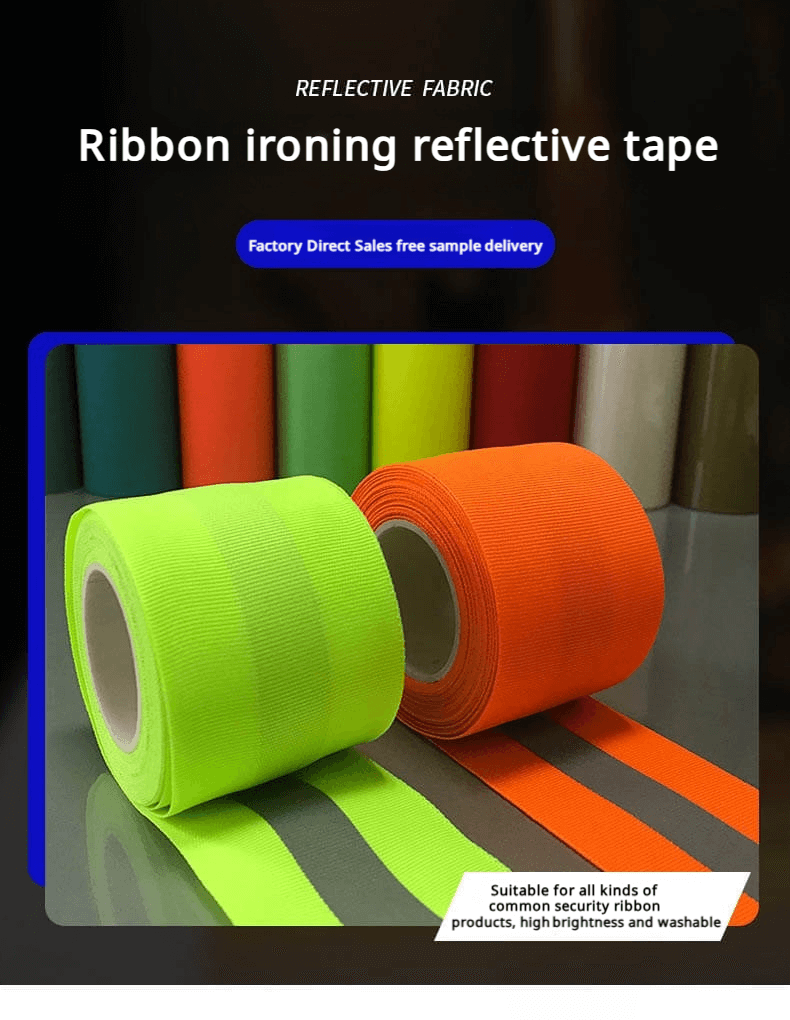
Simplified Microprism Light Path
Step 1
Incoming light enters a transparent prism cell from the headlight direction.
Step 2
The ray reflects internally from three angled cube-corner faces.
Step 3
The light exits nearly parallel to its entry path, returning toward the driver.
Microprismatic materials can be excellent for certain high-brightness applications. The trade-off is that prism films may be less textile-like than bead-based systems, depending on film thickness, lamination method, and webbing design. When the application involves constant flexing, stitching, edge abrasion, or contact with buckles and adjusters, the engineering must ensure that the prism layer does not crack, delaminate, or lose optical alignment.
For buyers comparing technologies, the right question is not “which one is always better?” but “which optical system fits the application, compliance target, wash program, bending radius, and expected service life?” A microprismatic strip on a rigid sign and a reflective strap on a moving safety harness operate in very different mechanical environments.
Glass Bead vs Microprismatic Reflective Webbing
Both technologies can be engineered into high-performance safety products. The choice depends on the final use: workwear reinforcement, backpacks, cargo straps, pet products, outdoor gear, tactical accessories, construction safety, logistics equipment, or railway and mining apparel. Below is a practical comparison from a sourcing and product-development perspective.
| Factor | Glass Bead Webbing | Microprismatic Webbing |
|---|---|---|
| Optical mechanism | Refraction through glass beads plus reflection from backing layer | Internal reflection through cube-corner prism geometry |
| Flexibility | Generally strong for curved, sewn, and flexible textile applications | Depends heavily on film construction and lamination design |
| Brightness potential | Balanced brightness with good textile integration | Can reach very high brightness in controlled geometry |
| Durability concerns | Bead loss, coating wear, wash degradation, binder quality | Film cracking, prism damage, delamination, surface contamination |
| Best-fit applications | Workwear straps, bags, harnesses, pet leashes, flexible trims | High-brightness strips, certain outdoor products, structured panels |
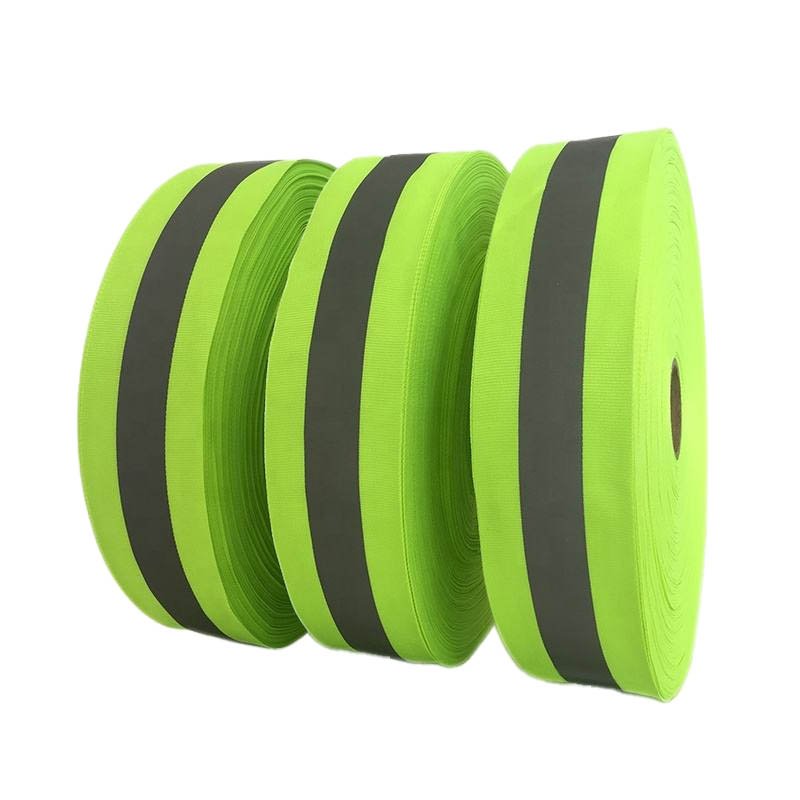
Why Real-World Performance Is More Than “It Reflects”
In professional sourcing, retro-reflective webbing is no longer judged by a quick photo in a dark room. The market has matured. North American safety distributors, European workwear brands, Middle Eastern infrastructure contractors, and Australian mining suppliers increasingly evaluate reflective materials like engineered safety components. They ask about CPL values, wash retention, acute observation angles, environmental compliance, and batch-to-batch consistency.
Observation Angle
The observation angle is the angle between the light source and the viewer’s eye. In real driving, headlights and the driver’s eyes are not in exactly the same position. When a worker bends, turns, kneels, or stands at the side of a road, the webbing must still return enough light to be noticed.
Entrance Angle
The entrance angle describes how light hits the surface. A perfectly flat sample in a lab is easier than a strap wrapped around a backpack or a harness crossing the shoulder. Good webbing design must maintain visibility when the surface is angled.
Wash Durability
Industrial laundering can attack binders, coatings, yarns, and reflective surfaces. A material that passes initial brightness testing but collapses after repeated washing creates liability for uniform programs and large corporate accounts.
Wet Weather Performance
Rain changes surface optics. Water droplets can scatter or redirect light, while mud and oil reduce reflectivity. Webbing used in road work, logistics yards, ports, and construction must be evaluated under realistic exposure conditions.
The coefficient of retroreflection is commonly measured in candela per lux per square meter, often written as cd/(lx·m²). Some buyers refer to this as CPL. Independent testing methods and visibility science are discussed by organizations such as ASTM International test standards and the International Commission on Illumination. For procurement teams, the key is not to chase the highest initial number only, but to compare retained brightness after washing, abrasion, flexing, and weathering.
“The difference between well-engineered glass beads and a lower-quality alternative can be the difference between being seen from hundreds of meters away or being noticed too late. In the field, retro-reflection is not decoration—it is reaction time.”
How VizGlo Engineers Reflective Webbing for Real Worksites
At VizGlo Safety, reflective webbing is not treated as a commodity strap with a shiny surface. We manufacture it as an optical-textile system. That means the webbing yarn, weave density, reflective layer, bonding agent, coating thickness, width tolerance, tensile strength, colorfastness, and reflective consistency must work together. A beautiful lab sample is not enough if the production roll varies from edge to edge or if the reflective layer weakens after repeated laundering.

Our team evaluates reflective webbing through the lens of the final application. A road-work safety vest needs compliance and wash durability. A logistics harness needs abrasion resistance and comfortable flexibility. A pet leash needs nighttime visibility, color options, and stable bonding through outdoor use. A tactical or industrial strap may require heavier yarn, reinforced edges, or customized reflective placement. Because we produce reflective materials and high-visibility apparel within the same vertically integrated system, we can adjust specifications at both material and garment levels.
This is where science becomes practical sourcing value. If a buyer asks only whether the webbing meets a minimum standard, they may miss the real risk: brightness decay after field use. If a buyer asks about retained CPL values, acute-angle performance, wet visibility, abrasion, and bonding chemistry, they are protecting both workers and brand reputation. That is the level of conversation we increasingly have with advanced buyers from North America, Europe, the Middle East, and Oceania.
Engineering Checklist for Reflective Webbing Buyers
- ✓Confirm the reflective technology: glass bead, microprismatic, or hybrid construction.
- ✓Request initial and post-wash coefficient of retroreflection data.
- ✓Evaluate performance at practical observation and entrance angles.
- ✓Check abrasion resistance where the webbing contacts buckles, hardware, or rough surfaces.
- ✓Specify base fiber, width, thickness, color, tensile strength, and edge finish.
- ✓Ask whether the bonding chemistry supports your wash, weather, and environmental requirements.
If you are developing safety bags, harnesses, workwear trims, reflective straps, pet products, outdoor gear, or industrial accessories, you can explore our high-visibility reflective webbing products to compare customizable options for width, color, base material, reflective brightness, and OEM/ODM requirements.
For teams building complete PPE programs, it is also useful to understand how reflective webbing interacts with other visibility materials such as reflective tape, piping, heat transfer film, and high-visibility fabrics. You can review related technical guidance from OSHA personal protective equipment resources and compare it with your internal risk assessment for traffic, machinery, night operations, and low-light environments.
Need Reflective Webbing Built Around Your Application?
Tell us your target market, safety standard, width, base webbing material, color, wash requirement, and expected use environment. Our team can help you select or develop the right reflective webbing construction for your brand.
Request a Custom Webbing QuoteWordPress/Elementor note: this CTA uses your Elementor popup ID 26 and will open the inquiry form when published on the site.
FAQ: Retro-Reflective Webbing Technology
Is reflective webbing the same as glow-in-the-dark material? +
No. Glow-in-the-dark material stores light energy and emits it slowly in darkness. Retro-reflective webbing does not glow by itself; it returns incoming light, such as vehicle headlights, back toward the source.
Which is better: glass bead or microprismatic reflective webbing? +
Neither is universally better. Glass bead technology is often excellent for flexible textile applications, while microprismatic technology can provide strong brightness in certain structured uses. The best choice depends on flexibility, wash durability, abrasion, viewing angle, and the final product design.
Why does reflective webbing lose brightness after washing? +
Washing can weaken binders, damage coatings, remove surface optical elements, or contaminate the reflective layer. Industrial laundering is especially demanding because of temperature, detergent chemistry, mechanical action, and drying conditions.
What should buyers ask before ordering reflective webbing? +
Buyers should ask about reflective technology, coefficient of retroreflection, post-wash performance, observation angle, entrance angle, tensile strength, abrasion resistance, base material, colorfastness, width tolerance, and OEM customization options.
Can reflective webbing be customized for private-label products? +
Yes. VizGlo Safety supports OEM/ODM customization for width, color, base webbing, reflective stripe layout, brightness level, packaging, and application-specific performance requirements.