Reflective Material Knowledge Hub
Master the Language of Safety
Quick Answer: Understanding Reflective Material Terminology
Reflective material terminology encompasses technical specifications and industry standards that define material performance, safety compliance, and application suitability. Key terms like retroreflectance (the ability to reflect light back to its source), CPL (Coefficient of Luminous Intensity), and luminous intensity determine whether a material meets safety standards such as EN ISO 20471 (European) or ANSI/ISEA 107 (North American). Understanding these 50+ critical terms is essential for procurement professionals, safety managers, and manufacturers selecting reflective tapes, films, webbing, and logos. The difference between confusing a Type 1 (enclosed lens) material with Type 2 (exposed lens)—or misinterpreting CPL values—can result in non-compliant products, failed certifications, and safety failures. This glossary demystifies every term, ensuring you specify materials correctly the first time, avoiding costly rejections and safety compromises.
Why Precision in Reflective Material Terminology Matters More Than You Think
In my 15+ years of exporting hi-vis materials, I can tell you that the most expensive mistakes don’t happen in shipping; they start with a simple misunderstanding of terminology. A client in Germany might ask for “high-grade tape,” while a buyer in Texas wants “the brightest stuff.” Do they mean the same thing? Not at all.
One is likely referring to a specific EN 20471 certification requirement, while the other might be focused on ANSI/ISEA 107 standards for CPL value. Getting this wrong can lead to failed lab tests, rejected shipments, and a total loss of trust.
This glossary isn’t just a list of words; it’s a tool for precision. It’s our shared language to ensure that when you specify a material, you get exactly what you need for your market, your application, and your safety standards—the first time.
Foundation Concepts: The 5 Core Principles Every Buyer Must Know
1. Retroreflectance: The Heart of All Reflective Materials
Retroreflectance is the fundamental property that defines reflective materials. It refers to the material’s ability to return light back toward its source—exactly what happens when a car’s headlights illuminate a reflective safety vest. Without retroreflection, the light would scatter in all directions, and the wearer would be invisible.
Why it matters: A material with 200+ candelas/lux retroreflectance will be visible from 300+ meters away; one with only 50 candelas/lux might only be visible from 75 meters.
2. Luminous Intensity (Candela): Measuring Brightness in a Specific Direction
Candela (cd) is the unit of luminous intensity—essentially, how bright light appears in a particular direction. When a reflective material is rated at “500 cd/lux,” it means that when illuminated by 1 lux of light, it returns 500 candelas back toward the source.
Why it matters: Higher candela values = greater detection distance and compliance with stricter safety standards.
3. Coefficient of Luminous Intensity (CPL): The Performance Rating You Must Know
CPL is the ratio of reflected light intensity to incident light intensity. It’s the most critical number on a reflective material’s specification sheet. CPL values typically range from 5 to 500+, and they directly determine which safety standard classifications a material can achieve.
Why it matters: CPL directly determines compliance levels—Type 1 materials rarely exceed CPL 100; Type 4+ premium materials achieve 300+.
A – C: Foundation & Classification Terms
Angle of Incidence
The angle at which light hits a reflective surface. Most reflective materials perform best at angles close to 0° (perpendicular) but must still function effectively at wider angles (15°-45°) as required by safety standards.
Angle of Observation
The angle from which an observer views the reflected light. Safety standards test performance at multiple observation angles (0.2°, 0.5°, 1.5°, etc.) to simulate real-world viewing conditions like when a driver first spots a worker from distance, then closer up.
ANSI/ISEA 107
The American National Standards Institute/International Safety Equipment Association standard for high-visibility apparel in North America. It defines performance classes based on CPL, visibility distance, and color requirements. Class 2 and 3 are most common for occupational safety.
Beads / Microspheres
Tiny glass spheres (typically 40-200 micrometers in diameter) embedded in a reflective material’s surface. These beads refract light back toward its source, creating the retroreflective effect. Quality and uniformity of beads directly affect material performance.
Candela (cd)
The SI unit of luminous intensity. It measures how bright light appears in a specific direction. A reflective material’s candela rating (e.g., 300 cd/lux) indicates how much light it reflects back per unit of incident light.
Certification / Compliance
Third-party laboratory verification that a product meets specific safety standards (EN, ANSI, etc.). Certifications are not optional—they’re required for market entry in most developed countries. Always request test reports before purchasing.
Color Saturation / Chromaticity
The purity and intensity of color in reflective materials. Standards specify exact color coordinates (x, y values in CIE 1931 color space). A material’s color must remain within these tight tolerances even after specified washing and weathering tests.
CPL (Coefficient of Luminous Intensity)
The key performance metric for all reflective materials. It’s the ratio of the luminous intensity reflected back to the incident illuminance. CPL of 100 means the material reflects light back 100 times more effectively than a standard reference surface. Higher CPL = better performance and compliance with stricter standards.
D – L: Technical Performance & Material Types
Durable Retroreflection
Retroreflective performance that maintains compliance after repeated washing, weathering, and/or UV exposure. EN standards require testing at 20, 40, and 60 washing cycles. Durable materials are typically designated as Type 2 or higher.
Enclosed Lens Technology (Type 1)
Reflective design where glass microspheres are fully embedded within a resin binder, covered by a protective layer. This provides good performance, durability, and cost-effectiveness. Most common choice for basic safety vests and standard reflective tapes.
EN ISO 20471
The European international standard for high-visibility warning clothing. It defines three performance classes (1, 2, 3) based on retroreflectance, color, and reflective material area. Class 3 requires the highest CPL values (200+) and largest visible areas.
Exposure Angle
The angle at which beads are exposed above the surface of a reflective tape. Exposed lens designs (Type 2, 3, 4) have increasingly more bead exposure, resulting in superior performance at wider angles but reduced durability if not properly protected.
Fluorescent / Neon Colors
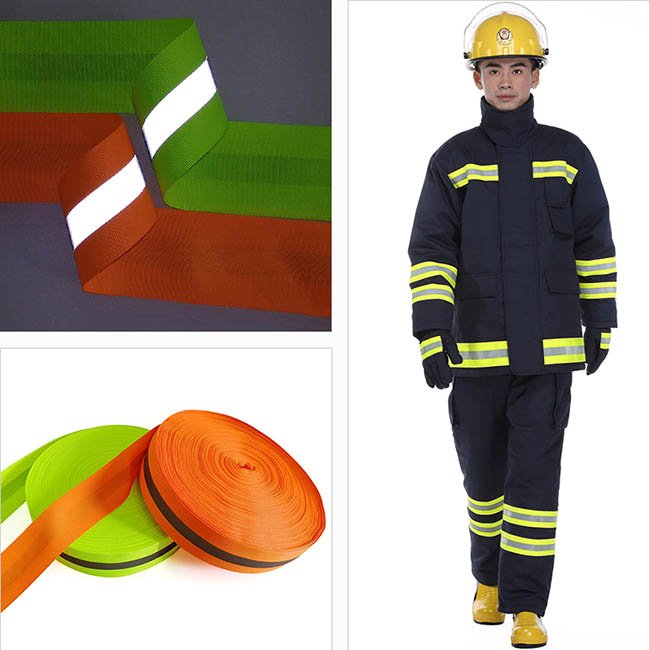
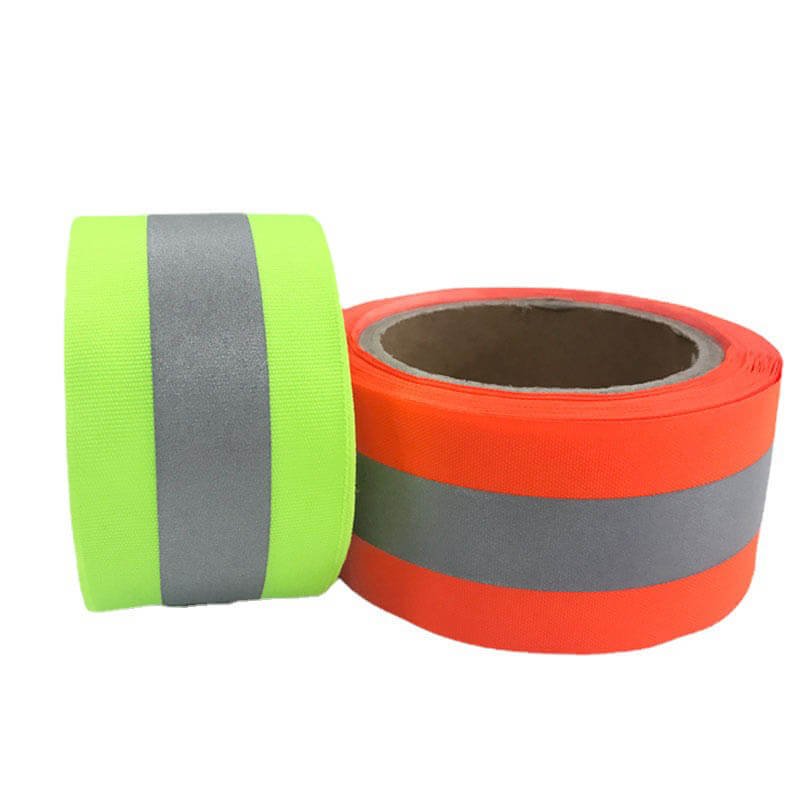
High-visibility base colors (lime-yellow, orange, pink) that appear bright under both day and night conditions. Fluorescence enhances daytime visibility; retroreflectance (via reflective beads) provides night visibility. Most reflective materials use fluorescent-colored base with reflective trim.
Gloss Retention / Gloss Factor
Measurement of how shiny a reflective surface remains after weathering exposure. Standards test gloss changes after UV exposure (ISO 12103 sand + xenon arc). Better materials maintain more gloss (> 80%) and thus better reflectance after exposure.
Heat Transfer / Thermal Adhesive
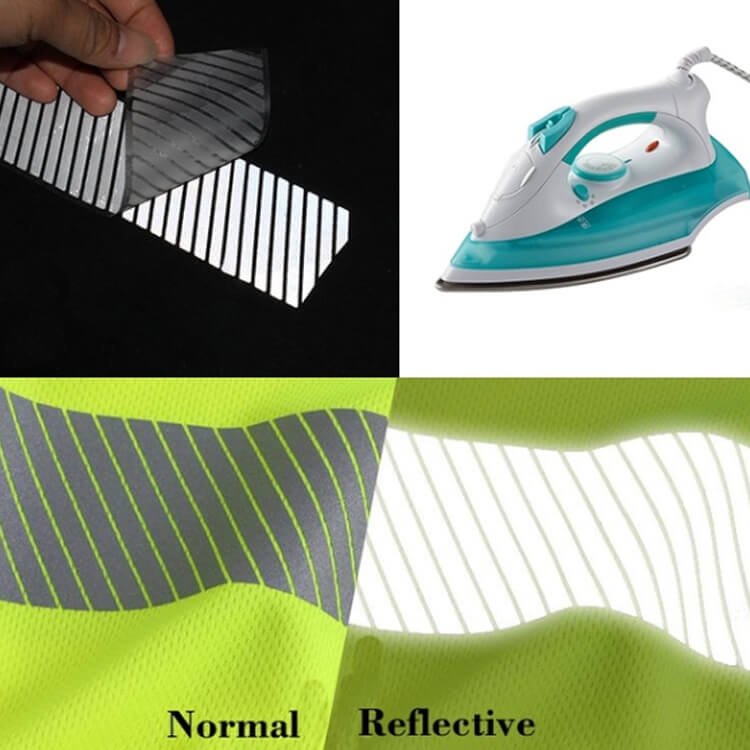
Specialized reflective materials (typically films) with heat-sensitive adhesives allowing them to be applied to garments via heat presses or thermal transfer equipment. Common for logo application and custom designs on safety apparel. Must maintain adhesion through specified washing cycles.
Incident Light / Illumination
The light shining onto a reflective surface (measured in lux). All retroreflectance measurements are defined per unit of incident light. A material tested at different illumination levels will show performance variations important for real-world visibility predictions.
Luminous Reflectance (Reflection Factor)
The percentage of incident light reflected in all directions (total hemispherical reflection). Different from retroreflection, which focuses light back to the source. A material might have high retroreflection (CPL) but lower overall reflectance due to bead structure design.
M – R: Performance Measurements & Standards
Microprism Technology
Advanced reflective design using precision-formed prisms instead of beads. Microprism materials offer superior performance at wide angles and extreme durability. Often used in premium applications, emergency services, and high-performance work wear where Type 3/4 compliance is required.
Observation Distance
The distance at which a material is visible under specific lighting conditions. A material with CPL 200 might be visible at 250+ meters; one with CPL 50 at only 75 meters. Standards implicitly define required observation distances through their CPL requirements.
OEKO-TEX Standard
International certification for safety and environmental sustainability of reflective textiles. Tests for harmful substances (heavy metals, formaldehyde, etc.). Not a core safety standard but increasingly required by EU buyers and eco-conscious procurement managers.
Peel Strength / Adhesion Test
Measurement of how firmly a reflective tape adheres to a garment base material (typically measured in N/cm). Standards require minimum peel strength after washing, stretching, and temperature cycling. Poor adhesion = tape delamination = compliance failure.
Refractive Index
Property describing how much light bends when entering a material (typically 1.5-1.9 for glass beads used in reflective materials). Higher refractive index = better bead performance = higher CPL. This is why premium beads (n=1.9) outperform standard beads (n=1.5).
Refractive Efficiency
The effectiveness of a material at bending and reflecting light compared to theoretical maximum. Efficiency losses occur due to imperfect bead shape, surface impurities, and resin absorption. Materials with 70%+ efficiency are considered premium grade.
Retroreflection Measurement / RA Value
Direct measurement of a material’s ability to return light to its source. RA values are specified at standard angles (typically 0.2°, 0.5°, 1.5° observation; 5° incident angle). Must meet minimums for each angle per EN or ANSI standards to achieve compliance.
Robustness / Durability Class
EN standard designation (R1, R2, R3) indicating how well retroreflective performance is maintained through washing cycles (20, 40, 60+ cycles). R3 materials maintain compliance through 100+ washes. Critical for work wear that must last an entire season.
S – Z: Advanced Specifications & Applications
Segmented Retroreflection / Periodic Structure
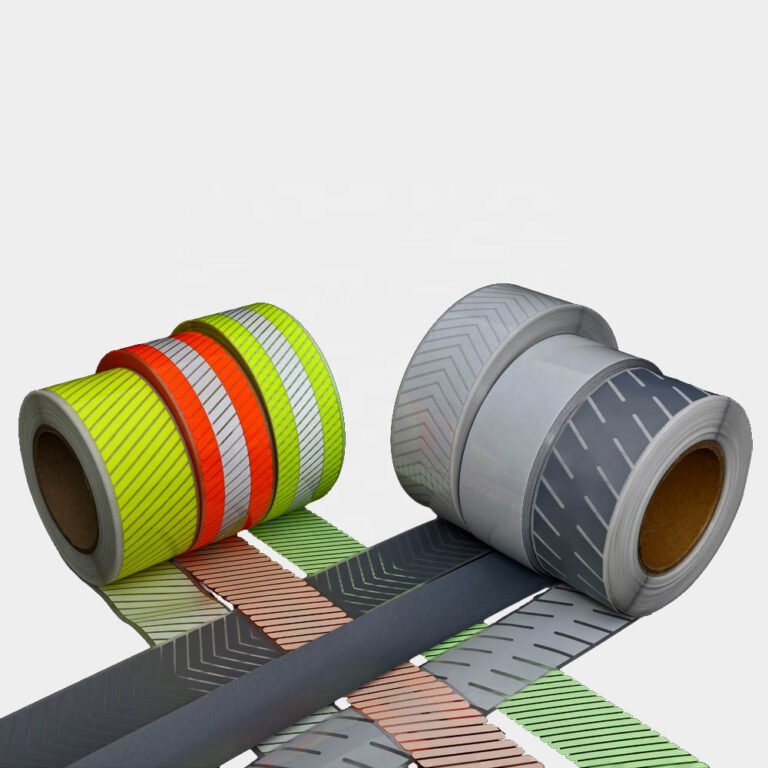
Design pattern (often repeating stripes or dots) interrupting continuous reflective surface. This improves material flex, stretch, and breathability without sacrificing compliance. Popular for ergonomic and comfort-focused safety apparel where continuous tape would be too stiff.
Silver Reflective Grade
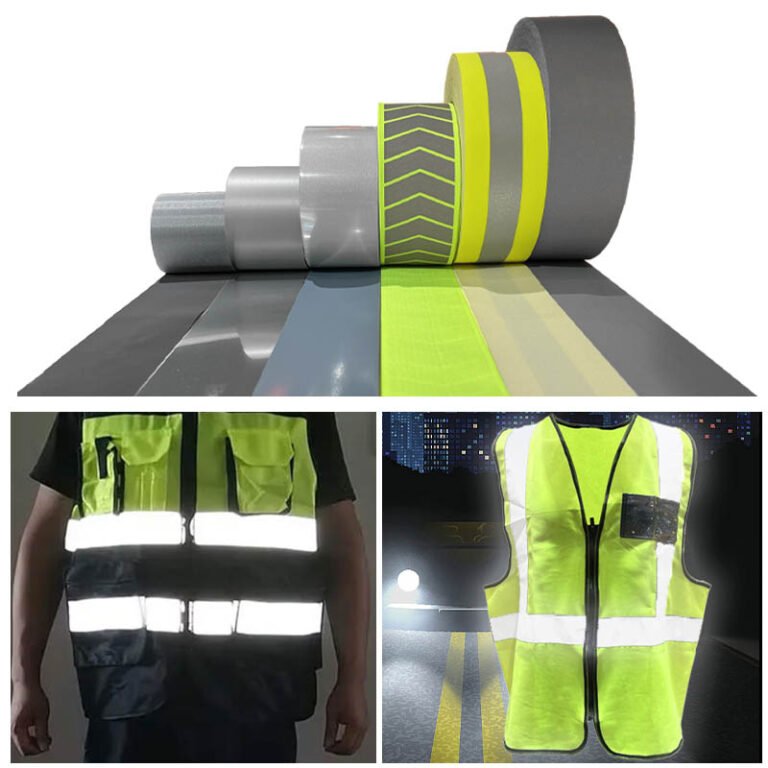
The most common reflective material type, using silver-colored binder and beads. Achieves CPL 50-100 (Type 1) easily. Lower cost but limited to lower safety classes. Often used for basic safety vests and standard industrial applications.
Specular vs. Diffuse Reflection
Specular = mirror-like reflection (like retroreflection, where direction in = direction out). Diffuse = scattering in all directions. Reflective materials must combine both: specular retroreflection for visibility at distance + some diffuse scattering for visibility at angles. Balance is key.
Stretch / Elasticity
Ability of reflective material to accommodate fabric stretch (typically 4-Way or multidirectional). Essential for fitted safety apparel, athletic wear, and ergonomic designs. Standard reflective tapes (non-elastic) are brittle and crack when garment stretches.
Tear Resistance / Tensile Strength
Measurement of how much force is required to tear a reflective material (typically measured in N/cm or kg-force). Standards specify minimum tear resistance to ensure material survives normal wear, washing, and flexing. Weak materials fail in field use; strong materials maintain integrity.
Transfer Efficiency / Heat Transfer Adhesive (HTA)
Property of reflective films to transfer cleanly from PE backing to substrate (clothing) without residue or peel-off. Critical for heat-transfer applied logos and custom designs. Poor transfer = gaps, wrinkles, and compliance loss after one wash.
Type 1, 2, 3, 4 Reflective Materials
EN standard material classifications based on bead exposure and CPL performance:
- Type 1: Enclosed lens (CPL ~75) – basic safety, lowest cost
- Type 2: Exposed lens (CPL ~150+) – mid-range performance, better durability
- Type 3: High-exposure lens (CPL ~250+) – premium performance, wide-angle visibility
- Type 4: Microprism (CPL ~350+) – maximum performance, extreme durability
UV Resistance / Photodegradation
Ability of reflective materials to resist fading and loss of performance from sun exposure. Standards test materials under xenon arc lamps (simulating 1000+ hours of sunlight). Poor UV resistance = loss of brightness and retroreflection within weeks of field use.
Water Repellency / Hydrophobicity
Property preventing water absorption into reflective material base. Important for durability and maintaining performance in wet conditions. Hydrophobic materials resist peeling and delamination after rain exposure or moisture cycling tests.
Visibility Range / Visible Distance
The maximum distance at which a reflective material is discernible under headlight illumination (typically car headlights at 1000 lux). Calculated from CPL and observation angle. Type 1 = ~100m; Type 2 = ~200m; Type 3+ = ~300m+ visibility.
Wash Fastness / Durability (ISO 6330 Testing)
How well retroreflective performance survives repeated domestic or industrial washing. EN standards require compliance maintenance at 20, 40, and 60-cycle washing intervals. Materials failing wash tests lose certification and are non-compliant for sale in regulated markets.
Xenon Arc Aging / Weathering Simulation
Accelerated UV aging test (ASTM G155) simulating several months of outdoor weathering in just 500-1000 hours of lab exposure. Measures CPL retention, gloss changes, and color shifts. Premium materials retain 80%+ CPL after testing; poor materials may drop to 50% or fail entirely.
Zero Loss / Maintained Performance
Premium material designation indicating negligible performance loss after washing, weathering, and field use cycles. Typically Type 3/4 materials from leading brands. “Zero loss” claims must be backed by independent testing—don’t take manufacturer word without certification.

Key Safety Standards Decoded: Which One Applies to Your Market?
🇪🇺 EN ISO 20471:2013 (Europe, UK, Australia)
The most widely adopted international standard for high-visibility clothing. Defines three performance classes:
- Class 1: Basic (fluorescent material + minimal reflective trim) – daytime visibility primary
- Class 2: Standard (fluorescent + reflective stripes) – day/night visibility for urban environments
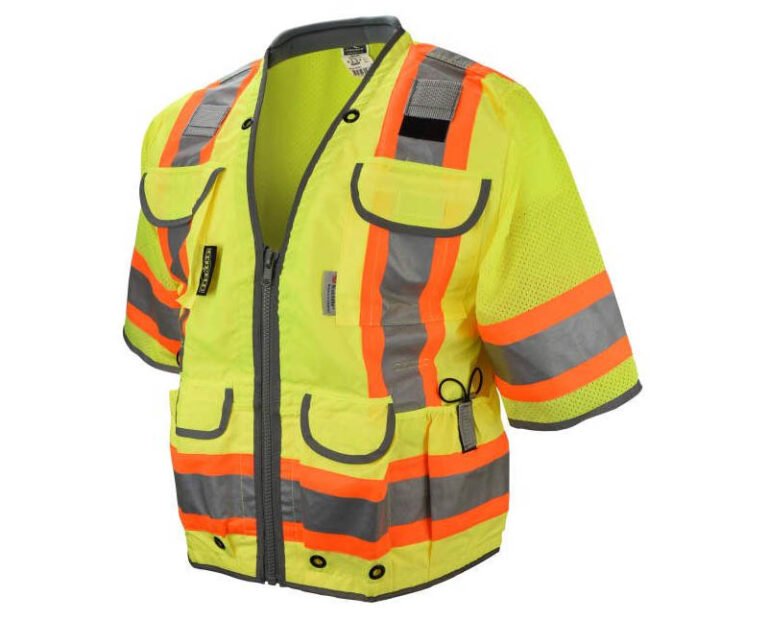
- Class 3: High (large fluorescent area + extensive reflective coverage) – maximum visibility for high-speed traffic/nighttime
Typical reflective material requirement: Class 2 uses Type 1-2 materials (CPL 75-150); Class 3 requires Type 3+ (CPL 200+)
🇺🇸 ANSI/ISEA 107 (USA, Canada)
The North American standard with different performance classes focusing on motion/task-based visibility needs:
- Class 1: Stationary roles (parking attendants, toll booth operators) – lower performance required
- Class 2: Mobile roles (road workers, surveying, yard personnel) – moderate reflective material requirement
- Class 3: High-speed traffic exposure (highway workers, responders) – high CPL materials required (Type 3)
Often more demanding than EN equivalent—a Class 3 ANSI material typically exceeds Class 3 EN performance.
🇦🇺 AS/NZS 1906.4 (Australia, New Zealand)
Australian/New Zealand standard parallel to EN 20471 but with additional environmental requirements (intense UV exposure). Defines D61, D62, D63 performance classes. Often requires higher durability and UV resistance than EN equivalent due to Southern Hemisphere sun exposure.
🔥 EN ISO 11612 (Flame-Resistant + Visibility)
Specialized standard for work wear in fire-hazard environments (welding, petrochemical, mining). Combines EN 20471 visibility requirements with EN 61482 arc flash and EN 11611 flame-resistance specifications. Reflective materials must maintain durability through higher washing/baking cycles.
Real-World Terminology in Action: Specification Example
Sample Material Specification (European Market)
Here’s what an actual reflective material brief looks like, decoded:
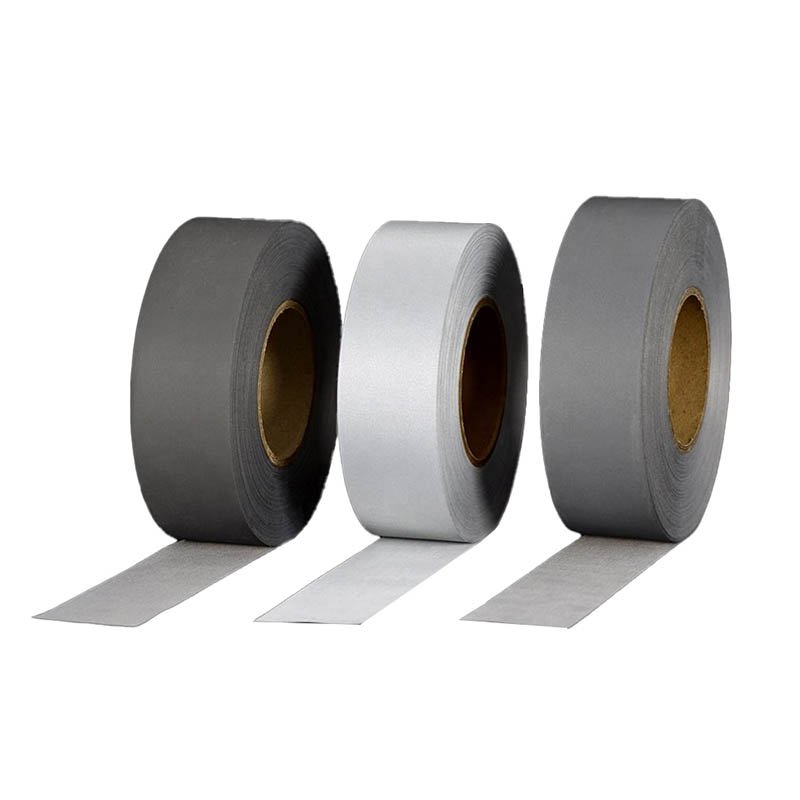
"EN ISO 20471 Class 2 | Type 2 | CPL ≥150 @ 0.5° obs |
Silver reflective tape | 5cm wide | 50m/roll |
Heat-transfer adhesive backing | R2 durability | 60-cycle wash retention |
UV resistance: ≥80% CPL after ASTM G155 xenon testing |
Peel strength: ≥5 N/cm after 40-cycle wash"
Translation: This is a mid-tier European compliance material. Type 2 (exposed lens) means good performance and reasonable cost. CPL ≥150 ensures visibility at 150+ meters under standard headlight conditions. The heat-transfer backing allows application via heat press to garments. R2 durability means it maintains compliance through 40 wash cycles—suitable for seasonal work wear. The UV and peel strength specs guarantee the material won’t degrade in sunlight or peel off after repeated laundering.
If someone sent you a “reflective tape” without these specs? You have no assurance it meets any market requirements. It could fail certification testing, lead to liability issues, and result in rejected shipments. This is why terminology precision matters—it’s the language of compliance and safety.
Ready to Stop Guessing About Reflective Materials?
Master terminology is the first step. The next is partnering with a supplier who speaks your language and delivers materials that actually meet your specifications—every time, no exceptions.
VizGlo Safety’s technical team has 15+ years of expertise in translating your compliance requirements into exactly the right material. Whether you need Class 2 EN 20471, ANSI/ISEA 107 Class 3, or specialized flame-resistant reflective composites, we deliver with certified test reports and 100% compliance guarantee.
📞 Request Material Specifications TodayFrequently Asked Questions About Reflective Material Terminology
What does CPL stand for in reflective materials? ▼
CPL stands for Coefficient of Luminous Intensity in the Retroreflection Direction. It’s the ratio of reflected light intensity to incident light intensity. In simple terms, it measures how effectively a material bounces light back toward its source. A CPL of 200 means the material reflects light 200 times more effectively than a standard reference surface. Higher CPL = better visibility and compliance with stricter safety standards.
What is retroreflectance and why does it matter? ▼
Retroreflectance is the ability of a material to return light in the direction it came from. This is critical for safety applications because it ensures that light from vehicle headlights reflects directly back to the driver’s eyes, making workers and equipment highly visible at night. Without retroreflection, light would scatter in all directions, and nighttime visibility would be nearly impossible. This is the fundamental principle that makes all reflective safety materials work.
What is the difference between Type 1 and Type 2 reflective materials? ▼
Type 1 (Enclosed Lens): Glass spheres are fully embedded within a resin binder, covered by a protective layer. Lower cost, good durability, CPL typically 50-100. Best for basic safety vests and standard applications.
Type 2 (Exposed Lens): Glass beads are partially exposed above the surface, allowing more light to be refracted at various angles. Higher CPL (150+), better night visibility, but slightly less durability. Preferred for occupational safety where performance must balance cost and longevity.
Choose Type 1 for budget-conscious applications; choose Type 2 when better nighttime visibility is critical.
How do EN 20471 and ANSI/ISEA 107 standards differ? ▼
EN ISO 20471 (European): Defines Class 1, 2, 3 based on fluorescent area and reflective coverage. Focuses on visibility of the entire garment. Requires specific color saturation and maintains the same classification system across EU markets.
ANSI/ISEA 107 (North American): Defines Class 1, 2, 3 based on the worker’s task and motion level. Class 3 ANSI is often more demanding than Class 3 EN. Different market acceptance and stricter in some aspects.
Rule of thumb: Choose EN 20471 for European, UK, or Australian markets. Choose ANSI/ISEA 107 for USA/Canada. Don’t mix standards—material certified for one may not be acceptable in the other market.
Why does wash fastness (durability rating) matter? ▼
Wash fastness determines how long a reflective material maintains compliance through repeated washing. EN standards specify R1 (≥20 cycles), R2 (≥40 cycles), R3 (≥60 cycles). A material with R1 durability fails compliance after 25 washes—unusable for a worker’s seasonal work wear. R2 or R3 materials maintain compliance throughout the garment’s serviceable life. Poor wash fastness means garments become non-compliant mid-season, creating safety and liability issues. Always specify R2 minimum for occupational safety wear.
What’s the relationship between CPL, candela, and visibility distance? ▼
Candela (cd): Unit of light intensity in a specific direction.
CPL: Ratio of reflected candelas to incident light (lux).
Visibility distance: How far away a reflective material is visible under headlight conditions.
Simple relationship: Higher CPL = More candelas reflected = Longer visibility distance. A material with CPL 300 might be visible 350+ meters away; one with CPL 75 only 100 meters. For highway work (100+ km/h traffic), you need Type 3/4 materials (CPL 200+) to provide sufficient detection distance for drivers to brake safely.
🔗 Dive Deeper into Reflective Material Solutions
This glossary covers the terminology you need to know. But understanding words is only the first step. To truly master reflective materials, you need practical knowledge about material selection, performance comparison, and real-world application.
Our comprehensive guide to industrial reflective tape covers everything from Type 1 through Type 4 materials, durability testing, market-specific compliance requirements, and how to specify the exact material you need for your application. Learn from 15+ years of industry expertise and avoid costly mistakes.
Ready to move from terminology to specification? Explore our reflective tape selection guide →
📚 External Reference Resources
ISO 20471:2013 – Official Standard
International Organization for Standardization official specification for high-visibility clothing.
ASSE – American Society of Safety Professionals
Authoritative source for ANSI/ISEA 107 standards and North American safety specifications.
BSI – British Standards Institution
UK testing and certification body for EN ISO 20471 compliance testing and material certification.
OEKO-TEX – Sustainable Textiles
International certification for safety and environmental sustainability of reflective textiles.
3M Reflective Materials Technical Documentation
Leading manufacturer technical guides and performance data sheets for reflective material comparison.
ASTM International – Testing Standards
Official source for ASTM G155 (xenon aging), G169 (retroreflection measurement), and related test methods.
💡 Your Complete Reflective Material Partner
From terminology clarity to material specification to production and certification—VizGlo Safety handles the entire process. We speak your language, deliver materials that meet your standards, and back everything with comprehensive testing documentation.
📧 Get a Free Material ConsultationFinal Thoughts: Precision is Safety
This A-Z glossary represents the foundation of professional reflective material specification. Whether you’re a procurement manager sourcing materials for your company’s fleet, a safety officer ensuring workplace compliance, or a manufacturer selecting base materials for your products, precise terminology is non-negotiable.
The difference between using a “bright reflective tape” (non-specific, risky) and an “EN ISO 20471 Class 2, Type 2, CPL≥150, R2 durability reflective tape” (precise, compliant, safe) isn’t just words—it’s the difference between meeting standards and failing audits, between protecting your workers and exposing your organization to liability.
Master these terms. Use them consistently. Partner with suppliers who respect this precision. That’s how you ensure safety, compliance, and peace of mind every time.