Is High Visibility Clothing PPE? Requirements, Standards and Workplace Use
Yes, high visibility clothing is unequivocally classified as Personal Protective Equipment (PPE). Under global regulatory frameworks—including OSHA (29 CFR 1910/1926) in the United States, EU Regulation 2016/425, and Safe Work Australia—hi-vis garments serve as an engineered primary line of defense designed to safeguard workers from struck-by hazards caused by moving motor vehicles, heavy mobile machinery, and low-light visual deficits. Certified under technical standards such as ANSI/ISEA 107 and EN ISO 20471, compliant hi-vis workwear is legally defined as life-saving safety equipment that employers must evaluate, provide, and maintain systematically in any hazardous occupational environment.
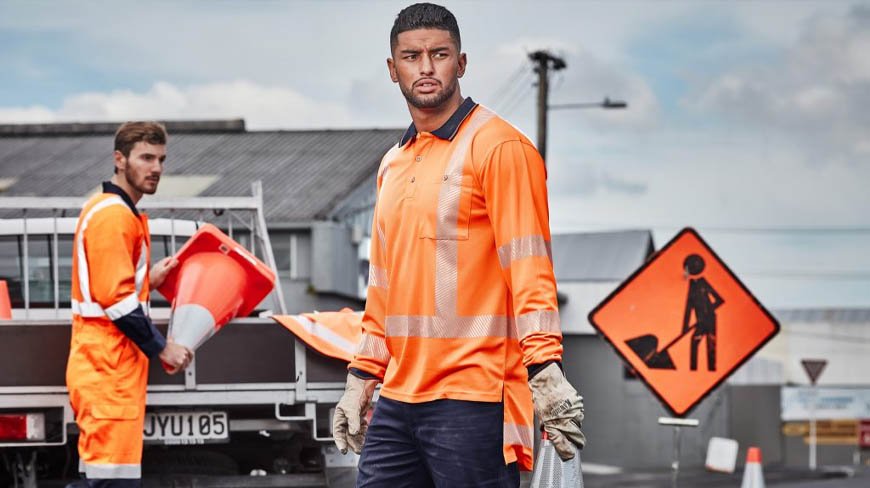
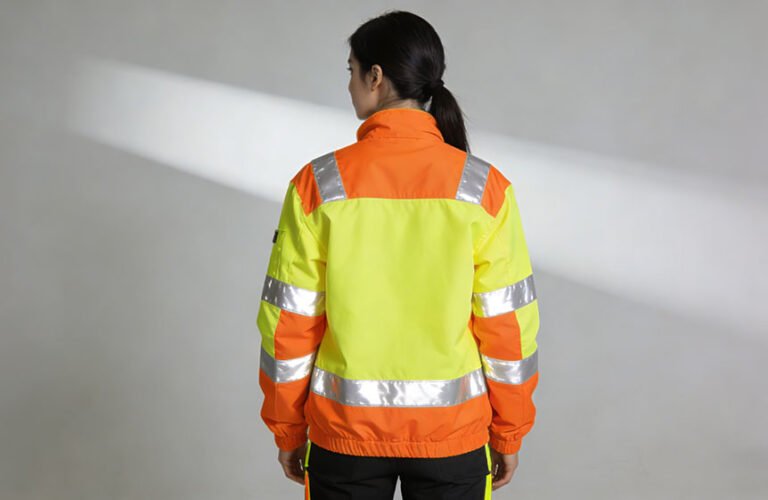
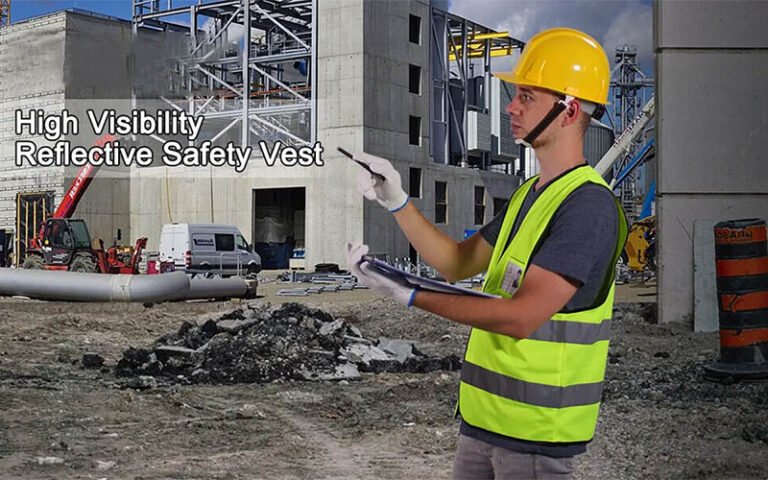
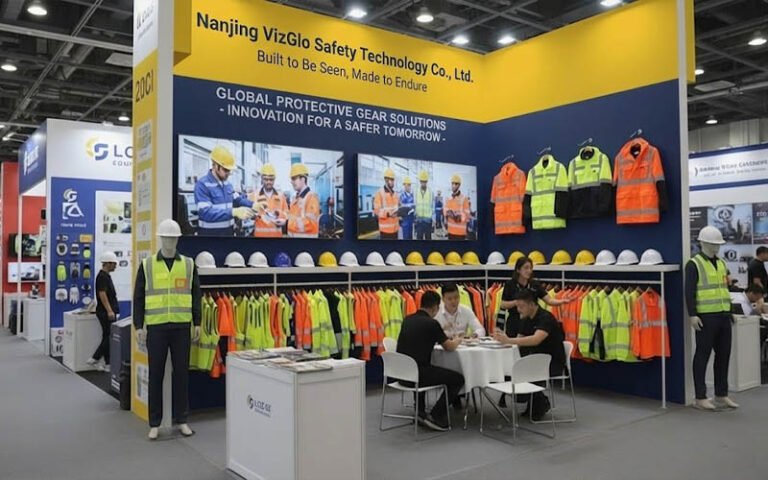
Certified hi-vis garments operate as life-critical personal protective equipment across industrial job sites.
1. The Legal Classification: Why Hi-Vis Is PPE, Not Just a Uniform
Within enterprise procurement and occupational health management, confusing daily company uniform attire with dedicated hi vis clothing creates severe legal liability and safety failure risks. A standard work uniform exists primarily for corporate identification, brand presentation, or basic soil protection. In stark contrast, Personal Protective Equipment (PPE) is legally defined as any device, appliance, or garment worn by a worker to mitigate specific, evaluated occupational hazards.
Statutory health and safety bodies worldwide—such as the US Occupational Safety and Health Administration (OSHA 1910.132) and the European Union PPE Regulation 2016/425—explicitly categorize high-visibility warning garments as intermediate/Category II PPE.
The physical hazard mitigated by hi-vis PPE is struck-by mortality. By maximizing contrast against cluttered backgrounds under both day and night conditions, the garment buys critical reaction time for equipment operators, crane rigging teams, and external vehicular traffic.
2. International Compliance Frameworks: ANSI/ISEA 107 & EN ISO 20471
For a garment to meet the threshold of legal PPE, it cannot merely use bright colors; it must undergo rigorous accredited laboratory testing against recognized global consensus standards. Safety managers typically navigate two dominant technical frameworks:
| Standard | Primary Jurisdiction | Core Classification Model | Performance Verification |
|---|---|---|---|
| ANSI/ISEA 107 | North America / Global Projects | Type R (Roadway), Type O (Off-road), Type P (Public Safety); Classes 1, 2, 3 | Chromaticity, luminance, retroreflective RA values, bursting strength |
| EN ISO 20471 | Europe, UK, International | Classes 1, 2, and 3 based strictly on minimum visible m² areas | UV colorfastness, sweat resistance, washing cycle durability, thermal stability |
While these technical standards specify required square meterage for background fluorescent materials and retroreflective bands, selecting the right garment class depends entirely on the operational risk profile of your job site.
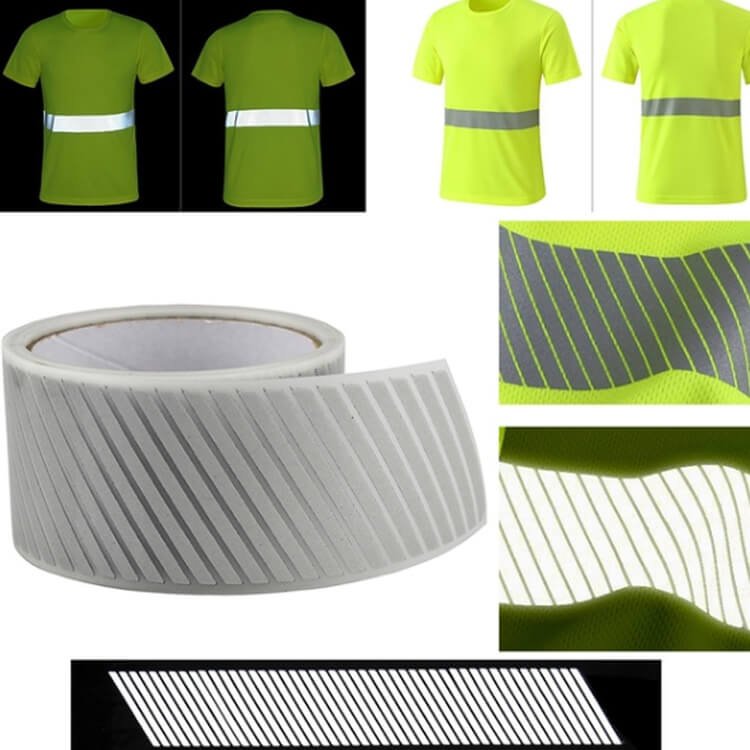
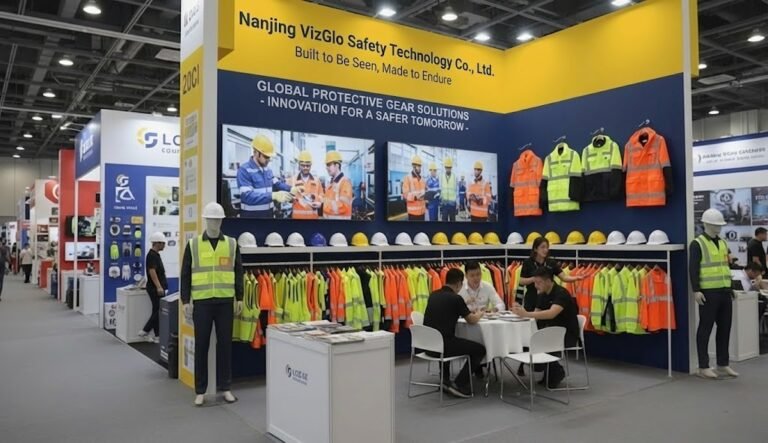
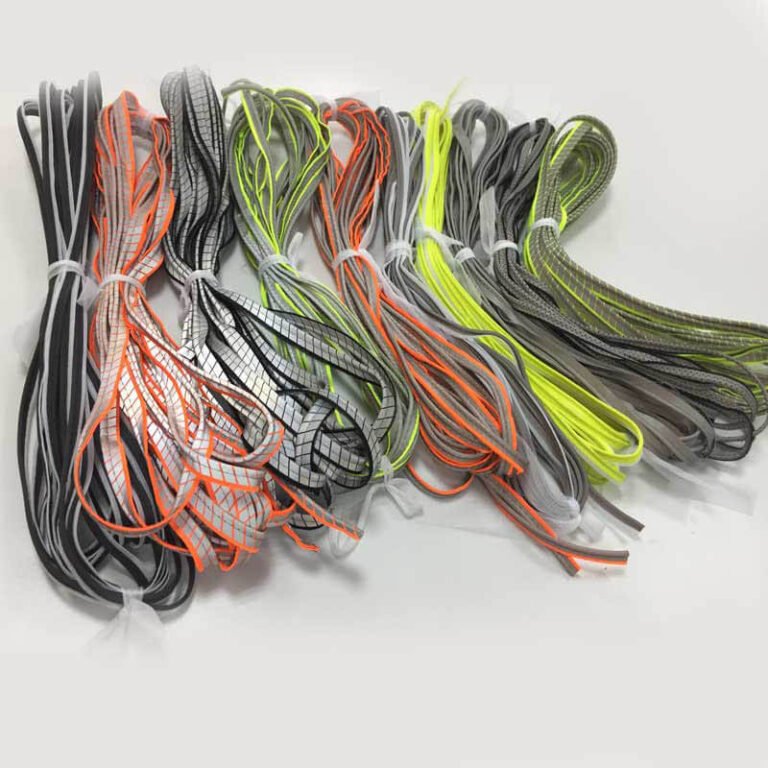
Engineered retroreflective elements bonded to functional performance fabrics ensure optical compliance and full movement flexibility.
3. Employer Responsibilities & Workplace Risk Assessment
Because high visibility clothing is classified under statutory safety law as PPE, company management, site general contractors, and corporate safety directors carry specific, non-delegable legal responsibilities:
- Mandatory Risk Assessments: Employers must formally assess site hazards, calculating operating vehicle speeds, lighting gradients, weather conditions, and proximity to mobile machinery.
- Cost Provision: Under governing bodies such as the UK Health and Safety Executive (HSE) and OSHA, compliant PPE must be provided to personnel free of charge.
- Fit and Inclusivity: PPE must properly fit every worker. Oversized garments create snagging hazards near rotating equipment, while undersized gear restricts movement or unzips, failing visual surface area requirements.
- Systematic Enforcement: Establishing mandatory PPE zones across work locations and ensuring workers wear their protective gear correctly throughout shift rotations.
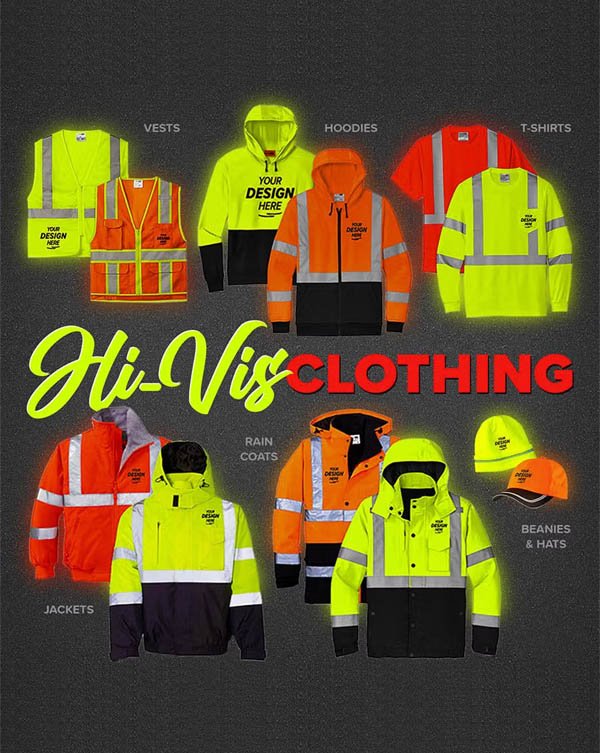
For enterprise-wide setups requiring specialized garments tailored to specific industrial hazards, exploring full-coverage hi vis workwear ensures seamless regulatory compliance across multi-disciplinary construction and utility crews.
4. Engineering Behind Hi-Vis PPE: Fabrics, Retroreflection & Ergonomics
A garment only functions as an effective piece of safety PPE when its physical engineering combines photometric visibility with occupational durability. True protective hi-vis apparel relies on three core materials science components:
Fluorescent Substrates
Transforms invisible ultraviolet radiation into visible light, delivering maximum daylight contrast in overcast, foggy, or dawn/dusk conditions.
Retroreflective Materials
Utilizes micro-glass bead or prismatic technology through advanced reflective tapes to bounce vehicle headlamp beams directly back to the driver’s eye.
Ergonomic Sub-assemblies
Integrates flexible segmented heat transfer films, mechanical stretch fabrics, and breathable weaves to eliminate wearer fatigue and overheating.
When working under wet or harsh weather conditions, visibility needs must be balanced with climate control. Outer layers such as dedicated hi vis raincoats engineered to EN 343 waterproof standards ensure that visibility performance does not compromise thermal comfort and weatherproofing.
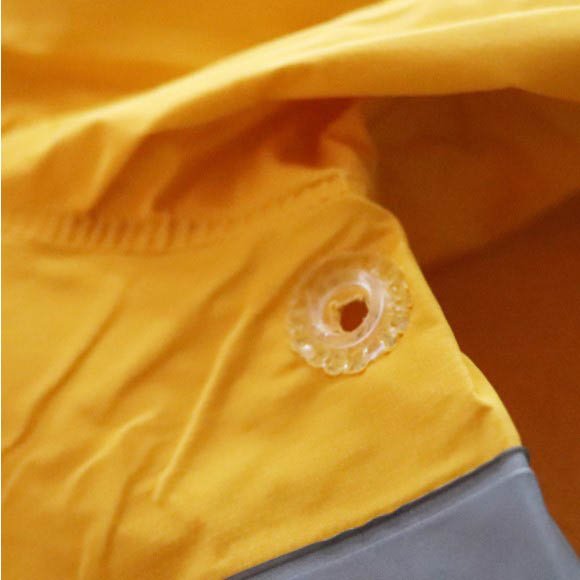
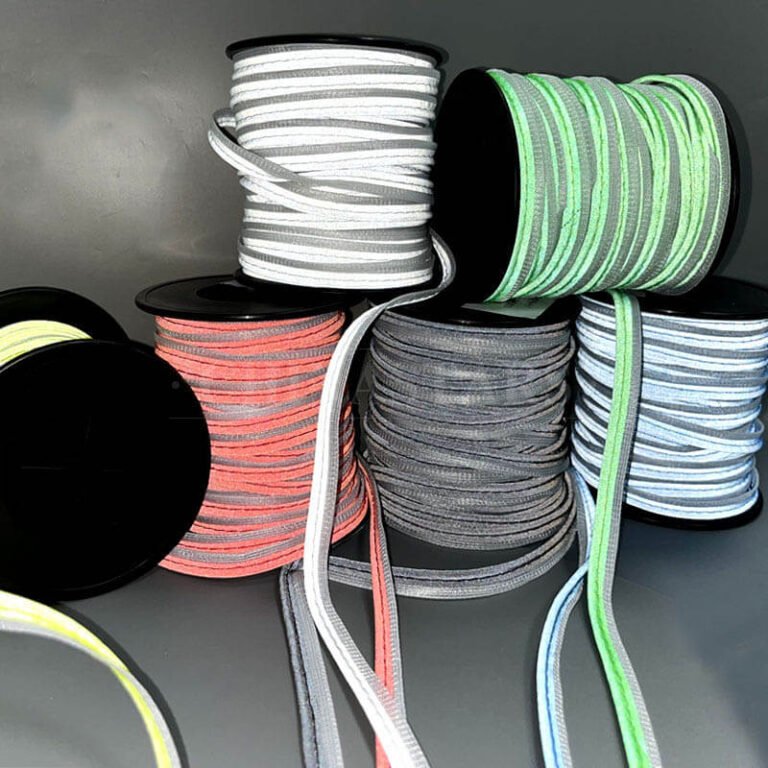
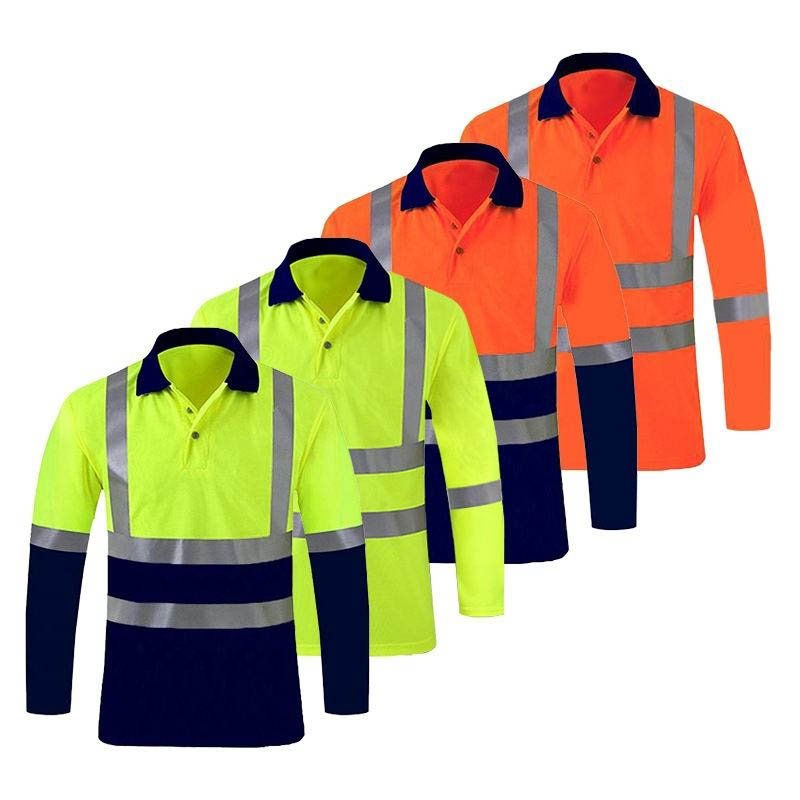
Precision construction: Seam-sealed weatherproof hi-vis apparel maintains certified optical and climate protection standards.
5. Procurement Governance: Vetting Certification Documents & Durability
For enterprise purchasing agents, PPE distributors, and supply chain directors, buying compliant hi-vis apparel requires thorough supplier verification. Low-cost commodity options often cut corners using uncertified dye batches or low-grade reflective films that degrade rapidly after minimal washing.
During technical supplier audits and bulk RFQ evaluations, insist on reviewing the following quality documentation:
- Accredited Third-Party Test Reports: Reports issued by recognized testing houses (e.g., SATRA, SGS, TÜV) confirming compliance with ANSI/ISEA 107-2020 or EN ISO 20471:2013+A1:2016.
- Washing Durability Verification: Lab test certificates explicitly validating that reflective tape luminance coefficient values ($R_A > 330\text{ cd}/(\text{lx}\cdot\text{m}^2)$) are maintained after at least 25 to 50 industrial wash cycles.
- Ecological Safety Certifications: Compliance with OEKO-TEX Standard 100 to verify that textiles coming into prolonged skin contact are free from hazardous azo dyes and toxic heavy metals.
- Factory Audit Credentials: Proven manufacturing standards backed by ISO 9001 quality management and BSCI social compliance certifications.
6. Maintenance, Inspection & Lifecycle Replacement Policies
Unlike basic uniform apparel, every piece of hi-vis PPE has a finite operational lifespan. Once retroreflective properties or fluorescent pigments degrade past minimum thresholds, the garment no longer provides certified protection and exposes the company to safety non-compliance.
Critical Field Inspection Triggers for Immediate PPE Retirement:
- ✕ Fluorescent Substrate Fading: Background fabric has visibly faded due to prolonged UV exposure, no longer matching safety color spaces.
- ✕ Micro-Bead Degradation: Reflective striping shows extensive cracking, flaking, or abrasion damage under flash inspections.
- ✕ Irreversible Contamination: Heavy oil, asphalt, concrete slurry, or grease stains cover more than 10% of the visible fluorescent area.
- ✕ Washing Limit Exceeded: Garments have exceeded the maximum certified laundering cycles indicated on the inner care label.
Implementing proactive procurement schedules with structured buffer stock prevents field staff from wearing compromised, degraded workwear on active job sites.

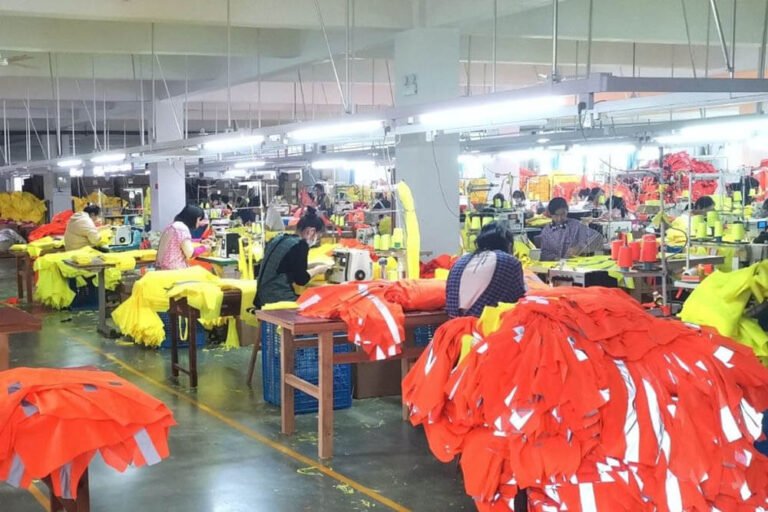
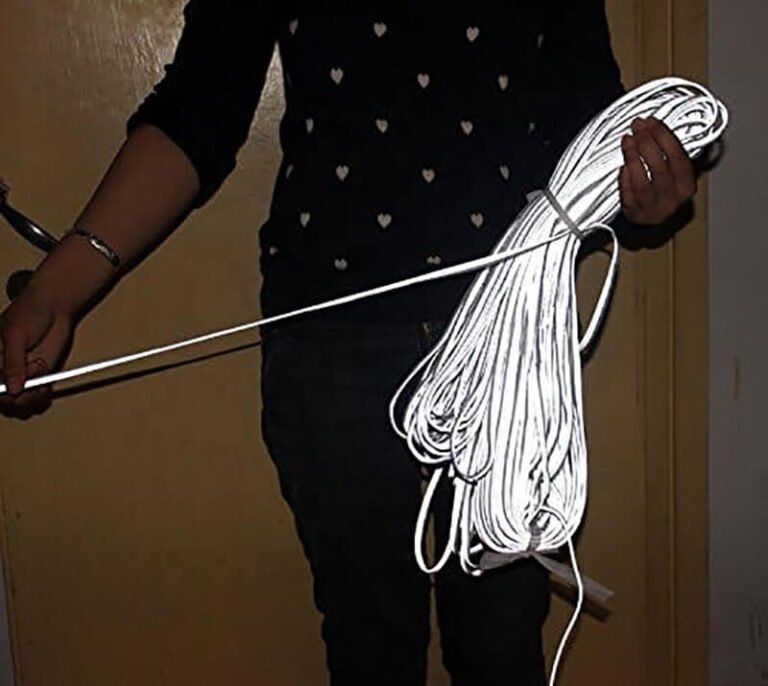
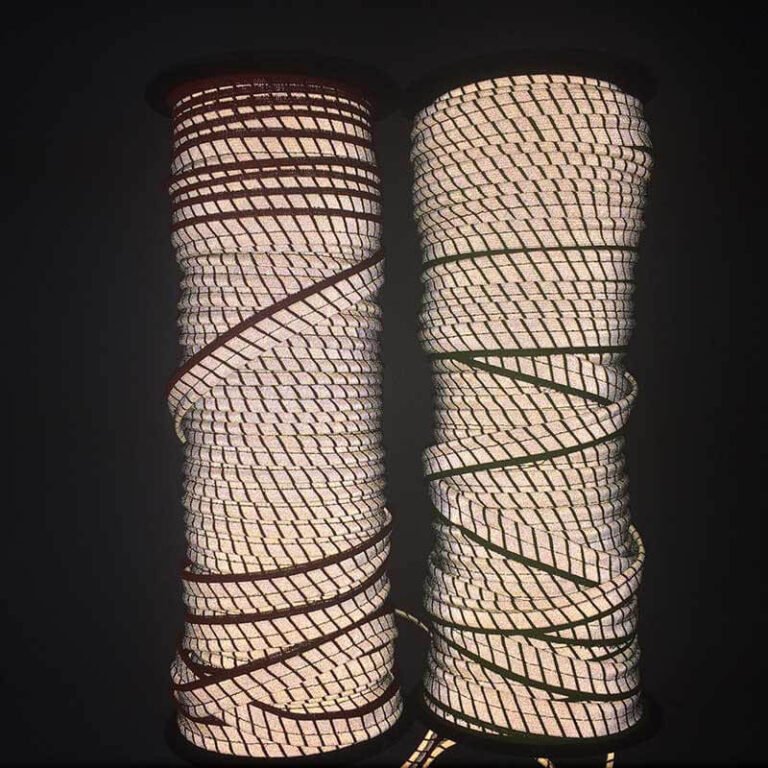
Quality-controlled raw materials, reinforced stitching, and certified trims form the foundation of compliant hi-vis PPE.
My Insight: Compliance is the Floor, Not the Ceiling
“From my vantage point on the front lines, speaking with safety managers and distributors across five continents, the question ‘Is High Visibility Clothing PPE?’ is one I encounter frequently. The simple answer is an unequivocal yes. But this answer barely scratches the surface. To truly grasp its importance, we must shift our mindset: hi-vis clothing is not a uniform; it is a life-saving system. It is often the only thing protecting a worker from a moving vehicle or heavy machinery.”
“In my 15+ years in this industry, I’ve seen a critical gap emerge: the gap between baseline compliance and real-world performance. A garment can have an EN ISO 20471 or ANSI/ISEA 107 certificate, but that’s just the entry ticket. The real operational questions are: Will they actually wear it? If a jacket is stiff, non-breathable, or poorly fitted, workers in hot climates or strenuous roles will take it off, rendering the certification meaningless. This is where material innovation—like stretch fabrics, moisture-wicking properties, and segmented tapes for breathability—becomes non-negotiable.”
“Furthermore, will it withstand the job? A certificate tests a new garment. I see what happens after 5, 10, or 25 industrial wash cycles. True PPE is built for durability from the ground up. Treat the selection process with the same gravity as choosing a fall-arrest harness or a respirator. Look beyond the label. Scrutinize the materials, the construction, the comfort, and your manufacturing partner’s commitment to quality. Compliance is the floor, not the ceiling. Your team’s life depends on what happens above that floor.”
Explore Complete OEM/ODM Safety Solutions
Need certified, high-durability safety apparel built for specific climate conditions and industry risks? Discover our complete range of certified technical protective workwear and advanced materials at our commercial manufacturing center:
Visit the VizGlo Hi Vis Clothing Product Center →Frequently Asked Questions (FAQ)
Is high visibility clothing legally defined as PPE?
Yes. Major safety authorities—including OSHA in the United States, EU Regulation 2016/425, and Safe Work Australia—classify high visibility garments as PPE whenever personnel are exposed to hazards from moving vehicles, mobile machinery, or low-light work zones.
Are employers legally required to provide hi vis PPE for free?
In most jurisdictions, including under OSHA (29 CFR 1910.132) and the UK/EU PPE at Work Regulations, employers must supply required PPE to their workforce at no cost, while ensuring it is maintained in safe, compliant working order.
What technical documents should buyers request from suppliers?
Buyers should always require accredited lab test reports confirming compliance with ANSI/ISEA 107 or EN ISO 20471, EU Declarations of Conformity, certified wash-cycle testing data (25 to 50 cycles), and OEKO-TEX Standard 100 textile safety documentation.
When should hi vis PPE garments be retired and replaced?
Hi-vis garments should be retired immediately when background fabrics fade, reflective striping cracks or peels, heavy permanent staining covers critical visibility areas, or the garment exceeds its maximum certified wash cycle limit.