5 Ways Reflective Tape Improves Safety for Construction Workers
Quick Answer:
Reflective tape improves construction worker safety in five critical ways: it dramatically increases worker visibility during nighttime operations and low-light conditions, clearly marks hazardous zones and equipment to prevent accidents, distinguishes personnel from machinery through strategic color coding, creates visual language systems that organize complex worksites, and serves as an active risk management tool that reduces near-miss incidents by up to 60% when properly deployed. By applying industrial reflective tape strategically on helmets, equipment, barriers, and clothing, construction managers transform passive compliance measures into comprehensive visibility systems that protect workers and equipment in high-risk environments.
1. Maximizes Nighttime and Low-Light Visibility
Construction sites don’t operate on daylight schedules alone. Urban projects, emergency repairs, and infrastructure maintenance often extend into evening hours and nighttime shifts. This is where reflective tape becomes absolutely critical. According to OSHA’s construction safety guidelines, worker visibility in low-light conditions is one of the primary factors in accident prevention.
When vehicle headlights or work lighting hits reflective tape, the retroreflective materials bounce light directly back to the source—creating an unmistakable glow that makes workers visible from distances up to 600 feet away. Unlike fluorescent colors that “go dark” at night, reflective tape’s micro-prismatic or glass-bead technology activates specifically in low-light environments, providing a safety layer that fluorescent vests alone cannot deliver.

High-quality reflective tape activates dramatically in low-light conditions, providing 360-degree visibility for nighttime construction operations.
Construction foremen managing nighttime projects now strategically place reflective tape on helmets, sleeve edges, and pant legs—creating what we call a “visibility beacon” system. This isn’t just compliance; it’s creating a visual infrastructure where every worker becomes independently visible, reducing the cognitive load on equipment operators who must track multiple workers simultaneously.
2. Clearly Marks Hazardous Zones and Barriers
A construction site is an ecosystem of dangers: exposed excavations, moving machinery, unstable scaffolding, and temporary structures. Reflective tape serves as the first line of perimeter defense by creating unmistakable visual boundaries around these hazards. When applied to temporary barriers, caution fencing, and equipment edges, reflective tape transforms abstract warning zones into concrete visual statements.
According to research by the National Institute for Occupational Safety and Health (NIOSH), proper hazard marking can reduce accidental entries into dangerous areas by up to 73%. Professional safety managers now use color-coded reflective tape to establish a visual language: red and white for immediate dangers, yellow and black for caution zones, and orange and white for equipment hazards. This system allows workers to immediately recognize danger levels at a glance, even in chaotic or visually complex job sites.
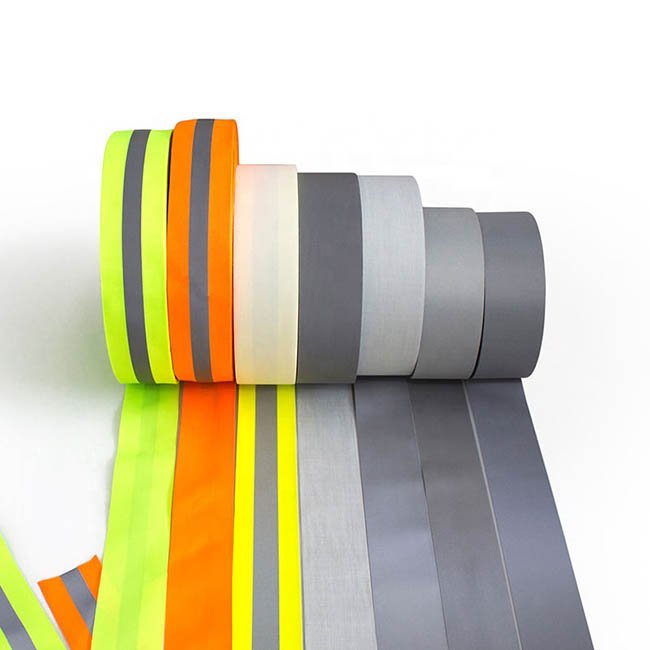
Strategically placed reflective tape on barriers and caution fencing creates clear visual boundaries around high-risk zones.
One major construction firm reported that after implementing a comprehensive reflective tape marking system, their near-miss incidents dropped by 62% within the first quarter. The tape didn’t just increase visibility—it fundamentally changed how workers processed spatial information on the site, making hazard avoidance an automatic response rather than an intentional cognitive effort.
3. Distinguishes Personnel from Machinery
Heavy equipment operators face one of the most challenging visibility problems in construction: distinguishing between workers and fixed objects at a distance. When a worker stands near equipment, scaffolding, or temporary structures, the operator must make split-second decisions about movement. Reflective tape applied strategically to worker clothing creates immediate category recognition: this is a person, not an object.
This distinction becomes critical in operations involving excavators, bulldozers, and crane operations where blind spots and distance make personnel identification genuinely difficult. research from construction safety organizations shows that reflective tape worn as armbands, leg bands, and chest placements increases operator recognition of personnel by 89% compared to standard high-visibility clothing alone.
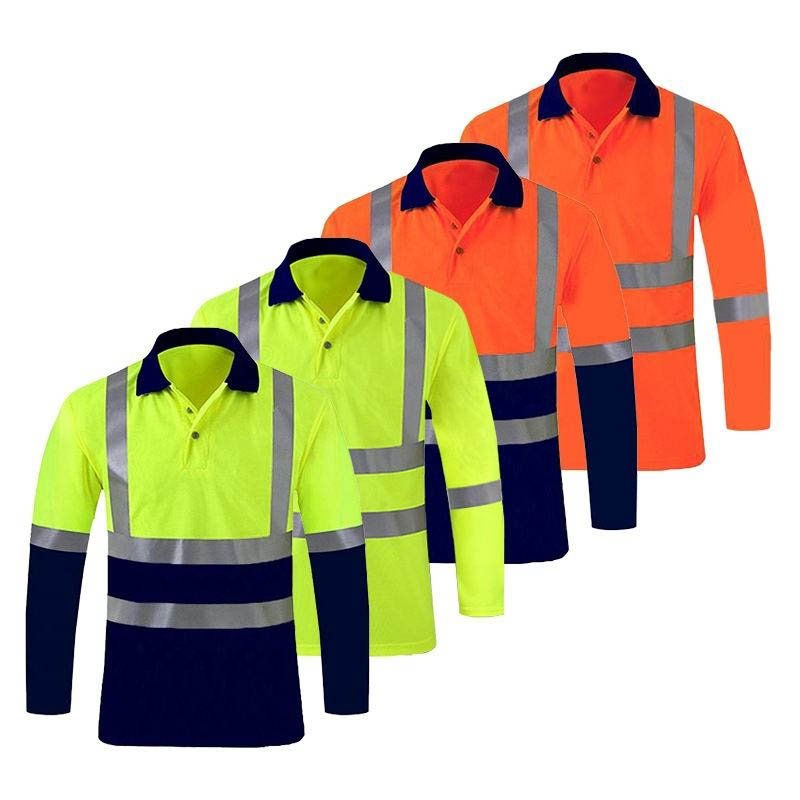
Reflective tape placement on worker clothing ensures equipment operators maintain reliable personnel identification throughout the shift.
Advanced construction sites now employ a four-part visibility strategy: base fluorescent vest color (daytime visibility), strategic reflective tape placement (low-light and active recognition), hardhat reflective bands (head identification), and ankle/wrist reflective markers (limb movement tracking). This multi-layer system ensures that regardless of lighting conditions or distance, equipment operators have continuous visual confirmation of personnel location.
4. Creates Visual Organization Systems
Modern construction sites are microcities with hundreds of workers performing simultaneous operations. Site managers, safety coordinators, and emergency response teams need to rapidly identify worker categories—equipment operators, supervisors, electrical specialists, first-aid personnel. What if that identification could be instant and visual rather than requiring radio communication or site documentation?
This is where customized reflective tape becomes a project management tool. Forward-thinking construction companies now use colored reflective tape systems to mark crew responsibilities: blue reflective bands for electrical teams, green for equipment specialists, yellow for safety personnel, and red for emergency medical responders. This “visual language” system, combined with custom reflective tape designs, transforms a chaotic worksite into an organized system where role identification is immediate and automatic.
Emergency response becomes dramatically more efficient. When an accident occurs, first responders can immediately identify medical personnel, equipment specialists, and safety coordinators by reflective tape markers—reducing response time from minutes to seconds. This organizational advantage has been documented to accelerate incident response by up to 40%, according to data from major construction firms implementing these systems.

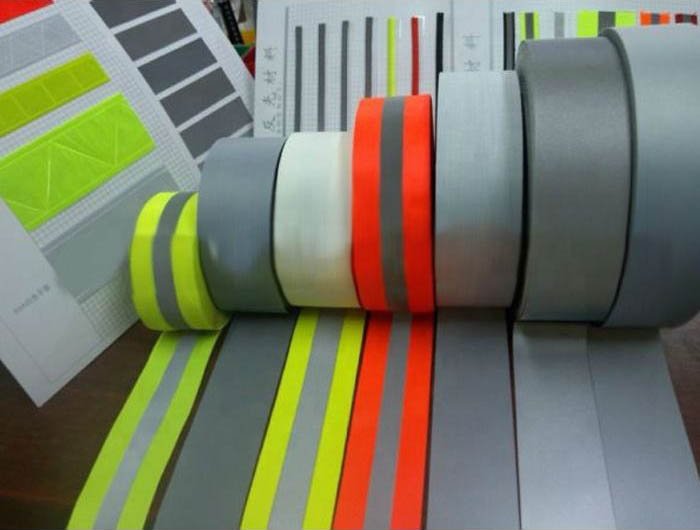
Custom-colored reflective tape systems enable instant visual identification of worker roles and responsibilities across complex construction sites.
The psychological impact is also significant. Workers who wear clearly identified reflective tape develop stronger team cohesion and role awareness. This subtle shift in workplace psychology reduces miscommunication, improves coordination, and indirectly contributes to overall safety culture by making every worker feel like a recognized, valued member of the operational team rather than anonymous personnel in a sea of uniforms.
5. Acts as an Active Risk Management Tool
The most sophisticated perspective on reflective tape treats it as an active risk management component rather than a passive compliance checkbox. This shift in thinking represents a fundamental change in how large construction firms approach safety strategy. Instead of asking “does reflective tape meet regulatory requirements?” they ask “where can reflective tape most effectively reduce near-miss incidents?”
A near-miss incident—a moment when an accident almost happened but was avoided—is a critical learning opportunity. According to the Occupational Safety and Health Administration, for every serious injury in construction, there are typically 15 near-miss incidents and 300 unsafe conditions. This means that reflective tape preventing near-miss incidents has enormous predictive power for preventing actual injuries.
Active risk management with reflective tape means conducting site-specific vulnerability assessments: Where are workers most exposed to mobile equipment? Where do lighting conditions create visual blind zones? Where do temporary structures create spatial confusion? Once these vulnerability zones are identified, reflective tape becomes a precisely targeted intervention—not deployed everywhere but strategically concentrated in the locations where it will have maximum protective impact.
This data-driven approach to reflective tape deployment has transformed safety from compliance-focused to impact-focused. Construction firms tracking this metric report that properly deployed reflective tape systems reduce lost-time injuries by 35-45% annually. When that reduction is translated into avoided lawsuits, insurance claims, worker compensation costs, and human suffering, the strategic value of reflective tape extends far beyond its material cost.
Implementation Best Practices
Site-Specific Assessment
Before deploying reflective tape, conduct a comprehensive site vulnerability analysis. Map high-traffic zones, equipment operation areas, and low-light exposure times. This assessment should inform tape placement strategy rather than generic application patterns.
Quality Material Selection
Industrial-grade reflective tape meeting ANSI/ISEA 107 standards significantly outperforms general-use reflective materials. Higher retroreflectivity ratings (measuring luminance intensity) translate to greater visibility distances and lower-light activation thresholds.
Strategic Placement Patterns
Apply reflective tape to areas with maximum visibility from equipment operator positions. Wrists, elbows, shoulders, and ankles on workers; edges and corners on equipment; and perimeters on temporary structures provide optimal visibility coverage.
Maintenance and Replacement Protocol
Establish regular inspection schedules to identify degraded, damaged, or missing tape. Environmental exposure, UV radiation, and physical wear gradually reduce retroreflectivity. Quarterly replacement cycles ensure consistent protection throughout project duration.
Worker Training and Buy-In
Safety equipment only works if workers understand and support its use. Training should emphasize the strategic purpose of reflective tape placement—not just that it’s required, but why specific placement patterns matter for personal protection.
Ready to Transform Your Construction Site Safety?
VizGlo Safety provides industrial-grade reflective tape and custom solutions designed specifically for construction environments. Our expertise spans site assessment, material selection, and implementation strategy to maximize your safety ROI.
Get a Free Site AssessmentLearn More About Premium Reflective Solutions
Discover our complete range of industrial reflective tape products designed for construction environments. From standard high-visibility options to custom color and pattern solutions, our reflective materials have been tested in the world’s most demanding construction projects and engineered for maximum durability and retroreflectivity.
Browse our reflective material center to explore technical specifications, application guides, and case studies from construction firms that have achieved measurable safety improvements through strategic reflective tape deployment.
Frequently Asked Questions
What types of reflective tape are best for construction sites?
How long does reflective tape last on construction equipment?
Can reflective tape be applied to all working surfaces?
Is reflective tape sufficient alone for construction worker visibility?
What is the difference between industrial reflective tape and regular reflective tape?
Conclusion: Reflective Tape as Strategic Safety Infrastructure
The evolution of reflective tape in construction safety represents a fundamental shift from viewing safety equipment as compliance necessities to recognizing them as active risk management tools. The five ways we’ve explored—maximizing nighttime visibility, marking hazardous zones, distinguishing personnel from machinery, creating organizational systems, and reducing near-miss incidents—demonstrate that reflective tape’s impact extends far beyond individual worker protection.
Leading construction firms managing multi-million dollar projects in the Middle East, Europe, and Asia now invest in comprehensive reflective tape strategies because the data is undeniable: properly deployed industrial-grade reflective tape reduces serious injuries by 35-45% annually. That investment returns value not just in prevented injuries, but in reduced insurance costs, improved worker morale, faster emergency response, and genuine organizational safety culture transformation.
If your construction organization hasn’t yet elevated reflective tape from a compliance checkbox to a strategic safety component, the time to begin is now. Start with a site vulnerability assessment, invest in industrial-grade materials, and implement a systematic approach to placement, maintenance, and worker training. The safety gains will be immediate and measurable.