A B2B Buyer’s Guide: 7 Questions to Ask Your Hi Vis Workwear Manufacturer Before Placing an Order
Author: VizGlo Safety Procurement Team | Category: B2B Sourcing & Quality Assurance
When vetting a hi-vis workwear manufacturer, B2B buyers must ask seven critical questions: Do you hold current, audited certifications for the target market (e.g., EN ISO 20471, ANSI/ISEA 107)? Can you provide third-party test reports for both fluorescent base fabric and reflective tapes? What specific sewing standards do you follow regarding thread type, needle size, and stitch tension to prevent seam failure? How do you verify the reflective brightness and wash durability of finished garments? What is your exact process for approving pre-production samples and tech pack adjustments? Do you maintain buffer stock or scalable production lines for urgent or seasonal orders? What is your written policy for handling defective batches, replacements, and post-delivery compliance documentation? Asking these separates professional OEM/ODM partners from generic garment factories, ensuring your procurement aligns with safety regulations, end-user protection, and commercial reliability.
1. Compliance & Market-Specific Certifications
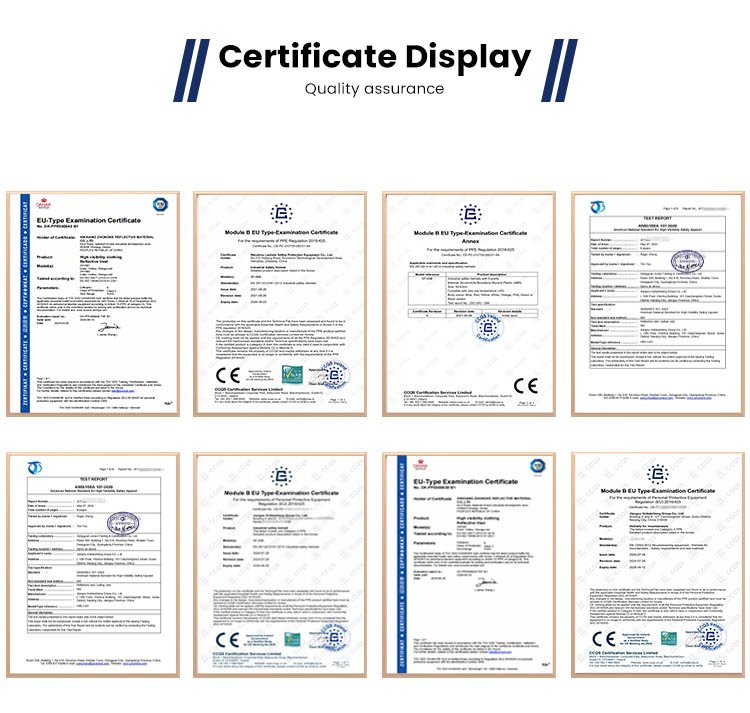
Safety apparel is heavily regulated, and a manufacturer claiming compliance without audited documentation is an immediate red flag. Ask for certificates that match your destination market. For Europe, this means EN ISO 20471 or the updated EN ISO 20471:2023. In North America, look for ANSI/ISEA 107 Class 2 or 3 ratings. Australia and New Zealand require AS/NZS 4602.1 and AS/NZS 1906.4. Verify that these certifications are current, issued by accredited third-party labs, and cover the exact garments you intend to order, not just generic factory audits or expired social compliance records.
2. Material Sourcing & Traceability
The performance of hi-vis workwear hinges on two components: the fluorescent background material and the retroreflective tape. Ask your supplier where these materials originate and request batch consistency guarantees. Low-grade polyester often suffers from UV degradation, causing the background color to fade and fall below minimum lux requirements within months. Similarly, reflective tapes vary drastically in microbead vs. prismatic technology, wash durability, and flexibility. A transparent manufacturer will provide material safety data sheets and supplier traceability records. This is where understanding the supply chain for industrial reflective tape becomes crucial, as mismatched materials can void the entire garment’s compliance status and compromise worker visibility.
3. Assembly Integrity & Sewing Standards
In global safety apparel trade, the biggest disconnect isn’t usually the fabric or tape—it’s the assembly. A factory can source premium EN 20471 certified tape, but if the sewing line uses incorrect thread, mismatched needles, or poor stitch tension, the entire garment fails. I’ve witnessed entire shipments rejected because puckered seams distorted the reflective surface, reducing retroreflective efficiency by over 30%. Worse, using standard cotton thread instead of UV-stabilized polyester thread causes rapid degradation under sunlight, leading to seam splitting during the garment’s operational life. Ask your manufacturer: What thread specification do you use? What needle size and stitch density do you apply to stress points? How do you calibrate machines to prevent seam puckering? These “small” assembly details dictate durability, compliance retention, and ultimately, end-user safety.

4. In-House Testing & Quality Control
Reliable manufacturers don’t just send products to external labs for batch testing; they maintain rigorous in-house QC protocols. Inquire about their IQC (Incoming Quality Control), PQC (Process Quality Control), and FQC (Final Quality Control) workflows. Specifically, ask how they test retroreflective luminance (cd/lx/m²) across different wash cycles, and whether they conduct colorfastness tests per ISO 105-B02 standards for UV exposure. Factories equipped with spectrophotometers and wash-testers can catch deviations before mass production, saving you from costly delays and non-compliant inventory. Request a sample QC report to see how they document tolerances and reject criteria.
5. Customization & Tech Pack Execution
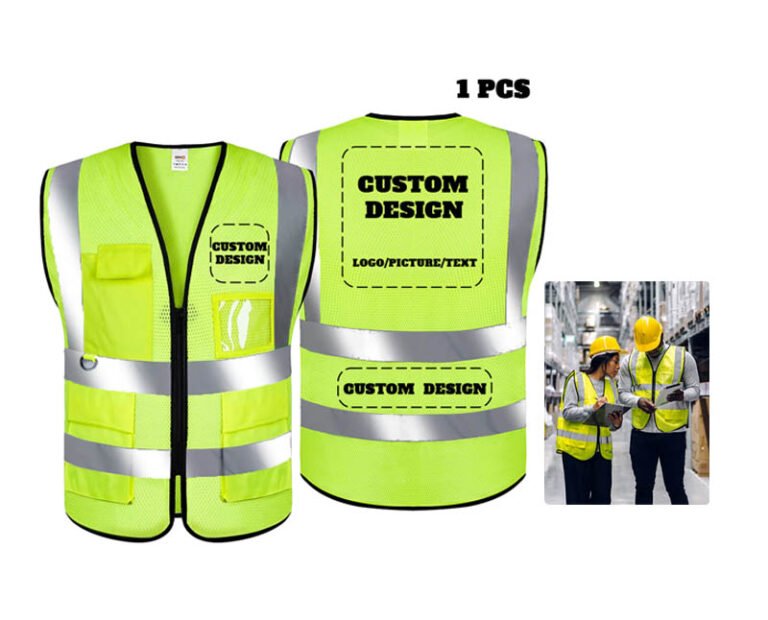
Private label and OEM orders require precise execution. Ask how the manufacturer handles tech pack revisions, grading rules for extended sizing (up to 7XL), and branding application methods. Heat transfer reflective logos, screen printing, and embroidery each have different impacts on breathability, seam flexibility, and reflective performance. A professional partner will provide digital proofs, discuss placement restrictions to maintain safety coverage, and confirm minimum order quantities (MOQs) for custom components. Clear communication here prevents misaligned expectations and ensures your brand identity integrates seamlessly with regulatory safety zones.
6. Production Scalability & Lead Times
Supply chain volatility is real. Ask about their standard lead times from pattern approval to container loading, and how they handle urgent or seasonal spikes. Do they maintain raw material buffer stock? Are their production lines dedicated to safety apparel, or are they shared with fast fashion? Manufacturers with 50,000+ monthly capacity and automated cutting systems can scale without compromising stitch quality. Additionally, clarify their communication protocol: will you have a dedicated project manager, weekly production updates, and pre-shipment inspection options? Predictable timelines are as valuable as product quality in B2B procurement.
7. Warranty, Returns & Documentation
Even with rigorous vetting, issues can arise. Ask for their written policy on defective batches, replacement lead times, and dispute resolution. A credible supplier will cover manufacturing faults and provide compliant documentation packages, including EU Declaration of Conformity (DoC), material test reports, and commercial invoices aligned with Incoterms 2020. Transparent post-delivery support indicates a long-term partnership mindset rather than a transactional one. Protect your business continuity by ensuring accountability is clearly defined before the first needle pierces the fabric.
Ready to partner with a manufacturer that prioritizes compliance, assembly integrity, and on-time delivery?
Skip the trial-and-error. Get a detailed tech pack review and transparent B2B pricing within 24 hours.
Request a Custom B2B QuotationFrequently Asked Questions
+ How long does certification testing take for new hi-vis designs?
Third-party lab testing for standards like EN ISO 20471 or ANSI/ISEA 107 typically takes 4 to 6 weeks. Factor this into your pre-production timeline, and ensure your manufacturer submits samples early to avoid shipment delays.
+ Can manufacturers mix different reflective tapes on one garment?
Yes, but only if both tapes meet the same performance class and the combination maintains required retroreflective coverage. Mixing incompatible materials can create weak points during washing and may fail compliance audits.
+ What is the ideal stitch density for hi-vis safety seams?
Industry best practice recommends 10 to 12 stitches per inch (SPI) for standard seams, with reinforced double-needle stitching or bar tacks at stress points like shoulder seams and belt loops to prevent seam blowouts.