A Deep Dive into EN ISO 20471 & ANSI 107 for Reflective Logos
Understanding Global Standards for High-Visibility Logo Compliance
When designing high-visibility safety clothing, most brands understand the fluorescent color requirement—but the reflective logo specification remains one of the most frequently overlooked compliance challenges. Both EN ISO 20471 (the European standard) and ANSI/ISEA 107 (the North American standard) impose strict requirements on reflective elements, including logos, defining minimum brightness coefficients, minimum area coverage, and precise placement rules. The critical insight that separates industry leaders from novices is this: a non-compliant logo doesn’t just fail to meet regulations—it actively reduces the total compliant background material area by displacing fluorescent or reflective fabric, potentially pushing an entire garment out of spec. The solution isn’t to sacrifice branding; it’s to manufacture the logo itself from certified retroreflective materials. When your company’s logo becomes part of the active safety system rather than an obstacle to it, you’ve transformed a compliance liability into a competitive asset. This approach maintains regulatory approval, satisfies marketing requirements for brand visibility, and demonstrates your organization’s commitment to worker protection—a winning combination that resonates with safety managers and procurement teams across North America, Europe, and beyond.
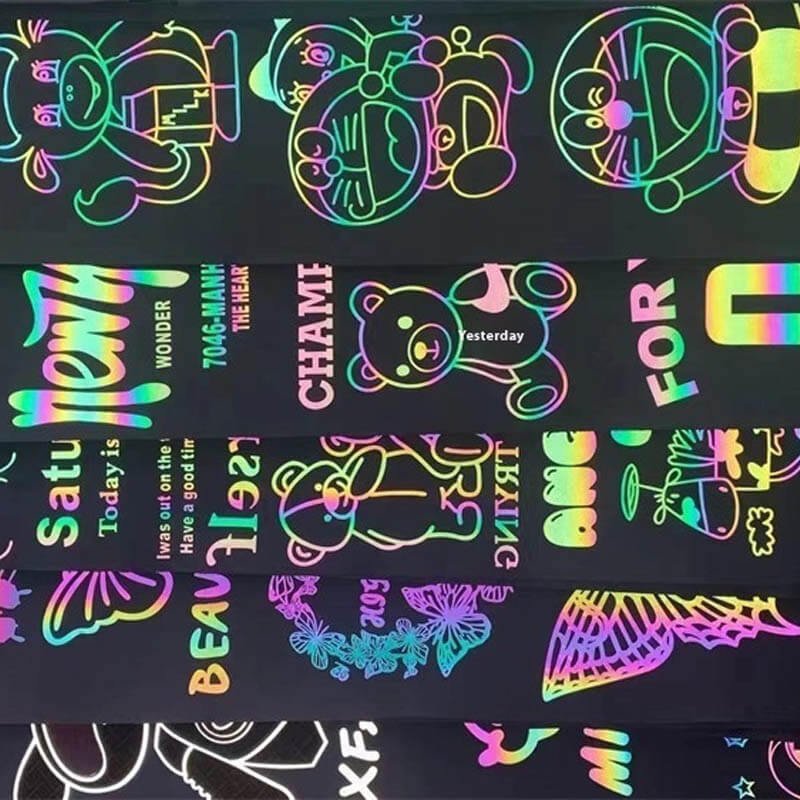
Standards Overview: Why Two Different Standards Matter
The global safety apparel market doesn’t operate under a unified standard—a reality that creates both complexity and opportunity for manufacturers and distributors. EN ISO 20471 governs compliance throughout the European Union, United Kingdom, and many Commonwealth nations. Meanwhile, ANSI/ISEA 107 dominates North America, including the United States and Canada. For any company exporting internationally, understanding both standards isn’t optional; it’s operational necessity.
What complicates matters further is that these standards share common principles but diverge in their numerical thresholds. Both mandate retroreflective brightness; both specify minimum area requirements; both define Class levels (with higher classes demanding more reflective material). However, the specific luminance values, area calculations, and logo placement allowances differ. A logo that satisfies ANSI 107 might fall short under EN ISO 20471, and vice versa. This explains why smart manufacturers maintain dual certification— it’s the only way to serve global markets without maintaining separate production runs.
Pro Tip: When ordering reflective logos for the global market, specify dual compliance (EN ISO 20471 + ANSI 107) in your technical requirements. The marginal production cost is negligible compared to the flexibility and market reach it provides.
EN ISO 20471: European Standard Requirements for Reflective Logos
EN ISO 20471 establishes three classes of high-visibility clothing, each with increasing safety requirements. For reflective logos specifically, the standard mandates that any retroreflective element must meet defined luminance coefficients and must not reduce the garment’s overall compliant material area below regulatory minimums.
Brightness Requirements (Retroreflective Material)
EN ISO 20471 specifies a minimum luminance coefficient (measured in cd/lux/m²) of 140 for standard retroreflective material. In practical terms, this means a reflective logo must be visible and bright when illuminated by a vehicle’s headlights at night. The measurement is conducted under standardized conditions: a test angle of 0.2° and 0.5°, ensuring consistency across manufacturers worldwide.
The reality in the field is stricter than the minimum standard: materials that perform at exactly the threshold often degrade to sub-compliance after 10-15 industrial wash cycles. This is why leading manufacturers specify retroreflective materials with a luminance coefficient of 180-200 cd/lux/m² for logos—the extra margin absorbs weathering and laundering without slipping below compliance.
Area Requirements Under EN ISO 20471
Class 1
- • Fluorescent background: 0.14 m²
- • Retroreflective strips: 0.10 m²
- • Logo area: ≤ 50 cm² (without penalty)
Class 2
- • Fluorescent background: 0.50 m²
- • Retroreflective strips: 0.13 m²
- • Logo area: ≤ 100 cm² (without penalty)
Class 3
- • Fluorescent background: 0.80 m²
- • Retroreflective strips: 0.20 m²
- • Logo area: ≤ 150 cm² (without penalty)
Critical Point: These logo area allowances assume the logo is printed in a non-fluorescent, non-reflective color (typically dark blue, black, or dark red). If your logo exceeds these dimensions or is rendered in a non-compliant material, the excess area must be deducted from the required fluorescent or retroreflective background material—potentially pushing the garment out of compliance entirely.

ANSI/ISEA 107: North American Standard for Reflective Logo Specifications
The ANSI/ISEA 107 standard, maintained by the American National Standards Institute in collaboration with the International Safety Equipment Association, takes a slightly different approach to logo compliance. While the overall framework—Classes 1, 2, and 3 with increasing reflective material requirements—mirrors EN ISO 20471, the numerical thresholds and allowances diverge in ways that matter significantly in manufacturing.
Luminance Coefficient Under ANSI 107
ANSI/ISEA 107 specifies a minimum luminance coefficient of 150 cd/lux/m² for retroreflective elements. This is marginally higher than the 140 minimum in EN ISO 20471, reflecting the North American market’s emphasis on nighttime visibility in diverse road and weather conditions. For logos specifically, maintaining a 180+ cd/lux/m² specification remains best practice to ensure durability across the garment’s service life.
Area Allowances and Class Specifications
| Class | Fluorescent Area | Retroreflective Area | Logo Allowance |
|---|---|---|---|
| 1 | 0.155 m² | 0.155 m² | ≤ 65 cm² |
| 2 | 0.50 m² | 0.155 m² | ≤ 100 cm² |
| 3 | 0.80 m² | 0.50 m² | ≤ 200 cm² |
*Assumes standard (non-reflective) logo material
One key distinction: ANSI 107 permits slightly larger logos in Class 3 garments (200 cm² vs. EN ISO’s 150 cm²) without penalty. However, this flexibility exists only if the logo is rendered in compliant non-reflective material. The moment you exceed the threshold or use non-compliant material, the excess area reduces the required fluorescent or retroreflective background.
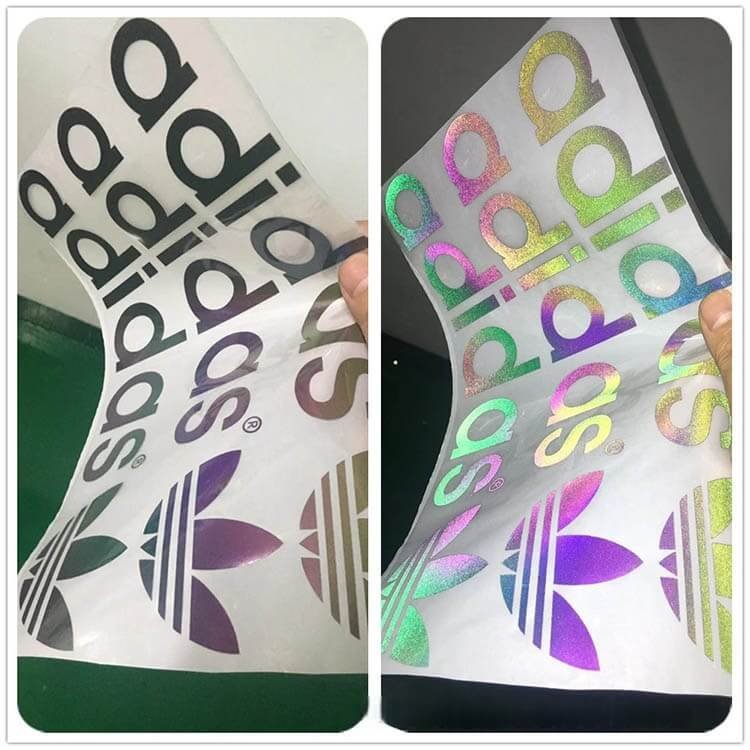
Specific Logo Requirements: Brightness, Area, and Placement Rules
The technical specifications for logos can feel abstract until you’re actually designing or approving them in production. Let’s break down the practical requirements that matter every single day in a manufacturing environment.
Brightness and Visibility
Both EN ISO 20471 and ANSI 107 employ the retroreflectivity test under specific conditions: typically an observer angle of 0.2° and a measurement angle of 0.5°. In real-world terms, this simulates a vehicle’s headlights shining on a garment at roughly 100 meters distance. For a reflective logo to pass, it must achieve and sustain the luminance coefficient across multiple test cycles and after simulated laundry conditions (typically 10-20 wash cycles depending on the standard).
For manufacturers working with VizGlo or similar suppliers, this means requesting third-party certification reports showing post-wash performance. A logo that meets the baseline luminance coefficient before washing but degrades below threshold after 5 laundries will fail compliance in the field—and your customers will discover this failure when they send garments for maintenance inspection.
Area Specifications and Impact on Overall Compliance
Here’s the core tension: the standards permit logos only up to defined maximum areas. Beyond that, every additional square centimeter of logo must be deducted from the garment’s required fluorescent or retroreflective material. This creates a mathematical problem that catch many brands off-guard.
Consider a practical scenario: You’re producing Class 2 vests under EN ISO 20471. Your brand guidelines specify a company logo that measures 120 cm². Under the standard, you’re allowed up to 100 cm² without penalty. The excess 20 cm² must be deducted from your required 0.50 m² of fluorescent background. This means your fluorescent material requirement drops to 0.4850 m² (0.50 m² minus 0.0020 m² for the logo overage). If your vest design is already tight on background area—common with fashion-conscious safety clothing—this penalty might push you over the edge into non-compliance.
Solution: Instead of deducting logo area from fluorescent material, render your logo in certified retroreflective material. A reflective logo doesn’t subtract from required background; it contributes to it. This is the game-changing insight most brands miss until a supplier points it out.
Placement and Orientation Rules
Both standards require that reflective elements—including logos—be positioned such that they contribute meaningfully to visibility from the critical viewing angles. For logos on the front of a vest, this typically means the upper torso or central placement. Logos positioned too far to the side or back may fail to meet visibility requirements if they’re outside the primary sightline when a wearer is facing oncoming traffic.
The standards don’t explicitly forbid logos on sleeves or back panels, but they do require that the overall garment—evaluated as a whole—meets the area and brightness requirements from all critical angles. In practice, this means a logo on the back of a safety vest is less effective for compliance purposes than one on the front, and this is reflected in the calculations.

Achieving Compliance: The Reflective Logo Strategy
Moving from compliance obstacles to compliance assets requires a strategic shift in how brands approach logo design. Instead of viewing your logo as something added to a safety garment (and therefore something that threatens compliance), reframe it as a component of the safety system itself.
Option 1: Certified Retroreflective Logo Material
The premier approach—and the one we recommend to every client—is to manufacture your logo from certified retroreflective material meeting the same brightness standards as the garment’s strip material. This accomplishes three objectives simultaneously:
- 1 Preservation of Compliance: Your logo doesn’t reduce the required fluorescent or retroreflective background area. In fact, it contributes to it.
- 2 Enhanced Visibility: Your brand becomes part of the active safety system. In low-light conditions, a glowing reflective logo dramatically increases the wearer’s conspicuity.
- 3 Market Differentiation: A reflective logo signals to safety managers and procurement teams that your organization prioritizes worker protection. This is a powerful trust signal.
Option 2: Heat Transfer vs. Direct Printing
There are two primary methods for applying reflective logos to garments:
Heat Transfer (Recommended)
- ✓ Superior durability through laundry cycles
- ✓ Consistent brightness maintenance
- ✓ Precise color control (silver, gold, white, multi-color)
- ✓ Scalable to production volumes
Direct Printing (Screen/Digital)
- • Lower per-unit cost on larger volumes
- ⚠ Retroreflective ink degrades faster
- ⚠ Complex color designs are challenging
- ⚠ Luminance coefficient often dips below threshold after 5-10 washes
For compliance-critical applications (construction, road work, railway operations), heat transfer reflective logos are the only defensible choice. The marginal cost premium (typically $0.15–$0.40 per garment) is negligible compared to the liability exposure if a logo degrades into non-compliance in the field.
Option 3: Combination Approach—Dual Standards with Flexible Design
For international brands serving multiple markets simultaneously, consider designing your logo with flexibility in mind. A core logo area (say, 60 cm²) is rendered in retroreflective material and works across all classes and both standards. Secondary brand elements—company name, certification marks—can be applied via standard printing or embroidery without triggering compliance penalties because they fall within the permitted non-reflective area allowance.
This hybrid approach maximizes branding opportunity while maintaining compliance confidence across EN ISO 20471, ANSI 107, and regional variants. When we work with large distributors, this is the standard we recommend.
Ready to Get Compliant Reflective Logos?
Let our experts guide you through EN ISO 20471 and ANSI 107 certification. Contact VizGlo Safety today for a free compliance consultation.
Get Your Free Consultation NowFrequently Asked Questions About Reflective Logo Standards
Can a standard printed logo meet EN ISO 20471 compliance? ▼
Only if the logo area is within the permitted tolerance (50-150 cm² depending on class) AND rendered in a non-reflective color. If your logo exceeds the area allowance, the excess must be deducted from required fluorescent material, potentially pushing the garment out of spec. For logos using retroreflective material, there is no area penalty—they contribute to compliance.
What’s the difference in logo allowance between ANSI 107 and EN ISO 20471? ▼
EN ISO 20471 allows up to 150 cm² for Class 3 garments; ANSI 107 allows 200 cm² for Class 3. The difference reflects different market risk assessments. For practical purposes, always design for the stricter standard (EN ISO 20471) if you plan to export. This ensures your product works globally without redesign.
How do I know if my reflective logo meets the brightness requirement? ▼
Request a third-party luminance coefficient test report (tested to ISO 7223 or equivalent). The lab will provide initial and post-wash (typically 10-20 cycles) measurements. A good reflective logo maintains ≥140 cd/lux/m² (EN ISO 20471) or ≥150 cd/lux/m² (ANSI 107) even after the full wash test cycle.
Is it possible to have a colored logo that’s still retroreflective? ▼
Yes, absolutely. Modern retroreflective films come in gold, silver, red, blue, and multi-color options. However, colored retroreflective materials typically have slightly lower luminance coefficients than standard silver. Always request post-wash performance data to ensure the colored version maintains compliance through its intended lifespan. For brands prioritizing compliance, standard silver or white retroreflective logos deliver the highest reliability.
What happens if a logo degrades below the brightness threshold after purchase? ▼
Technically, the garment becomes non-compliant and should not be used in high-risk environments. In practice, field inspection may not catch minor non-compliance until an accident occurs. This is why durability matters: investing in quality retroreflective logo material (preferably heat-transfer applied) ensures compliance is maintained throughout the garment’s service life. Many safety-conscious companies specify monthly or quarterly brightness verification using portable retroreflectance meters.
Can I use the same logo design for both EN ISO 20471 and ANSI 107? ▼
Yes, as long as you design for the stricter standard. If your logo is compliant under EN ISO 20471, it will automatically be compliant under ANSI 107 (which allows slightly larger areas). This simplifies global manufacturing. However, if you create a logo sized for ANSI’s allowances, it may exceed EN ISO’s limits—requiring area deduction that could make the garment non-compliant. Always design for dual compliance from the start.
Industry Expert Insight
From our experience serving North American, European, and Australian markets, the single most frequent logorelatedissue occurs when clients send a complex, multi-color corporate logo and ask, “Can we put this on 500 Class 3 vests?” The safe technical answer is often “not as originally designed.” But the valuable answer—the one that separates true partners from order-takers—is to reframe the conversation.
The game-changer is recognizing that a logo doesn’t have to be an obstacle to compliance. By manufacturing your company emblem in retroreflective material, you transform it from a compliance liability into a visible asset that works 24/7—including when it matters most, in low-light conditions. This approach satisfies both the marketing team (brand visibility maintained) and the safety team (compliance assured). It’s a win-win that resonates with every stakeholder, and it’s precisely why leading organizations now specify reflective logo solutions from their first inquiry.
Explore Related Topics
- Our Complete Reflective Logo Product Line – Discover certified retroreflective logo solutions meeting EN ISO 20471 and ANSI 107
- SF6 Circuit Breaker Solutions – Explore our advanced electrical safety systems
- Featured Partner Resources:
Additional Regulatory Resources
EU PPE Regulation 2019/1689
Official regulation governing personal protective equipment in the European Union
OSHA High-Visibility Apparel Guidance
U.S. Occupational Safety and Health Administration guidance on safety equipment
ASTM D1951 Reflective Material Testing
Standard methods for measuring retroreflectivity of materials
NFPA Safety Standards Library
National Fire Protection Association resources for safety compliance
Conclusion: Compliance as Competitive Advantage
EN ISO 20471 and ANSI/ISEA 107 aren’t barriers to brand expression—they’re frameworks for demonstrating organizational commitment to worker safety. When you approach reflective logo specification with intentionality, viewing your brand not as an addition to comply with, but as a component of the active safety system, you unlock a powerful positioning advantage.
Whether you’re a distributor serving North American markets, a European safety brand, or a global manufacturer navigating dual standards, the path forward is clear: invest in certified retroreflective logo materials, specify dual compliance (EN ISO 20471 + ANSI 107) from design phase, and partner with manufacturers who view compliance as partnership rather than checkbox exercise.
Your workers don’t just wear safety apparel—they become visible advocates for your brand every single shift. Make sure that visibility contributes to their protection, not compromises it.
Need Expert Guidance on Logo Compliance?
Our safety specialists have guided thousands of distributors and brands through successful EN ISO 20471 and ANSI 107 certification. Let’s ensure your logos meet standards while amplifying your brand.
Schedule Your Free Consultation