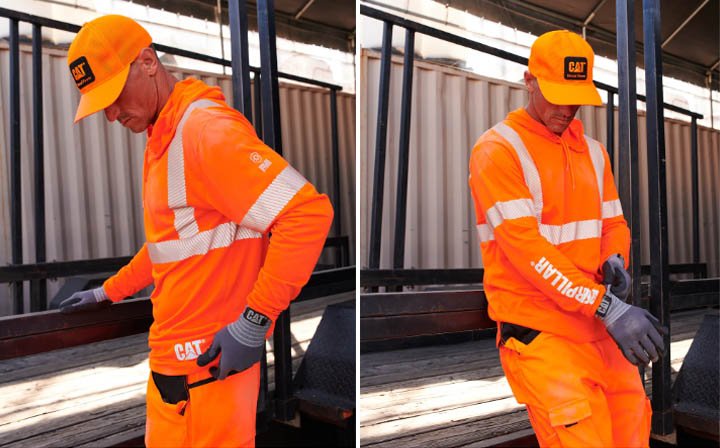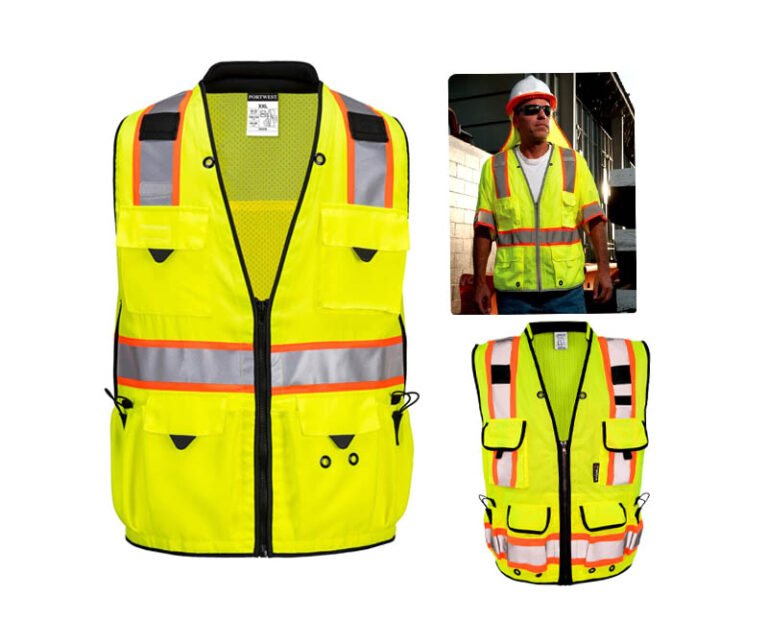
High Visibility Clothing Requirements: What Should Employers and Buyers Check?
Quick Overview for Procurement Teams
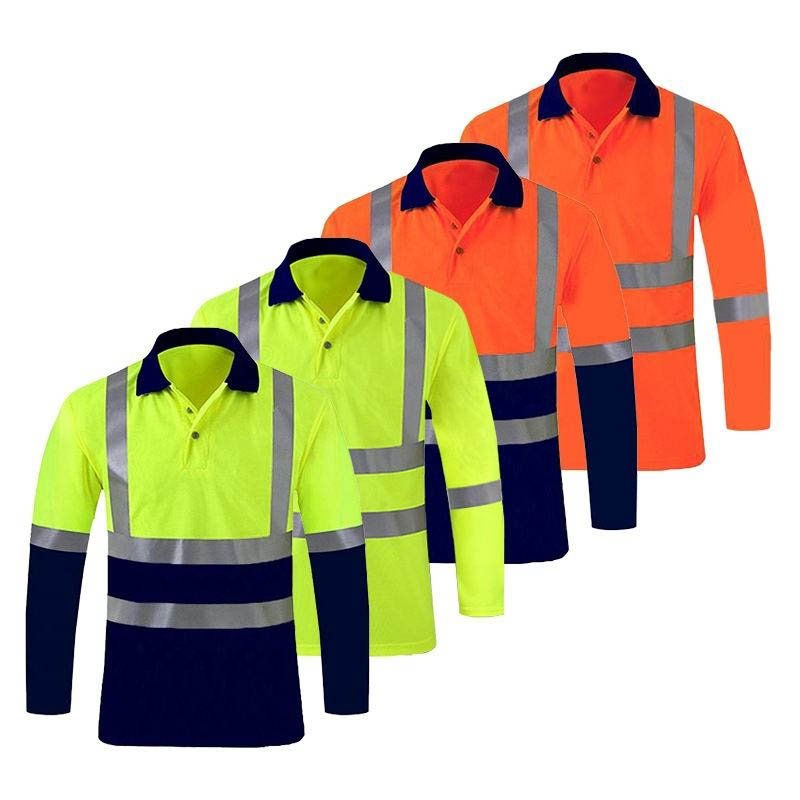
When evaluating high visibility clothing requirements, employers and professional buyers must look beyond fundamental standard certifications (OSHA-mandated standards such as ANSI/ISEA 107 or EN ISO 20471) and conduct due diligence across three critical operational pillars: durability and total cost of ownership (TCO) (including certified industrial wash cycles and UV colorfastness), worker ergonomics and functionality (breathability, mobility, climate suitability, and inclusive sizing), and manufacturing integrity (batch-to-batch photometric consistency, OEKO-TEX compliance, and complete material traceability). True compliance ensures that high visibility garments maintain their retroreflective brightness and daytime chromaticity throughout the entirety of their operational service life, avoiding costly premature replacements and regulatory liabilities.
The Procurement Blind Spot: Compliance on Paper vs. Real-World Performance
For high-volume buyers, PPE distributors, and safety managers, verifying standard compliance tags is simply table stakes. While ensuring garments meet normative minimums like ANSI/ISEA 107 in North America or EN ISO 20471 across Europe is essential, technical certificates only show how a garment performed on day one in a clean laboratory.
The practical challenge—where supply chain managers bleed margin and safety directors face liability—is the performance delta between lab-certified gear and rugged field wear. A low-cost certified safety vest that loses its retroreflective integrity after five laundering cycles or tears at the stress seams within a month ends up quadrupling an organization’s annualized garment budget.
Pillar 1: Durability & Total Cost of Ownership (TCO) Audit
Procurement decisions driven solely by initial unit costs often yield the highest operational expenses. Corporate buyers must evaluate the Total Cost of Ownership (TCO) of their safety apparel by scrutinizing raw material specifications:
1. Validated Wash-Cycle Thresholds
Standard market tapes degrade significantly after 10–25 domestic washes. Premium buyers should require test reports validating a minimum of 25 to 50 certified wash cycles (or dedicated industrial laundry cycles under ISO 15797) with retroreflective values maintaining above 100 cd/(lx·m²). Discover our specialized range of industrial-grade reflective tapes engineered for extended wash cycles.
2. Colorfastness & UV Degradation
Fluorescent pigments (Yellow-Green, Orange-Red) are vulnerable to UV breakdown and harsh weather. Always request xenon arc light fastness testing (EN ISO 105-B02) and wet/dry rubbing fastness to ensure the base fabric maintains chromaticity requirements throughout multi-season shifts.
3. Seam Tensile & Stress Engineering
Industrial wear fails first at mechanical stress points: pocket corners, underarms, and front zip runs. Check for reinforced bar-tack stitching, heavy-duty bonded threads, and twin-needle topstitching across high-tension panel joins.
4. Substrate Compatibility
Applying rigid reflective tapes onto flexible or stretch base fabrics results in tape delamination and cracking. Ensure elastic garments use dedicated heat transfer reflective films with high-elasticity polymers designed to flex with worker movement.
Pillar 2: Worker Acceptance, Ergonomics, and Climate Adaptability
Safety compliance on a work site fails immediately if employees avoid wearing their gear because it is stiff, hot, or restrictive. Modern workplace buyers must integrate user ergonomics into their technical tender criteria:
-
✓
Moisture Management and Air Permeability: For warm climates and physical labor, dense synthetic weaves cause heat stress. Specify lightweight bird’s-eye knit polyesters, mesh venting zones, and moisture-wicking finishes.
-
✓
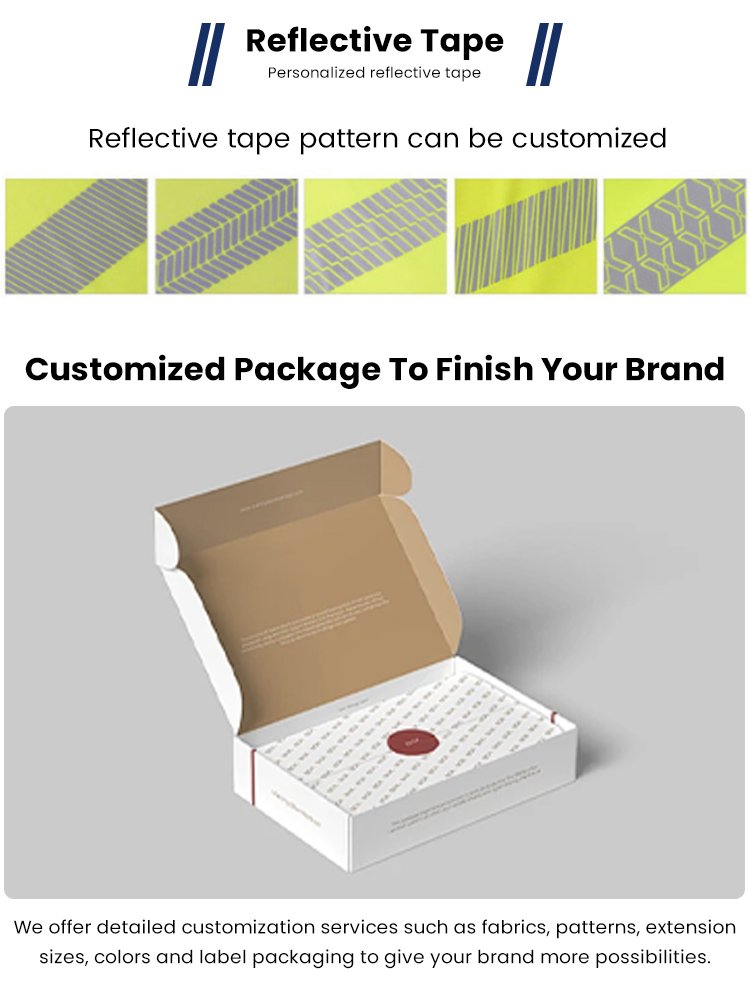
Segmented vs. Solid Reflective Taping: Continuous solid glass-bead tapes restrict fabric stretch and trap body heat. Using segmented heat-applied reflective patterns enhances breathability by up to 30% while retaining full 360-degree night visibility.
-
✓
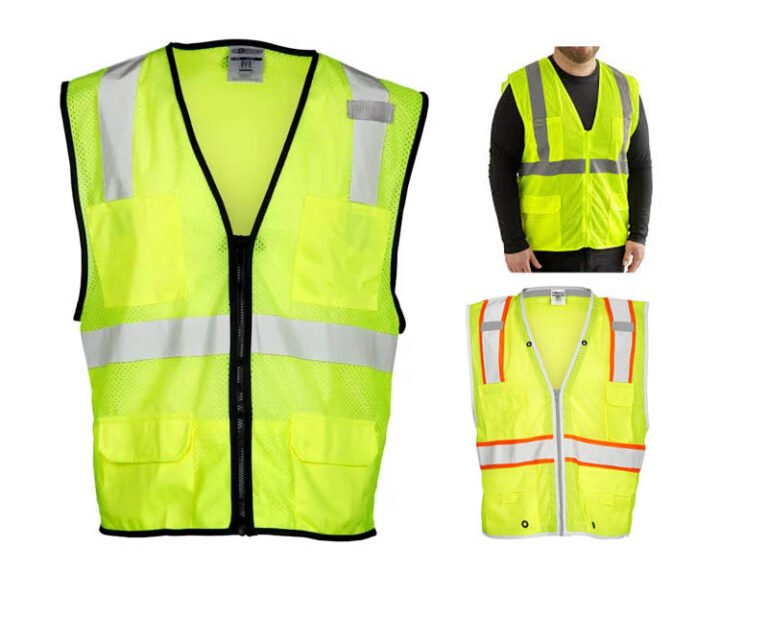
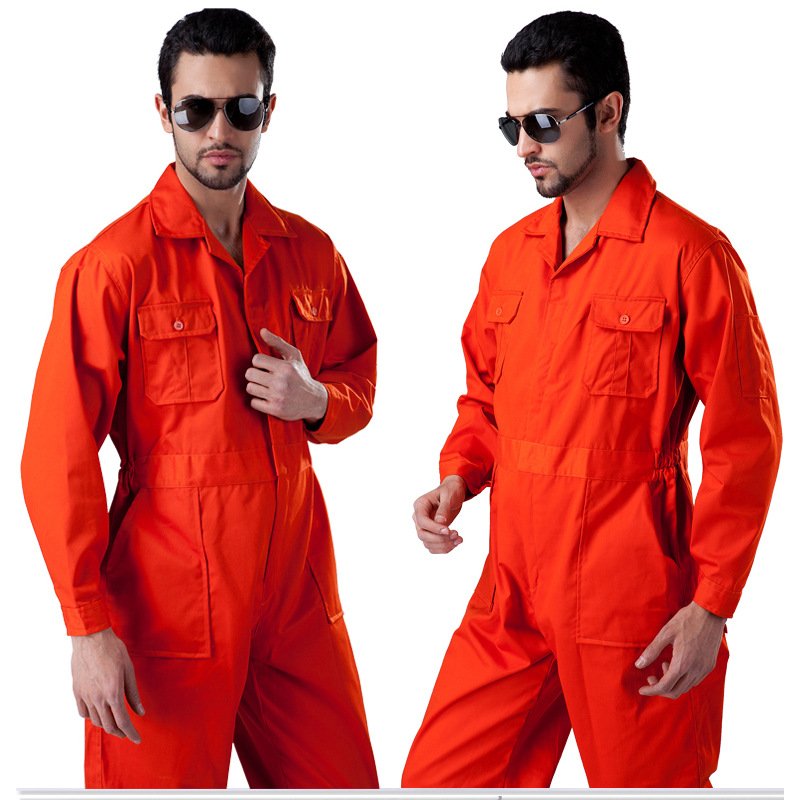
Purpose-Built Pocket Placement: Evaluate utility requirements: reinforced radio loops, dual-tier pen slots, heavy-duty badge holders, and waterproof cell phone pockets with secure closure flaps. Explore our comprehensive custom hi-vis workwear series for industry-tailored utility layouts.
-
✓
Inclusive Sizing and Tailored Cuts: Generic oversized fits create snag hazards around heavy equipment. Buyers should require comprehensive size scaling (XS to 7XL) alongside dedicated women’s ergonomic cuts tailored to shoulder and waist proportions.
Pillar 3: Supplier Capability, Supply Chain Traceability, and Brand Integrity
When sourcing large contract volumes or private-label collections, your manufacturer’s operational capabilities dictate your brand reputation. Sourcing managers should inspect three critical supplier-level criteria:
1. Vertical Integration vs. Assembly Trading
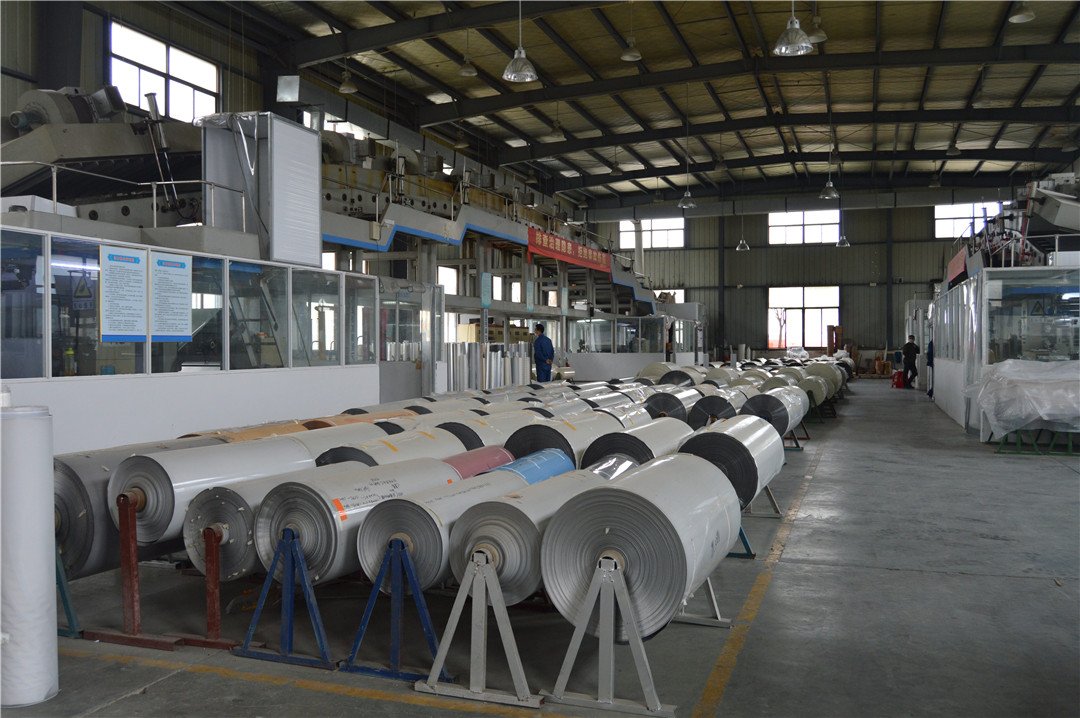
Most garment factories outsource their reflective trims to third-party converters, leading to uneven reflectivity and delamination risks. Partnering with a vertically integrated manufacturer that produces its own high-performance reflective materials ensures end-to-end quality control and eliminates intermediate markups.
2. Custom Branding Compliance Without Compromising Surface Area
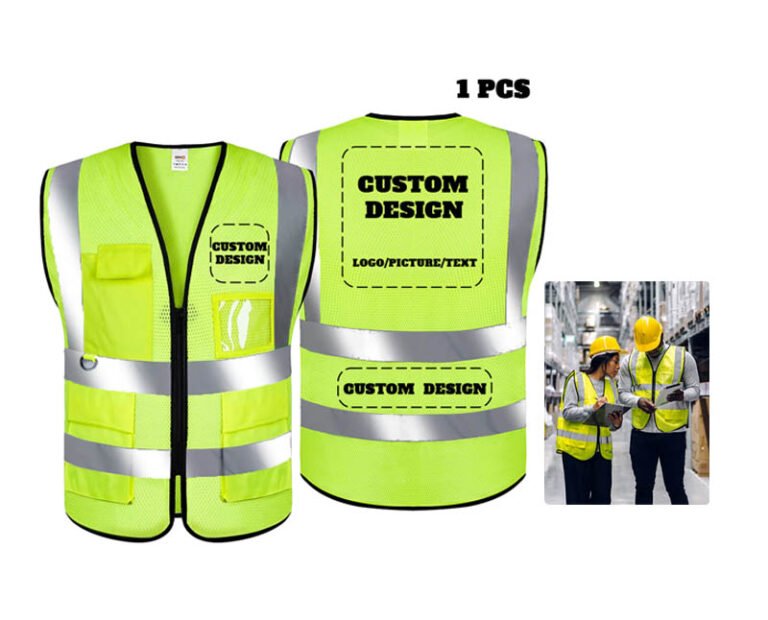
Applying large corporate logos can inadvertently breach certified background fabric surface area minimums. OEM partners should provide engineered logo applications—such as laser-cut custom reflective logos or specialized heat transfer emblems—that enhance overall reflectivity without violating compliance boundaries.
3. Third-Party Auditing and Environmental Compliance
Ensure the factory holds active management certifications including ISO 9001 quality systems, social responsibility audits (amfori BSCI), and ecological textile safety certifications like OEKO-TEX Standard 100 to verify that garments are free of harmful aromatic amines or heavy metals.
The Professional Buyer’s Pre-Order Verification Matrix
Before issuing a purchase order or approving a production sample, execute this due diligence checklist against candidate vendors:
| Verification Item | Standard Spec Requirement | What to Request from Supplier |
|---|---|---|
| Retroreflective Value (RA) | Initial > 330–400 cd/(lx·m²) at 5° entrance angle | Spectrophotometer batch report & accredited lab test sheet |
| Certified Wash Life | 25 to 50 cycles at 60°C (ISO 6330 or ISO 15797) | Post-wash retroreflectivity test certificate |
| Fabric Weight & Strength | 120–160 gsm for vests; 280–360 gsm for outerwear | Bursting and tensile strength test reports (ISO 13934) |
| Eco & Skin Toxicity | Hypoallergenic, formaldehyde & azo-free dyes | Current OEKO-TEX Standard 100 Class II certificate |
| Factory Social Compliance | Audited labor conditions and safety compliance | BSCI Audit Summary Report or SMETA 4-Pillar report |
Strategic Partnering: Moving from Vendor to OEM/ODM Manufacturing Ally
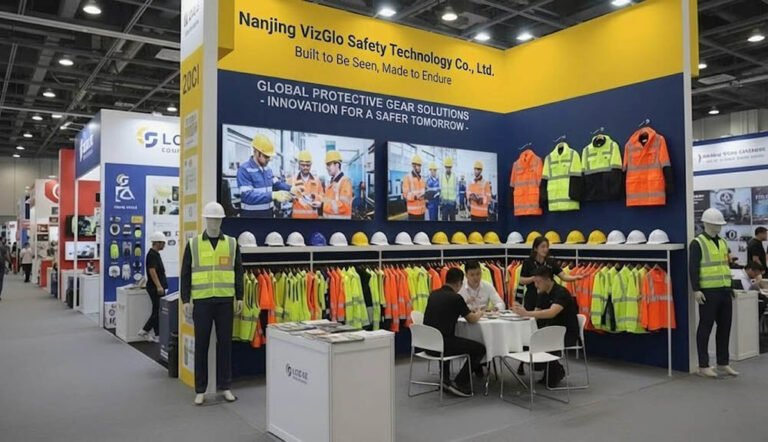
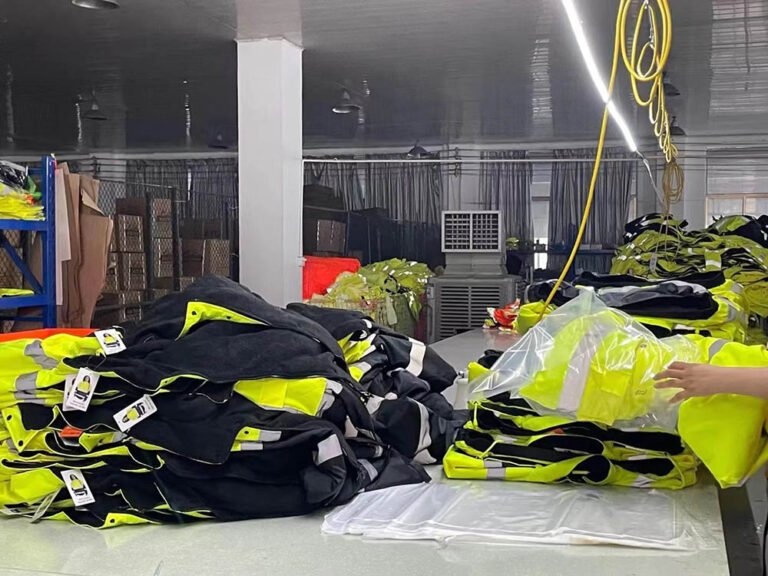
Managing compliance, fabric performance, and bulk logistics requires more than a standard trading relationship. At Nanjing VizGlo Safety Technology Co., Ltd., we operate as a fully integrated manufacturing partner. Backed by over 15 years of industry-dedicated R&D, our production infrastructure spans precision reflective material conversion to finished hi-vis garments—producing over 50,000 certified units per month.
Whether you require customized private-label production lines, specialized flame-retardant retroreflective finishes, or rapid 48-hour sample turnarounds, our technical engineering team helps you build workwear collections that meet strict regulatory benchmarks while optimizing long-term replacement cycles.
Upgrade Your Safety Apparel Supply Chain
Contact VizGlo’s engineering team for custom samples, accredited technical test dossiers, and transparent factory-direct quotation models.
Frequently Asked Questions (FAQ)
How can buyers quickly verify if a hi-vis test certificate is authentic? ▼
Always inspect the certificate issue date, verify that the report comes from an accredited third-party body (such as SATRA, SGS, TÜV, or BTTG), and cross-check the certificate ID directly on the testing house’s online verification database. Ensure the fabric composition matches your physical sample specs.
What causes reflective tape to crack and peel prematurely? ▼
Premature failure typically stems from using non-stretch glass-bead tapes on elastic fabrics, inadequate heat-press calibration (incorrect temperature, dwell time, or pressure during application), or inferior hot-melt adhesive layers incompatible with water-repellent fabric coatings.
Does adding custom company logos violate ANSI or EN ISO standards? ▼
Adding logos can compromise compliance if the printed surface area reduces the minimum required background fluorescent fabric area. To remain compliant, consult with your manufacturer to strategically position logos or use certified reflective heat transfer films that contribute toward retroreflective area minimums.