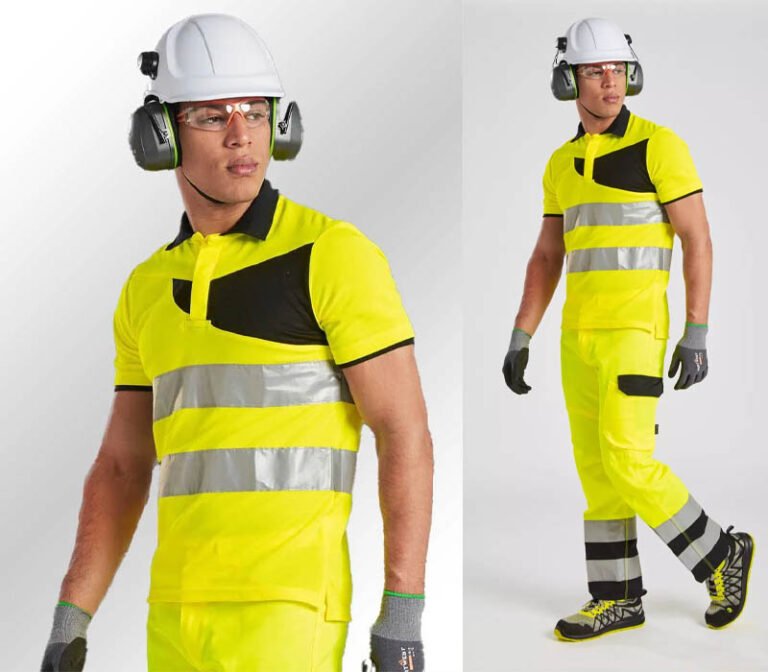
Hi Vis Workwear Vest: How to Choose the Right Vest for Workers
Summary: Choosing the Right Hi Vis Workwear Vest
To choose the right hi vis workwear vest for your workforce, procurement managers must evaluate three core pillars beyond basic regulatory compliance: functional durability (selecting high-tensile 120–150+ GSM OEKO-TEX certified fabrics and certified micro-prismatic or glass-bead reflective tapes to lower Total Cost of Ownership), ergonomic comfort (integrating breathable mesh, tailored unisex or specialized sizing, and break-away features to ensure 100% on-site worker wear compliance), and strategic corporate branding (utilizing premium heat transfer or embroidery that withstands industrial laundering). Balancing these criteria transforms basic PPE into a high-ROI asset that protects crew lives while elevating corporate brand presence.
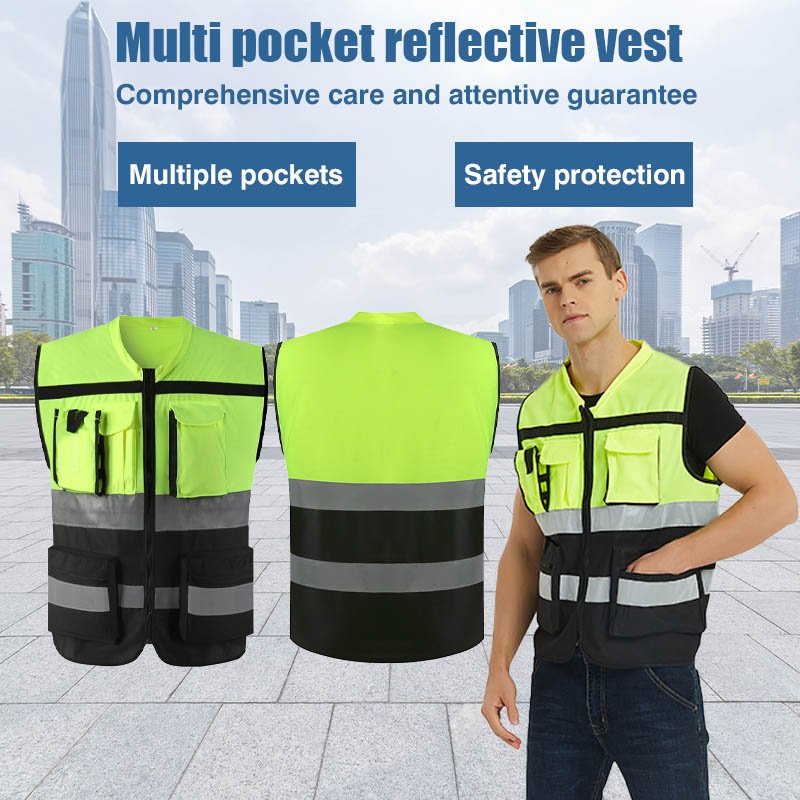
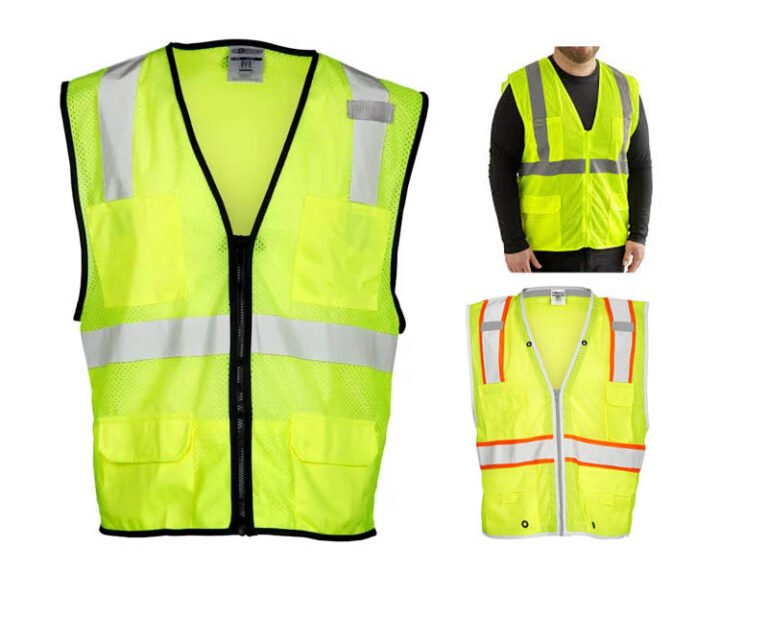
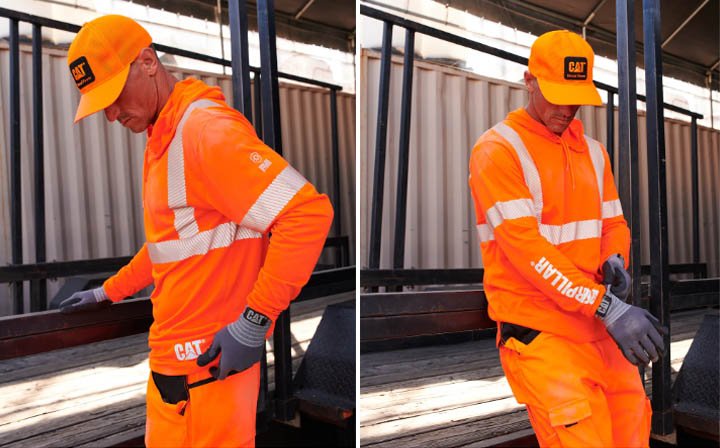
Functional hi-vis vests equipped with specialized multi-pocket arrays optimize on-site workflow and crew compliance.
Table of Contents
1. Compliance is the Starting Point, Not the Finish Line
For global procurement leaders, commercial project directors, and private label PPE brand distributors, meeting international standards such as ANSI/ISEA 107 in North America, EN ISO 20471 across Europe, or AS/NZS 4602.1 in Australasia is merely the entry ticket.
Standard compliance certifies that background fluorescent fabrics and retroreflective materials meet strict minimum surface area and photometric performance requirements. However, laboratory certification does not guarantee operational longevity, worker satisfaction, or total procurement efficiency. A vest that checks the legal box but tears within 3 weeks or causes heat exhaustion on an asphalt paving project ends up costing enterprise buyers exponentially more in replacement cycles and safety downtime.
“Viewing PPE through a pure unit-price compliance lens is the most expensive mistake a procurement team can make. The right vest optimizes lifecycle value, operational efficiency, and worker protection simultaneously.”
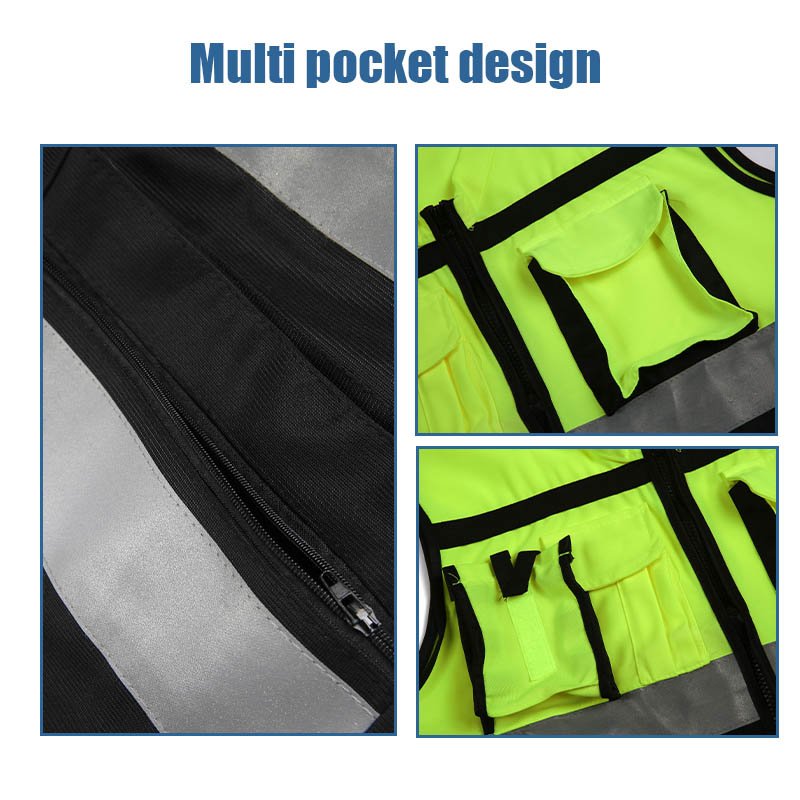
Precision bar-tacking, heavy-duty resin zippers, and tailored storage pockets distinguish professional-grade workwear.
2. Beyond Compliance: The Functionality & Durability Equation (TCO)
When calculating the Total Cost of Ownership (TCO) of workwear vests across hundreds or thousands of workers, fabric specifications and structural hardware make the difference between annual savings and continuous waste.
Fabric Construction & Weight
Low-bid contractors often buy standard 100–120 GSM polyester knitted vests. While cost-effective upfront, these garments pill rapidly, lose color fastness under UV radiation, and suffer tear failures around load-bearing seams within 15 to 25 industrial wash cycles. Upgrading to high-density 130–160 GSM warp-knitted solid polyester or high-tear-strength ripstop fabric delivers up to 50+ wash cycles without chromaticity drop. Sourcing certified materials such as OEKO-TEX® STANDARD 100 certified fabrics guarantees toxicological safety alongside long-term mechanical resilience.
Role-Specific Functional Architecture
One standard vest style rarely meets all field operations. Professional OEM/ODM customization tailors functionality directly to workplace roles:
- Surveyors & Site Engineers: Need reinforced dual-layer tablet/iPad pockets, integrated brass grommets for flagging tape, and padded neck collars to carry equipment weight.
- Railway Crews & Track Workers: Require dual heavy-duty mic loops, D-ring fall-arrest access pass-through slots, and anti-static or FR-treated composite fabrics. Check our dedicated solutions for Hi Vis Clothing For Railway.
- Warehouse & Material Handlers: Benefit from 5-point break-away velcro systems (shoulders, sides, front) to instantly detach if snagged in conveyor systems or heavy equipment.
3. Comfort = Compliance: Eliminating Safety Liabilities
A common challenge for EHS (Environmental Health and Safety) managers is getting frontline workers to wear high-visibility PPE consistently throughout their shifts. In high-temperature or humid environments, an unbreathable synthetic vest creates thermal discomfort. When workers unzip or take off their vests, site liability spikes dramatically.
Climate-Specific Engineering
For hot summer climates (e.g., Texas, Middle East, Western Australia), utilize ultra-breathable open-weave polyester mesh or segmented hybrid construction (solid bottom for abrasion resistance, mesh top for ventilation). In colder climates, combine vests with layered workwear or fleece-lined utility outer shells.
Ergonomic Fit & Sizing Architecture
Avoid boxy, one-size-fits-all purchasing models. Modern safety procurement demands gender-inclusive tailoring, adjustable zippered expansion side gussets to fit over both summer tees and heavy winter jackets, and balanced weight distribution for pocket loads.
By involving factory-direct engineering in tailoring vest breathability and ergonomic cut, enterprises achieve near 100% voluntary wearer compliance without continual supervisory enforcement.
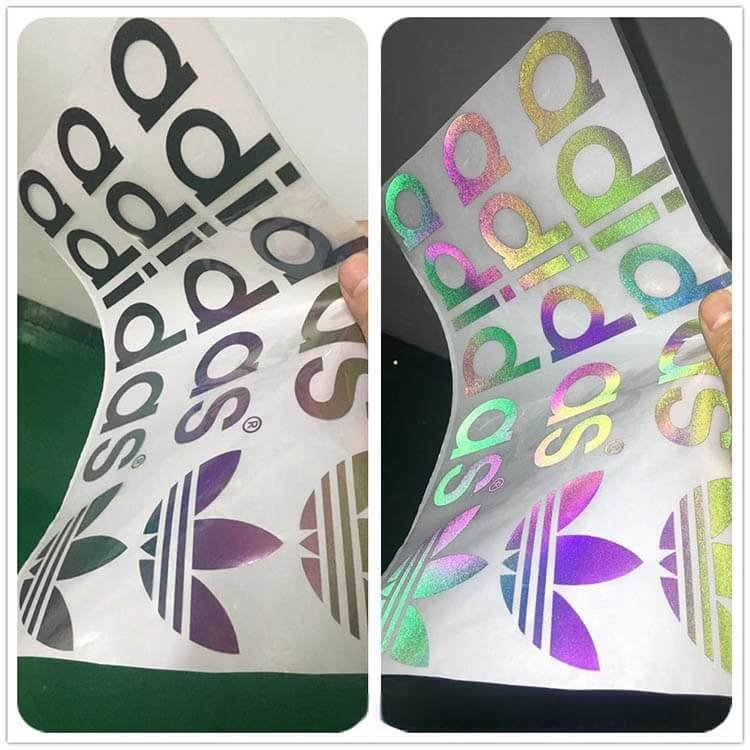
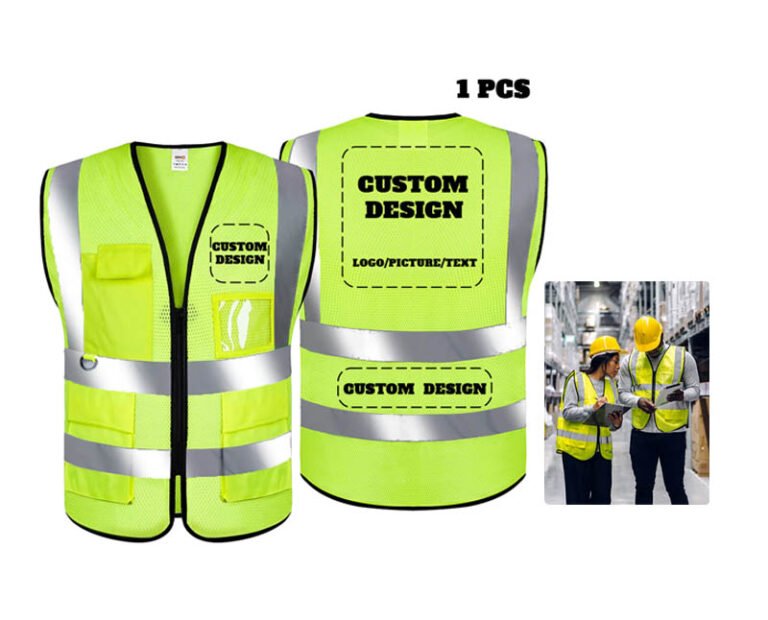
Precision engineered reflective heat-transfer logos turn essential safety gear into durable corporate branding assets.
4. The Vest as Your Brand Ambassador
For top contractors, logistics powerhouses, and private label safety retailers, every worker wearing a hi-vis vest acts as a mobile ambassador for the enterprise. Low-quality silk screen prints that crack, peel, or fade after minimal washings signal negligence and diminish brand credibility on public sites.
At VizGlo Safety, we integrate specialized garment manufacturing with our proprietary reflective material production lines to deliver advanced branding integration:
- Custom Cut Reflective Films: Seamlessly integrate corporate logos directly using high-performance micro-bead reflective heat transfer film, preserving 360-degree night retroreflectivity while showcasing sharp brand emblems.
- Segmented & Patterned Reflective Tapes: Replace stiff solid glass-bead tapes with breathable, elastic segmented tapes or custom corporate patterned reflective trims for unmatched modern aesthetic and movement flexibility.
- High-Density Multi-Color Embroidery: Applied to reinforced chest patches to provide a premium, executive appearance for supervisory and site-director uniforms.
Explore our comprehensive range of safety apparel in our High Visibility Vests Catalog to discover ready-to-scale OEM/ODM frameworks.
5. Enterprise Hi Vis Vest Selection Matrix
| Operating Scenario | Recommended Fabric | Reflective Spec | Key Hardware Features |
|---|---|---|---|
| Road Construction & Highway | 130+ GSM Solid Tricot Polyester | 5cm Silver Glass Bead Tape (Class 2/3) | Heavy-duty resin zipper, dual mic loops, radio pocket |
| Logistics & Warehousing | 120 GSM Lightweight Mesh / Solid Mix | Segmented Flexible Reflective Tape | 5-Point Break-away hook & loop closure, clear ID holder |
| Civil Survey & Site Managers | 150+ GSM Heavy-Duty Oxford / Twill | High-Brightness 2-Tone Contrast Tape | Reinforced tablet pocket, grommets, padded neckline |
| High-Heat / Extreme Summer | Full 110 GSM Ultra-Vent Mesh | Perforated Breathable Reflective Tape | Side expandable zippers, lightweight minimal binding |
Elevate Your Enterprise Infrastructure & PPE Standards
Partner with certified industrial manufacturers who understand both life-critical safety apparel and heavy infrastructure protection. Learn how our engineering approach drives total system reliability across high-voltage and utility setups by visiting our SF6 Circuit Breakers Product Center.