How to Evaluate the Quality of Hi Vis Clothing Before Bulk Purchase
Moving beyond the “golden sample” illusion: A technical, risk-management blueprint for safety managers, distributors, and procurement professionals to audit PPE build quality, lab validations, and factory integrity.
Executive Summary: Quality Evaluation Protocol
To properly evaluate the quality of hi vis clothing before a bulk purchase, procurement teams must execute a four-pillar validation framework: 1) Interrogate compliance documentation by requesting recent, batch-specific retro-reflectivity and chromaticity lab reports rather than relying on static certificates; 2) Conduct rigorous multi-cycle wash testing (5 to 25 cycles) to inspect for fluorescent fading, micro-glass bead loss, and tape delamination; 3) Scrutinize structural trims such as thread tensile strength, reinforced bar-tacks, and branded zippers (e.g., YKK); and 4) Validate the supplier’s vertical supply chain to confirm direct manufacturing control over both reflective materials and finished garments to ensure uncompromised consistency across production runs.
1. The Procurement Mindset: Shifting from Product to Process Auditing
A common and costly failure in B2B safety apparel procurement is evaluating garments like a retail consumer. When buyers base massive capital allocations purely on unit pricing and a hand-delivered “golden sample,” they expose their operations to extreme supply chain risk. Golden samples can easily be curated, hand-stitched, or assembled with premium third-party fabrics that never make it into final container shipments.
Professional procurement managers evaluate the underlying manufacturing and quality management systems. A reliable production output is simply the output of an institutionalized process. When planning your team’s gear through a dedicated hi vis clothing program, your goal is verifying whether the factory enforces process consistency through raw material inspection, automated cutting, and continuous quality audits.

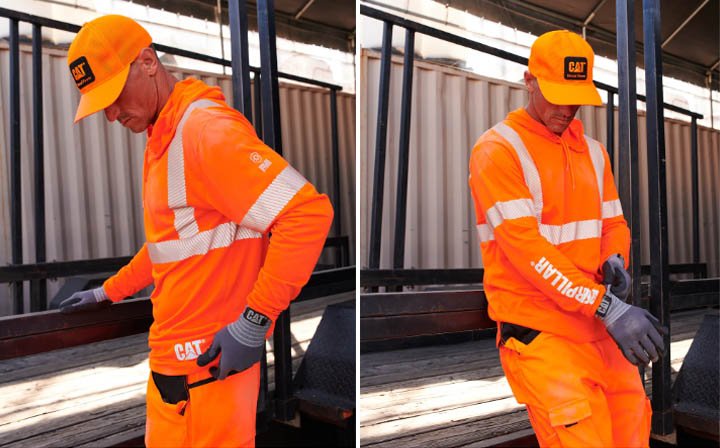
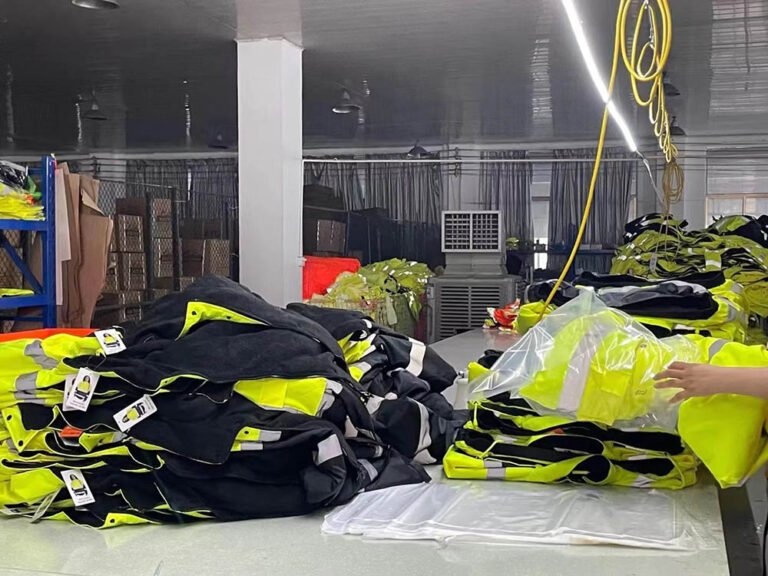
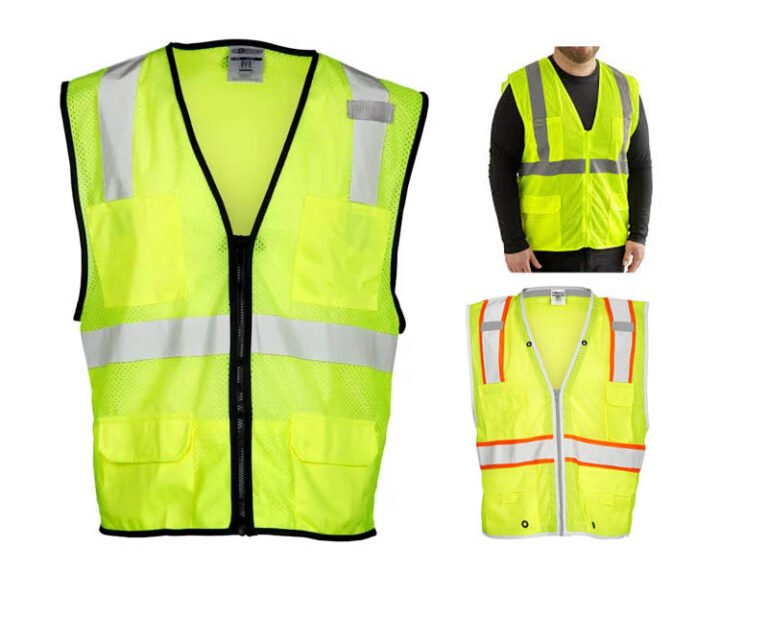
Figure 1: Comprehensive in-line quality controls are critical to ensuring mass production matches sample specifications.
2. Stop “Checking” Certificates: Start Interrogating Them
Receiving a digital PDF showing compliance with safety protocols is merely table stakes. Regulatory frameworks like OSHA workplace PPE guidelines and the ANSI/ISEA 107 standard overview provide the baseline metrics, but certificates can quickly become outdated, forged, or derived from specialized test batches.
Instead of simply filing a certificate, ask pointed technical questions:
- In-House Verification: Does the vendor operate internal testing machinery to measure retro-reflectivity (RA values) across ongoing production batches?
- Batch-Specific Traceability: Can the supplier provide an internal test report corresponding to the specific lot of dye and fabric used in your order?
- Chromaticity & Luminance Checks: How does the factory verify that fluorescent yellow or orange fabrics stay within the required chromaticity coordinates under continuous UV exposure?
At VizGlo Safety, our operating philosophy is guided by certified ISO 9001 Quality Management systems, ensuring that our in-house laboratories audit incoming materials and finished garments at every operational gate.
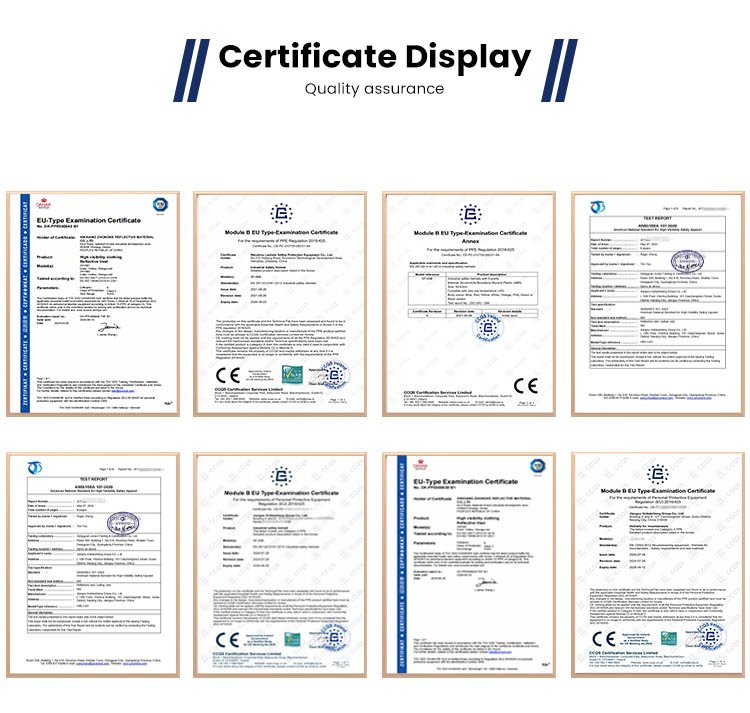
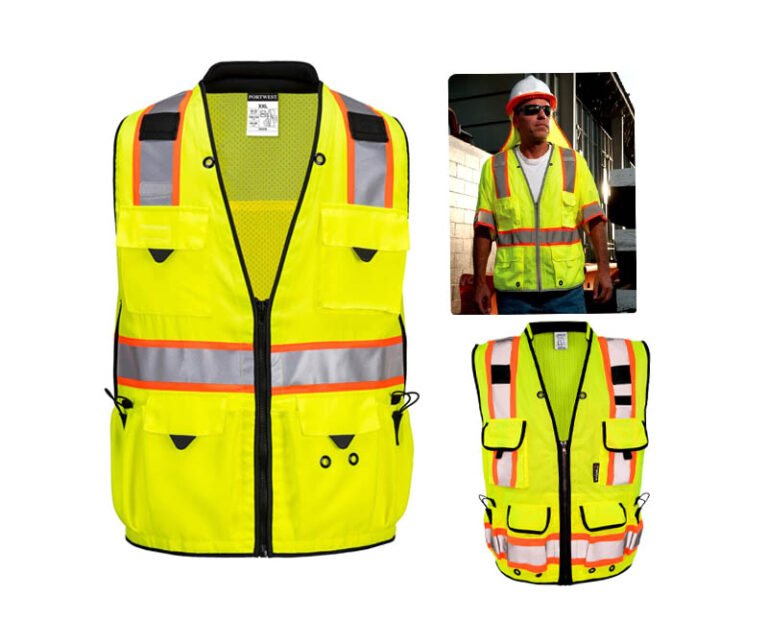
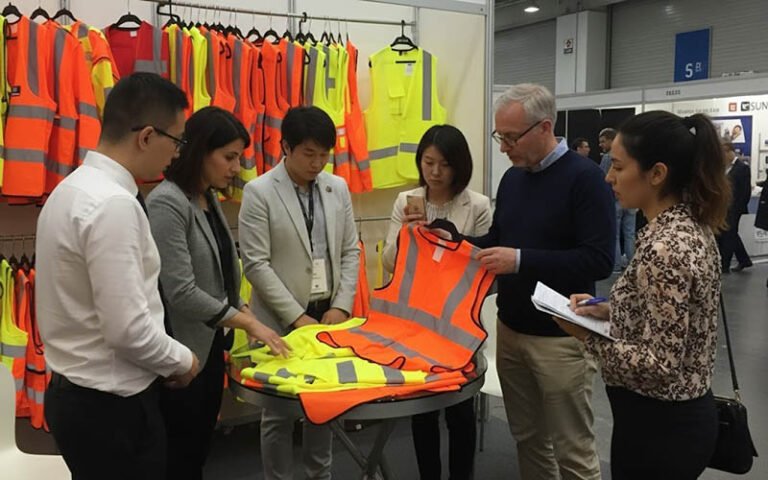
Figure 2: Complete certification dossiers backed by batch-level internal test reports prevent costly compliance failures.
3. The “Wash Test” is Your Single Best Predictor of ROI
A poorly constructed safety vest or jacket looks flawless right out of the plastic bag. However, real-world utility requires enduring tough job site conditions and frequent laundry cycles. Premature degradation causes garment non-compliance, forcing early replacements that destroy your procurement budget.
Before signing off on bulk procurement, subject pre-production samples to your own aggressive wash tests:
1. Tape Delamination
Check for edge peeling or micro-cracking across segmented or solid heat-applied reflective films.
2. Colorfastness
Ensure fluorescent backgrounds do not bleed, fade, or lose their luminance factor after 5 to 25 wash cycles.
3. Dimensional Stability
Verify that the garment retains its shape, seam alignment, and pocket placement without excessive torquing or shrinkage.
Testing these variables upfront strips away superficial marketing promises and reveals the true life-cycle cost of your fleet gear.
4. Evaluate the “Unseen” Components
Unskilled inspectors look solely at fabric weight (GSM) and surface stitches. Seasoned PPE managers dissect the underlying structural components that directly dictate durability:
Sewing Threads and Tension
Low-cost suppliers use inexpensive cotton or unstable core-spun threads that rot or snap under heavy tension. Insist on high-tenacity, 100% polyester filament threads with double-needle flat-felled seam construction.
Hardware and Closures
Examine zipper teeth, slider boxes, and snap buttons. A broken zipper renders an entire outer jacket useless. In heavy-duty hi vis workwear, opt for reinforced SBS or YKK industrial zippers with reinforced bar-tacks at stress points.
Reinforcement Edging and Piping
Check edge bindings and pockets. Industrial work requires high-abrasion resistance, often achieved through specialized trims like reflective piping and cross-stitched hook-and-loop closures.
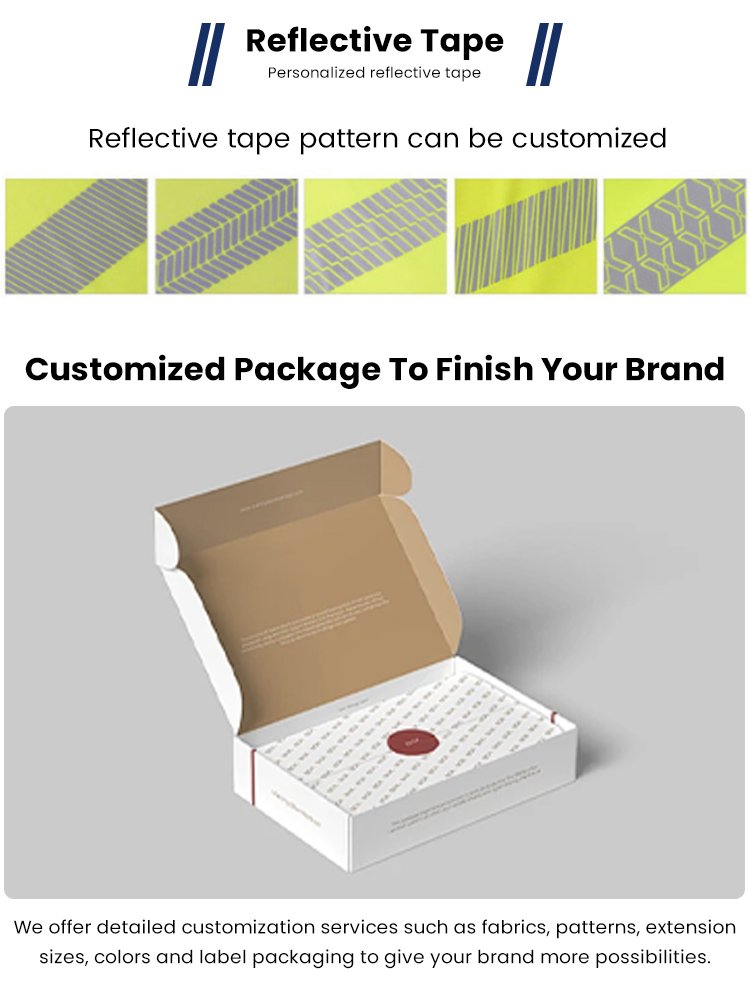
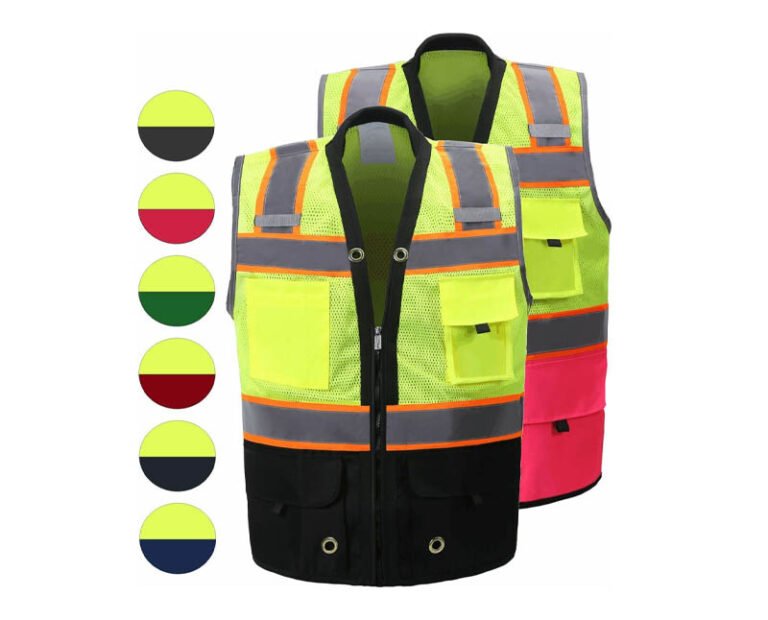
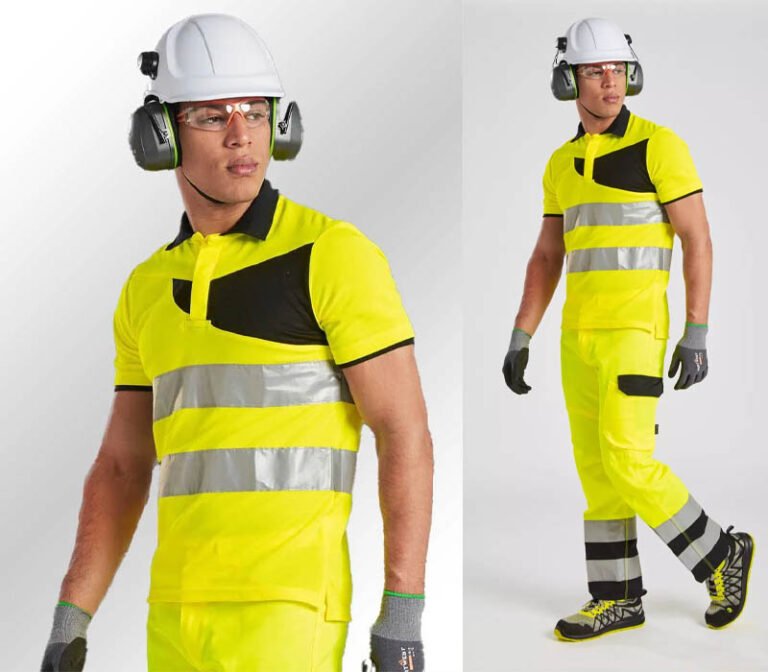
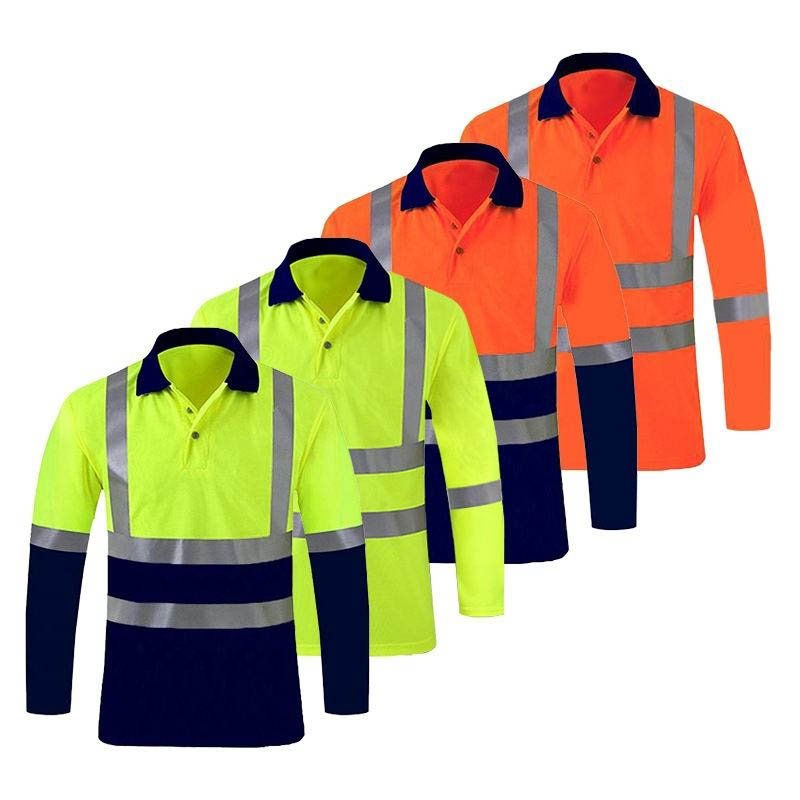
Figure 3: Detailed trim inspection, seam reinforcing, and precise tape stitching are indicators of superior craftsmanship.
5. The Vertical Integration Advantage in Reflective Materials
The most vital safety element on any high-visibility garment is its retro-reflective component. Garment assembly factories that purchase open-market, unbranded tapes from various third-party brokers face severe quality volatility: one batch performs well, while the next suffers from micro-glass bead separation or thermal adhesive failure.
A vertically integrated partner that directly manufactures both the specialized reflective tapes and the cut-and-sew garment lines provides three major buyer safeguards:
- ✓ Raw Material Traceability: Uniform adhesive chemistry and precise micro-glass bead density across every linear meter.
- ✓ Direct Technical Support: Customized solutions (e.g., flame-retardant backing, stretchable segmental tape) tailored directly at the manufacturing level.
- ✓ Cost Optimization: Removal of tiered middleman surcharges across core safety materials.
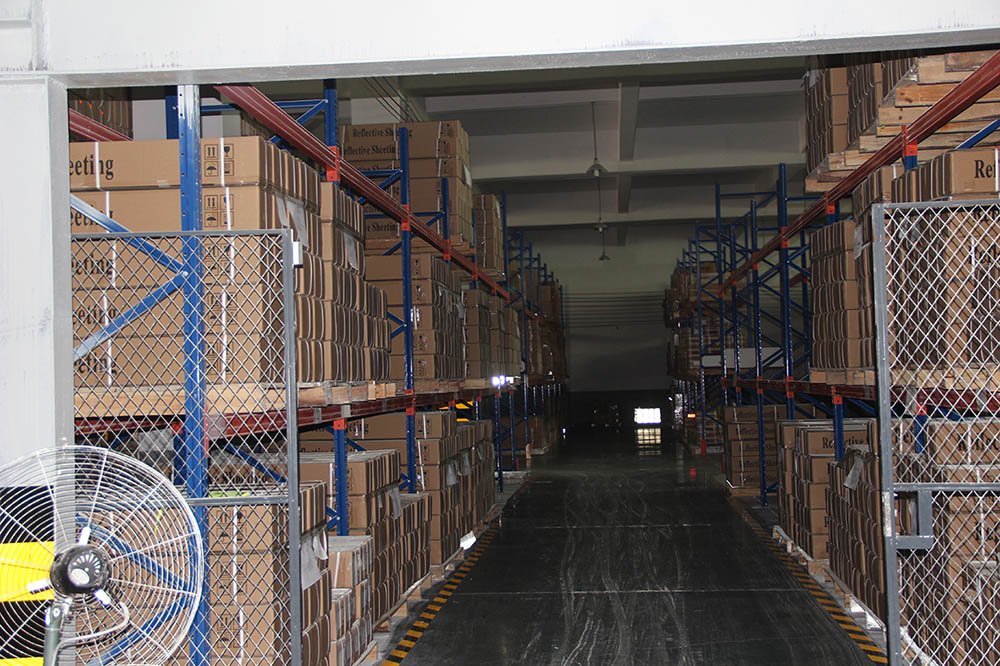
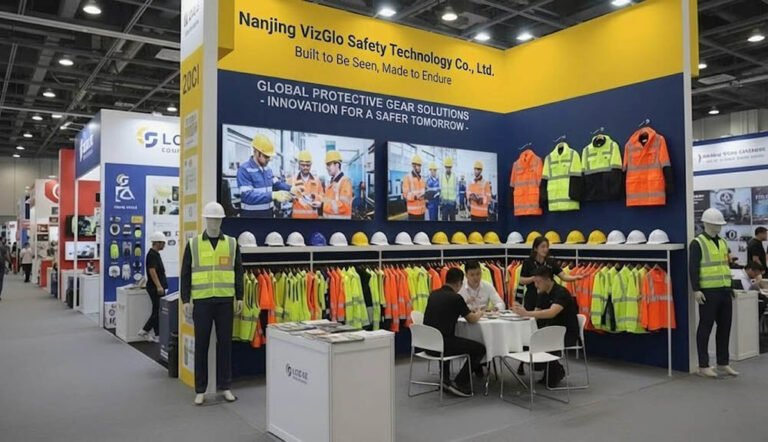
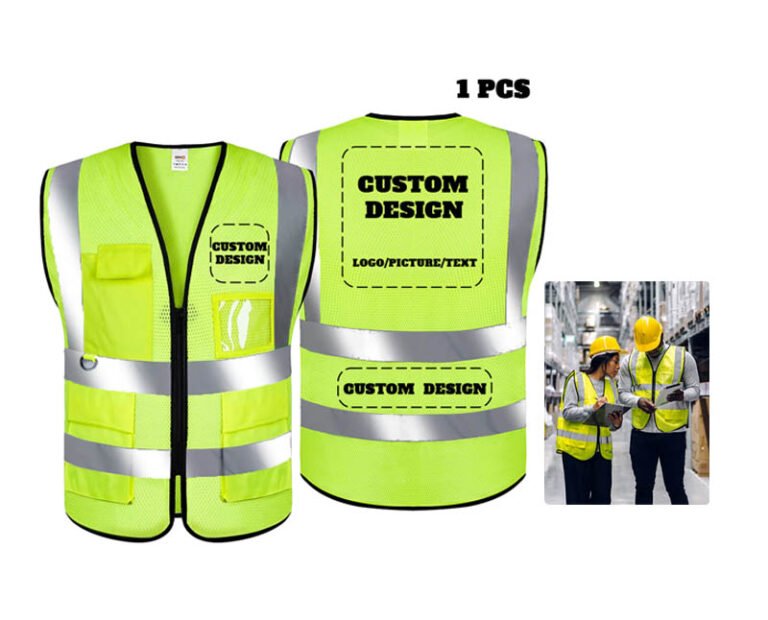
Figure 4: Direct control over the reflective tape production floor ensures uniform photometric performance.
Pre-Order Vendor Audit: 5 Tough Questions to Ask
- “Can you share the retro-reflectivity and chromaticity lab reports from your last three continuous production runs?”
- “Do you manufacture your own reflective materials in-house or source from open markets?”
- “What brand and spec of sewing threads, zippers, and thermal adhesives are documented in this bill of materials (BOM)?”
- “What specific wash cycles (e.g., 25 cycles at 60°C) is this garment batch certified to maintain RA > 330 cd/(lx·m²)?”
- “Can you furnish a factory audit showing adherence to ISO 9001 and social compliance frameworks?”
Frequently Asked Questions
What is the minimum retro-reflectivity level required for compliant garments?
Under both ANSI/ISEA 107 and EN ISO 20471 Level 2 reflective standards, compliant primary retro-reflective material must achieve a minimum coefficient of retro-reflection (RA) of 330 cd/(lx·m²) in new condition, and maintain safety performance after rated wash tests.
How do you detect cheap reflective tapes before buying bulk?
Conduct a surface abrasion and scratch test with a fingernail or blunt tool. Low-grade tapes immediately lose their glass-bead coating. Next, inspect tape backing flexibility; brittle backing indicates rapid future delamination during routine wear.
Can a factory customize branding without voiding safety certification?
Yes. Custom branding can be applied using screen printing, embroidery, or specialized heat transfers, provided that the total square area of background fluorescent fabric and reflective striping remains within the mandatory threshold requirements for the garment’s designated safety class.
Partner with a Quality-Obsessed OEM/ODM Manufacturer
Eliminate quality risks on your next bulk procurement. VizGlo Safety provides direct vertical manufacturing, in-house lab validation, and fully compliant custom workwear programs tailored for global brands and PPE distributors.