Understanding Retroreflectivity: The Science Behind How Reflective Films Work
Quick Answer: Retroreflectivity is the optical property that allows reflective films to bounce light directly back to its source—such as a driver’s eyes—using thousands of microscopic optical elements called microprisms or glass spheres. These tiny structures, embedded within the film’s surface, bend incoming light rays through precise angles of refraction, focus them, and return them along nearly the same path they originated from. Unlike ordinary mirrors that scatter light in multiple directions, retroreflective materials achieve their distinctive bright “glow” effect by concentrating light return, enabling visibility from distances exceeding 400 meters. This principle, governed by optical physics and formalized in international safety standards like ANSI/ISEA 107 and EN ISO 20471, is fundamental to every high-visibility garment and safety material that protects workers and drivers in low-light conditions. When procurement managers understand this science, they recognize that purchasing reflective films isn’t simply about cost per meter—it’s an investment in a life-saving technology that must meet rigorous performance benchmarks.
What is Retroreflectivity?
Retroreflectivity refers to the ability of a material to reflect light back toward the source from which it came. The term derives from the Latin “retro,” meaning “backward,” and the English word “reflect.” In the context of safety materials, retroreflectivity describes a highly specialized optical phenomenon where light rays are returned to their point of origin with remarkable efficiency—up to 80% or more of incident light in premium materials.
Imagine a driver traveling at night. Headlight beams strike a person wearing a high-visibility vest equipped with retroreflective films. Rather than dispersing the light randomly, the material captures those photons and redirects them back toward the driver’s eyes—enabling detection from distances of 400 meters or more. This is fundamentally different from conventional reflective surfaces like white paint, which scatter light in all directions and provide visibility only at short distances.
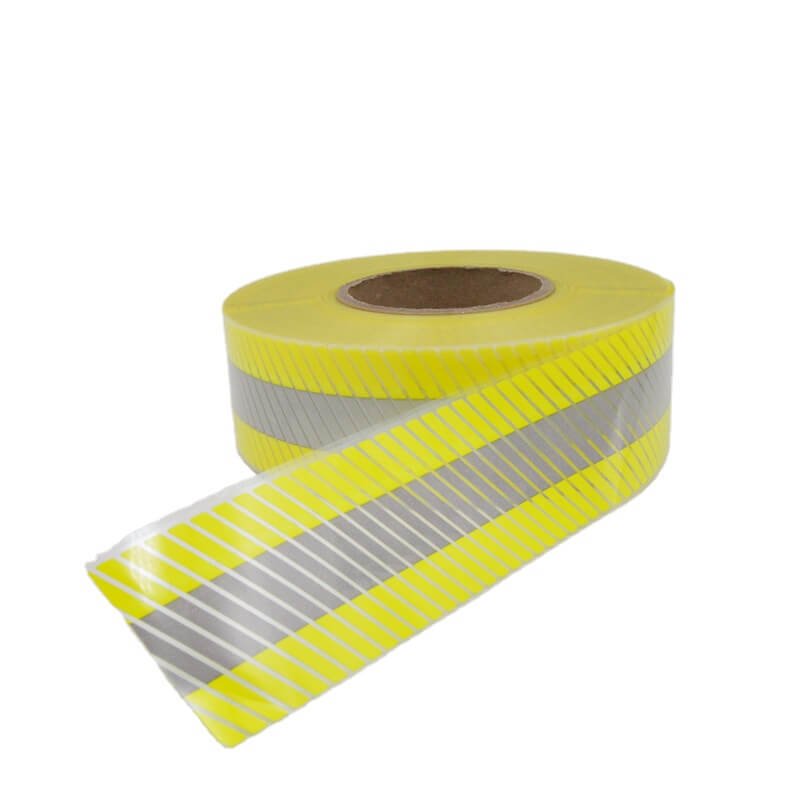
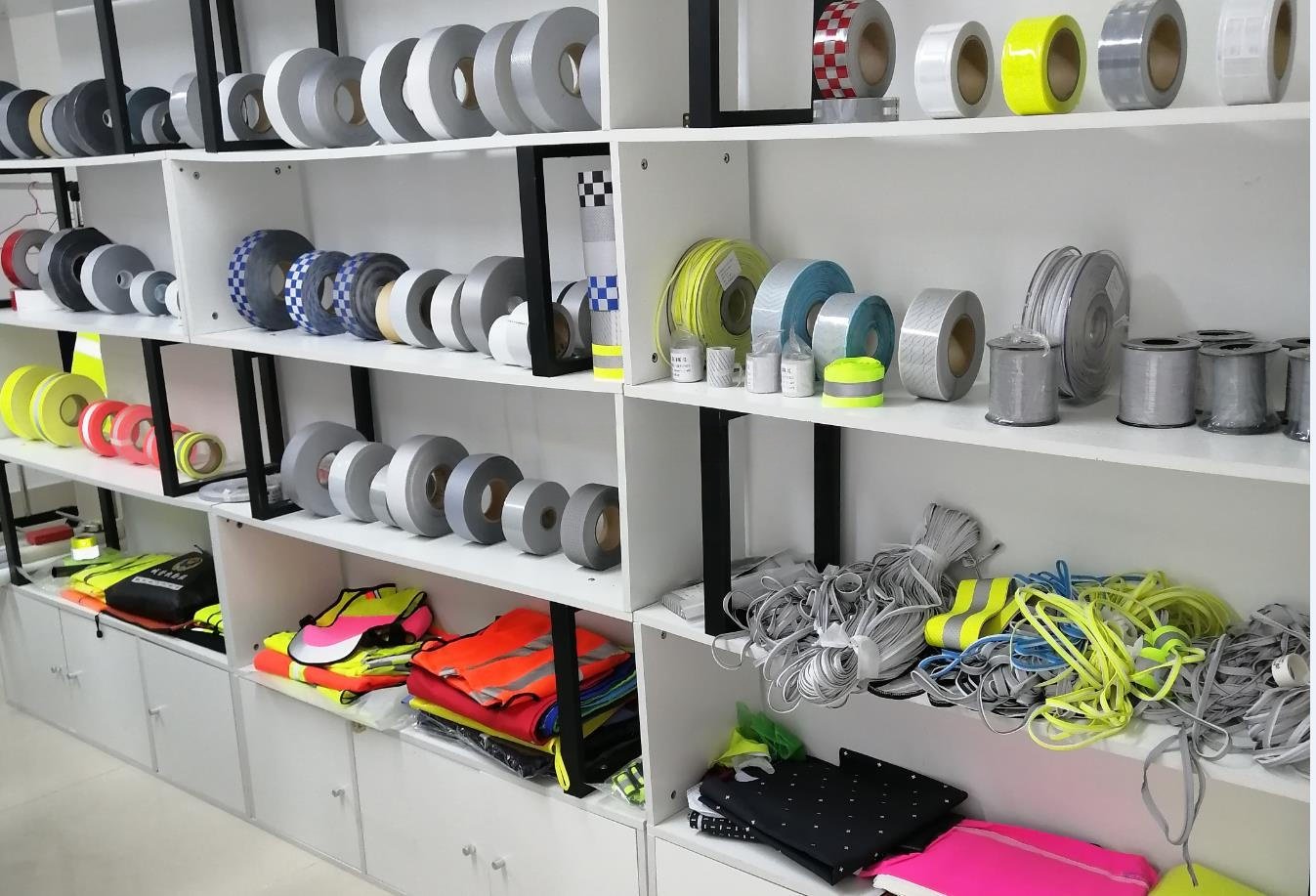
Cross-section of advanced reflective film showing embedded microstructures
The Optical Principles Behind Reflective Films
The science of retroreflectivity rests on fundamental principles of optics—specifically, refraction, reflection, and the behavior of light as it passes through different media. To understand how reflective films achieve their remarkable performance, we must first grasp these underlying concepts.
Snell’s Law and Refraction
When light travels from one transparent medium to another—such as from air into glass—its path bends according to Snell’s Law. The degree of bending depends on the refractive indices of both media. A reflective film exploits this principle by using materials with precisely calibrated refractive indices (typically between 1.9 and 2.5 for advanced films). This controlled bending allows the film to capture incoming light and redirect it back toward the source.
Total Internal Reflection
The real magic happens through a phenomenon called total internal reflection. When light traveling through a denser medium (like glass) strikes the boundary with a less dense medium (like air) at a sufficiently steep angle, it reflects entirely back into the denser medium rather than escaping. Reflective film designs strategically position microscopic optical elements to trigger this effect, ensuring that light bounces backward with minimal loss.
The Focusing Layer
Behind the optical elements, reflective films typically include a reflective backing layer—often aluminum or another highly reflective material. This layer acts as a mirror, catching any light that the microstructures haven’t already redirected. The combination of the microoptical structures and the reflective backing creates a dual-mechanism system that maximizes light return.
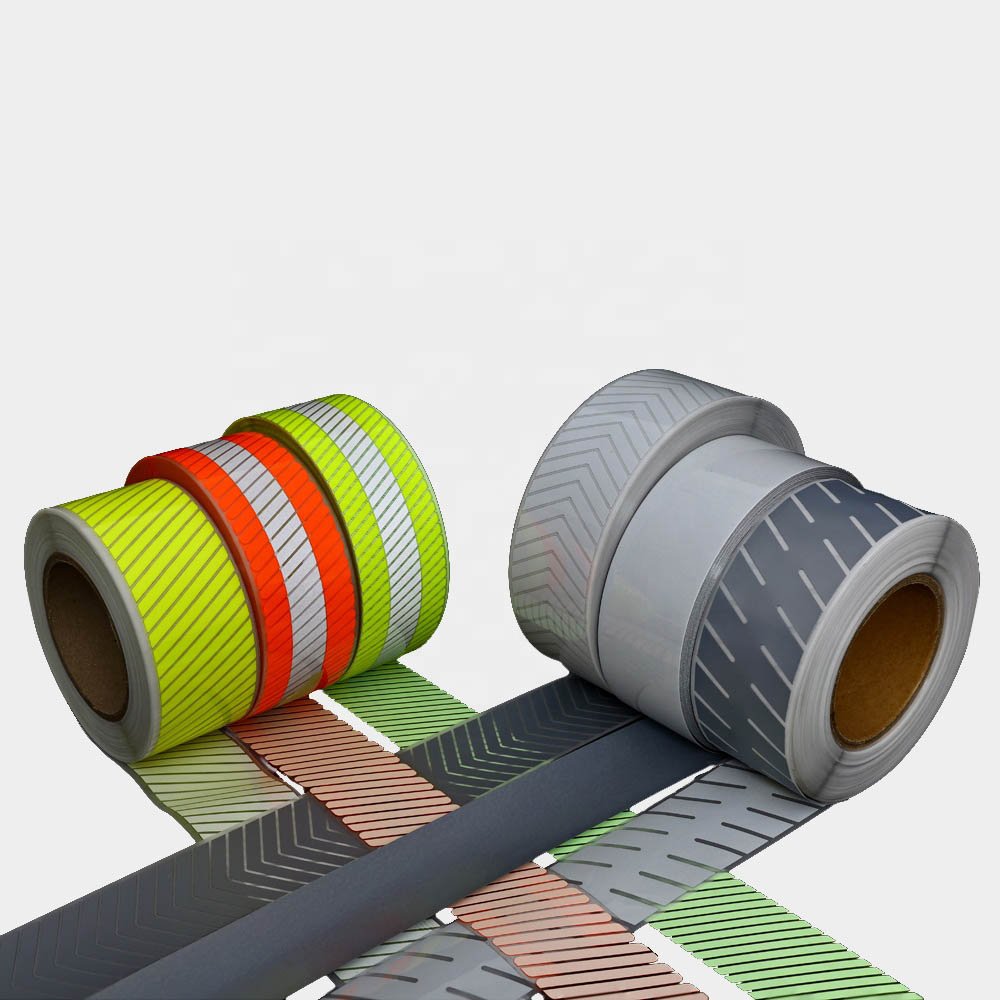
Segmented reflective material demonstrating uniform microprism spacing
Microprisms vs. Glass Beads: Understanding the Difference
There are two primary technologies for creating retroreflective materials: microprisms and glass beads. Each offers distinct advantages, and understanding the differences is crucial for selecting the right material for your application.
Microprism Technology
Microprisms are precisely engineered pyramid or prism-shaped structures embossed directly into the film’s surface. Each prism acts as a tiny lens, bending and focusing light with optical accuracy. Modern microprism films feature prisms as small as 0.1 millimeters, arranged in precise geometric patterns.
- ✓ Higher retroreflectivity (up to 600+ cd/m²/lx)
- ✓ More uniform light return across viewing angles
- ✓ Better durability and weather resistance
- ✓ Suitable for high-visibility apparel and permanent installations
- ✗ Higher manufacturing cost
Glass Bead Technology
Glass beads are tiny glass spheres—typically ranging from 0.15 to 0.3 millimeters in diameter—embedded in or bonded to the material surface. Light enters the transparent glass sphere, refracts toward the sphere’s center, reflects off the backing, and exits back toward the source.
- ✓ Lower cost than microprism alternatives
- ✓ Good retroreflectivity for many end uses (200-400 cd/m²/lx)
- ✓ Flexible manufacturing possibilities
- ✗ Performance degrades with moisture and dirt
- ✗ Narrower viewing angle
- ✗ Less resistant to mechanical wear
For professional high-visibility clothing and critical safety applications, microprism technology has become the industry standard. Premium reflective films utilize advanced microprism designs that maintain performance through thousands of wash cycles and years of outdoor exposure.
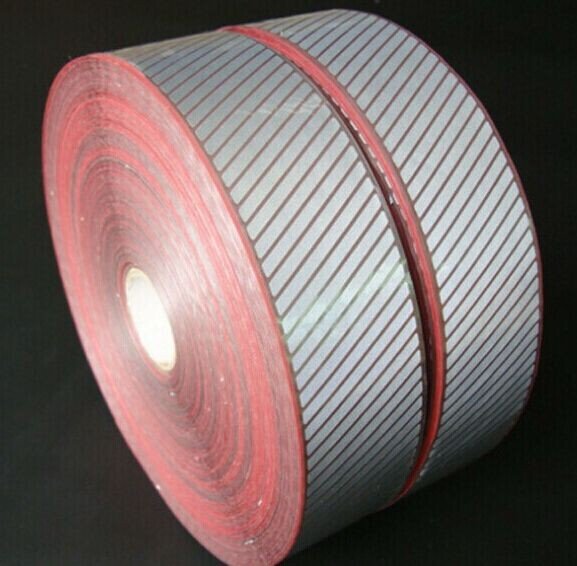
Advanced elastic reflective film technology for stretch garment applications
How Reflective Films Work in Practice
Let’s walk through the exact sequence of events when a reflective film returns light to its source. Understanding this process is essential for appreciating why reflective film quality matters.
-
1
Light Incidence
Headlight beams from a vehicle strike the reflective film at an angle. The angle of incidence—typically between 30° and 60° for vehicle-to-pedestrian scenarios—is critical to how effectively the material will return light.
-
2
Refraction at the Surface
Light entering the transparent microprism layer bends according to the refractive index of the material. The prism’s geometry focuses the light rays toward the center of the structure.
-
3
Reflection from the Backing
The focused light reaches the reflective backing layer (typically aluminum). This backing reflects nearly 100% of incident light back into the microprism structure.
-
4
Exit Refraction
The reflected light travels back through the microprism and exits the surface. The prism geometry ensures that light rays are refracted to travel back along nearly the same path they came from.
-
5
Return to Source
The light reaches the driver’s eyes, appearing as a bright glow. A high-performance microprism film may return 80% or more of the incident light, making the wearer visible from exceptional distances.
This entire process occurs at the speed of light—nanoseconds. Yet the precision of each stage determines whether a worker is visible at 200 meters, 400 meters, or beyond. This is why material composition, prism geometry, and backing layer quality are not minor specifications—they are life-or-death considerations.

Advanced custom reflective pattern technology for branded applications
Performance Metrics and Safety Standards
The effectiveness of reflective films is measured using standardized metrics and governed by international safety standards. These specifications ensure that products deliver consistent, measurable performance.
Coefficient of Retroreflection (RA)
The coefficient of retroreflection, measured in cd/m²/lx (candelas per square meter per lux), quantifies the brightness of the reflected image. A typical Class 1 reflective material returns 50-100 cd/m²/lx, while premium Class 3 materials exceed 500 cd/m²/lx. Higher coefficients mean visibility from greater distances. For a worker wearing a vest with RA ≥ 500 cd/m²/lx, a driver traveling at highway speeds can detect the person from 400+ meters away—providing critical reaction time.
Key Safety Standards
Several international standards govern reflective material performance:
-
•
ANSI/ISEA 107 (North America)
Specifies retroreflectance, fluorescence, background color, and striping patterns for high-visibility safety apparel. Includes performance after 50 wash cycles.
-
•
EN ISO 20471 (Europe)
European standard for high-visibility clothing. More stringent than ANSI in some respects, requiring materials to maintain performance after at least 25 washing cycles.
-
•
AS/NZS 1906.4 & 4602.1 (Australia/New Zealand)
Performance standards for reflective materials in the ANZ region, with similar, sometimes overlapping requirements with European standards.
-
•
ISO 30127 (International)
Specifies test methods for retroreflective materials, including durability testing, aging, and light fade resistance.
Compliance with these standards is not optional for organizations committed to worker safety. A reflective film that meets EN ISO 20471, for example, has been independently tested for light return, color fastness, and wash durability. This assurance is invaluable when selecting materials for your industrial reflective tape or safety apparel.
Industrial Applications and Real-World Impact
Understanding retroreflectivity transitions from academic knowledge to practical impact when we examine real-world applications. The industries relying on reflective technology include:
🛣️ Road & Highway Work
Workers must remain visible to fast-moving traffic. A Class 3 reflective vest ensures visibility from 400+ meters, providing drivers with over 10 seconds of reaction time at highway speeds.
🏗️ Construction Sites
Nighttime construction demands exceptional visibility. Retroreflective materials on hard hats, vests, and equipment keep workers safe in complex, equipment-heavy environments.
🚛 Logistics & Warehousing
Forklifts and vehicles operate continuously in distribution centers. Reflective apparel minimizes accidents during shift changes and low-light hours.
🚂 Railway Operations
Rail workers face hazards from oncoming trains traveling at extreme speeds. High-performance retroreflective materials on maintenance worker uniforms are essential for survival.
⛏️ Mining & Extractive Industries
Underground and surface mining environments with heavy machinery demand visible workers. Reflective gear is often combined with other safety technologies like FR (flame-resistant) properties.
🚁 Emergency Response
First responders wearing retroreflective gear remain visible to both ground and aerial traffic, enabling rapid scene management and saving lives.
In each scenario, the science of retroreflectivity translates directly to occupational safety outcomes. When procurement teams understand that they’re not simply purchasing “reflective material”—they’re acquiring a precisely engineered optical system—they make decisions that save lives.
Frequently Asked Questions About Retroreflectivity
Why does retroreflective material look different colors (silver vs. white vs. amber)?
The color you see in a reflective film reflects both the material composition and the pigments used. A silver microprism film typically contains aluminum backing, which reflects all wavelengths of light equally. Amber (yellow-orange) films use pigments that absorb blue and green wavelengths while reflecting red and yellow, making them particularly visible at night when most vehicle headlights emit a yellow-white spectrum. White films use titanium dioxide or similar compounds. The “white” you see in a white reflective material is actually a combination of visible wavelengths that haven’t been absorbed by pigments. All these colors can achieve high retroreflectivity; the choice depends on intended use and aesthetic preferences.
How does washing affect retroreflectivity?
Washing is the primary degradation factor for reflective materials. Mechanical abrasion from laundering can damage the microprism or bead surface, and detergent residue can cloud the transparent top layer. International standards like EN ISO 20471 require materials to maintain specific performance levels after 25 wash cycles; ANSI/ISEA 107 requires this after 50 cycles. Premium microprism films lose approximately 5-15% of their retroreflectivity after each wash cycle, then stabilize at a baseline performance level. Glass bead materials may lose 20-30% per cycle. To maximize durability, always follow manufacturer washing instructions: use mild detergents, avoid bleach, wash in cool water, and air-dry rather than machine-drying.
Can reflective films work in daylight, or only at night?
Retroreflective films function at any time of day, but their advantage is most pronounced at night. During daylight, the high-visibility color itself (fluorescent yellow, orange, etc.) provides visibility through contrast with the background and the saturation of light being reflected generally. At night, when ambient light is minimal, the retroreflectivity mechanism becomes paramount—the retroreflective material efficiently bounces the vehicle’s headlights back to the driver’s eyes. This is why regulations typically specify that all workers in high-risk environments (road crews, railway workers, etc.) must wear Class 2 or Class 3 retroreflective materials, which provide detection distances of 200+ meters regardless of lighting conditions.
What’s the difference between retroreflective film and thermal transfer?
Retroreflective film refers to the material itself—the optical structure that returns light. Thermal (heat) transfer is a manufacturing method for applying that retroreflective material to garments. A heat-transfer reflective film is pressed onto fabric using heat and pressure (typically 130–150°C), which bonds the film permanently to the garment. This method allows for precise pattern placement, detailed logos, and complex designs. Sewn-on reflective tape is an alternative application method where the material is stitched to the garment. Both sewn and heat-transferred retroreflective materials can be composed of microprisms, glass beads, or hybrid technologies. The science of retroreflectivity is identical; the difference is how the material gets onto the clothing.
Why is there such a price difference between reflective materials?
Price differences reflect genuine differences in optical performance, durability, and manufacturing complexity. A Class 1 reflective material (50–100 cd/m²/lx) costs significantly less than a Class 3 material (≥500 cd/m²/lx) because the microprism geometry, refractive index optimization, and backing layer quality are more sophisticated in the higher-performing material. Additionally, premium materials are engineered to maintain performance through many wash cycles using durable polymeric substrates and advanced adhesion layers. In industrial applications where worker safety is at stake, the cost-per-meter is less relevant than the cost-per-lifecycle. A Class 3 material costing 3× more than Class 1 may actually cost less per useful lifetime if the garment remains compliant for twice as many years of use.
Can retroreflective materials be combined with other safety technologies?
Yes—and this is increasingly common in industrial applications. Reflective materials are frequently combined with flame-resistant (FR) properties for workers in oil & gas, mining, or electrical utility sectors. Reflective materials can also be combined with water-resistant, anti-static, or UV-protective properties. The substrate and backing layers are engineered to accommodate these additional functions without compromising retroreflectivity. For example, a flame-resistant reflective fabric maintains its microprism geometry while using fire-resistant fibers in the textile base. Integration of multiple safety properties maximizes value and compliance in high-hazard environments.
Ready to Specify High-Performance Reflective Materials?
Understanding retroreflectivity is the first step. Let VizGlo Safety guide you toward materials that meet your exact performance and compliance requirements.
Get Expert Guidance TodayExplore Our Complete Reflective Material Solutions
Now that you understand the science behind retroreflectivity, discover how VizGlo Safety applies these principles to engineer industry-leading reflective films. From high-performance reflective films to custom-engineered solutions for your specific application, we deliver materials that exceed ANSI and EN ISO standards.
Visit Our Reflective Films CenterConclusion
Retroreflectivity is far more than a technical specification—it’s the optical foundation of occupational safety. When light from a vehicle’s headlights strikes a worker wearing a retroreflective material, thousands of microprisms work in concert to bend, focus, and return that light back to the driver’s eyes. This happens at the speed of light, across distances of hundreds of meters, enabling drivers to detect and react to hazards in time to prevent tragedy.
By investing time in understanding how reflective films work—the optical principles, the engineering choices between microprisms and glass beads, the performance metrics that matter, and the international standards that ensure compliance—procurement professionals and safety managers transform their approach. Instead of shopping by price per meter, they evaluate technology by its ability to save lives. They specify materials whose retroreflective properties will maintain protection through years of wear and use.
For organizations committed to bringing their workers home safely every day, understanding retroreflectivity is the essential foundation. It’s time to elevate this conversation beyond cost and move toward life-saving impact. That’s the difference science makes in safety—and that’s the promise of true retroreflective performance.