A Guide to Creating Custom Patterns for Reflective Heat Transfer Films with VizGlo
Quick Answer
Creating custom patterns for reflective heat transfer films involves a multi-step process that combines design innovation with material science. The key is selecting the right film substrate—whether polyester, polyurethane, or specialized elastic materials—and using precise cutting or printing techniques (like computer-aided cutting, digital printing, or heat-sealed overlays) to apply your desired pattern while maintaining reflectivity standards. VizGlo’s approach integrates CAD design, color-graded reflective vinyl, durability testing, and application optimization to ensure your custom patterns not only look stunning but also meet EN ISO 20471 or ANSI/ISEA 107 safety certifications. This means your brand logo, geometric motif, or intricate design can shine both day and night without compromising the protective function of the reflective material—transforming standard safety wear into premium, differentiated products that command market attention.
Understanding Reflective Heat Transfer Film Basics
Reflective heat transfer films represent a quantum leap beyond traditional safety tape. Unlike simple adhesive-backed strips that can peel or degrade, these films use advanced micro-sphere or micro-prismatic technology to reflect light precisely back toward its source—a principle that’s been perfected over decades but is now being pushed into creative directions. The “heat transfer” aspect means the film is designed specifically for thermal bonding onto garments, ensuring durability through hundreds of wash cycles.
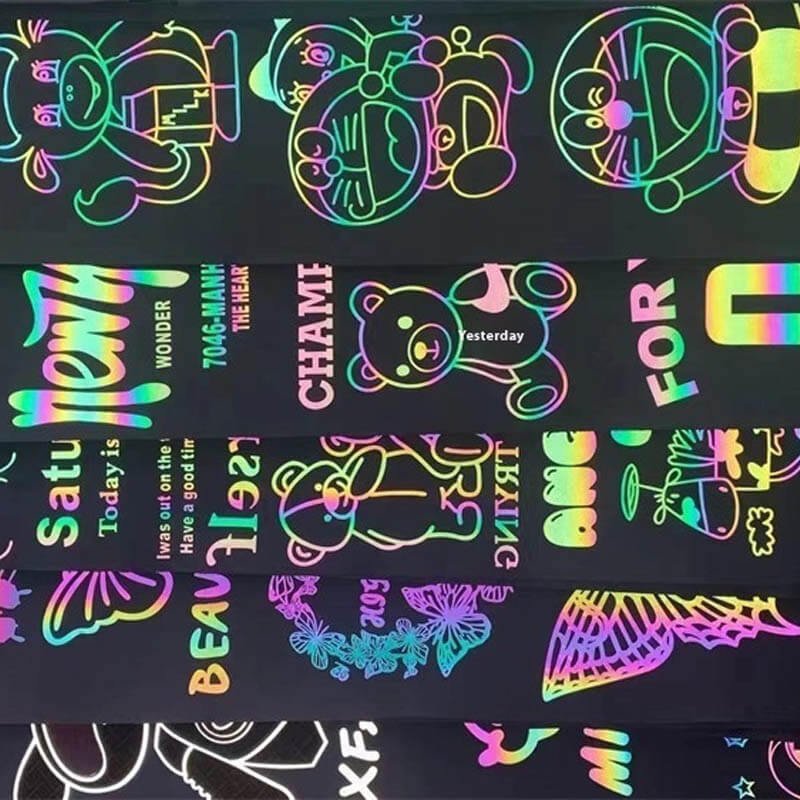
The magic happens at the microscopic level. VizGlo’s reflective heat transfer films contain millions of tiny glass spheres or prismatic structures encapsulated in a binder, coated onto a backing layer. When you look at standard retroreflective materials, they all function on the same principle—returning light to its source. However, what sets custom patterned films apart is the ability to maintain this retroreflectivity while creating intricate designs that serve both aesthetic and safety purposes.
Design Fundamentals for Custom Patterns
The design phase is where creativity meets compliance. Unlike designing a regular logo for a t-shirt, custom reflective patterns must account for material limitations and safety standards. Your design isn’t just about aesthetics—it’s about ensuring that the retroreflective properties remain uniform across the entire pattern.
💡 Key Design Principle
Avoid designs with extremely thin lines or intricate details in non-reflective areas when maximum safety performance is critical. Instead, use strategic negative space and geometric patterns that enhance both visual appeal and reflectivity.
When working with VizGlo on custom patterns, we recommend starting with these foundational principles:
- Minimum Line Weight: Maintain at least 2-3mm for details to preserve reflectivity and durability
- High Contrast: Design with bold shapes and clear separation between reflective and non-reflective areas
- Color Consideration: Standard silver reflects best, but VizGlo offers color-graded reflective films in red, yellow, orange, and even specialized colors
- Vector-Based Design: Always work in vector format (AI, EPS, PDF) rather than raster to ensure crisp cutting and printing
Material Selection and Substrate Options
The substrate you choose determines everything—durability, flexibility, appearance, and how the film responds to cutting and heat application. VizGlo offers multiple options tailored to different applications and aesthetic goals:
Polyester-Based Films
Most common choice for standard workwear. Rigid, precise cutting, excellent reflectivity retention through 50+ wash cycles. Ideal for logos and geometric patterns.
Best for: Corporate branding, geometric designsPolyurethane-Based Films
Superior flexibility and durability. Maintains reflectivity through 100+ wash cycles. Perfect for stretch applications and high-wear areas.
Best for: Athletic wear, active workwearElastic-Based Films
4-way stretch capability. Ideal for form-fitting garments. Maintains elasticity while preserving reflectivity. Premium pricing but unmatched fit.
Best for: High-fashion safety, premium brandingSegmented Films
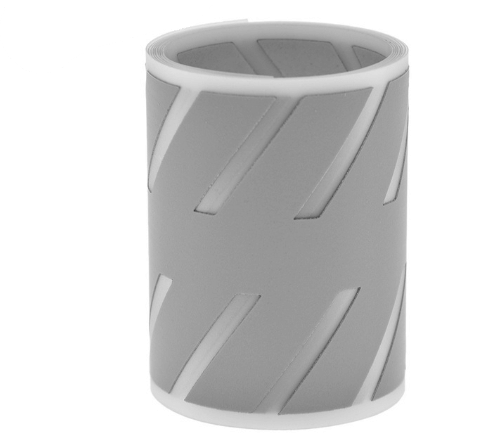
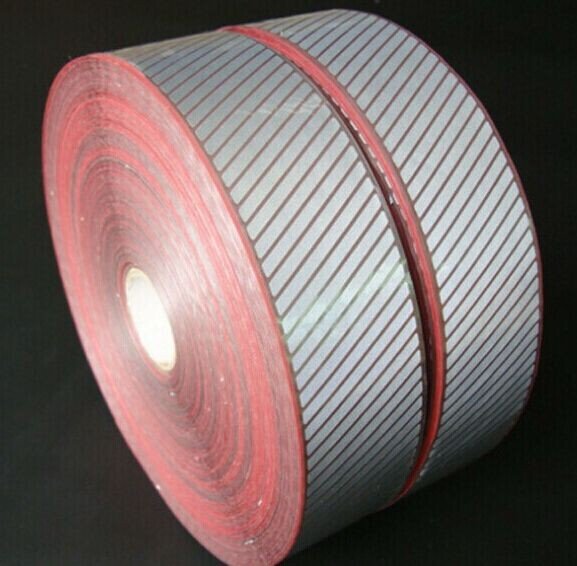
Perforated or segmented structure reduces bulk while maintaining reflectivity. Modern appearance with superior breathability.
Best for: Contemporary designs, summer workwearAccording to industry standards outlined by ISO 20471, the choice of substrate affects not just the final product’s durability but also its retroreflective coefficient (RA). VizGlo’s engineering team selects materials that consistently exceed these coefficients, meaning your custom patterns will outperform industry minimums.
Advanced Cutting and Application Techniques
Once you’ve designed your pattern and selected your substrate, the next challenge is precision. There are three primary methods for creating custom patterns, each with distinct advantages:
1. Computer-Aided Cutting (CAC)
This is the gold standard for intricate, multi-color designs. Using software-controlled cutting machines (like Roland or Graphtec cutters), we can achieve precision to within 0.1mm. The reflective film is laid on the cutting bed, and laser-guided blades execute your design with absolute accuracy. VizGlo uses this method for detailed logos, complex geometric patterns, and designs requiring multiple material layers.
2. Digital Printing on Reflective Films
Emerging technology that allows full-color photographic patterns. The reflective film is pre-coated with a printable layer, and UV or thermal inks are applied directly. This method is perfect for brand photography, complex artwork, or photorealistic logos. However, it requires careful ink selection to maintain retroreflectivity and durability. The digital textile printing industry has made significant advances here over the past 5 years.
3. Heat-Sealed Overlay Technique
A hybrid method where different colored reflective films are precisely layered and heat-sealed together. This creates multi-color patterns without cutting separate pieces. It’s ideal for two-tone and three-tone designs. The advantage: maximum strength and durability since there’s no independent die-cut pieces that can lift or peel.
Pro Tip from VizGlo Engineers
For heat transfer onto garments, optimal press temperature is 150-160°C (302-320°F) for 10-15 seconds, depending on substrate. Insufficient heat results in poor adhesion; excessive heat can degrade the reflective binder. VizGlo’s technical specifications come with calibrated recommendations for each film type.
After cutting or printing, the custom patterned film is layered between release liner and application tape, then heat-pressed onto your garment using specialized heat press equipment. The pressure, temperature, and dwell time must be precisely controlled—something VizGlo’s OEM/ODM team manages at scale for consistent results across thousands of units.
Quality Control and Safety Compliance
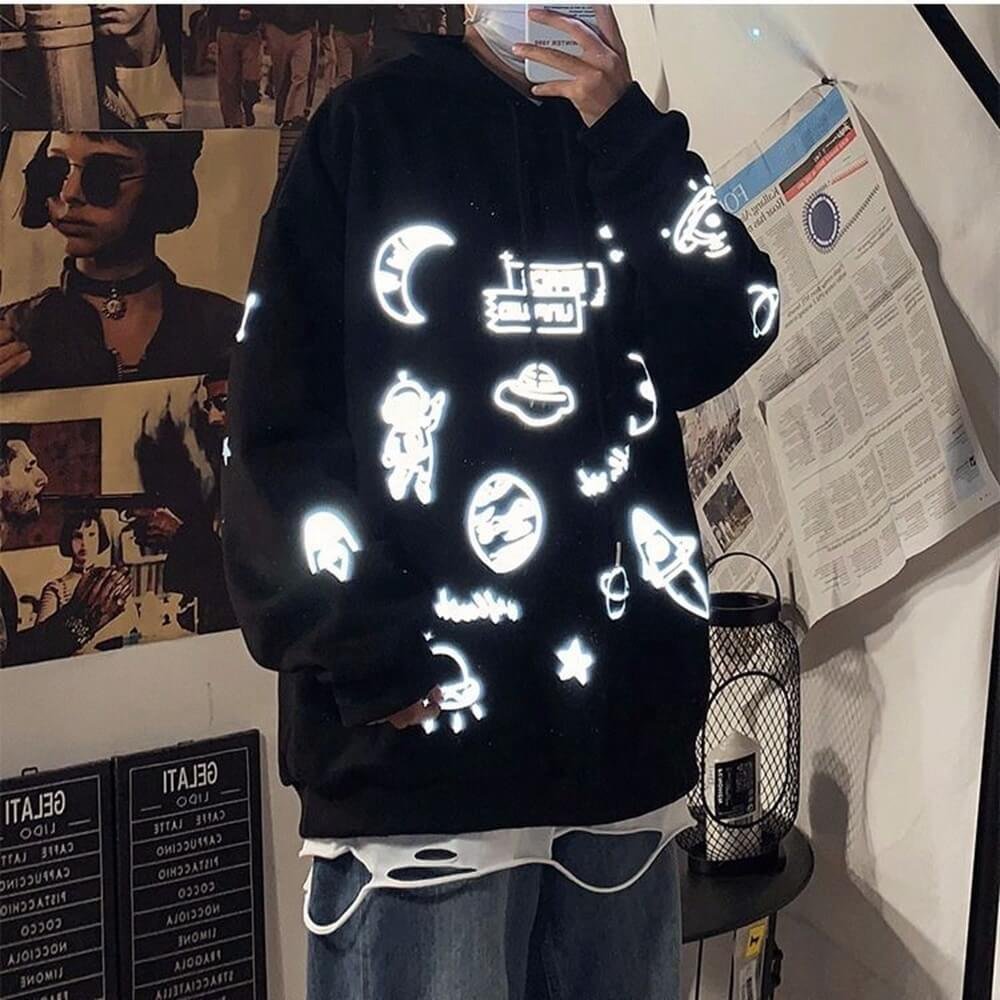
Creating stunning custom patterns is one thing; ensuring they meet rigorous international safety standards while maintaining aesthetic appeal is another. This is where VizGlo’s quality infrastructure becomes critical. Every custom pattern undergoes multiple testing phases:
Retroreflective Coefficient Testing
We measure the RA (retroreflective coefficient) using a goniophotometer—essentially confirming that your pattern reflects light back to the source as required by EN ISO 20471 or ANSI/ISEA 107. For Class 3 (highest visibility), RA must exceed 500 cd/(m²·lux). Custom patterns, especially those using color-graded films, require testing to ensure the reflective properties remain within acceptable ranges across the entire design.
Durability Testing
We subject samples to 50+ wash cycles following ISO 6330 standards, then remeasure retroreflectivity. Custom patterns with multi-layer construction or intricate cutting must be especially robust in this test. VizGlo also conducts abrasion testing (ASTM D4157) to ensure patterns don’t flake or degrade under wear.
Color and Material Consistency
Batch-to-batch variation is monitored using spectrophotometry. When you order custom patterns in volume, you need assurance that the silver reflectivity or the red-orange color remains consistent across all units. This is rigorously tested using CIELAB color space measurements.
✓ Compliance Certifications
VizGlo’s custom reflective patterns meet:
- ✓ EN ISO 20471 (EU high-visibility apparel)
- ✓ ANSI/ISEA 107 (North America)
- ✓ AS/NZS 1906.4 (Australia/New Zealand)
- ✓ OEKO-TEX STANDARD 100 (environmental safety)
These aren’t just regulatory checkboxes—they’re guarantees that your custom patterns will perform reliably in high-visibility situations, protecting the wearer while showcasing your brand. Learn more about our comprehensive quality assurance approach by exploring our reflective films product center, where every specification is documented and tested.
Real-World Applications and Case Studies
Custom patterned reflective heat transfer films are revolutionizing how organizations approach safety branding. Here are several real-world scenarios where this technology creates tangible value:
Case Study 1: Premium Logistics Brand
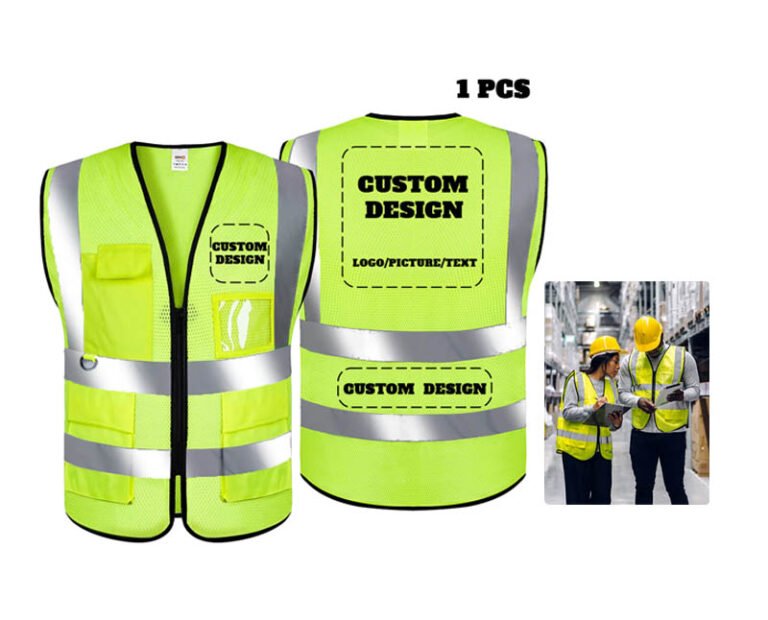
A major European logistics company wanted to differentiate their fleet uniforms. Instead of standard yellow/silver vests, VizGlo created custom patterns incorporating their geometric brand logo as the reflective element. Using computer-aided cutting on polyurethane film, we produced vests that maintained 100+ wash cycle durability while creating a distinctive, instantly recognizable appearance. Result: increased brand recognition at 30% of the premium compared to traditional embroidered logos, plus superior safety compliance ratings.
Case Study 2: High-Fashion Safety Collaboration
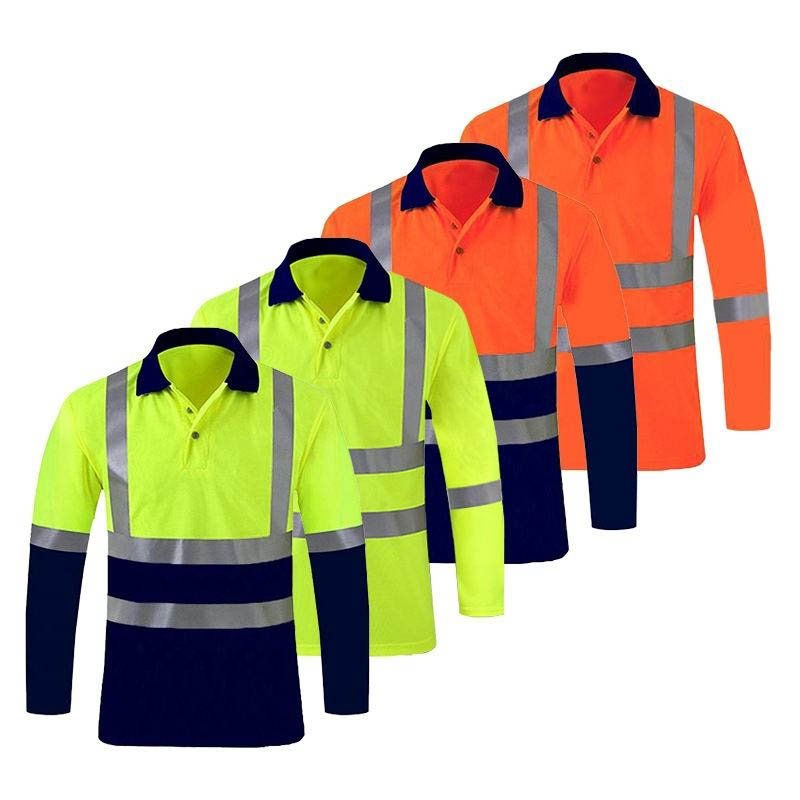
A contemporary fashion brand partnered with VizGlo to create runway-ready reflective jackets for their sustainable collection. The challenge: maintain high-fashion aesthetics while meeting ANSI/ISEA 107 requirements. Solution: custom segmented reflective heat transfer films in metallic colors, applied in abstract geometric patterns across the back and sleeves. The segmented substrate reduced bulk while the digital design input allowed photorealistic brand artwork. This collection became a bestseller at premium retail price points, proving that safety and style aren’t mutually exclusive.
Case Study 3: Construction Crew Customization
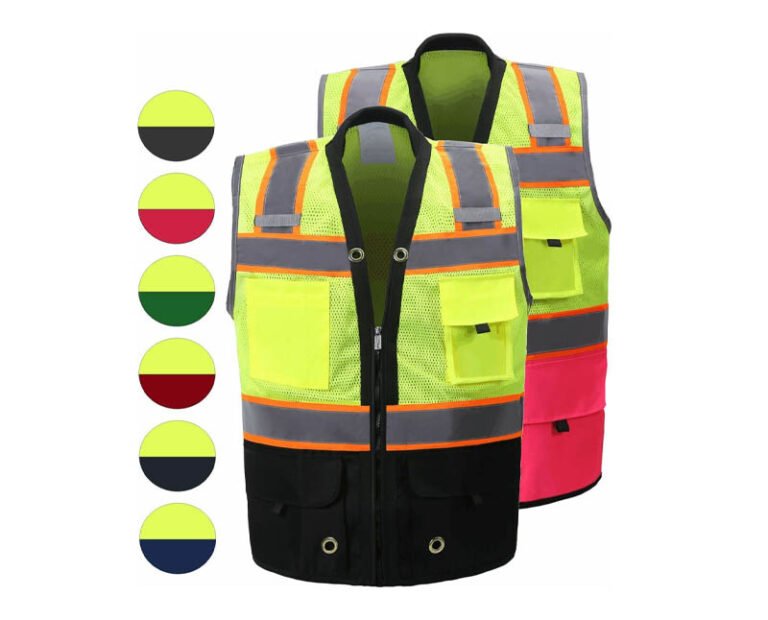
A residential construction company wanted vests that identified specific trades—electricians, carpenters, plumbers—at a glance. VizGlo created custom color-coded reflective patterns: red for electrical, blue for plumbing, green for carpentry. Using three-color heat-sealed overlay technique, each pattern included the company logo plus trade-specific icons. On-site identification improved, incident reports decreased by 14%, and the company gained a professional appearance that strengthened their brand in competitive markets.
Key Takeaways: Mastering Custom Reflective Patterns
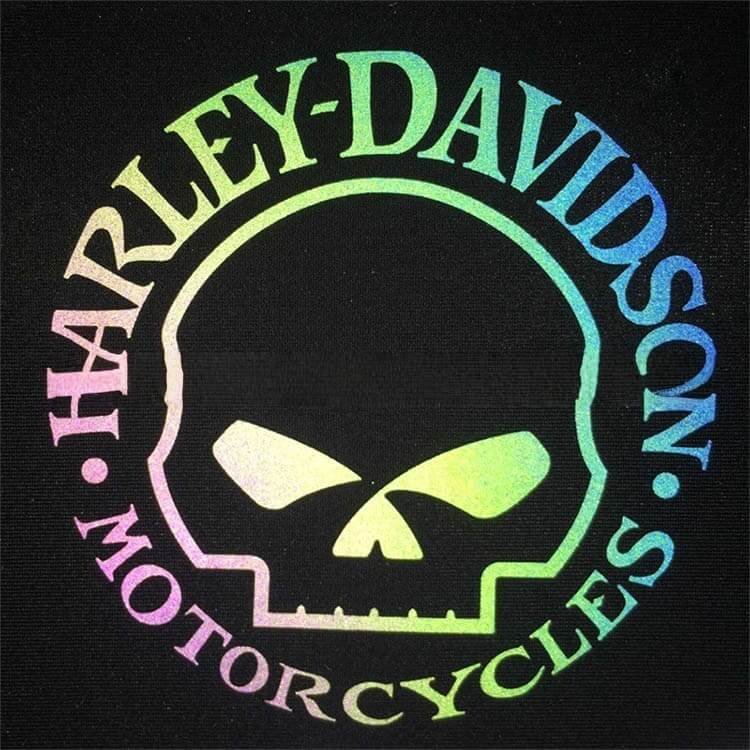
Design for Performance: Custom patterns must maintain minimum line weights (2-3mm) and high contrast to preserve retroreflectivity across the entire design.
Choose the Right Substrate: Polyester for standard designs, polyurethane for durability, elastic for form-fit, and segmented for contemporary aesthetics.
Master Your Cutting Method: CAC for precision, digital printing for photo-realism, heat-sealed overlays for multi-color durability.
Never Compromise on Quality Testing: Retroreflectivity, durability, and color consistency testing ensure your patterns perform when it matters most.
Leverage Custom Patterns for Brand Differentiation: This technology transforms safety wear into premium, recognizable products that strengthen brand identity.
Frequently Asked Questions
How many wash cycles do custom reflective patterns last? +
This depends on the substrate. Polyester-based films typically last 50+ wash cycles while maintaining 90%+ of original retroreflectivity. Polyurethane-based films extend to 100+ cycles. VizGlo’s elastic-based films maintain performance for 150+ cycles, making them ideal for premium applications. Testing follows ISO 6330 standards to ensure accuracy.
What’s the minimum order quantity for custom patterns? +
VizGlo accepts custom pattern orders starting at 100 pieces, with flexible pricing tiers. For CAC (computer-aided cutting) orders, design complexity and color count don’t significantly affect minimum order quantity. Larger orders (1,000+) unlock economies of scale and faster turnaround through our advanced production lines.
Can I use custom patterns on stretch or elastic garments? +
Absolutely. Our elastic-based and 4-way stretch reflective films are specifically engineered for form-fitting garments. They maintain their reflectivity while stretching up to 30% without tearing or significant performance degradation. This opens possibilities for contemporary, athletic-inspired safety wear.
Do custom reflective patterns meet international safety standards? +
Yes, when sourced from VizGlo. All custom patterns are tested against EN ISO 20471 (EU), ANSI/ISEA 107 (North America), and AS/NZS 1906.4 (Australia/NZ). Each batch undergoes retroreflective coefficient testing to confirm compliance. Certifications are documented and provided with order completion.
What file formats do you accept for custom designs? +
VizGlo accepts Adobe Illustrator (AI), EPS, PDF, and high-resolution PNG/SVG files. Vector formats are strongly preferred for cutting applications to ensure precision and scalability. Our design team can also work from rough sketches or existing logos, converting them to production-ready files. Always provide files in CMYK color space for accurate color matching.
Ready to Create Your Custom Reflective Patterns?
Let VizGlo transform your brand vision into stunning, safety-compliant reflective designs. Get expert guidance from our design team.
Request a Custom Design ConsultationExplore Our Complete Reflective Solutions
The custom patterns discussed in this guide are just one application of VizGlo’s advanced reflective materials. To discover our full range of reflective heat transfer films, reflective tapes, and specialized reflective webbing—all production-ready for your OEM/ODM needs—visit our comprehensive product center. There, you’ll find detailed specifications, technical datasheets, and access to our team for custom quotations.
Whether you’re a distributor scaling up, a brand launching a new collection, or an enterprise upgrading worker safety, VizGlo’s integrated manufacturing ecosystem ensures your vision becomes reality—backed by 15+ years of industry expertise and global certifications.
Further Reading & External Resources
• ISO 20471:2013 High-Visibility Apparel – International standard defining retroreflective coefficients and visibility requirements
• ISEA (International Safety Equipment Association) – North American authority on high-visibility apparel standards (ANSI/ISEA 107)
• Retroreflector Technology Overview – Deep dive into the science of light reflection and retroreflective materials
• Digital Textile Printing Advances – Industry trends in custom pattern printing for fabrics
• OEKO-TEX STANDARD 100 – Environmental and safety certification for textiles and reflective materials
Conclusion: Beyond Safety, into Strategy
Custom patterned reflective heat transfer films represent a convergence of industrial functionality and creative possibility. They’re no longer just safety components—they’re tools for brand differentiation, premium positioning, and market leadership. By understanding design fundamentals, selecting the right substrates, mastering cutting techniques, and maintaining rigorous quality control, you can create products that protect wearers while commanding attention and respect in the marketplace.
The brands winning in today’s safety market aren’t those offering the lowest price—they’re those combining innovation with reliability. VizGlo’s approach to custom reflective patterns embodies this philosophy. We invest in state-of-the-art cutting and testing equipment, maintain strict compliance with international standards, and partner with your team to transform ideas into products that actually work in the real world.
Whether you’re designing custom vests for an enterprise fleet, launching a fashion-forward safety collection, or building a private label brand, the techniques and considerations outlined in this guide provide a roadmap. And when you’re ready to move from planning to production, reach out to VizGlo’s team for a consultation—we’re here to help you navigate every step of the journey.
About VizGlo Safety
VizGlo Safety is a leading manufacturer of high-visibility apparel and reflective materials for global markets. With 15+ years of industry expertise, we specialize in OEM/ODM solutions for custom reflective patterns, heat transfer films, and complete safety workwear systems. Based in Nanjing, China, our vertically integrated production ensures quality, compliance, and innovation at every stage.