A B2B Buyer’s Guide to Rainbow Reflective Fabric
Why Technical Specifications Matter More Than Social Media Aesthetics
Rainbow reflective fabric represents the convergence of two distinct market demands: the visual allure of iridescent, color-shifting aesthetics that dominate social media and fashion runways, and the life-critical performance requirements demanded by safety professionals in construction, transportation, and emergency response sectors. Unlike standard silver or white reflective materials, rainbow variants achieve their signature prismatic effect through advanced micro-bead technology or holographic film layering that refracts light across the visible spectrum while maintaining—or in premium formulations, exceeding—the retro-reflectivity values (CPL) mandated by international safety standards like EN ISO 20471 and ANSI/ISEA 107. The true value proposition for B2B buyers lies not in choosing between aesthetic appeal and safety compliance, but in sourcing materials that deliver both simultaneously, backed by comprehensive performance data, wash durability testing, and supplier certifications that withstand regulatory scrutiny across global markets.
What Is Rainbow Reflective Fabric?
Rainbow reflective fabric—also referred to as iridescent, gradient, or color-shifting reflective material—is a specialized textile that combines high-visibility base fabrics (typically 100% polyester or polyester-cotton blends) with reflective elements engineered to produce a dynamic color spectrum when illuminated. Unlike traditional reflective tapes that appear uniformly silver or white in all lighting conditions, rainbow variants employ one of three primary technologies:
- Holographic Films: Layered adhesive films featuring microscopic grooves that diffract light into its component wavelengths, creating rainbow effects that shift as viewing angles change.
- Prism-Based Micro-Beads: Precision-engineered spheres manufactured from high-index glass or acrylic, where each bead functions as a tiny prism that separates white light into spectral colors.
- Gradient & Segmented Designs: Strategic placement of different colored reflective segments—cyan, magenta, yellow—that combine optically to create rainbow appearance without sacrificing retro-reflectivity in any specific direction.
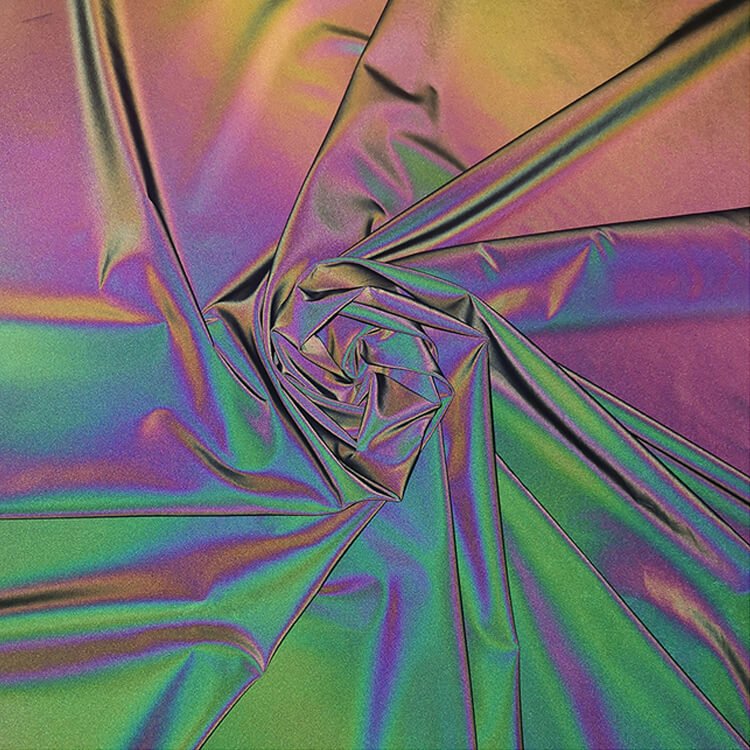
Premium rainbow reflective fabric displaying full spectral shift under daylight illumination
The Technology Behind the Shimmer
How Retro-Reflectivity Meets Iridescence
The critical engineering challenge in rainbow reflective fabric development involves maintaining or exceeding the optical performance (retro-reflectivity coefficient, or CPL) required for nighttime visibility while simultaneously introducing color-shifting properties that are inherently directional. When light diffracts into a spectrum, it is momentarily “separated” from the primary reflection path, technically reducing efficiency compared to omnidirectional silver reflectors.
Leading manufacturers address this through proprietary bead-sizing (typically 100–250 microns), precise bead-distribution density, and backing layer optimization. A high-quality rainbow reflective tape can achieve CPL values of 150–300 cd/m²/lux, which meets or exceeds EN ISO 20471 Class 2 and 3 requirements, depending on application and substrate.
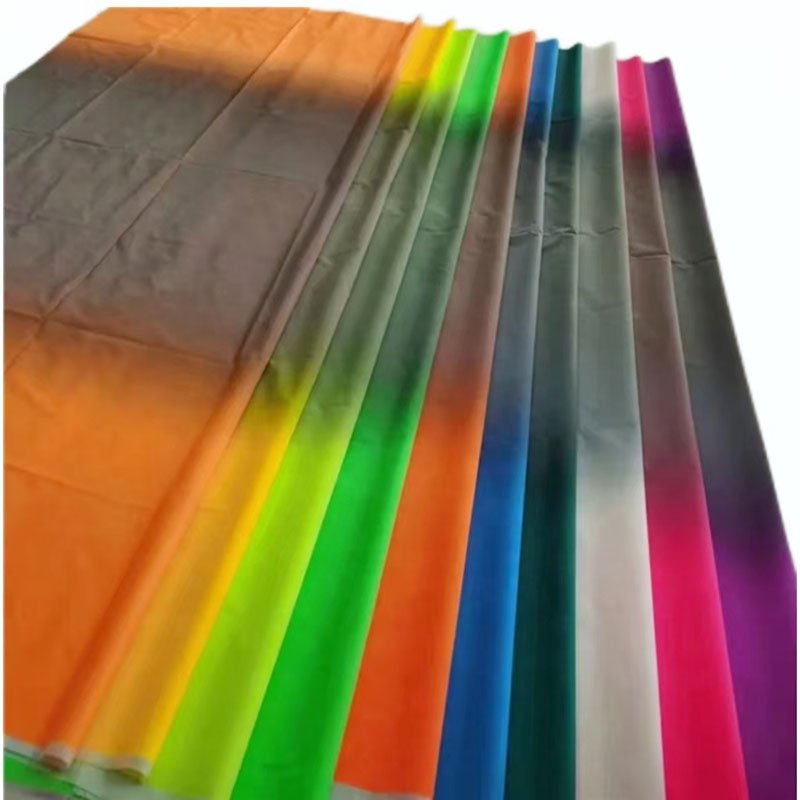
Gradient reflective technology: four-way spectrum transition in a single material
✓ Advantages
- • Exceptional day-and-night visibility contrast
- • Photogenic appeal drives end-user adoption
- • Differentiates brand in competitive markets
- • Maintains regulatory compliance when sourced correctly
⚠ Trade-offs to Monitor
- • Higher material costs than standard silver
- • Directional reflectivity (not omnidirectional)
- • More sensitive to wash degradation
- • Requires verified CPL testing documentation
Performance Metrics That Matter in B2B Procurement
The gap between aesthetic appeal and technical compliance is where most B2B buyers make critical mistakes. A fabric may shimmer beautifully in daylight but fail nocturnal visibility tests—or vice versa. Here are the metrics that separate capable suppliers from unreliable ones:
Coefficient of Retroreflection (CPL)
Measured in cd/m²/lux. This is the gold standard metric. EN 20471 Class 2 requires ≥200 cd/m²/lux; Class 3 requires ≥250 cd/m²/lux. Premium rainbow fabrics typically score 150–300, depending on observation angle.
Color Fastness & Wash Durability
Standards like ISO 105-C06 (machine wash testing) and ISO 105-B02 (light fastness) are critical. Demand a minimum of 20 wash cycles before CPL drops below 80% of original value. Premium suppliers provide >40-cycle certification.
Observation Angle Performance
Reflectivity varies by angle. Request datasheets showing performance at 0.2°, 0.5°, 1.0°, and 1.5° observation angles. Rainbow fabrics often show stronger performance at wider angles due to lens-like properties.
Flammability & FR Compliance
If targeting railway or industrial sectors, verify flame-retardant certification (EN 11612, EN 348) and ensure reflective components don’t compromise FR performance or vice versa.

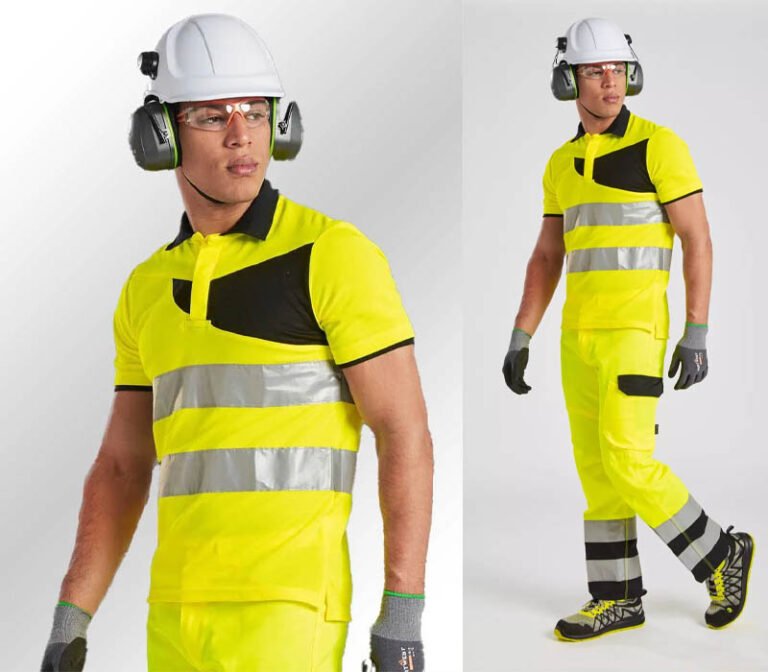
Rainbow reflective fabric integrated into workwear – demonstrating real-world visibility
Real-World Applications & Market Fit
Rainbow reflective fabric isn’t a universal solution—it thrives in specific market segments where the combination of compliance and appeal directly influences purchase behavior and end-user satisfaction.
🔨 Construction & Infrastructure
High turnover of temporary workers with minimal safety training. The visual “wow factor” increases voluntary compliance with PPE requirements. Premium pricing justified by reduced incident rates.
🚗 Transportation & Logistics
Fleet operators use branded rainbow workwear as mobile marketing; drivers report higher night-driving visibility confidence. EN 20471 compliance non-negotiable in EU markets.
🚨 Emergency Services & Event Security
Law enforcement and security personnel prefer rainbow materials for daytime crowd identification and nighttime visibility. Premium aesthetic supports professional credibility.
🎽 Fashion & Lifestyle Brands
Luxury and streetwear brands leveraging safety aesthetics as design statements. Here, reflectivity may be secondary to iridescence. Note: This segment often requires ANSI 107 or EN 20471 Class 1 compliance only—not Class 2/3.
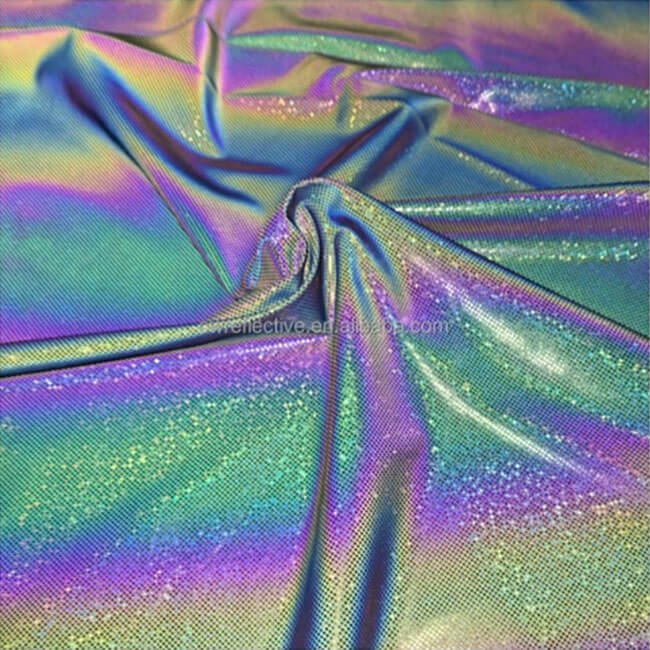
Sequined rainbow elasticated fabric – bridging fashion and function
Competitor Analysis & Market Standards
The rainbow reflective fabric market remains fragmented. Dominant suppliers come from three regions, each with distinct strengths and compliance profiles:
| Region / Supplier Type | CPL Range | Cost Index | Lead Time |
|---|---|---|---|
| East Asia (Premium) Japan, South Korea |
250–350 CPL | 100 | 12–16 weeks |
| China (Balanced) Established OEM/ODM manufacturers |
150–250 CPL | 55–70 | 6–10 weeks |
| Europe (Compliant) Germany, UK, Netherlands |
200–300 CPL | 85–110 | 8–12 weeks |
⚠ Critical Buying Insight: The “Rainbow Trap”
Unscrupulous suppliers often market low-quality holographic films adhered to cheap polyester as “rainbow reflective fabric,” achieving stunning aesthetics with CPL values of only 80–120 cd/m²/lux—well below EN 20471 Class 2 minimums. Request third-party reflective materials testing certificates from accredited labs (TÜV, SGS, Intertek) before committing to volume orders.
Key Competitors & Differentiators
While VizGlo Safety operates primarily in the OEM/ODM space (manufacturing for private label brands rather than under its own label), key direct competitors in the rainbow reflective fabric space include:
- •3M Scotchlite: Premium Japanese technology; highest CPL values; cost-prohibitive for mass-market workwear; dominates high-end safety apparel segment.
- •Oralite/Reflexite: Innovators in segmented rainbow designs; strong EU compliance; mid-range pricing; popular with OEM partners.
- •Kissel + Wolf (Germany): Specializes in FR + reflective combinations; premium positioning; dominant in specialized workwear (railway, firefighting).
- •Chinese Manufacturers: Rapidly improving quality; aggressive pricing; verification of standards essential before sourcing.
Learn more about industrial-grade reflective materials and market trends at Safety Equipment Institute standards reference.
Developing a Winning B2B Procurement Strategy
The Two-Camp Decision Framework
As highlighted in industry insights, B2B buyers typically fall into one of two categories—and the best suppliers bridge both.
CAMP A: Aesthetic-Driven Buyers
Focus on visual impact, trendsetting, and social media presence. Primary concerns: color vibrancy, consistency, and fashion credibility. Action: Request small samples first; conduct internal focus groups; prioritize suppliers with established brand partnerships.
CAMP B: Performance-Driven Buyers
Prioritize regulatory compliance, CPL metrics, wash durability, and certification. Primary concerns: liability mitigation, employee safety, and auditable documentation. Action: Request full technical datasheets, third-party certifications, and documentation of wash testing protocols before proceeding with trials.
The key insight: The best suppliers do not force you to choose between these camps. They deliver scientifically rigorous CPL performance wrapped in stunning iridescent aesthetics.
7-Step Procurement Checklist
- Define Your Compliance Tier: EN 20471 Class 1, 2, or 3? (Class 3 = highest visibility, highest cost)
- Request Verifiable Test Data: CPL values at multiple observation angles; wash cycle degradation curves
- Verify Accreditation: Ensure third-party testing from TÜV, SGS, or Intertek—not supplier in-house only
- Sample Testing: Order sample rolls; conduct 10+ wash cycles internally; measure any CPL loss
- Supplier Stability Check: Are they ISO 9001 certified? Do they have stable supply chains and capacity for surge orders?
- Cost Structure Transparency: Request itemized quotes breaking out base fabric, reflective coating, adhesive/lamination, and packaging
- Contractual Guarantees: Include performance specs and warranty clauses; outline remediation if CPL drops below thresholds
Frequently Asked Questions
What’s the difference between rainbow and standard silver reflective fabric? ⌄
Standard silver reflective fabric uses uniform micro-beads that reflect light in a full hemisphere, resulting in consistent silver appearance from all angles. Rainbow fabric employs prism or holographic technology that diffracts white light into spectral colors, creating the iridescent effect. While visually stunning, rainbow fabrics are directional—reflectivity varies significantly with observation angle—whereas silver is more omnidirectional. Both can meet EN 20471 when engineered correctly, but rainbow typically achieves slightly lower peak CPL values.
Does rainbow reflective fabric meet ANSI 107 standards? ⌄
Yes—premium rainbow fabrics can meet both ANSI/ISEA 107 and EN ISO 20471 when sourced from reputable manufacturers. However, many low-cost rainbow variants meet only ANSI 107 Class 1 (lowest visibility tier). Verify with your supplier: request explicit confirmation of which class they guarantee, and always request third-party testing documentation.
How many wash cycles can I expect before rainbow fabric degrades? ⌄
This is highly supplier-dependent. High-quality rainbow fabrics typically retain >80% of original CPL for 20–40 industrial wash cycles (ISO 105-C06 at 60°C). Budget brands may degrade after 5–10 cycles. Adhesive delamination and bead yellowing/haziness are the primary failure modes. Always request wash testing data from your supplier before volume commitment.
Can rainbow reflective fabric be used in flame-retardant applications? ⌄
Yes, but with caution. Specialized FR-grade rainbow fabrics exist and meet EN 11612 standards, but fire-retardant treatments can sometimes interfere with reflective coatings. Demand verification that both EN 11612 (flame resistance) and the relevant reflectivity standard (EN 20471 or ANSI 107) are independently tested and certified on the same material.
What’s the typical price premium for rainbow vs. standard reflective fabric? ⌄
Expect 30–60% higher costs compared to standard silver reflective fabrics. Premium Japanese suppliers (3M, Oralite) command 80–120% premiums due to superior durability. Chinese manufacturers offer 20–40% premiums with variable quality. The investment is justified if your end-market values aesthetics or if the “wow factor” drives higher end-user PPE compliance rates.
Which international standards apply to rainbow reflective fabrics? ⌄
Europe: EN ISO 20471 (Classes 1, 2, 3); EN 11612 (FR). North America: ANSI/ISEA 107 (Classes 1, 2, 3). Australia/NZ: AS/NZS 1906.4 and 4602.1. Most reputable suppliers ensure compliance with multiple standards to access global markets. Confirm which standards your target market mandates before finalizing supplier selection. Access ISO’s official EN 20471 reference for the latest revisions.
Ready to Source Premium Rainbow Reflective Fabric?
Let’s connect with a product specialist who understands both the technical specs and aesthetic demands of your application.
Request a Material ConsultationExpand Your Knowledge
This guide covers the critical aspects of rainbow reflective fabric procurement, but the broader landscape of reflective materials is vast. Explore the full spectrum of reflective fabric technologies, applications, and industry standards in our comprehensive resource center. Whether you’re sourcing segmented tape, heat-transfer films, or custom logos, our materials guide covers the complete ecosystem—helping B2B buyers make informed decisions across all reflective material categories.
From technical specifications to real-world durability testing, understanding these foundational concepts will position your organization to negotiate better terms, avoid costly mistakes, and ultimately deliver products that satisfy both regulatory requirements and end-user expectations.
The Bottom Line for B2B Buyers
“Don’t ask for ‘rainbow fabric.’ Ask for the spec sheet. CPL values. Third-party certifications. Wash cycle degradation curves. The real value lies in a material that turns heads and protects lives simultaneously. The market is full of suppliers selling aesthetic without substance. Your job—as a professional buyer—is to demand both. If a supplier can’t back their rainbow reflective fabric with rigorous performance data, they’re not worth your procurement budget.”
Whether you’re sourcing for construction crews, transportation fleets, or fashion-forward safety brands, the framework in this guide will help you navigate the complexity, avoid common pitfalls, and ultimately partner with suppliers capable of delivering materials that meet your dual mandate: compliance and visual appeal.