Supplier Due Diligence / Hi-Vis Workwear
Before You Request a Hi-Vis Workwear Sample: Supplier Evidence Checklist
Before paying for development, establish who will make the sample, which product and documents it represents, and what the sample fee actually includes. This evidence checklist turns an initial supplier conversation into a sample request your procurement and quality teams can review together.

Quick answer: what should you verify first?
Verify the legal supplier identity, relevant product capability, sample process, evidence trail, quality controls, communication ownership and change-control terms before you approve a sample route. Ask for documents and answers that match the entity quoting you and the product family you intend to buy.
This guide is a procurement framework. It does not certify a supplier, guarantee production capacity or replace your own compliance review. Start with a defined use case and destination market. CCOHS advises confirming jurisdictional requirements and carrying out a hazard assessment before selecting high-visibility apparel; use that context to define what your supplier must demonstrate. [CCOHS]
1. Check the supplier identity and scope
Record the legal company name, business address, website, quotation entity, sales contact and payment beneficiary. If several names appear, ask the supplier to explain the relationship in writing before sampling.
- Request the business registration or equivalent company identifier appropriate to the supplier’s country.
- Confirm the manufacturing location for the product you are buying, and distinguish owned production from subcontracted operations.
- Ask which product families are made under the quoted quality system and which are sourced or assembled elsewhere.
- Check whether certificates, audit reports and test reports identify the same legal entity and scope.
Do not infer factory ownership from a factory photograph, marketplace profile or a certification logo. Treat each as a lead that needs matching evidence. A trading company or specialist subcontractor may be part of a workable sourcing route; what matters at this stage is that the route is disclosed and the parties responsible for quality, documentation and changes are clear.
When reviewing VizGlo’s company information or another supplier’s profile, make a short evidence log: claim, document or response received, date checked, reviewer and unresolved question. Do not give a company-wide marketing statement the same status as a product-specific technical answer.
2. Match capability to your actual brief
Send a short requirements brief before asking for a sample. Include garment type, fabric, reflective arrangement, color, size range, logo method, destination market, quantity and care process. A supplier who only answers with a generic catalog has not yet demonstrated fit for the project.
| Buyer question | Evidence or answer to request |
|---|---|
| Can you make this garment? | Relevant product examples, construction notes and a response to your drawings or reference sample. |
| Can you support this market? | Product-specific files, labels and testing or certification evidence that your responsible reviewer can assess. |
| Can you repeat the approved result? | Specification revision, approved sample reference, material codes and change-notification process. |
| Can you meet the commercial brief? | MOQ basis, sample cost, production lead-time assumptions, packing and shipping exclusions. |
Keep requirements separate from supplier claims. Mark each line confirmed, to verify by sample, or not offered. For custom workwear, the discussion should link to an OEM/ODM development brief, with a version number your team and supplier can both identify.
A practical example: one brief, three different sample routes
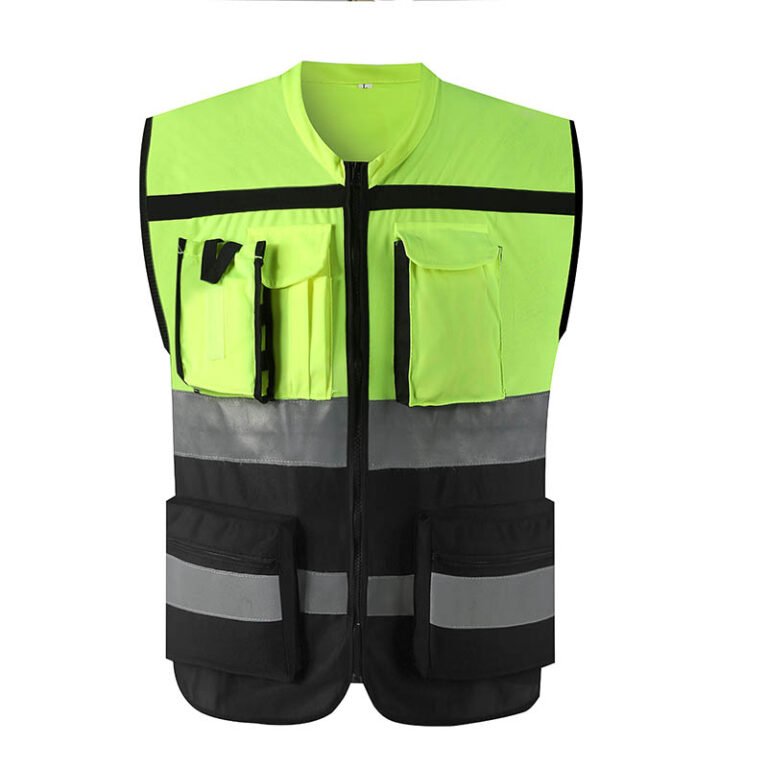
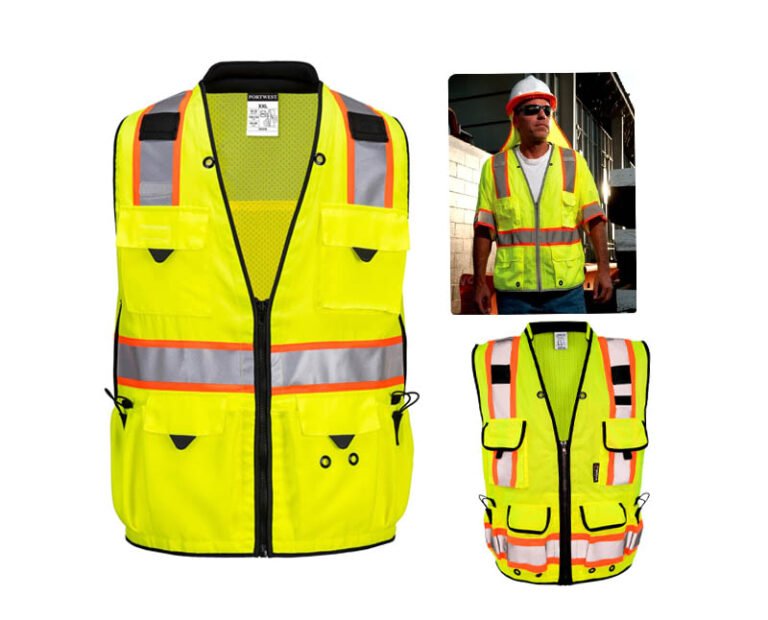
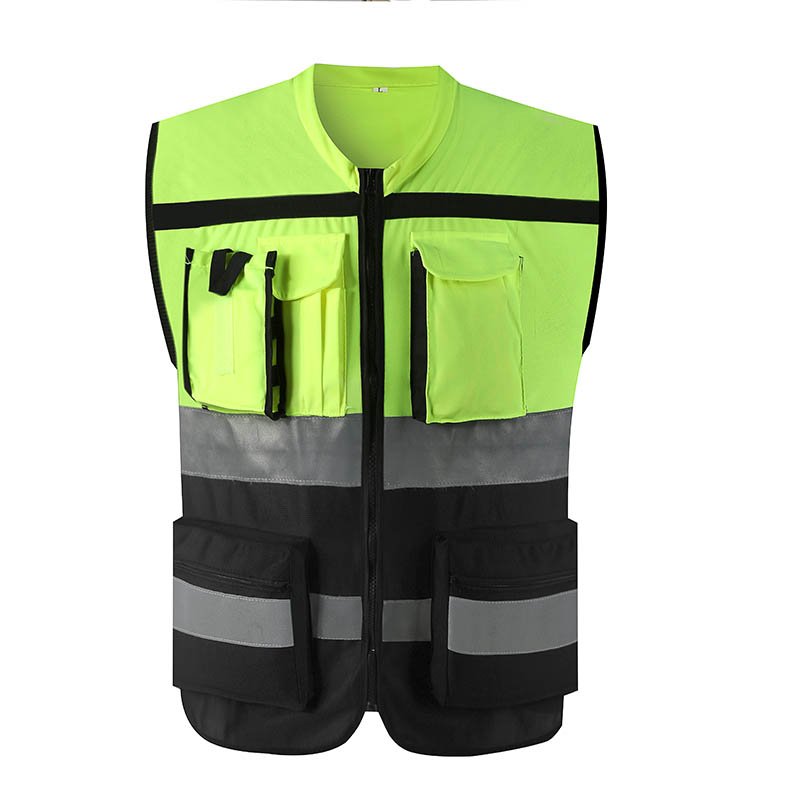
Suppose you are developing a zip-front vest with two chest pockets and your own logo. A stock vest can demonstrate general handling, but its fabric, pocket dimensions and reflective layout may differ from your order. A development sample can show the requested layout, while a later production-representative sample may be needed to approve final materials. Ask which route the fee buys and list every difference from the target garment. This is an illustrative purchasing scenario, not a customer case or a statement about VizGlo’s sample inventory.
3. Evaluate the sample process, not just the sample
Ask who owns the tech pack, who confirms substitutions, how revisions are recorded and what happens if the first sample fails. Define whether the sample is a stock reference, development sample or production-representative sample.
- Send a numbered brief and retain the date and revision.
- Ask the supplier to repeat the key requirements and flag exceptions.
- Record sample code, fabric, reflective material, logo artwork and measurements.
- Review fit, construction, visibility features, labels, packaging and workmanship against the brief.
- Issue written comments and approve a dated reference sample only after open points are closed.
Agree the sample fee and deliverables
Have the quotation identify sample quantity, sizes, material selection, logo setup, artwork work, packaging, courier charges and any test costs separately. Ask whether a revision is included and what triggers a new charge. If the supplier offers a sample-fee credit against a bulk order, record the conditions rather than assuming the whole fee is refundable.
Lead time should have a defined starting event: payment received, artwork approved, fabric available or a brief frozen. Also identify the date the sample can leave the factory and distinguish that from arrival at your office. Avoid a single “seven days” promise with no starting point or shipping assumption.
Make the sample traceable
Ask the supplier to label the sample with its code, date and revision. In your review record, connect photographs to that same reference and note any temporary material or missing feature. If a substitute was used for development, write down which question that sample can answer and which questions remain for the next stage.
4. Ask for an evidence trail you can audit
Request documents that identify the proposed product and its scope. Depending on the project, this may include a datasheet, material composition, test reports, care instructions, label artwork, inspection records and an audit or social-compliance report.
For each file, capture the issuer, report or certificate number, issue date, named product, scope, limitations and any validity period stated. When independent verification is available from the issuer, check it through the issuer’s own channel. A logo or cropped first page does not provide the missing scope.
If a report is confidential, ask what review arrangement is available and record the limitation. Your team can decide whether a redacted file, direct issuer confirmation or later controlled review is sufficient for that stage. Do not mark an unread report as approved simply because a supplier says it exists.
Check four links: entity → product → construction → test scope. A document with a similar product name is not automatically evidence for your sample. Ask what changed if the report, sample and quotation use different codes.
For high-visibility garments, keep material evidence separate from finished-garment approval. CCOHS notes that purchasers should obtain proof for both the materials and the garment design. Your destination market and responsible reviewer determine the final evidence set.
5. Test quality communication before bulk commitment
Use the sample stage to observe response quality. Good signals include clear ownership, numbered answers, prompt disclosure of limits, consistent units and written change control. Warning signs include pressure to approve without a sample, unexplained substitutions, untraceable certificates, inconsistent company names or promises that rely on a photo.
Use one small technical question to test the process: for example, ask how the supplier would identify a proposed reflective tape and record its application on your chosen fabric. Look for a product code, an owner, a proposed verification step and an explicit statement of what remains unknown. A long answer is not automatically a good one; an accurate answer that closes a specific question is more useful.
Ask for the contact responsible for technical questions, production updates, inspection and after-sales issues. You should know who can approve a change before it reaches production.

6. Record the pre-sample decision with the same scorecard
| Area | Record | Decision prompt |
|---|---|---|
| Identity | Legal entity, site, beneficiary, scope | Can the quoted party be verified? |
| Capability | Garment, fabric, tape, logo and market fit | Does the supplier answer the actual brief? |
| Evidence | Codes, reports, labels, revisions | Can your reviewer connect documents to the sample? |
| Quality | Inspection, traceability, change control | How will repeat orders be controlled? |
| Commercial | MOQ, lead time, packing, freight, payment | Are the assumptions comparable? |
Use three decision labels in your own review: proceed to sample, proceed with named conditions, or hold pending clarification. Name the buyer-side owner of each unresolved condition and the date it must be closed. Identity and product-scope gaps should not disappear into an average numerical score.
For example, a sample can proceed to help assess fit while a particular document remains under review, provided everyone understands that this is not production release. If no one can identify the proposed manufacturing route or connect the sample to a specification, resolve that first. The point of the pre-sample check is to spend on a sample that can answer a defined question.
Keep this step separate from your later comparison of hi-vis workwear quotations. Score evidence quality separately from price. A lower quote with unresolved scope is not a comparable offer.
7. Copy this pre-sample request
Project and destination market: [details]
Garment and fabric: [details]
Reflective arrangement: [details]
Logo and label requirements: [details]
Target quantity and delivery point: [details]

Please confirm:
1. Legal quoting entity and manufacturing location.
2. Relevant product examples and proposed construction.
3. Sample route, cost, timing and revision process.
4. Product codes, datasheets and applicable evidence.
5. MOQ, lead-time assumptions, packaging and exclusions.
6. Quality contact, inspection process and change-control method.
7. Any requirement you cannot confirm before sampling.
Send the same request to each shortlisted supplier. Keep the replies with the brief so a future buyer can see what was actually agreed.
Need a Supplier Review That Leads to a Better RFQ?
Share your garment type, target market, reflective requirements, quantity and sample timeline with VizGlo. Ask for the proposed product code, evidence scope and sample-validation steps before approving the sample route. For a broader supplier selection discussion, see our bulk workwear supplier guide.
Start a Workwear EnquiryFAQ
Is a factory audit enough to approve a supplier?
No. An audit is one evidence item. Match its entity, date, scope and findings to the product and production route you are evaluating.
Should I request samples before verifying documents?
Run both tracks together, but verify the quoting entity and basic product scope before spending on a development sample.
How many suppliers should receive the same brief?
Use the same requirements and response fields for every shortlisted supplier so you can compare evidence, exceptions and commercial assumptions.
Can a catalog photo prove quality?
No. Use photographs for orientation. Approve against a physical sample, recorded measurements, construction review and the evidence required for your market.